“Action” covers a wide field on GameCube, so this ranking includes combat-led action-adventure games, survival horror, platform action, side-scrolling brawlers and arcade-style flight combat. It excludes racing, traditional fighting games, strategy-first releases and role-playing games whose main structure is turn-based or progression-driven. That keeps the list broad without treating every active game as an action game.
The ranking weighs the quality of each game’s moment-to-moment play, mechanical depth, encounter and level variety, responsiveness, replay value, originality and importance to the GameCube library. A game does not need to be the fastest or most combat-heavy release to rank highly; exploration, puzzle-solving, movement and resource decisions all count when they strengthen the action loop.
The original GameCube editions are the focus, not later Wii, PlayStation 2 or Wii U versions. Regional availability varied for some releases, but every game listed here received a GameCube release in at least one major territory. The list also considers how clearly each title represents a different branch of action design, rather than filling ten places with similar shooters or platformers.
10. Luigi's Mansion
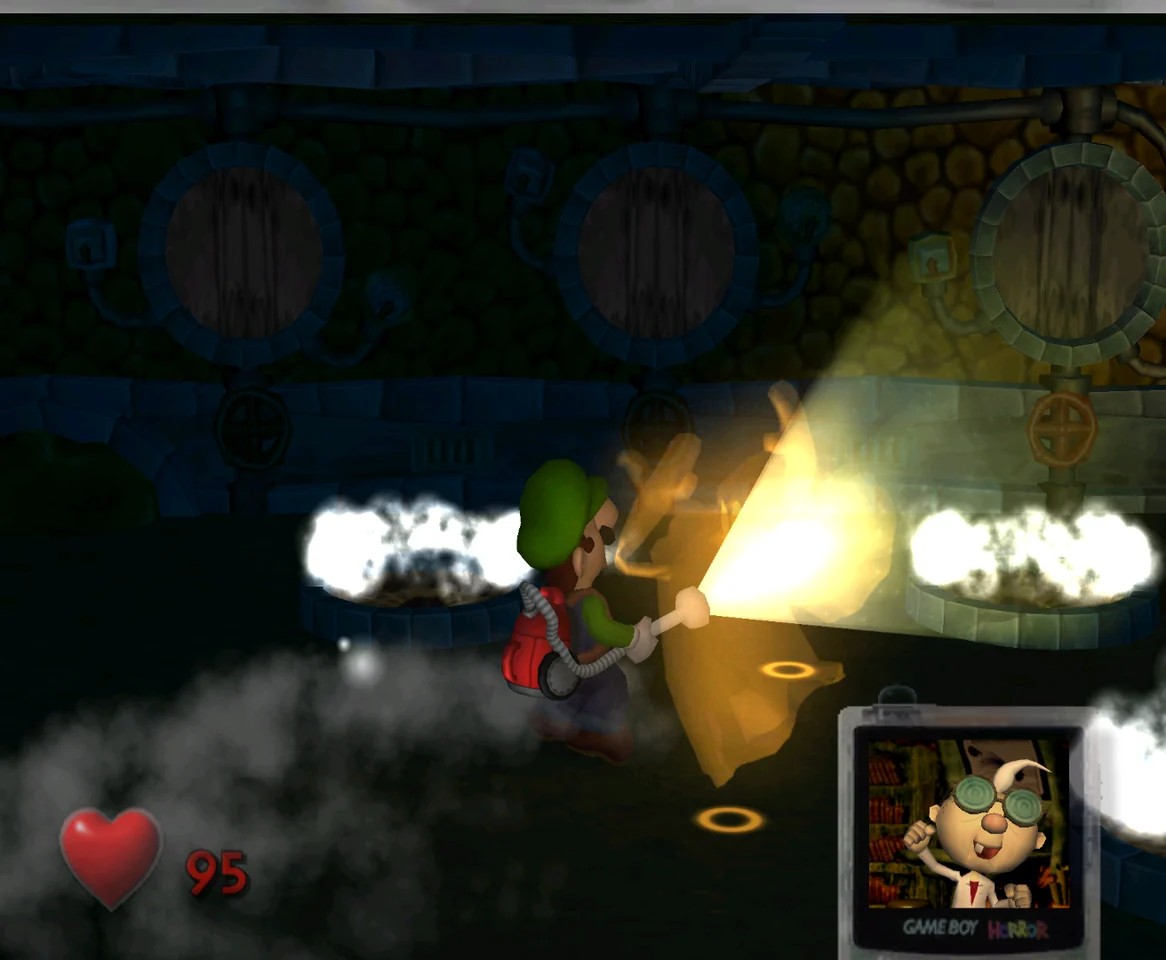
Luigi’s Mansion is a gentler, more focused kind of action-adventure. Luigi explores a haunted mansion with the Poltergust 3000, a vacuum-like device used to stun and capture ghosts, clear environmental obstacles and reveal hidden objects. The central loop is pleasingly physical: flash an enemy, hold the beam on it, pull against its movement and manage the room while furniture rattles and ghosts try to escape.
The mansion’s rooms are compact but cleverly connected, and many puzzles depend on observing details rather than searching for obscure solutions. Its tone is spooky without being relentlessly grim, making it a strong starting point for younger players or anyone who prefers readable combat over twitch difficulty. Different ghost behaviors also encourage the player to pay attention to positioning, timing and the environment rather than simply holding down an attack button.
The limitation is scope. The campaign is more contained than a full Zelda-style adventure, and ghost encounters can become methodical once their patterns are familiar. Some rooms also ask the player to revisit earlier spaces after gaining new tools, but the scale keeps that process manageable. It ranks tenth because its ideas are polished but less expansive than the games above it.
Luigi’s Mansion is best for players who want approachable supernatural action, environmental puzzles and a memorable setting rather than a long combat-heavy campaign.
- Best fit: approachable supernatural action and puzzle-solving.
- Main tradeoff: compact structure and deliberate enemy encounters.
9. Star Wars Rogue Squadron II: Rogue Leader
Rogue Leader turns the GameCube into an arcade flight-combat cabinet. Its missions draw from the original Star Wars trilogy, placing the player in craft such as X-wings, Y-wings and snowspeeders while objectives shift between dogfights, bombing runs, escorts and ground-attack sequences. The handling is accessible enough for immediate play, but advanced medals, tighter objectives and hidden rewards give skilled players reasons to repeat familiar missions.
Its greatest strength is concentration. Each stage is designed around spectacle and pressure rather than free-roaming simulation, so the player is constantly reacting to incoming fighters, terrain, targets and mission instructions. The game’s eleven primary missions provide a focused campaign, while additional craft and objectives support replay without turning the game into a conventional flight simulator.
The same focus creates its limits. Missions can be unforgiving when an objective is failed late, and the campaign offers little exploration outside its authored scenarios. Players seeking a realistic flight model or a relaxed Star Wars sandbox should look elsewhere. For arcade action, short replayable missions and cinematic Star Wars spectacle, however, Rogue Leader remains a superb fit.
- Best fit: arcade flight combat and Star Wars spectacle.
- Main tradeoff: strict objectives and limited free-form exploration.
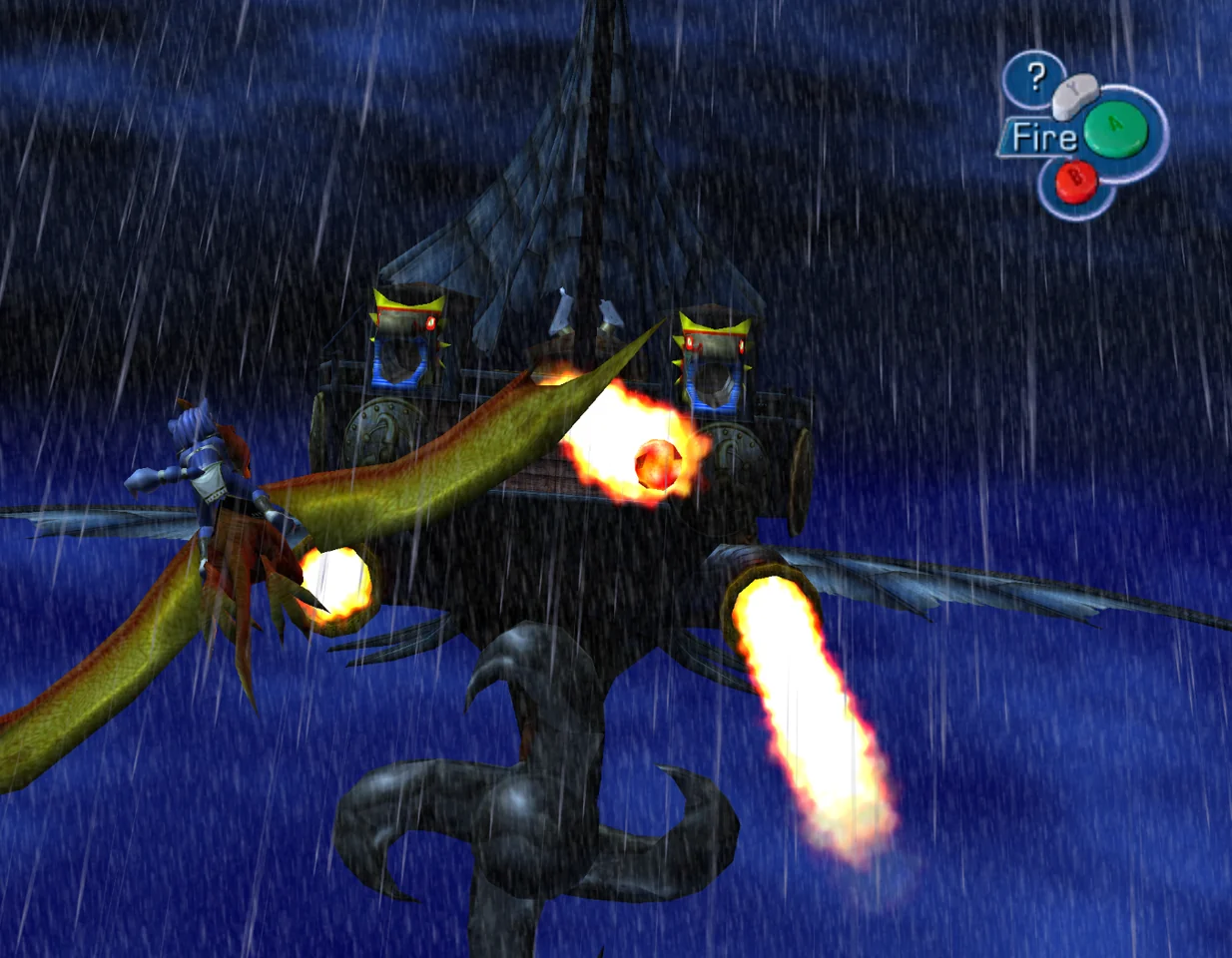
8. Super Mario Sunshine
Super Mario Sunshine makes movement itself the main event. Mario’s FLUDD device adds hovering, vertical boosts, water spraying and other movement options to the familiar run-and-jump foundation. Isle Delfino acts as a connected hub, while its individual areas alternate between open-ended objectives, hidden challenges and tightly designed obstacle courses.
The best stages let the player combine ordinary jumps with water-assisted corrections, wall jumps and rapid changes of direction. The game also offers a satisfying contrast between relaxed exploration and demanding precision sequences. It is one of the GameCube’s clearest examples of action-platforming built around a single new tool rather than a large inventory of weapons.
Sunshine’s strongest sections reward improvisation. Players can use FLUDD to recover from a missed jump, reach a distant platform or change the rhythm of a movement sequence. The tool is not only defensive; it changes how spaces are read and gives familiar platforming actions a new layer of control.
Its unevenness keeps it below the upper tier. Some objectives feel less polished than others, the camera can make complicated movement harder to read and collecting blue coins becomes a demanding late-game task. Sunshine is still an excellent recommendation for players who value expressive movement, but it is not as consistently shaped as the strongest games here.
- Best fit: movement-focused platform action.
- Main tradeoff: camera friction and inconsistent objective quality.
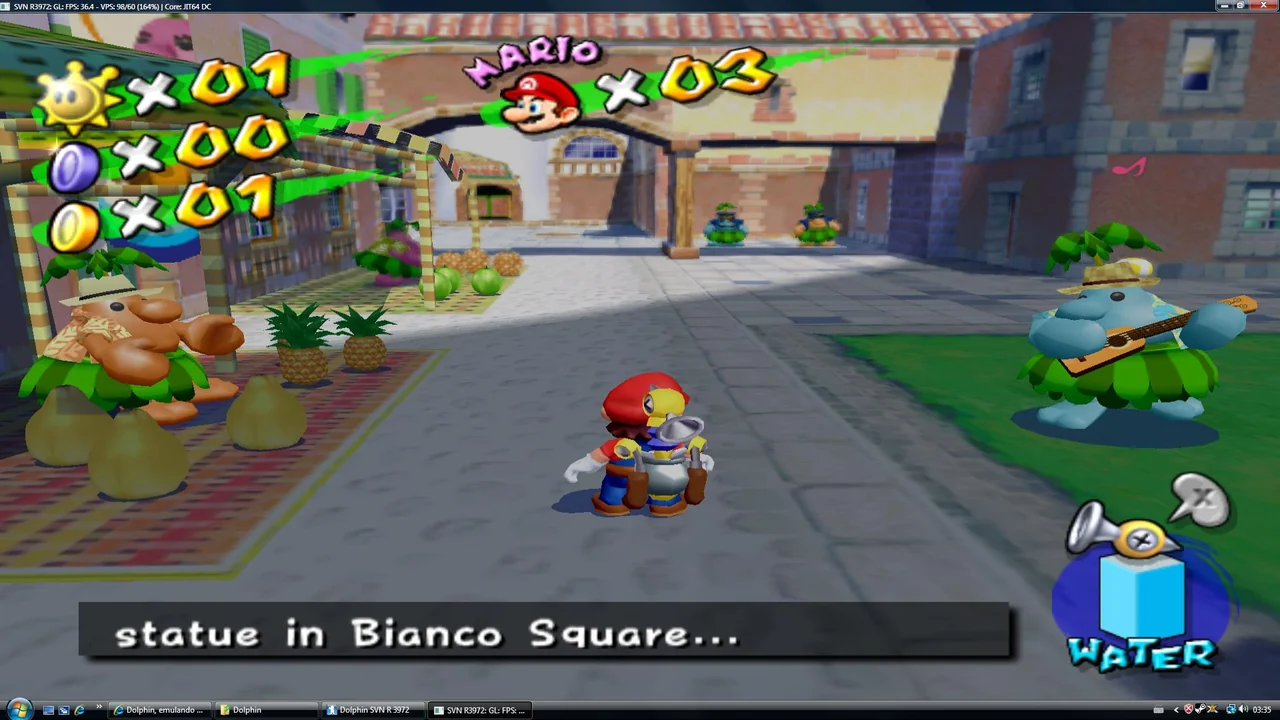
7. Eternal Darkness: Sanity's Requiem
Eternal Darkness combines survival-horror exploration with melee weapons, firearms, spellcasting and a story that moves across different historical periods. Its campaign features twelve controllable characters, giving the game a broader identity than a single-location horror title. The sanity system turns the protagonist’s mental state into part of the play experience, with hallucination effects that can make the player question what is happening on screen.
Its magic system adds meaningful flexibility. Spells can attack, defend, heal or alter the situation, and understanding how different powers interact becomes an important part of progression. The shifting settings also keep the campaign from feeling visually static, moving the player through different eras, locations and weapon styles.
Eternal Darkness is slower and stranger than Resident Evil 4, with more emphasis on atmosphere, investigation and narrative experimentation. Combat is active but still shaped by survival-horror concerns such as health, ammunition and inventory management. The result is a game where preparation and observation matter as much as reflexes.
Its aiming and combat can feel dated, and the campaign does not offer the same breadth of repeatable action challenges as the top entries. It is best for mature players who want psychological horror with a substantial action component, rather than players seeking a fast, combat-first experience.
- Best fit: story-rich psychological horror and experimental systems.
- Main tradeoff: slower pacing and dated combat handling.
6. Resident Evil
The GameCube version of Resident Evil is a substantial remake of the 1996 original, not a simple conversion. It rebuilds the mansion and surrounding areas with redesigned environments, altered enemy encounters, additional locations and a more detailed presentation. The result is a survival-horror game whose action depends as much on decisions about space and resources as on aiming.
Fixed camera angles create carefully framed rooms and make every doorway potentially threatening. Players must decide whether to fight, evade or return later, while ammunition, healing items and inventory slots remain limited. The remake’s slower combat gives enemies weight, and the mansion’s interconnected layout rewards memory and route planning.
The remake also creates tension through uncertainty. A familiar route can change when a new enemy appears, a previously safe room can become dangerous or a newly acquired item can open an unexpected path. These moments are less about speed than about managing risk while exploring a hostile space.
That deliberate structure will not suit everyone. Fixed-camera transitions can obscure threats, controls require adjustment and the game is less immediately aggressive than Resident Evil 4. Those limitations are part of its identity, though. Players who want tension built from uncertainty, resource pressure and environmental layout will find one of the GameCube’s most carefully constructed action-horror experiences.
- Best fit: methodical survival horror and resource management.
- Main tradeoff: fixed-camera friction and slower pacing.
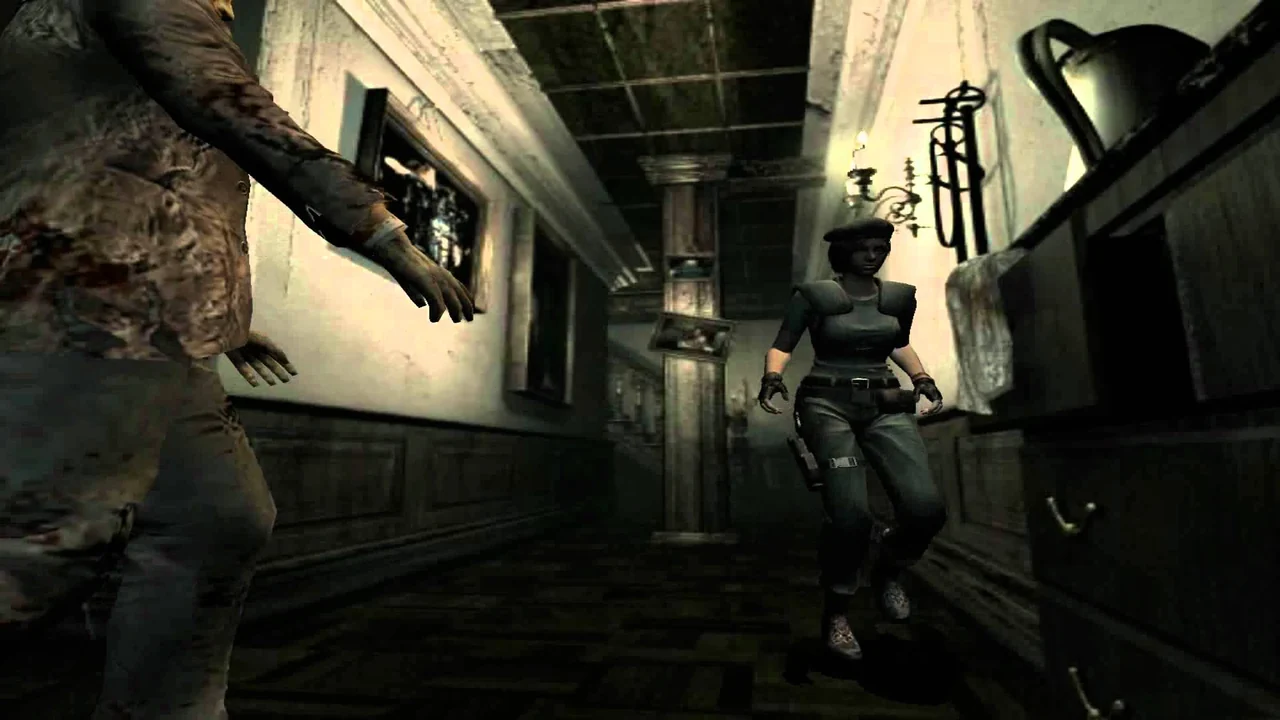
5. Viewtiful Joe
Viewtiful Joe is a side-scrolling action game with a distinctive combat language. Joe punches, kicks, dodges and launches enemies while using VFX powers to manipulate the action around him. Slow motion creates openings, speed changes alter enemy behavior and other abilities turn attacks into timing puzzles. The strongest encounters ask the player to understand not just which button to press, but how the entire scene can be manipulated.
The game’s cinematic presentation supports its mechanics rather than merely decorating them. Enemy formations, hazards and bosses are built around the VFX system, so learning to control time becomes the route to both survival and style. A projectile can become something to evade or redirect, while an enemy attack can be turned into an opportunity when the player changes the speed of the scene.
It feels more authored and demanding than a conventional beat-’em-up, with puzzle logic embedded directly into combat. The player is encouraged to observe enemy behavior, identify openings and use the right VFX ability instead of relying on a single dominant attack.
Its difficulty is the main barrier. Timing mistakes are punished, later situations can feel exhausting and the game expects players to learn enemy behavior rather than simply overpower it. Viewtiful Joe is an excellent choice for action fans who enjoy mastery and spectacle, but a poor choice for anyone seeking a forgiving button-masher.
- Best fit: demanding side-scrolling combat and timing puzzles.
- Main tradeoff: high difficulty and little tolerance for sloppy play.
4. Metroid Prime 2: Echoes
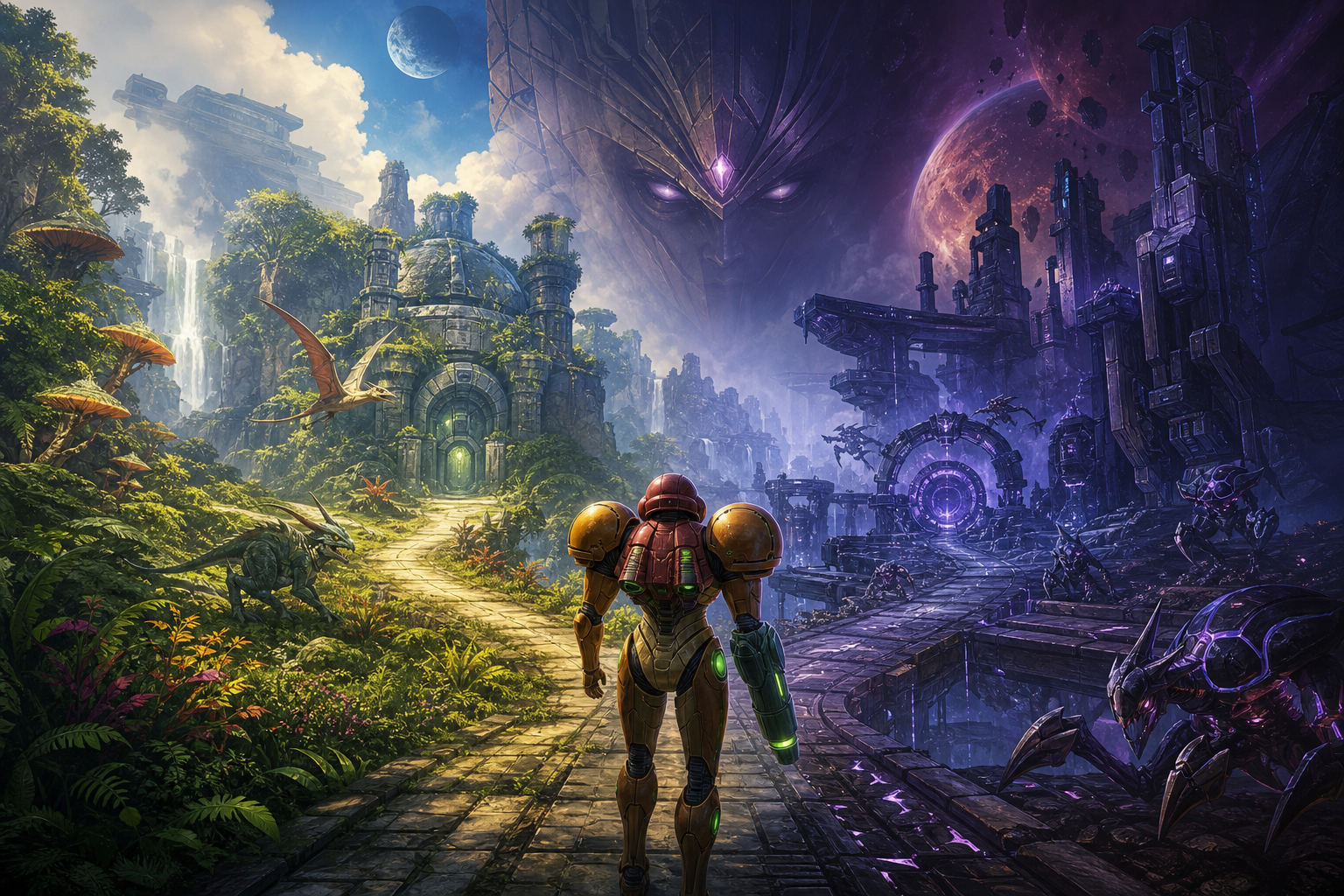
Metroid Prime 2: Echoes retains the first-person exploration and combat foundation of its predecessor while making the world more complicated. The Light and Dark Aether structure creates parallel versions of locations, and new beam types change how Samus approaches enemies, barriers and puzzles. Combat becomes more varied through beam-specific weaknesses and more aggressive encounters.
The game’s strongest quality is the way exploration and combat inform one another. A new ability is rarely just a weapon upgrade; it can reveal routes, alter environmental interactions or change the safest way to handle a room. The dual-world design gives familiar spaces a dangerous second identity and supports a more demanding atmosphere.
Echoes also asks the player to manage resources more carefully. Light and Dark areas impose different pressures, and ammunition for the beams adds another layer to combat decisions. These systems give encounters more texture, but they also make the game less immediately comfortable than the original Prime.
Echoes is not as naturally paced as Prime. Backtracking is denser, resource management can be more intrusive and some progression stretches ask the player to revisit large areas with limited guidance. It is an excellent recommendation for experienced exploration-action players who want more combat pressure and complexity, but a less welcoming first step into the series. The ranking here refers to the original GameCube edition, whose controls differ from later Wii and compilation releases.
- Best fit: demanding exploration, beam-based combat and layered worlds.
- Main tradeoff: heavier backtracking, resource pressure and uneven pacing.
3. The Legend of Zelda: The Wind Waker
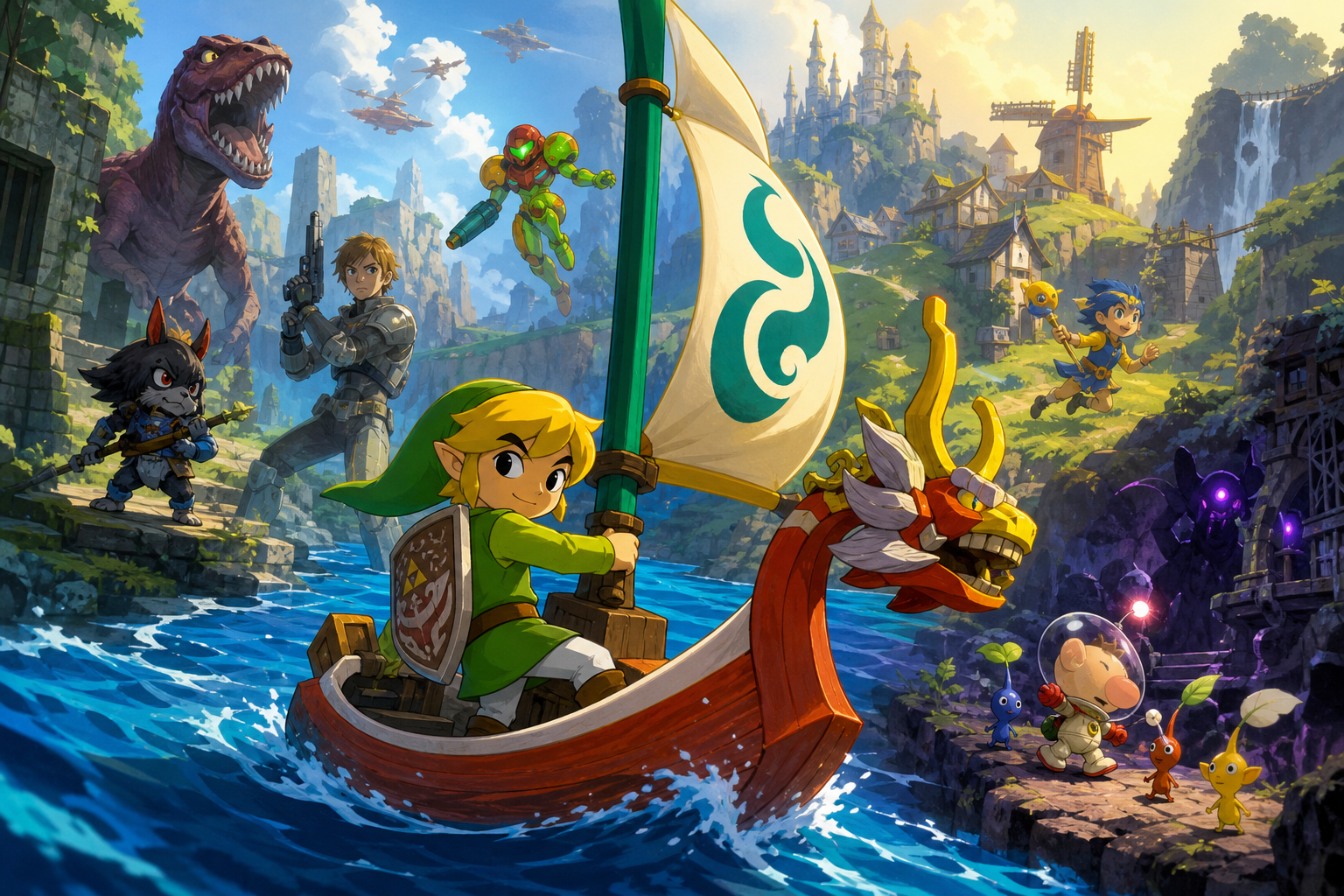
The Wind Waker combines real-time swordplay, shield defense, parries, item-based puzzles and open-sea exploration in one of the GameCube’s most distinctive adventures. Link’s combat is readable and expressive: enemies can be stunned, disarmed or countered, while new equipment expands both his fighting options and his ability to interact with the environment.
The sailing structure gives the game a strong sense of place. Islands, reefs, submarines and discoveries turn travel into an active part of the adventure rather than a simple transition between dungeons. The world is less densely packed than a modern open-world game, but the ocean gives the campaign a clear rhythm of preparation, travel, discovery and return.
Dungeons are compact, visually varied and built around items that change how Link reads the room. The expressive art style also makes enemy animations and environmental clues unusually clear. Combat benefits from the same readability: attack patterns are easy to understand, while counters and directional strikes give experienced players room to play aggressively.
The original GameCube edition has slower sea travel than the later Wii U release, and the late-game collection demands can interrupt the campaign’s momentum. Those issues matter, especially for players who prefer constant dungeon progression. Even so, Wind Waker offers an unusually complete blend of exploration, combat and puzzle-solving, earning its place near the top.
- Best fit: exploration-rich action-adventure and readable swordplay.
- Main tradeoff: long sailing stretches and late-game collection work.
2. Metroid Prime
Metroid Prime translates the exploration, scanning, upgrades and backtracking of earlier Metroid games into a first-person action-adventure without losing the series’ identity. Samus’s visor modes provide more than alternate views: they help identify weaknesses, reveal information and turn the environment into something to investigate. Progress comes from understanding the world as much as from defeating enemies.
The game’s level design is its greatest achievement. Areas connect through recognizable landmarks, upgrades unlock previously inaccessible routes and environmental storytelling fills the world with evidence of what happened there. Combat is built around movement, target selection and beam switching, while boss encounters test whether the player has understood the tools gathered along the way.
Prime’s action is strongest when it makes the player feel like an explorer under pressure. Scanning can reveal context or weaknesses, while visor changes help distinguish environmental clues from threats. The game rarely separates combat, navigation and investigation into isolated modes; each supports the others.
Prime does ask for backtracking, and some later combat encounters repeat ideas that were more surprising earlier. Its map and visual cues reduce the friction, however, and the overall rhythm remains remarkably cohesive. It is the best GameCube choice for players who want action to serve exploration rather than replace it.
- Best fit: first-person exploration, environmental storytelling and upgrade-driven progress.
- Main tradeoff: backtracking and occasional combat repetition.
1. Resident Evil 4
Resident Evil 4 is the strongest overall GameCube action package because nearly every system reinforces pressure and decision-making. Its over-the-shoulder viewpoint makes positioning central: enemies approach from multiple directions, terrain affects movement and every shot represents a choice about distance, target priority and ammunition. Encounters are staged around escalation, forcing the player to adapt instead of repeating one safe tactic.
The weapon economy gives exploration a practical purpose, while enemy reactions make accurate shooting feel more expressive than simply reducing health bars. A shot can stagger an opponent, create space or set up a close-range attack, but ammunition remains valuable enough that indiscriminate firing is not always wise. The player is constantly balancing immediate safety against future resources.
The campaign moves through different environments and encounter types, so its pacing rarely settles into one rhythm for long. Set pieces, boss battles and resource decisions all serve the same forward momentum. The game’s linear structure is a deliberate contrast with the mansion and planet exploration found elsewhere on this list: it prioritizes escalation, spectacle and encounter design over free-form navigation.
Its limitations are meaningful. The structure is more linear than the exploration-focused games above it, and the GameCube release is designed primarily around solo play rather than multiplayer action. Players seeking mansion-style puzzle horror or a large interconnected world should choose another entry. For combat variety, responsiveness, spectacle and sustained action momentum, however, Resident Evil 4 is the clearest winner on Nintendo’s console.
- Best fit: precision shooting, crowd pressure and cinematic solo action.
- Main tradeoff: more linear exploration and no multiplayer campaign.
The best starting point depends on the kind of action you want. Choose Resident Evil 4 for the most consistently forceful combat, Metroid Prime for exploration, Wind Waker for a broader action-adventure blend, the Resident Evil remake for deliberate horror and Super Mario Sunshine for movement-driven platforming. Rogue Leader supplies arcade spectacle, while Viewtiful Joe rewards players who enjoy demanding mastery.
Eternal Darkness is the pick for psychological horror and experimental storytelling, while Luigi’s Mansion offers a more approachable supernatural adventure. Metroid Prime 2: Echoes suits players who want a denser, more demanding exploration game than Prime. Each recommendation has a clear tradeoff, which is why the ranking is better understood as an editorial guide than an objective scorecard.
Together, these games show why the GameCube’s action library is difficult to reduce to one formula. Its strongest releases made action inseparable from exploration, atmosphere, movement, resource decisions or mechanical experimentation. That variety is the real reason the system still offers such a strong set of discoveries.