Super Mario Sunshine is built around movement. Mario’s jumps, the FLUDD water pack and open-ended objectives make traversal itself a major part of the pleasure. That also means the obvious next game is not always another platformer. After spending time with Isle Delfino, you may want an adventure that changes what progress means rather than simply offering another set of jumps and collectibles.
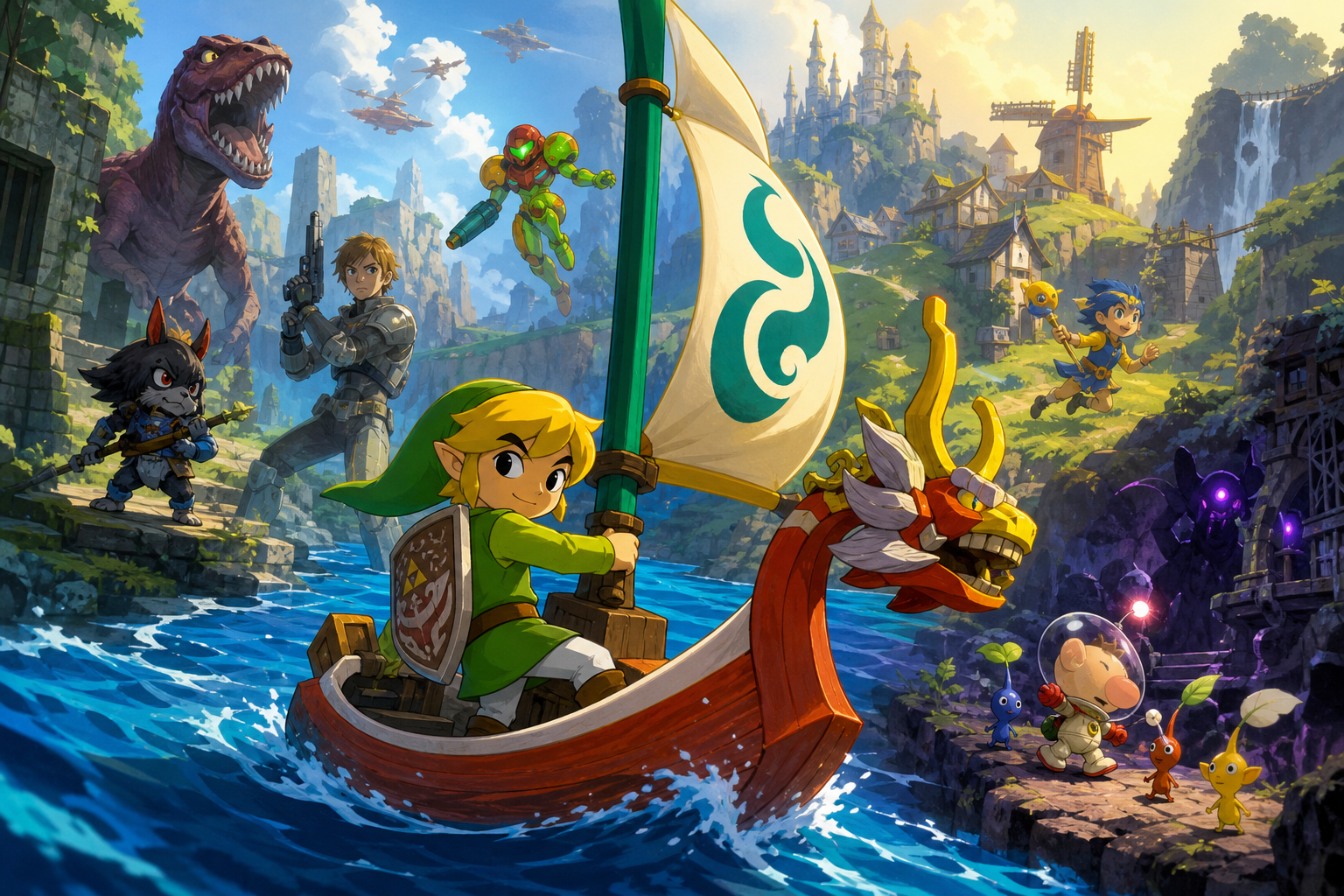
The five games below all appeared on the original Nintendo GameCube, but they do not try to reproduce Sunshine’s movement or structure. Instead, each points toward a different kind of solo play: The Legend of Zelda: The Wind Waker offers a broad journey, Luigi’s Mansion concentrates exploration inside one building, Pikmin turns planning into the main challenge, Metroid Prime makes discovery feel investigative, and Paper Mario: The Thousand-Year Door puts characters and turn-based decisions first.
How these five choices differ from Sunshine
The selection uses four practical criteria. Each game needs a strong identity on the original GameCube, a progression system that is meaningfully different from Sunshine, enough variety to sustain an adventure, and a clear audience recommendation. This is not a ranking of technical quality or a claim that every player will prefer the same title. The order moves from the most character- and system-driven option to the broadest sense of travel.
It also helps to set expectations about the word adventure. In one game, adventure means sailing between islands. In another, it means learning how a room works or deciding which small task deserves attention before the day ends. None of these games is a replacement for FLUDD-based movement, and treating them that way can obscure what makes each one interesting. Choose by the rhythm you want next, not by a shared mascot or publisher.
- Choose The Wind Waker for the largest journey and strongest travel fantasy.
- Choose Luigi’s Mansion for a contained puzzle adventure.
- Choose Pikmin for planning, task assignment and time pressure.
- Choose Metroid Prime for first-person exploration and environmental investigation.
- Choose Paper Mario: The Thousand-Year Door for dialogue, party tactics and turn-based combat.
Paper Mario: The Thousand-Year Door is the character-driven RPG choice
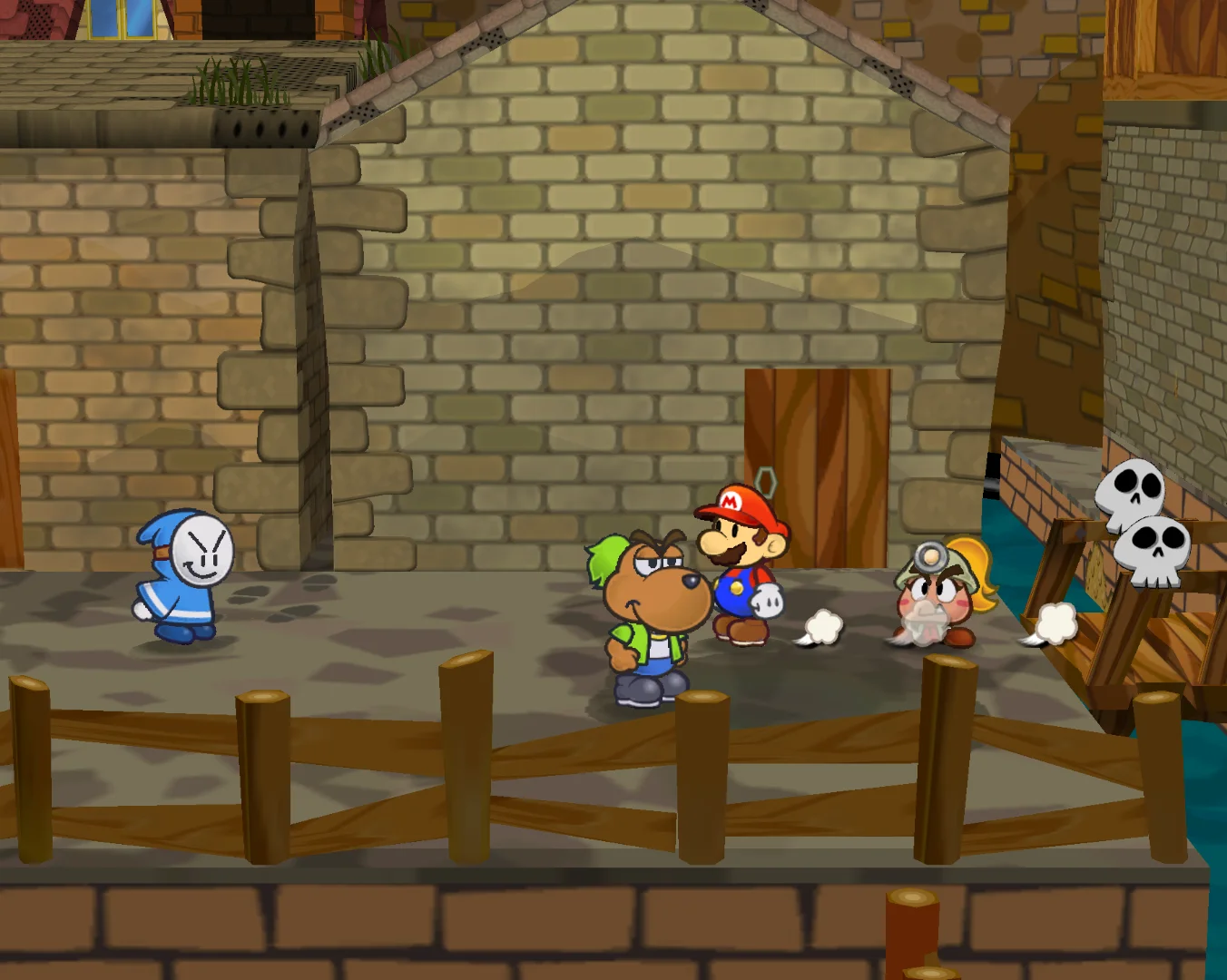
Paper Mario: The Thousand-Year Door is the clearest departure from Sunshine’s real-time movement. Mario travels through structured areas and chapter-based scenarios, but the central decisions happen in conversations, party management and battles. The story follows Mario and his partners as they search for the Crystal Stars and investigate the mystery behind the Thousand-Year Door. That setup gives the journey a strong cast and a sequence of distinct situations rather than a collection of largely independent platforming objectives.
Battles are turn-based, yet they are not passive menu exercises. Attacks and defenses use timed inputs, so attention still matters even when the action is presented on a stage before an audience. Mario can use badges to add or modify abilities, while partners bring their own attacks and situational strengths. Switching partners and choosing attacks gives each encounter a small tactical puzzle, especially when an enemy resists a familiar approach.
This is the best pick if what you liked about Sunshine was its colorful world and personality, but you are ready for more dialogue and deliberate progression. It trades athletic control for planning, character interaction and resource choices. Players seeking immediate movement may find the opening slower, while readers who enjoy chapter structure, expressive companions and combat experimentation will find a much richer alternative to another platforming campaign.
The original GameCube edition is the version covered here. Later releases add presentation and convenience changes, so players comparing versions should not assume that advice about the newer edition describes the GameCube experience.
- Look for a dialogue-heavy adventure with a defined cast and chapter progression.
- Expect turn-based battles rather than continuous real-time action.
- Use badges and partner abilities as part of your decisions instead of relying on one attack.
- Pick this first if story, humor and party choices matter more than free-form traversal.
Luigi’s Mansion is the focused haunted-house adventure
Luigi’s Mansion narrows the scale dramatically. Rather than crossing a large overworld, Luigi explores a haunted mansion whose rooms gradually become understandable through keys, equipment, ghost encounters and environmental puzzles. Nintendo’s original GameCube material describes more than 55 explorable rooms, but the important distinction is how those rooms fit together: the mansion is one central setting, not a sequence of wide outdoor zones.
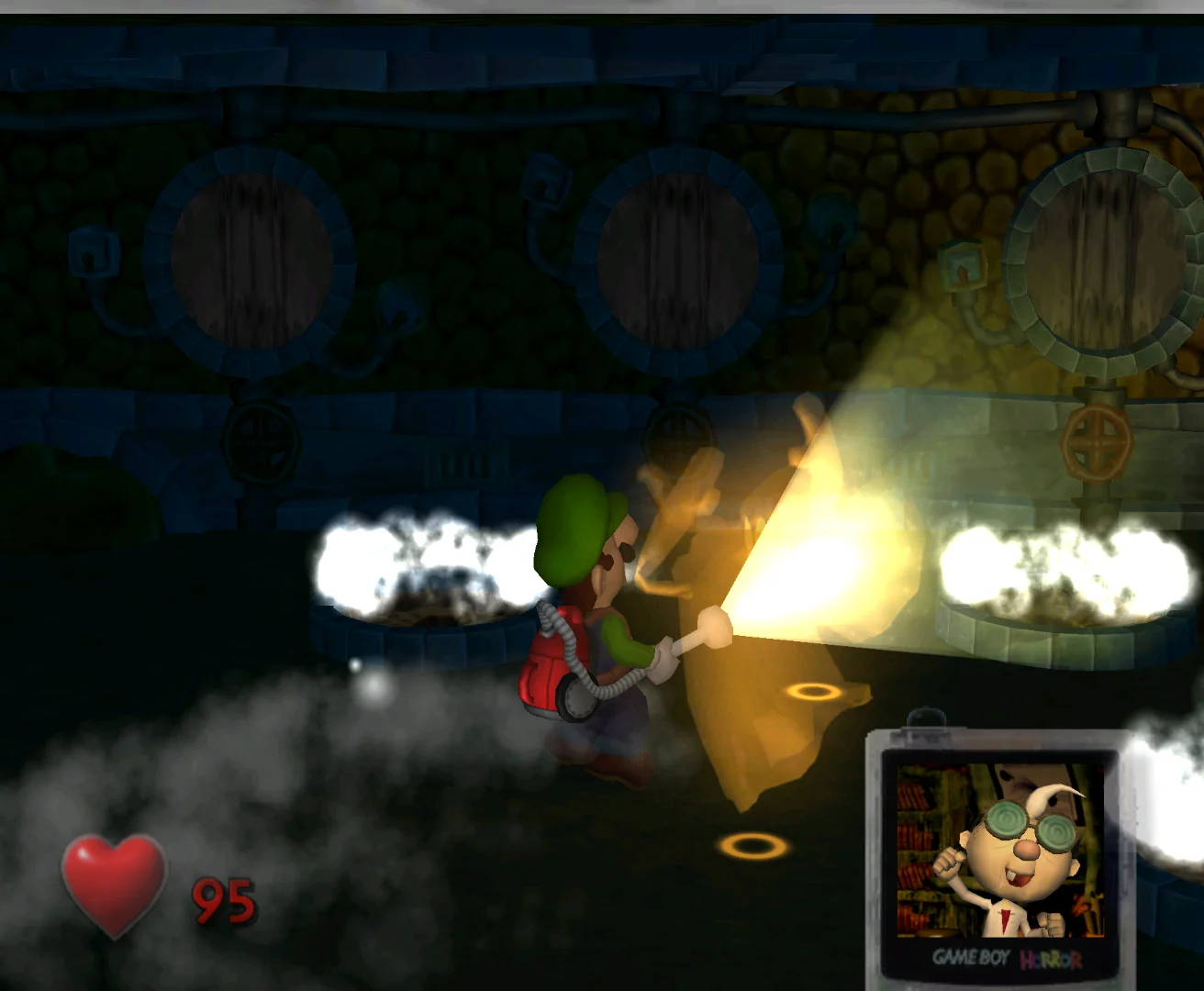
The Game Boy Horror serves as an in-game information tool, including functions such as displaying the mansion map and tracking collected items. Luigi’s ghost-hunting equipment also gives ordinary objects a mechanical purpose. Furniture, doors, lights and hidden spaces invite inspection, while ghosts turn observation and positioning into part of the challenge. The result is an adventure about reading a room and figuring out what kind of interaction it expects.
This is a good choice when Sunshine’s open-ended objectives feel too diffuse and you want a more directed route. Luigi’s Mansion is not an open-world game and should not be approached as one. Its compact setting creates a satisfying loop of entering a new area, solving a local problem, confronting a ghost and gaining access to another part of the building. The tradeoff is less freedom and less emphasis on athletic movement, but the focused structure makes it easy to understand what kind of progress the game wants from you.
Luigi’s Mansion is also a useful pick for players who want an adventure with a clear identity but do not want to commit immediately to a large map or a long series of sprawling regions. Its concentrated setting gives the game a distinctive rhythm: investigate, interact, deal with a ghost and reassess the mansion as new routes open.
- Choose this when a single memorable setting sounds better than a large overworld.
- Expect room-based puzzles, ghost encounters and equipment-based interaction.
- Use the map and collected-item information to maintain your sense of direction.
- Do not expect a conventional platformer or a broad travel story.
Pikmin turns exploration into small-scale strategy
Pikmin changes the question from “Can I reach that platform?” to “Which jobs should happen first?” Captain Olimar is stranded on an unfamiliar planet and must search for the scattered parts of his spacecraft. To make progress, he grows Pikmin from sprouts, gathers them into groups and assigns them to carry objects, build bridges, break barriers and fight creatures. Olimar moves independently while the Pikmin perform the work, creating a constant relationship between personal movement and delegated action.
The original GameCube game introduces red, yellow and blue Pikmin with different practical strengths. Their abilities affect which hazards they can handle and which obstacles they can overcome. Red Pikmin are suited to fire-related hazards and combat, blue Pikmin can operate in water, and yellow Pikmin are useful for elevated throws and electrical challenges in the situations where those abilities apply. That makes group composition important, but it also makes route planning important: the nearest task is not always the most useful one, and taking too many Pikmin away from one job can delay another.
Daily time pressure gives the game its particular tension. A day is a planning window, so you must decide what can realistically be accomplished before returning to safety. Pikmin can be lost to hazards or enemies, and recovering from a poor decision is part of the game’s strategic texture. This is not a consequence-free gardening activity. Choose Pikmin if you enjoy balancing priorities, learning a landscape and improving a route after seeing where your first plan went wrong.
The tradeoff is that players expecting constant movement or a relaxed collecting loop may find the deadlines demanding. Players who like making plans, splitting groups and gradually turning an unfamiliar environment into a workable route will find one of the most distinctive adventures on the system. Pikmin offers a different kind of control from Sunshine: you are still moving through a physical world, but your most important decisions concern timing, delegation and risk.
The original GameCube Pikmin is a solo strategy adventure in this list, not a multiplayer substitute for Sunshine. Its appeal comes from deciding what Olimar and his small workforce can accomplish during each limited field excursion.
- Choose Pikmin if task order and route planning sound more appealing than precision jumping.
- Learn the practical roles of red, yellow and blue Pikmin as situations require.
- Treat each day as a planning window rather than trying to solve every problem at once.
- Expect losses and imperfect plans to be part of the strategy, not a sign that the game is only about relaxation.

Metroid Prime makes discovery feel like investigation
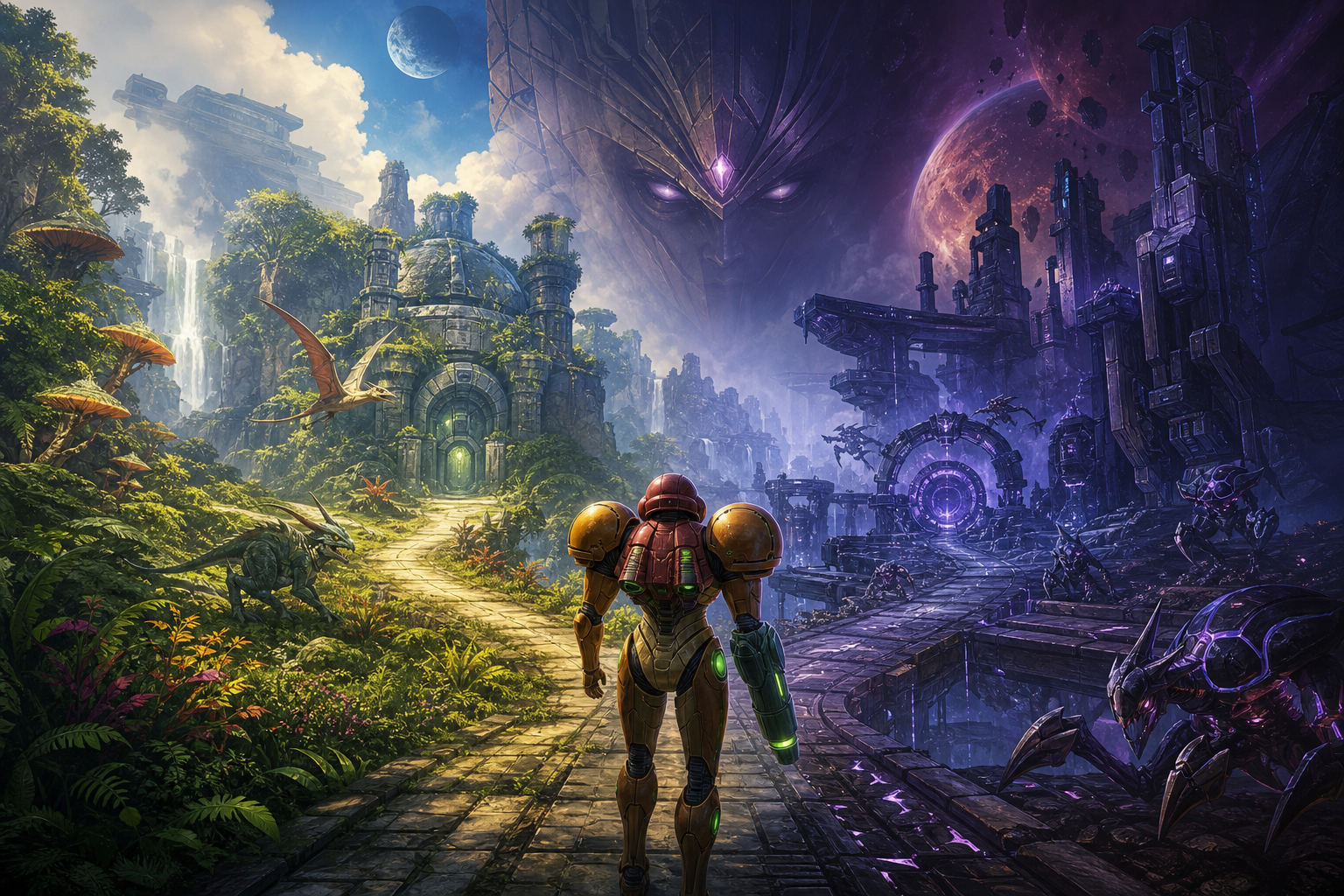
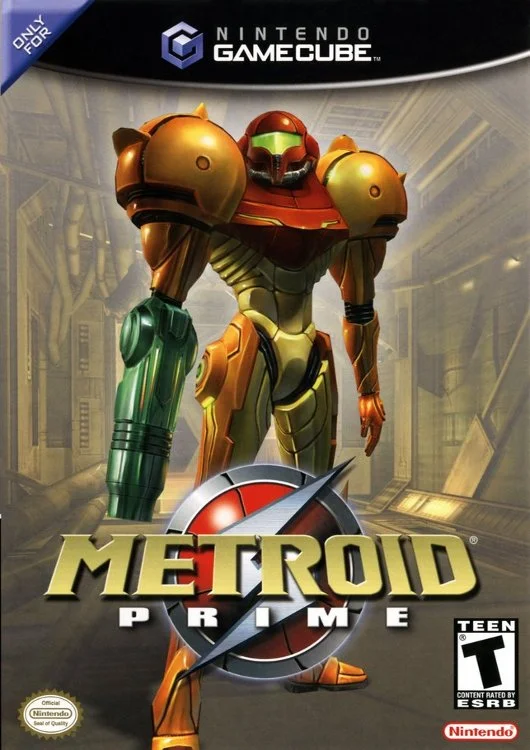
Metroid Prime places Samus on the planet Tallon IV and presents the adventure from a first-person perspective. That viewpoint can make it look like a straightforward shooter, but combat is only one part of the structure. Progress depends on scanning the environment, solving spatial problems, finding beam and suit upgrades, using different visor modes and returning to locations that become accessible after Samus gains a new ability.
Scanning gives observation a direct mechanical role. Objects, creatures and environmental details can provide information about the world, while the visor systems help distinguish what deserves attention. Morph Ball exploration adds another layer by changing how Samus fits through spaces and approaches routes. The game therefore rewards curiosity and memory as much as aiming. A blocked passage is often a question to revisit later rather than an obstacle to force immediately.
Metroid Prime suits a Sunshine player who wants exploration without another platforming playground. Its movement is more purposeful and its world is more interconnected. Backtracking can be rewarding when a new ability changes the meaning of an earlier room, but it can also frustrate players who prefer a strictly forward route. The atmosphere is more solitary and investigative than Sunshine’s bright vacation setting, and the first-person presentation creates a stronger sense of examining a place from inside it.
Choose this when you want the next adventure to ask you to notice details, map relationships between areas and use new abilities as keys to older spaces. It is the strongest option here for someone who wants discovery to feel like research rather than sightseeing. The GameCube version also has its own control and presentation context, so later versions should not be treated as interchangeable when discussing how the original plays.
Metroid Prime is therefore a good bridge for someone who wants more action than Paper Mario or Luigi’s Mansion, but who also wants exploration to matter as much as combat. It changes the camera, the pace and the meaning of progress without abandoning the pleasure of finding a new ability and seeing where it leads.
- Choose Metroid Prime for first-person exploration rather than a pure action game.
- Scan environments and creatures because observation supports both world-building and progression.
- Expect ability-based returns to earlier areas and some deliberate backtracking.
- Pick another game if you strongly prefer a linear route with little revisiting.
The Wind Waker offers the broadest sense of travel
The Legend of Zelda: The Wind Waker is the natural choice for a player who wants a large journey but not another platforming course. Link crosses the Great Sea to rescue his sister, sailing between islands that lead to characters, combat, dungeons and smaller discoveries. The sea gives the adventure a strong feeling of distance: the act of going somewhere is part of the experience, not merely a transition between missions.
The Wind Waker baton lets Link control the direction of the wind while sailing. That tool makes travel an active part of the game’s identity and connects navigation to the world’s systems. Islands provide variety without turning the adventure into a checklist of identical stages. Some spaces emphasize combat, others conversation, puzzles or dungeon exploration. The cel-shaded presentation also gives the journey a distinctive visual language that separates it from Sunshine’s tropical setting and movement-focused comedy.
This is the best match for someone who wants the most expansive change of pace. The game still has responsive action and familiar adventure ingredients, but its progression is built around travel, equipment, dungeons and a growing relationship with the wider world. The tradeoff is that sailing creates stretches of movement between destinations, and players who want a tightly compressed adventure may prefer Luigi’s Mansion or Paper Mario.
The recommendation refers specifically to the original Nintendo GameCube release. Wind Waker HD is a separate version with its own presentation and convenience changes, so advice about that edition should not be assumed to describe the GameCube game. For the original system, choose The Wind Waker when your ideal next game is a journey with a horizon rather than another movement challenge.
Among these five choices, The Wind Waker comes closest to matching Sunshine’s sense of a major console adventure while changing the reason you move through the world. The focus shifts from mastering FLUDD-assisted traversal and collecting Shine Sprites to sailing, solving dungeons, meeting characters and deciding which part of the Great Sea deserves attention next.
- Choose The Wind Waker when travel, islands and a broad adventure matter most.
- Expect sailing, wind control, characters, combat and dungeons to share the same journey.
- Allow the world’s travel rhythm to be part of the experience instead of treating every sea crossing as wasted time.
- Confirm that you want the original GameCube release rather than applying expectations from Wind Waker HD.
A quick decision guide for your next GameCube game
The easiest way to choose is to identify what you want to replace. If Sunshine’s movement was your favorite part and you want another broad, active adventure, The Wind Waker offers the closest sense of a major journey without repeating the same platforming formula. If Sunshine felt too sprawling, Luigi’s Mansion gives you one concentrated location and a clearer chain of local problems.
If you want the game to test your planning, pick Pikmin. Its challenge comes from distributing attention, choosing priorities and adapting when a route takes longer than expected. If you want to investigate a world through abilities and environmental clues, choose Metroid Prime. Its first-person viewpoint is only the surface; the deeper appeal is how scanning, upgrades and return visits reveal Tallon IV.
Finally, choose Paper Mario: The Thousand-Year Door if you want the strongest emphasis on characters, dialogue and party-based decisions. Its timed battle inputs preserve a sense of participation, but the overall pace is more deliberate than Sunshine’s. These are not interchangeable recommendations. Each one changes the question the game asks you to answer.
The Wind Waker is the broadest choice, but it is not automatically the correct first pick. A player who dislikes sailing between destinations may be happier in Luigi’s Mansion. Someone who enjoys planning under pressure may prefer Pikmin even though its world is smaller. A reader who wants a new kind of combat may find Paper Mario more appealing than any real-time option. The useful decision is not which game is universally best; it is which form of progress sounds most inviting.
- Largest journey: The Legend of Zelda: The Wind Waker.
- Most focused setting: Luigi’s Mansion.
- Most planning and time pressure: Pikmin.
- Most investigative exploration: Metroid Prime.
- Most character-driven RPG play: Paper Mario: The Thousand-Year Door.
Keep the original GameCube editions straight
Edition matters when comparing older Nintendo games. This list is limited to the original Nintendo GameCube releases of all five titles. That means The Wind Waker here is not Wind Waker HD, Metroid Prime here is not a later control revision, and Paper Mario: The Thousand-Year Door is not the later remake. Later versions may change presentation, controls, content or convenience features, so a guide or recommendation written for another edition can create incorrect expectations.
The same principle applies to Luigi’s Mansion and Pikmin. Later entries and rereleases may have different systems, layouts or control approaches, but they do not replace the identity of the original GameCube games. If you are choosing from an existing library, check the platform and edition before relying on screenshots, manuals or walkthroughs. That small check is especially useful for Wind Waker, where the later HD version is often discussed more readily than the original.
This article also avoids turning edition differences into a buying guide. It does not make claims about current prices, availability, disc condition or the best hardware setup. Those are separate questions. The useful comparison here is about what each original GameCube game asks you to do: travel, investigate, plan, solve or manage a party.
Whether you play on original hardware or a legitimate compatible setup, the selection remains the same. Start with the game whose rhythm sounds right, then confirm that the copy, manual or guide you are using matches the original GameCube edition. That is more reliable than assuming a later remake or remaster preserves every detail.
- Verify that the copy or guide refers to the original Nintendo GameCube release.
- Do not transfer Wind Waker HD features to the GameCube version.
- Do not treat later Pikmin, Metroid Prime or Paper Mario releases as evidence for the original editions.
- Choose by gameplay rhythm first, then consider your preferred hardware setup.
Super Mario Sunshine does not need to be followed by another platformer to keep the GameCube adventure going. The Wind Waker broadens the horizon, Luigi’s Mansion concentrates the action, Pikmin makes planning central, Metroid Prime turns exploration into investigation and Paper Mario: The Thousand-Year Door makes characters and turn-based choices the focus.
For the simplest first pick, choose The Wind Waker if you want the largest change in scenery and scale. Choose Luigi’s Mansion for a compact, more directed mood, or Pikmin if you would rather plan a day than master another jump. Metroid Prime is the choice for environmental discovery, while Paper Mario is best when dialogue and party decisions sound more appealing than real-time traversal.
The best follow-up is the one that changes the kind of play you want from the console. These five games share a platform and a broad sense of adventure, but their routes to progress are deliberately different.