Metroid Prime and Metroid Prime 2: Echoes are built on the same broad idea: explore a connected world, gain new abilities and use those abilities to understand places that once seemed incomplete. The difference is how much pressure each game places on that process. Prime asks you to learn one alien planet. Echoes asks you to learn two related versions of a world while managing threats that can make movement itself dangerous.
For a first-time player choosing between the original GameCube editions, Metroid Prime is the safer starting point. Its map, scanning tools, single-world structure and ability-gated progression provide a cleaner lesson in 3D Metroid exploration. Echoes is the better choice for someone who already enjoys revisiting spaces, comparing alternate routes and treating navigation friction as part of the atmosphere.
The decision in one sentence
Choose Metroid Prime if you want the more direct introduction to 3D exploration: one interconnected planet, readable equipment gates and a map that gradually becomes a record of your growing understanding. Choose Metroid Prime 2: Echoes if you want navigation to involve parallel geography, environmental danger, ammunition decisions and more frequent checks of whether you are in the correct version of a room.
That recommendation is about fit rather than quality. Prime is not free of confusing backtracking, and Echoes is not simply an inferior version of the same formula. They emphasize different kinds of learning. Prime makes you remember landmarks and recognize newly usable paths. Echoes adds the need to remember how those paths change between Light Aether and Dark Aether. Players who enjoy systems and route management may find Echoes more rewarding precisely where a newcomer finds it demanding.
- Start with Prime for a cleaner first lesson in 3D Metroid navigation.
- Choose Echoes first if parallel spaces and extra route friction sound appealing.
- Do not treat this as an objective easy-versus-hard ranking.
How Prime teaches you Tallon IV
Metroid Prime organizes its exploration around Tallon IV, a planet divided into distinct regions that connect into a larger expedition. Each area has its own visual and environmental identity, but the important design feature is that these places are not isolated stages. A door, ledge, tunnel or submerged passage can remain meaningful after you leave it because a later ability may change what that obstacle means.
The original manual tells players to remember areas where they cannot progress and return after gaining new abilities. That instruction captures Prime’s basic exploration language. A blocked route is not necessarily a dead end; it is a note for your future self. The game expects you to build a mental picture of the planet while moving through it, rather than treating every room as disposable scenery.
This makes Prime especially welcoming to players who like gradual revelation. You learn the shape of regions through repeated visits, but those visits usually have a clear reason: a new beam, suit function, visor or movement ability opens a possibility you could not act on earlier. The challenge is recognizing which old possibility matters now, not managing several overlapping versions of the same location.
Prime’s world also benefits from being a single geographical system. Its regions can feel distinct without becoming separate campaigns. Once you understand that a particular room connects to a larger route, returning there is an act of orientation rather than a complete reset. The game asks you to become familiar with one planet’s structure over time.
- Remember inaccessible ledges, doors and environmental obstacles.
- Use landmarks to connect regions rather than memorizing every room equally.
- Expect earlier spaces to become useful again after equipment upgrades.
What Prime’s map and scan systems contribute
Prime’s map is more than a diagram of visited rooms, although its usefulness depends on how much of a region has been revealed. Before a map station fills in the larger area, the display mainly shows rooms Samus has already explored. Afterward, explored rooms and not-yet-explored rooms are visually distinct, while colored exits indicate the beam weapon associated with a door. That gives the map a practical role in route planning without eliminating the need to remember ability-gated obstacles that are not represented by a simple colored door.
Scanning adds another layer to the exploration language. The Scan Visor can provide information about the environment, enemies, mechanisms and objects, and scanning contributes to the Log Book. In Prime, observation is therefore connected to both atmosphere and problem-solving. A player who pauses to inspect a room may discover a clue that makes a route or encounter more understandable.
The visor system also teaches players to look at familiar spaces differently. Combat, Scan, Thermal and X-Ray functions reveal different information, including enemies, weak points, hidden passages or objects that normal vision does not show clearly. Prime’s strongest navigational moments often come from realizing that the obstacle is not simply locked; it is being presented through the wrong sensory tool.
For newcomers, this structure is forgiving because the systems reinforce one another. The map records geography, scanning supplies context and visors change what can be perceived. You still need curiosity, but the game gives that curiosity several useful outlets instead of making route-finding depend on one trick.
This is also where Prime’s first-person format becomes part of its exploration language. The visor is not only a combat interface. It is a way to inspect a room, distinguish environmental information and decide whether a suspicious surface deserves another look. The result is a game that rewards attention without requiring every clue to be written down.
- Use map stations and the map display to understand the shape of a region.
- Remember that colored map exits primarily identify beam-based door requirements.
- Scan suspicious objects, mechanisms and unfamiliar enemies.
- Consider whether another visor reveals information hidden by the normal view.
How Echoes changes the navigation question
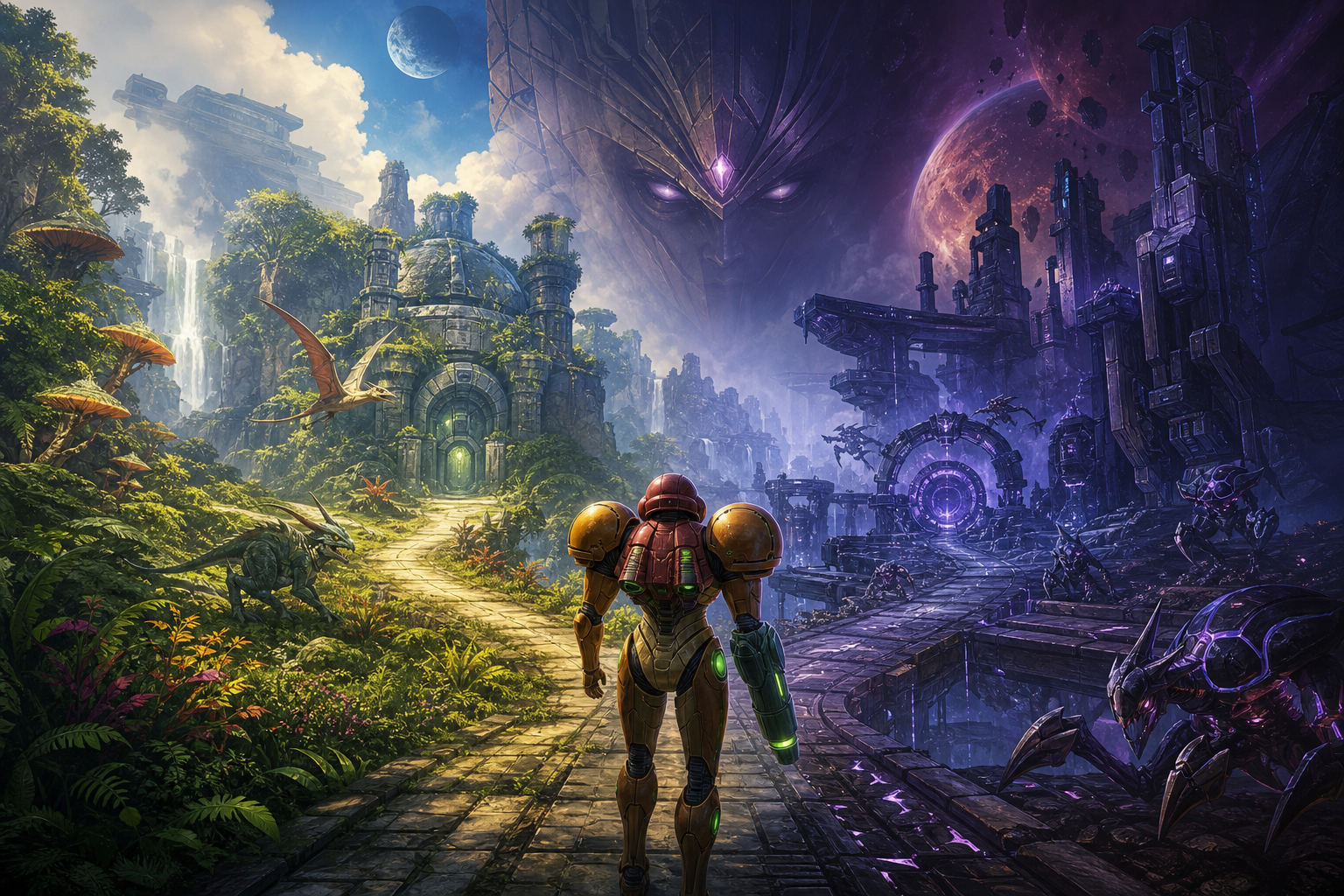
Echoes places its exploration across Light Aether and Dark Aether. These dimensions share broad geographic relationships, but they are not merely two color treatments of the same map. Rooms can contain different structures, creatures, hazards and usable objects depending on which version of the world you occupy. The question changes from “Where have I been?” to “Which version of this place contains the route I need?”
That distinction creates a denser kind of map learning. In Prime, returning to an old room usually means checking whether a new ability changes its possibilities. In Echoes, you may also need to remember the corresponding room in the other dimension, understand how to move between them and identify whether the destination is safe to remain in. The world becomes a set of relationships rather than one continuous surface.
Echoes lets you switch between the Light Aether and Dark Aether views on its map screen, but that does not turn the two spaces into one perfectly transparent diagram. You still have to interpret how the paired versions relate to one another and which dimensional transition is useful. The map can support the process, but it cannot replace your understanding of the route.
Echoes also asks you to pay attention to transitions. A portal or dimensional connection is not just a shortcut between two rooms. It can determine whether a route is viable, whether an objective is accessible and how much danger you face on the way. This makes the map feel more layered, but it can also make a missed connection harder to diagnose.
Players who enjoy comparing states of a space may find this structure fascinating. Players who prefer a straightforward chain of newly opened routes may find it less natural at first. Echoes rewards careful route notes and landmark memory, especially when two versions of a location share enough visual identity to invite mistakes.
- Remember both the location and the dimension associated with a route.
- Treat Light Aether and Dark Aether as materially different spaces.
- Use landmarks that remain recognizable across dimensional transitions.
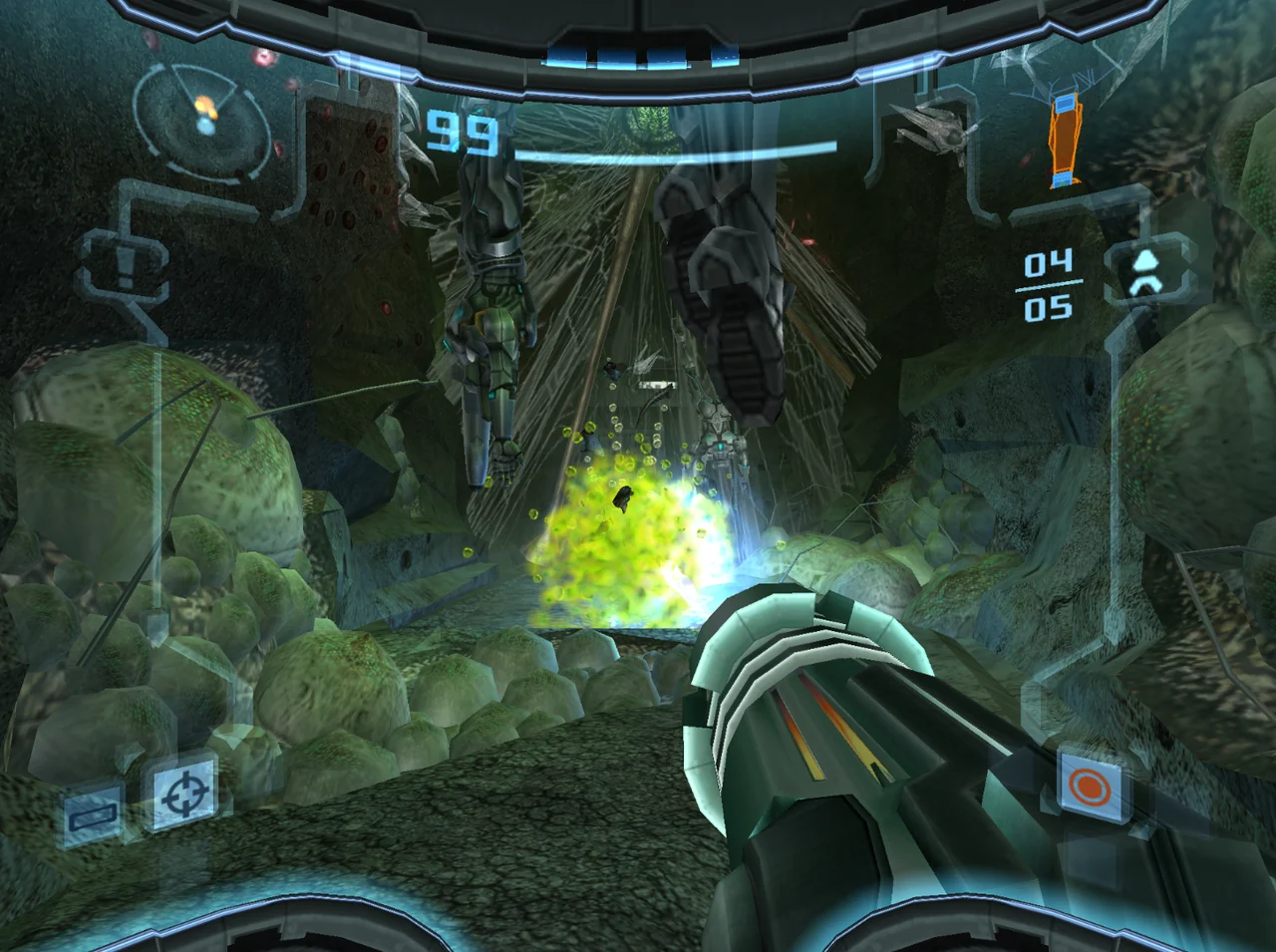
Backtracking: ability gates versus layered returns
Both games rely on backtracking, and neither should be described as a linear corridor from one objective to the next. The meaningful difference is what backtracking asks you to remember. Prime’s return trips are primarily ability-based. You recall a blocked door, high platform, hazardous passage or environmental feature, then test whether new equipment makes it relevant.
That form of backtracking can still become opaque. Prime may open several earlier possibilities at once, and the map cannot tell you which one is the most useful or interesting. If you do not remember why a particular room caught your attention, a return trip can turn into methodical checking. The friction is spatial and mnemonic: learn the planet well enough to notice what has changed.
Echoes combines that same ability-gated structure with dimensional switching, environmental damage and ammunition considerations. A route can be technically available but unattractive if it requires a long passage through danger or leaves you poorly prepared for an encounter. The game therefore makes the cost of a return trip more noticeable.
The two games also differ in how they make revisited spaces feel. Prime’s return trips often resemble an expedition revisiting a known location with better equipment. Echoes can make the same act feel like a logistical problem: which dimension, which route, which safe zone and which resources are involved? That extra work is not automatically better, but it gives the sequel a more deliberate sense of pressure.
This is why Prime usually makes the better introduction. It teaches the core pleasure of returning with new capabilities before adding the complication of a parallel world. Echoes is more suitable when you already know whether you enjoy that pleasure, because it asks you to perform it under additional conditions.
- In Prime, keep track of obstacles that require equipment you do not yet have.
- In Echoes, record the dimension as well as the room or landmark.
- Do not assume every newly available route must be pursued immediately.
Atmosphere through geography
Prime’s atmosphere grows from the contrast between regions on one planet. Ruins, water, fire, ice, abandoned facilities and contamination feel like parts of one ecological and historical expedition. Moving between them gives the world a sense of breadth without abandoning its central geography. The player gradually understands Tallon IV as a place with connected environments rather than a menu of themed levels.
That structure supports a calm form of discovery. Even when a room is dangerous, it belongs to a larger landscape that you are learning over time. Revisiting a familiar route can feel like returning to a known part of an expedition, especially when new equipment changes how you read the surroundings.
Echoes uses a more oppressive contrast. Light Aether is a damaged world, while Dark Aether introduces a hostile counterpart whose atmosphere and altered spaces make the setting itself a continuing threat. Dark Aether’s atmosphere damages Samus outside protected safe zones, so movement through that dimension is also a question of shelter and timing.
The result is a different relationship with movement. Prime often makes navigation feel like investigation. Echoes more often makes navigation feel like exposure: you are not only asking where the next route is, but how to cross it without wasting time, health or resources. If you want the environment to create pressure even between fights, Echoes has the stronger argument.
This contrast also changes the emotional rhythm of exploration. Prime can make a return visit feel reassuring because a formerly difficult route has become familiar. Echoes can make familiarity less comforting because the alternate world remains dangerous even after you understand its layout. The sequel’s map is therefore not just more complicated; it is more hostile to passive movement.
- Choose Prime for an exploratory atmosphere built around one connected ecosystem.
- Choose Echoes for a more oppressive mood where the environment affects route planning.
- Treat safe zones in Dark Aether as part of navigation, not merely scenery.
Prime’s combat friction supports exploration
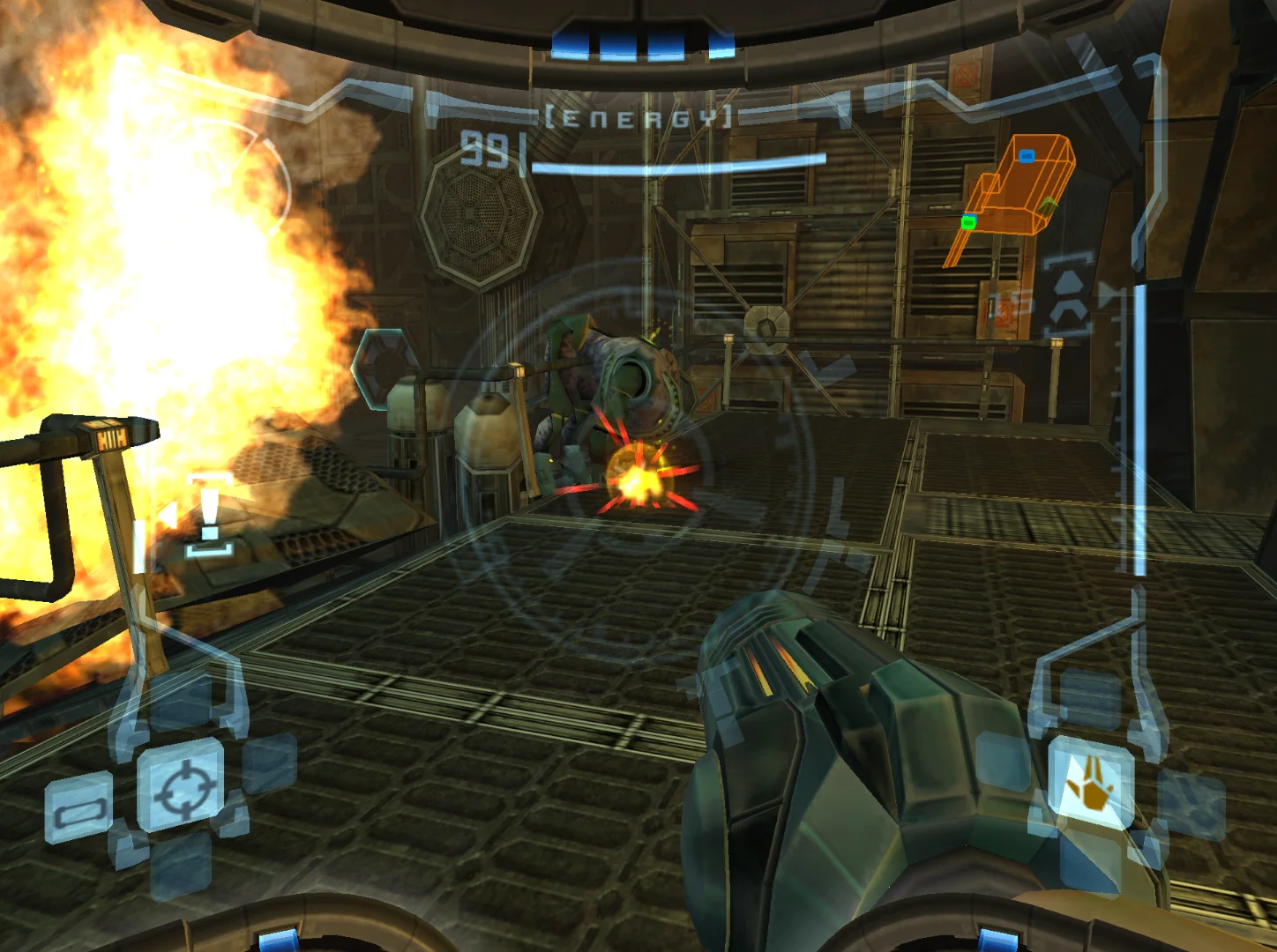
Prime’s combat is built around lock-on movement, beam selection and visor use. The original GameCube controls separate movement, aiming, beam selection and visor selection: the Control Stick moves Samus; holding the R Button allows aiming with that stick; the C Stick selects beams; the directional pad selects visors; the L Button handles lock-on; and the Z Button opens the map. This control philosophy gives encounters a distinct rhythm from conventional dual-stick shooters.
Beam types have different advantages, and some enemies respond more effectively to particular equipment. That means combat reinforces the same observational habit used during exploration. You are encouraged to notice what an opponent is doing, select an appropriate tool and use movement around a locked target rather than treating every encounter as a test of raw aiming speed.
The visor system also affects combat. Thermal and X-Ray functions can reveal enemies or weak points that are difficult to identify through the standard view. This can make a fight feel like a perception puzzle connected to the world’s broader scanning language.
Prime’s friction is therefore mostly about recognition and execution. You need to identify the right beam or visor and then operate within the GameCube control scheme. For a new player, that is a meaningful learning curve, but it remains closely tied to the game’s central exploration lesson: observe the environment, interpret its signals and use the tool that fits.
The GameCube layout is worth emphasizing because it affects how Prime feels as a first-person adventure. Samus does not use the modern arrangement of one stick for movement and another for continuous camera control. Lock-on handles much of the combat tracking, while aiming and looking are separate actions. That can feel deliberate and readable once understood, but it is part of the original edition’s control friction.
- Learn the separation between lock-on movement, beam choice and visor choice.
- Remember that aiming uses the R Button together with the Control Stick.
- Treat enemy behavior as information rather than only an attack pattern.
- Use alternate visors when a target or weak point is difficult to perceive.
Echoes adds resource pressure to familiar combat
Echoes retains Prime’s lock-on foundation, including the ability to circle-strafe around a locked target, but it adds more decisions to encounters. Its Dark, Light and later Annihilator Beam weapons use limited ammunition, and weapon choice can matter because enemies, doors or environmental interactions may favor one type. This does not mean every fight produces constant scarcity, and it would be misleading to describe the system as a fixed starvation mechanic. Its main effect is to make ammunition awareness part of ordinary play.
The extra beam types also connect combat to navigation. You may be thinking about whether a weapon is effective against a threat, whether ammunition should be conserved and whether a particular door or interaction expects a specific beam. The result is more friction layered onto the same basic controls.
Echoes’s additional visor functions extend that pattern. The Dark Visor helps reveal interdimensional objects or cloaked enemies, while the Echo Visor presents information through sound and can identify targets or mechanisms that are not obvious through ordinary vision. As in Prime, the correct answer is sometimes a different way of perceiving the room.
The ammunition system is best understood as decision pressure rather than a claim that the game constantly leaves you helpless. Beam ammunition can be replenished, and the weapons are designed to have specific uses. Even so, the player has more to track than in Prime. A combat choice can affect a later interaction, and an environmental hazard may make an inefficient route more costly.
This makes Echoes feel more demanding without proving that it is universally harder. A player comfortable with resource management may find the added decisions engaging. Another player may experience them as interruptions to exploration, especially when an otherwise simple encounter becomes a question of ammunition and dimension-specific threats.
- Track Light, Dark and Annihilator Beam ammunition without assuming every shot must be conserved.
- Expect visor choice and weapon choice to overlap with route discovery.
- Choose Echoes if combat decisions added to navigation sound satisfying rather than distracting.
Which game rewards your kind of map learning?
Prime rewards landmark memory, map reading and curiosity about blocked paths. You learn the planet by noticing relationships: this room connects to that region, this obstacle resembles one seen earlier, and this new ability changes the meaning of a familiar route. The game is a good fit for players who like to form a mental picture gradually and prefer their backtracking to have a clear equipment-based explanation.
Echoes rewards all of those skills while adding state tracking. You must remember not only a landmark but also the world state attached to it. Safe zones, dimensional transitions, altered room contents and ammunition reserves become part of the route. A small note such as “return later” is less useful than “return later in the other dimension after the relevant equipment is available.”
Neither game requires you to maintain a perfect written map. However, players who become frustrated by forgetting why a room mattered can benefit from simple notes. Record a landmark, the apparent obstacle and any important dimension or visor clue. Avoid writing a full walkthrough for yourself; the goal is to preserve your own discoveries, not replace them with instructions.
The practical distinction is cognitive load. Prime asks you to learn the vocabulary of three-dimensional Metroid exploration. Echoes asks you to speak that vocabulary while switching between two related maps and managing additional hazards. That is why Prime is usually the better first lesson, while Echoes is the stronger test for players who want the map itself to push back.
There is also a difference in the kind of mistake each game produces. In Prime, you may forget where an ability-gated opening was located or misread which earlier obstacle is now relevant. In Echoes, you can remember the place correctly but still choose the wrong dimension, overlook the safe route or arrive without the resource needed for the interaction. Those are different forms of confusion, and your tolerance for them should guide the choice.
- Use short notes for memorable obstacles rather than documenting every room.
- In Echoes, include the dimension and nearby safe-zone information.
- Choose based on the type of memory challenge you enjoy.
Difficulty without a false verdict
Echoes is often described as the more difficult GameCube adventure, but that label compresses several different experiences into one verdict. Its environmental damage, parallel geography, beam ammunition and dimension-specific threats can make progress feel heavier. Those systems overlap, so a player may struggle with Echoes even when the basic lock-on controls feel familiar.
Prime has its own barriers. Its map can leave several possibilities open at once, and its later returns depend on remembering details from earlier exploration. Some players find that kind of route-finding more frustrating than managing limited ammunition. Others find Prime’s single-world structure easier to internalize and therefore experience the same backtracking as satisfying rather than opaque.
The most useful comparison is not “easy” against “hard.” Prime concentrates its challenge in spatial memory, observation and equipment-based problem solving. Echoes distributes challenge across spatial memory, dimension awareness, environmental safety, combat resources and sensory tools. Whether that feels harder depends on which forms of friction you naturally notice and which ones you enjoy managing.
For a first playthrough, it is reasonable to choose the game that minimizes simultaneous demands. That points toward Prime for most newcomers. It does not make Echoes a poor starting point; it simply means Echoes asks you to appreciate more systems before the basic exploration language has fully settled.
Players should also separate campaign difficulty from control unfamiliarity. Both original GameCube games use the same broad control philosophy, so someone who has only played a modern first-person game may find Prime’s aiming and lock-on structure unusual before judging the world design itself. Echoes adds systems to that foundation, but the foundation remains recognizable between the two games.
- Expect Prime to challenge route memory even when combat feels manageable.
- Expect Echoes to combine navigation with hazard and resource decisions.
- Use “more demanding” rather than assuming one universal difficulty ranking.
Original GameCube edition notes
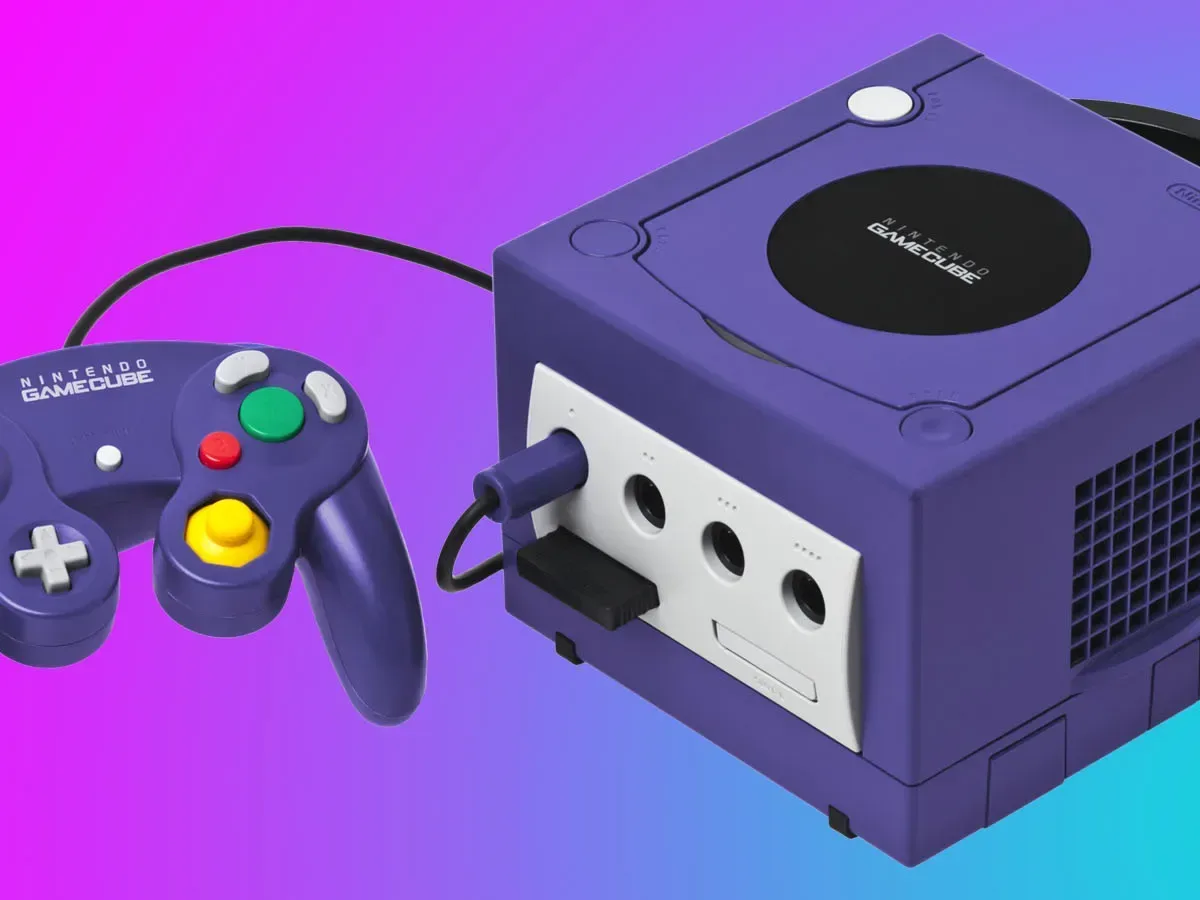
This comparison concerns the original Nintendo GameCube editions of Metroid Prime and Metroid Prime 2: Echoes. Their control philosophy is not the same as the pointer-based controls associated with the Wii versions or the modern dual-stick options associated with later remasters. If you have only played a newer edition, do not assume that its aiming feel or button layout describes the GameCube experience.
On GameCube, Prime’s controls give the C Stick responsibility for beam selection and use the directional pad for visor selection, while the L Button handles lock-on and the Z Button opens the map. Aiming is performed with the Control Stick while holding R. Echoes uses the same general arrangement and adds a map-screen toggle for viewing the Light Aether and Dark Aether versions of the world.
Echoes also includes a separate split-screen multiplayer component with arenas and modes apart from its single-player campaign. That feature may matter to someone choosing a GameCube disc for local play, but it should not be folded into the solo exploration comparison. The campaign’s identity comes from its world structure, combat systems and route planning, not from the additional multiplayer offering.
Edition accuracy matters because discussions of Prime often blend GameCube, Trilogy and remaster experiences. For this choice, focus on what the original hardware editions ask of you: lock-on combat, beam and visor selection, map reading and deliberate exploration. The Wii Trilogy versions changed the control model, while later remasters introduced additional control options that are not part of the original GameCube decision.
- Confirm that you are comparing original GameCube editions.
- Do not use Wii pointer-control impressions to judge the GameCube controls.
- Treat Echoes multiplayer as a separate feature from its solo adventure.
The spoiler-light recommendation
Start with Metroid Prime if this is your first 3D Metroid game, if you prefer a single coherent world, or if you want the map to teach you the series’ basic exploration language before adding another layer. Prime offers the clearest connection between new equipment, remembered obstacles, map information and environmental observation. It is the recommendation for players who want exploration to feel like learning an alien planet from the inside out.
Start with Echoes if you already know that you enjoy backtracking, if parallel versions of a location sound intriguing, or if environmental danger and limited beam ammunition make exploration more interesting to you. Echoes is a stronger fit for players who want every return trip to involve more than checking whether a new ability opened a door. It turns route planning into a combination of geography, dimension, safety and resources.
If you intend to play both, release order is the smoothest learning path: Prime first, then Echoes. That lets you understand the shared lock-on, visor and ability-gated foundation before Echoes complicates it with Light Aether and Dark Aether. Playing Echoes first is still valid if its denser structure is the specific appeal, but Prime is the better baseline for understanding what the sequel changes.
Prime is also the better choice for players who dislike resource management interrupting exploration. Its beam selection matters, but the basic beam arsenal does not impose the same limited-ammunition layer that Echoes places over its additional weapons. Echoes is the better match for players who enjoy having combat, route planning and environmental danger feed into one another.
The short version is simple: Prime teaches you how to explore a three-dimensional Metroid world; Echoes asks how well you can explore when that world has a dangerous counterpart. Pick the lesson you want first.
- Choose Prime for the clearest first-time introduction.
- Choose Echoes for denser map learning and added systemic pressure.
- Play Prime before Echoes if you want the progression of ideas to feel natural.
Metroid Prime is the safer starting point because its single-world structure makes the basic rewards of 3D exploration easier to recognize. Its backtracking still demands memory and patience, but the game’s map, scanning tools and equipment gates point toward one coherent geography.
Metroid Prime 2: Echoes is the choice for players who want that geography complicated by alternate world states, hazardous travel and resource decisions. It is not simply the harder game; it is the game that asks more questions of your map memory at the same time. Start with Prime for clarity, or choose Echoes first if that extra friction is exactly what you want.