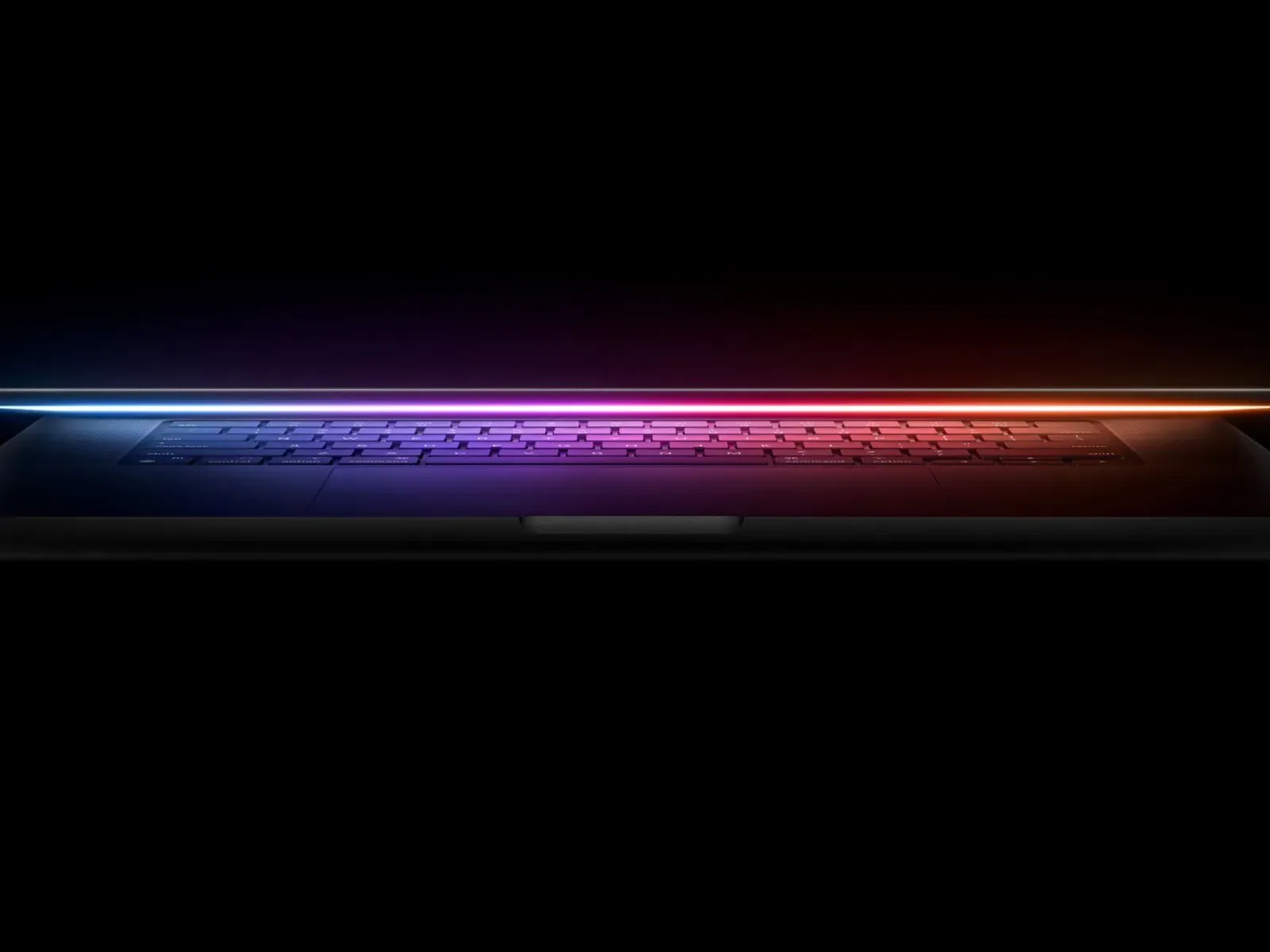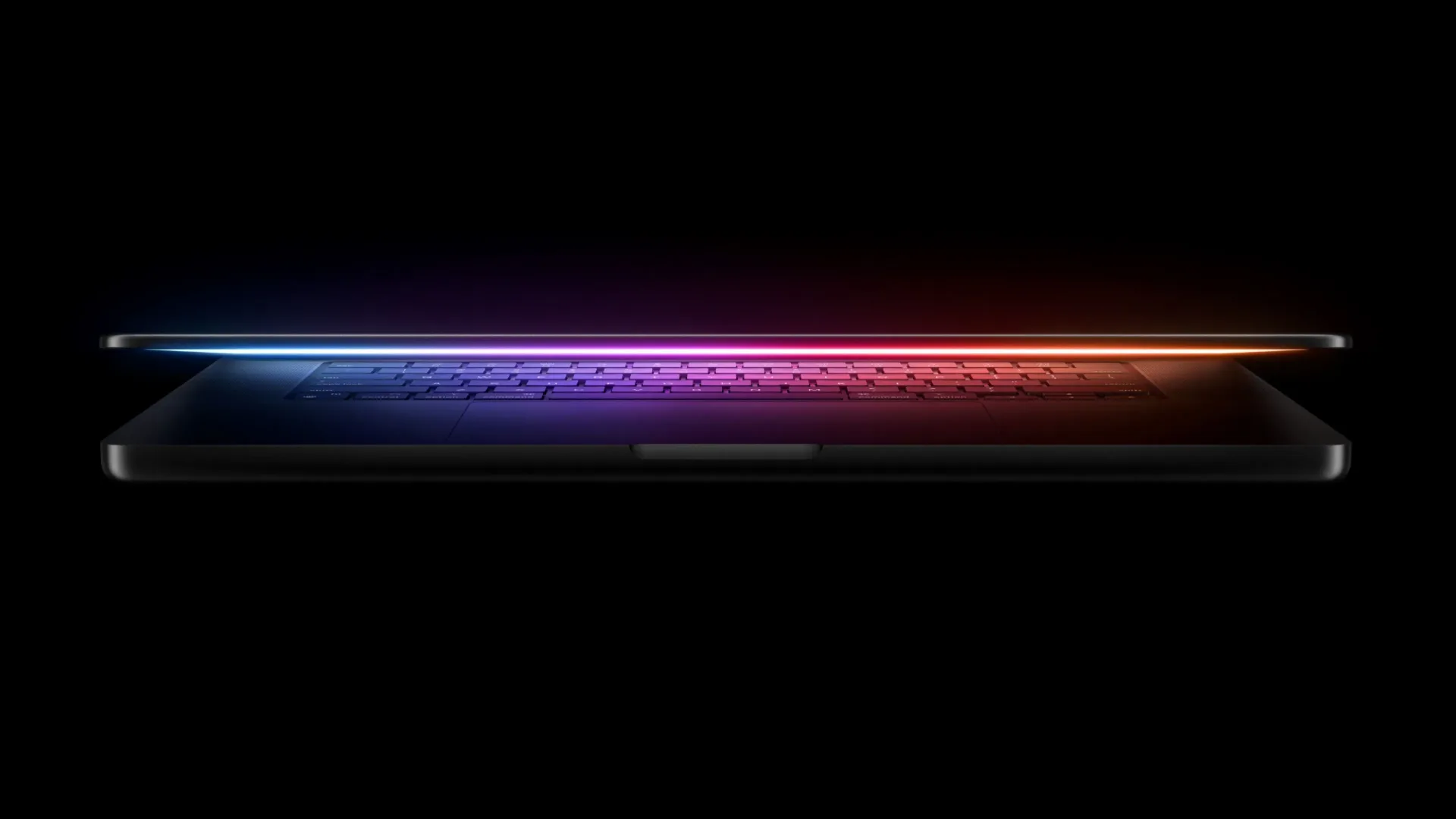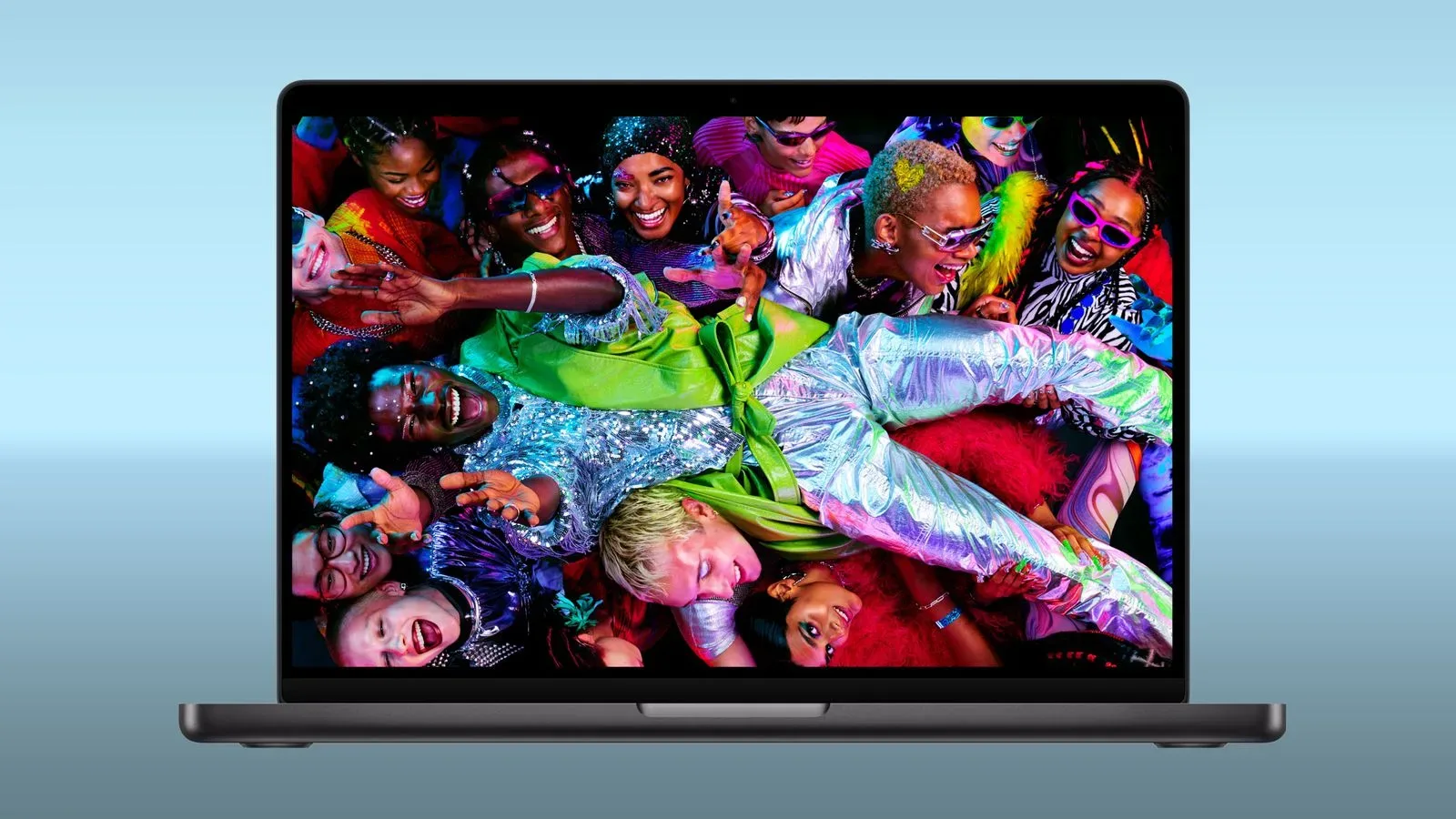
Apple may be preparing to let MacBook Pro owners touch the screen at last—an act that could end years of reaching toward a laptop display, remembering the rules, and slowly withdrawing the hand like it has been caught stealing a pixel. Rumored 14-inch and 16-inch MacBook Pro models with touch-enabled OLED displays are reportedly being tested internally with macOS 27.1. The software update is expected in late October, while the hardware itself is now said to be on track for a release later in 2026.
Nothing here is official. The display technology, touch capability, chip choices, design changes, launch window, and even the eventual name should all be treated as rumor rather than a shopping list. Still, the reported combination would represent a sizable shift for Apple’s professional laptops: OLED screens, direct touch controls, thinner hardware, and high-end M-series silicon in models positioned above the regular MacBook Pro family.
For PC players and creators, this is less a declaration that macOS will suddenly become the universal gaming machine and more a sign that Apple could be reshaping the premium laptop it wants developers, editors, artists, streamers, and high-budget Steam-window admirers to notice. A touch OLED panel does not automatically produce more games, better compatibility, or a dedicated gaming GPU. It could, however, change how people interact with creative tools, game-adjacent software, and the Mac interface itself.
The key rumor: OLED, touch, and two familiar sizes
The reported models are 14-inch and 16-inch MacBook Pros, retaining the size options that define Apple’s existing pro laptop range. Their major claimed upgrade is a touch-enabled OLED display. OLED panels are known for their per-pixel lighting, which can enable deep blacks and high contrast. Those characteristics are particularly easy to appreciate in games and media with dark scenes, vivid interface elements, neon-lit environments, or moody cinematic art direction.
There is an important distinction between an OLED MacBook Pro and a touch OLED MacBook Pro. A better panel affects what users see. Touch changes the input story. Apple has long pushed touch interaction toward the iPhone and iPad while keeping the Mac centered on keyboard, trackpad, mouse, and external accessories. If this report proves accurate, the company would be bringing a direct, glass-tapping option to its flagship notebook rather than merely upgrading its screen.
That does not necessarily mean every macOS application would become touch-first. Nor does it establish that games would support touch controls in a useful way. Many PC games are built around controller, keyboard-and-mouse, or both, and macOS game support remains title-specific. But a touch layer could be useful for maps, menus, launchers, music controls, reference images, creative applications, and general navigation. It may also offer a more immediate way to handle games designed with mobile-style interactions in mind.
The potential drawback is equally familiar: smudges. An OLED screen can make a dark game look wonderfully inky; a touch OLED screen can also make fingerprints feel like an unsolicited visual-effects package. A thinner chassis may make the devices more portable, but it would not repeal the physical law requiring somebody to clean the display after enthusiastically pinching to zoom.
macOS 27.1 testing offers a timing clue, not a launch confirmation
The laptops are reportedly being tested with macOS 27.1, an update expected to arrive in late October. The first developer beta of macOS 27.1 is also expected in the coming days. Internal testing with a particular operating-system version can indicate that hardware and software work is moving in parallel, especially where a new display or input method might need system-level support.
It is not proof that the machines will ship alongside macOS 27.1, or even that they will ship immediately after that update. Apple can test hardware well ahead of release, and operating-system builds can support features, fixes, or development needs that do not translate neatly into a public product timetable. In short: it is a breadcrumb, not the whole bread loaf, and definitely not an invitation to camp outside a store with a microfiber cloth.
The reported schedule has shifted toward more confidence in a late-2026 debut. Earlier expectations had left room for either late 2026 or early 2027. The newer claim places the high-end laptops among products expected before the end of 2026. That makes the prospect more immediate, but it remains a reported plan and could change before any formal reveal.
M5 Pro and M5 Max could put these above the ordinary Pro line
The rumored OLED models are expected to use M5 Pro and M5 Max chips. Exact specifications, performance figures, memory configurations, graphics capabilities, battery life, ports, thermal behavior, and pricing have not been established. Those omissions matter. A machine’s usefulness for game development, video production, 3D work, or playing compatible modern games is shaped by far more than the chip name stamped on its internal paperwork.
What is being suggested is a distinct upper tier. The first OLED MacBook Pro generation is expected to sit above the regular 14-inch and 16-inch MacBook Pro models and carry a higher price. Meanwhile, the regular MacBook Pro line is reportedly expected to move to M7 Pro and M7 Max chips next year. If that roadmap is accurate, Apple would not be treating OLED as a straightforward panel refresh across every professional notebook. Instead, it would be creating a premium branch with its own place in the lineup.
That could be confusing at the point of purchase. A newer chip number is not automatically the entire story when another model may offer a different display, touch support, chassis design, and market position. Buyers who care about compiling projects, editing footage, portable game development, or a particular external-monitor setup will need confirmed specifications rather than trying to read destiny from a pair of letters and a number.
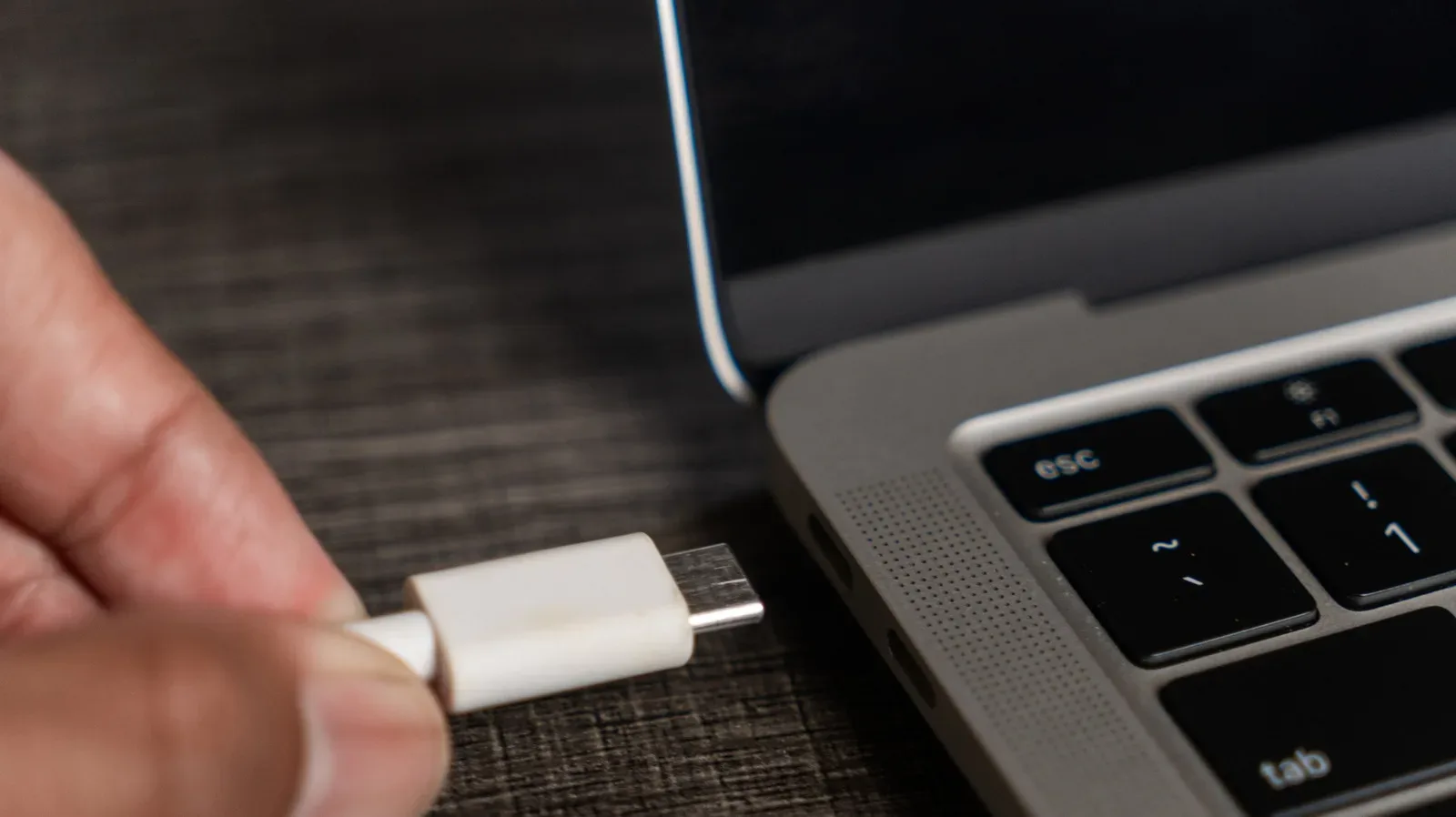
For the practical side of a desk setup, ports and display output remain important no matter how glossy the built-in panel becomes. Anyone comparing a future MacBook Pro with an external display workflow may want a refresher on whether a USB-C port can actually send video to a monitor. The answer is not always obvious from the connector’s shape alone, and an OLED laptop display does not eliminate the appeal of a larger screen.
A thinner design and a Dynamic Island are also in the rumor pile
Other reported changes include a thinner design and a Dynamic Island in place of the current notch. Apple’s notch has been a visible compromise in recent MacBook Pro display layouts. Replacing it with a Dynamic Island-style cutout could alter how the top edge looks and potentially how system status information is presented. The exact implementation is unknown, including whether it would behave like its iPhone counterpart or simply adopt a similar physical shape.
For games, the cutout question is not trivial but is also not the main event. Any interruption at the top of a display can affect menu bars, full-screen presentation, and developer interface choices. A well-integrated design can fade into the background; a poorly handled one becomes the tiny black monarch of the HUD. Without official images or software details, there is no basis to declare either outcome.
The thinner-body report prompts its own questions. Pro laptops need to balance performance, cooling, battery capacity, ports, speakers, and structural rigidity. Apple has experience making thin machines, but the rumored models would pair that ambition with higher-end chips and an advanced display. Until dimensions, weights, and sustained-performance details are confirmed, “thinner” is an aesthetic promise with several engineering footnotes attached.
What will they be called? Do not engrave “Ultra” on anything yet
One earlier report used the possible “MacBook Ultra” branding, but that naming claim deserves extra caution. The same reporting stream had incorrectly predicted that a separate iPhone product would use the “iPhone Ultra” name. That does not make a MacBook Ultra label impossible; it simply means the name is substantially less dependable than a rumor repeated without context might suggest.
Apple could call the machines MacBook Pro, MacBook Ultra, something entirely new, or nothing that fits neatly into internet shorthand. Brand speculation is fun in the same way character-select leaks are fun: people love to imagine the roster, but the logo on the final box is decided elsewhere. For now, “OLED touch MacBook Pro” is useful as a description, not a finalized product identity.
Why the rumor matters even before it becomes hardware
Apple has historically separated the tactile experience of iPadOS from the pointer-led experience of macOS. A touchscreen MacBook Pro would blur that border in a very deliberate, very premium way. It could give artists another way to manipulate work, offer developers a more convenient platform for testing touch-oriented design ideas, and make media interaction feel closer to Apple’s mobile devices. It could also merely give people another way to close a window while leaving a thumbprint exactly where the dramatic final cutscene needs to be.
For gaming audiences, the more meaningful questions remain unanswered: Will more developers prioritize macOS? Will compatibility improve? Will Apple’s software tools make it easier to bring games across? Will touch be thoughtfully supported rather than treated as a feature that exists because a specification sheet needed another dramatic line? None of those questions can be settled by this report.
What can be said is that the rumored package sounds intentionally distinct from a routine annual chip update. OLED, touch input, a redesigned top display area, a thinner profile, and placement above the usual Pro models would amount to a notable change in Apple’s laptop strategy. The late-2026 target now looks more plausible than an early-2027 wait, but consumers should keep their upgrade plans flexible until Apple provides concrete details. Until then, the alleged touchscreen MacBook Pro remains an intriguing possibility: a workstation that may finally let users poke macOS directly, with the dignity of a professional and the screen-cleaning obligations of a toddler with access to jam.