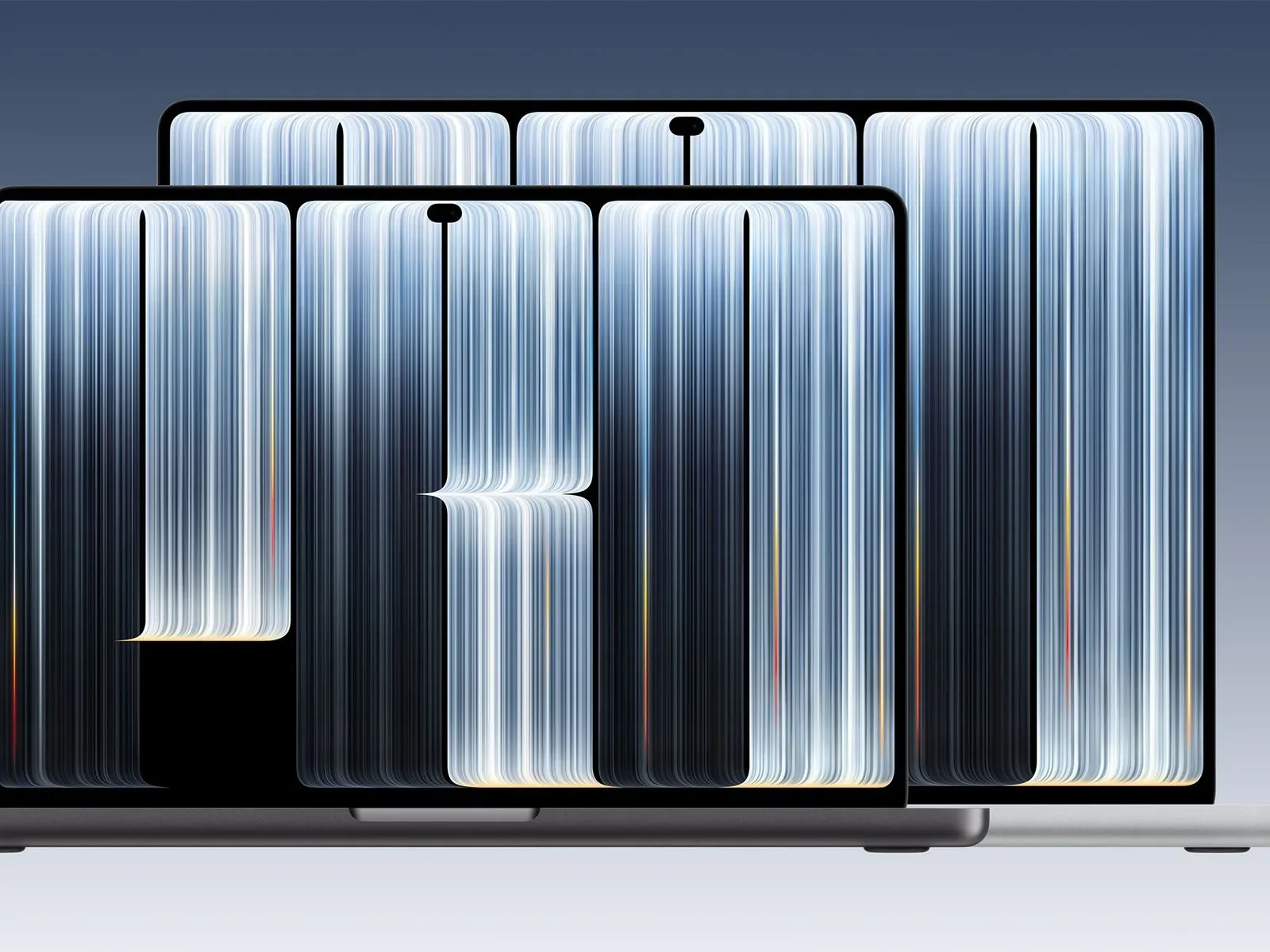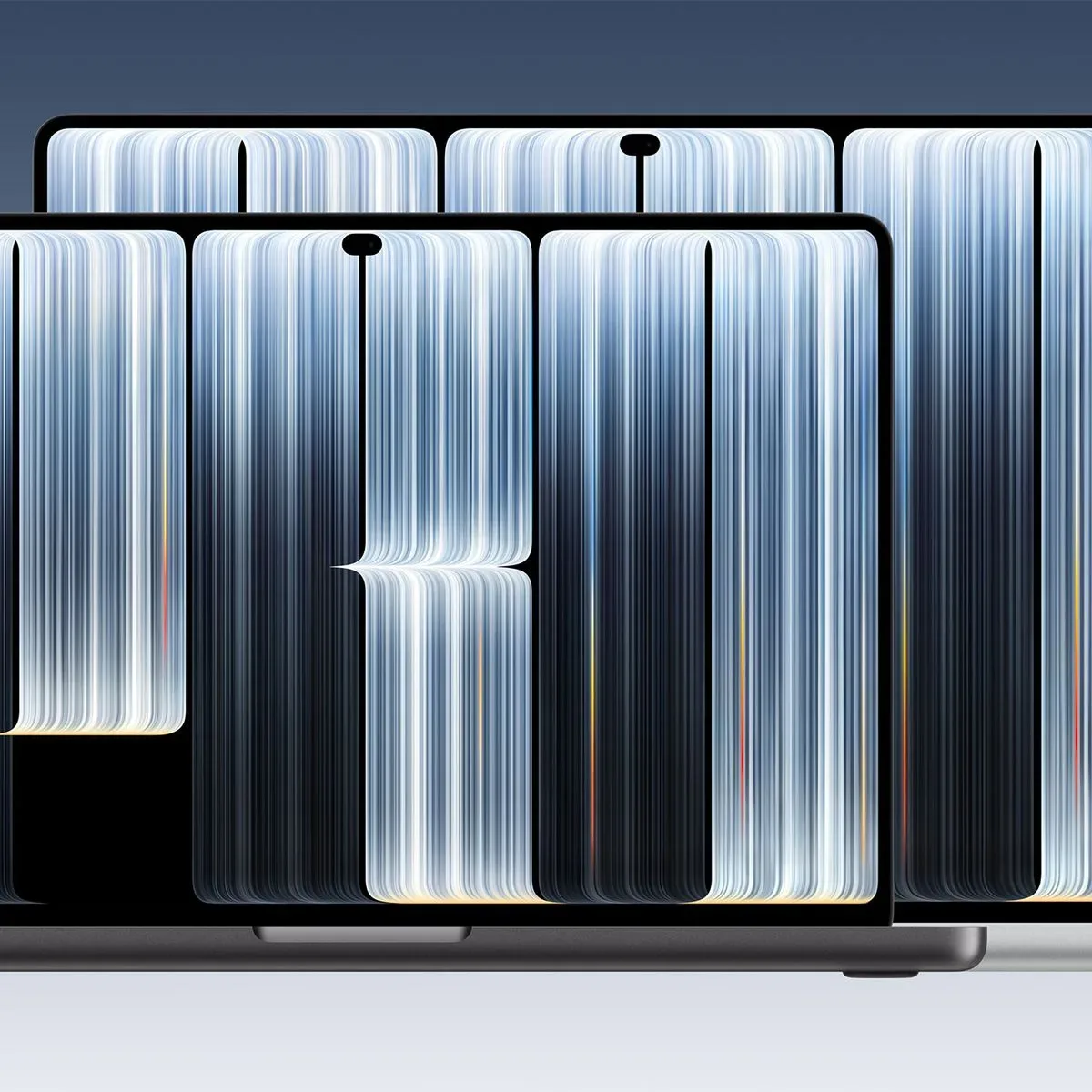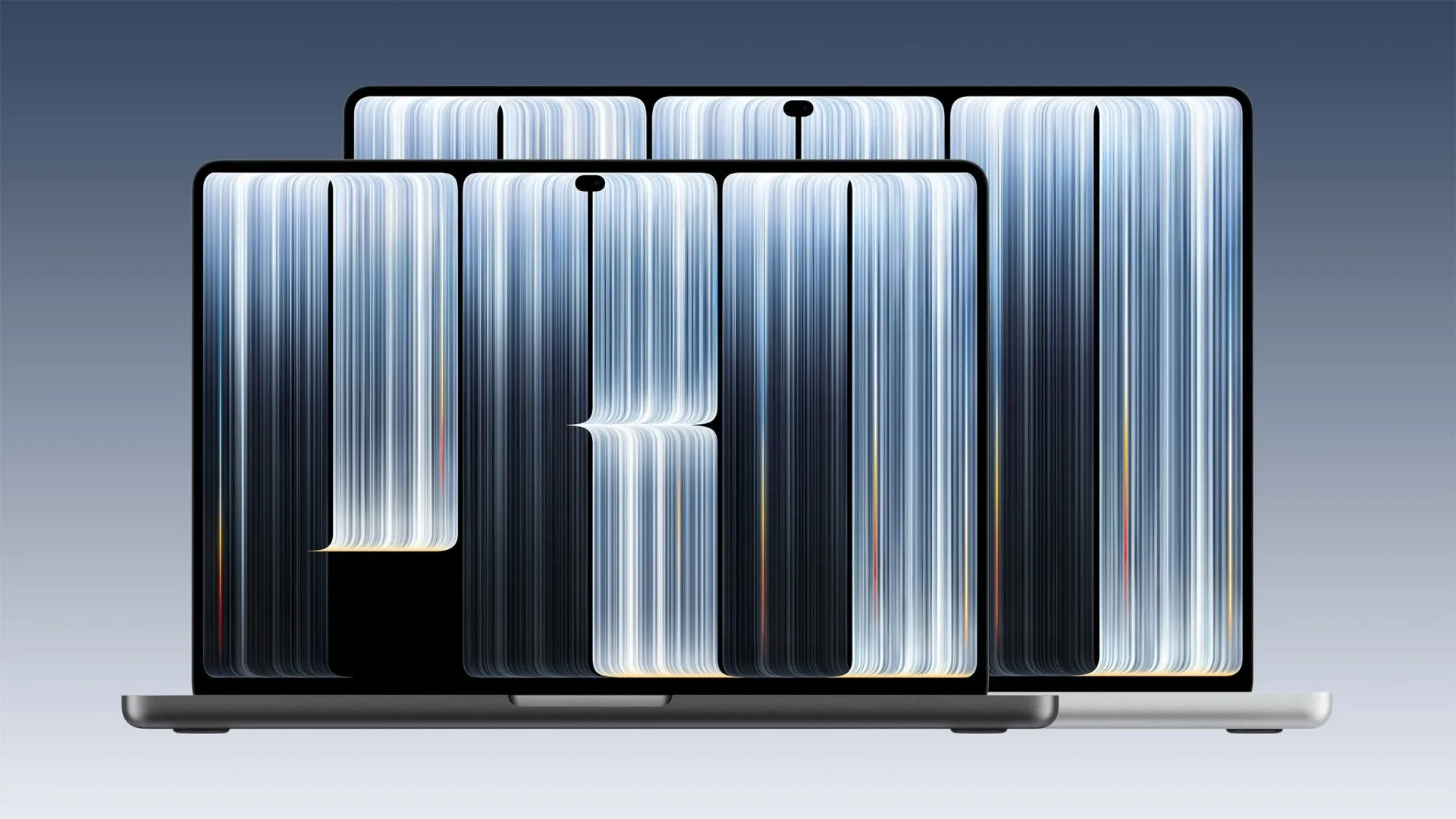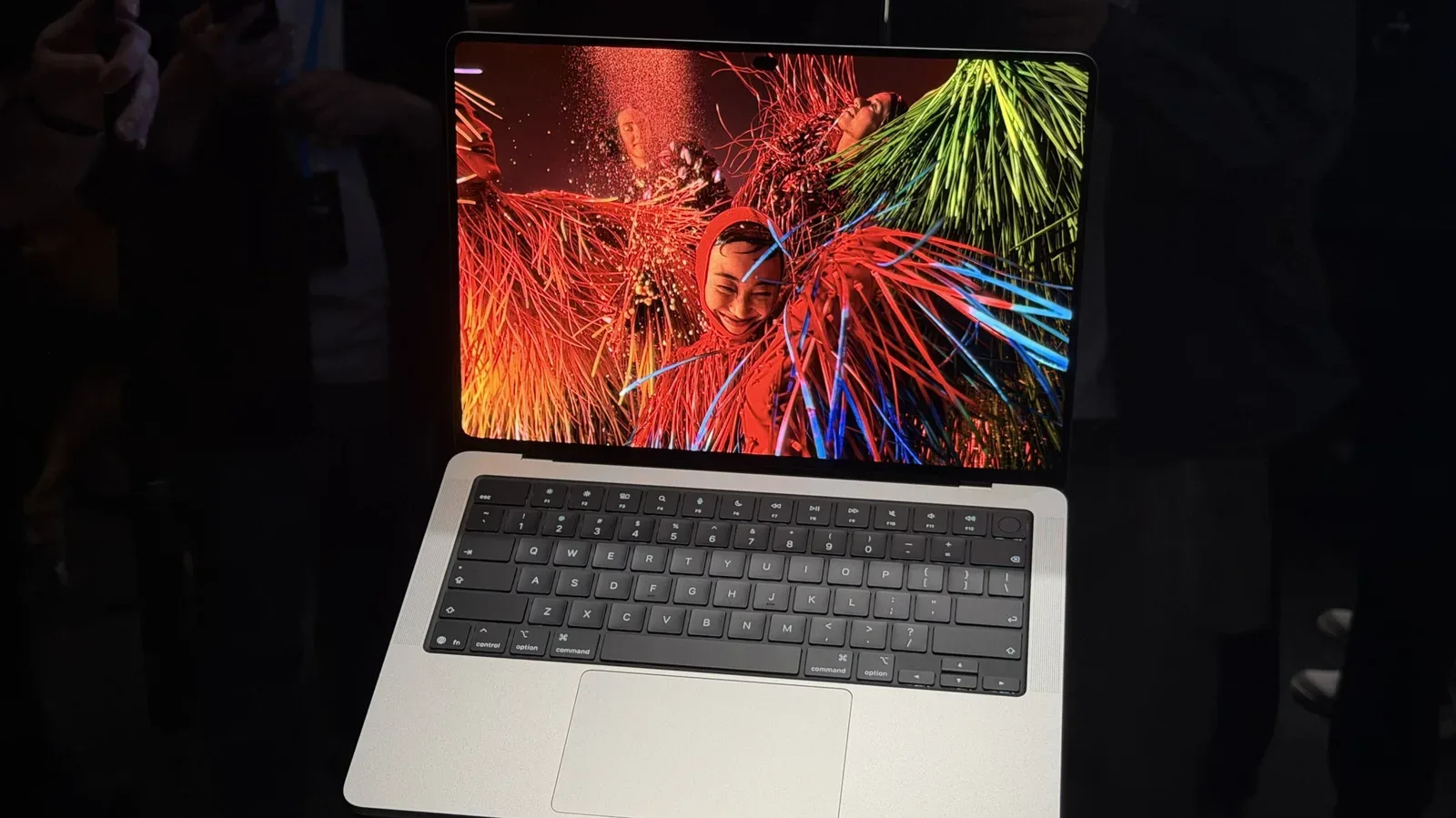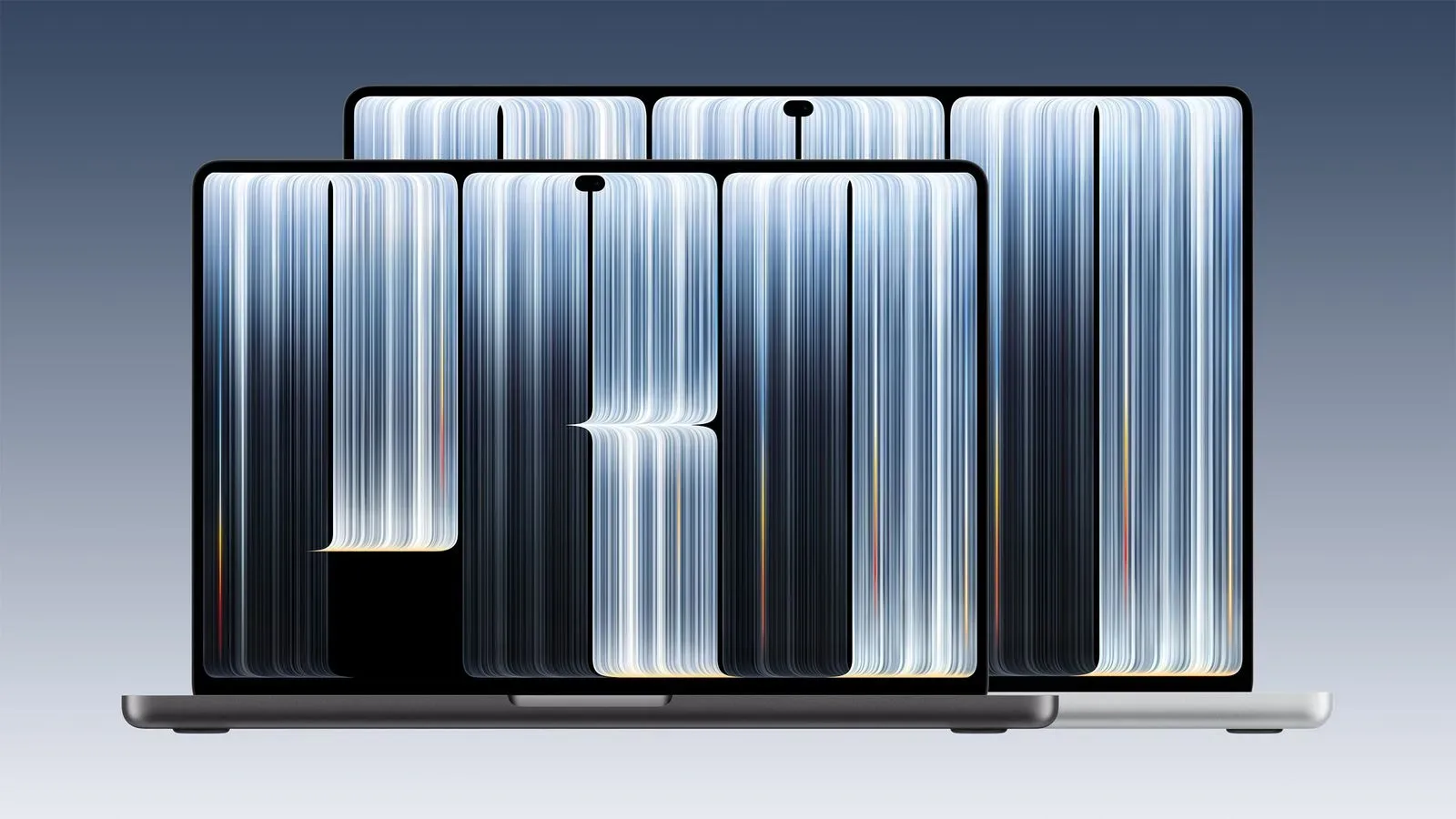
Apple has announced a new high-end MacBook Pro range in 14-inch and 16-inch sizes, centered on a major change to the company’s flagship laptop formula: a touch-enabled OLED screen. The models start at $2,899 for the 14-inch configuration and $3,399 for the 16-inch version, placing the new display technology firmly in premium territory from the outset.
The new machines use what Apple calls a PROLED XDR display, built around tandem OLED technology, and add a touch sensor directly into the display panel. They retain M5 Pro and M5 Max chips introduced in MacBook Pro models earlier in the year, while bringing a revised chassis, a redesigned thermal system, a smaller screen cutout now framed as Dynamic Island, and a broad set of professional I/O.
Pre-orders are open now, with release scheduled for Friday, November 6. Apple will continue selling these OLED MacBook Pro models alongside its existing mini-LED MacBook Pro options and a new 14-inch M6 MacBook Pro. That means prospective buyers will face an unusually segmented MacBook Pro lineup: the OLED/touch models are not simply replacing every other version immediately.
Touch is the headline change, but display specifications carry the larger workload
Touch support changes how a MacBook Pro can be operated. Apple describes gestures including swiping through web pages, pinching to zoom on photos, dragging slides between presentations, and double-tapping a window to expand it. Its stated approach is that macOS will translate touch input into clicks, allowing many existing applications to work with touch without requiring an immediate redesign.
That compatibility detail matters. Touch input is only as useful as the software and interface behaviors behind it. By converting taps into familiar click behavior, the system is positioned to make basic interaction available across software that was built for a trackpad or mouse. It does not, by itself, establish that every app has a purpose-built touch interface or will take full advantage of gestures.
Apple says the touch sensor is integrated into the panel rather than layered on top, a design intended to avoid added latency. Latency is the delay between a user’s action and the device’s visual response; in a touch display, noticeable delay can make dragging, scrolling, or fine placement feel disconnected from the finger. The company also says it has redesigned the hinge for greater stability during touch use.
There is a practical knock-on effect for video calls. Apple says advanced video stabilization will smooth the camera feed when a person touches the screen during a call. That addresses the unavoidable fact that pushing a laptop display can move it, even with a sturdier hinge. It is a small specification on paper, but it shows the design has been considered as a system rather than merely as a screen with touch sensing added.
The display’s OLED foundation is equally important. OLED, or organic light-emitting diode, lets individual pixels emit their own light. Apple’s implementation uses tandem OLED, meaning multiple OLED layers are used together. Apple pairs this panel technology with factory calibration and display-engine algorithms that manage each pixel’s color and luminance based on content, temperature, the environment, and pixel use.
Apple lists peak HDR and SDR brightness of up to 2,000 nits and a 10,000,000:1 contrast ratio. A nit is a measure of display brightness. HDR, short for high dynamic range, concerns the range between very dark and very bright portions of an image; a high-brightness HDR presentation can make highlights stand out while preserving shadow detail when the content and display are designed for it. Contrast ratio describes the separation between bright whites and dark blacks. These numbers are manufacturer specifications, but together they explain the company’s pitch: a display designed for vivid color, powerful highlights, and deep dark areas in demanding visual work.
ProMotion remains part of the package, with refresh rates that can range from 10Hz to 120Hz. The refresh rate is how many times a display updates each second. A higher rate can make motion and scrolling appear smoother, while a lower rate can be used when fast updates are unnecessary. The new screen also has an antireflective coating, and a nano-texture option will be available for buyers who want an additional glare-reducing display treatment.
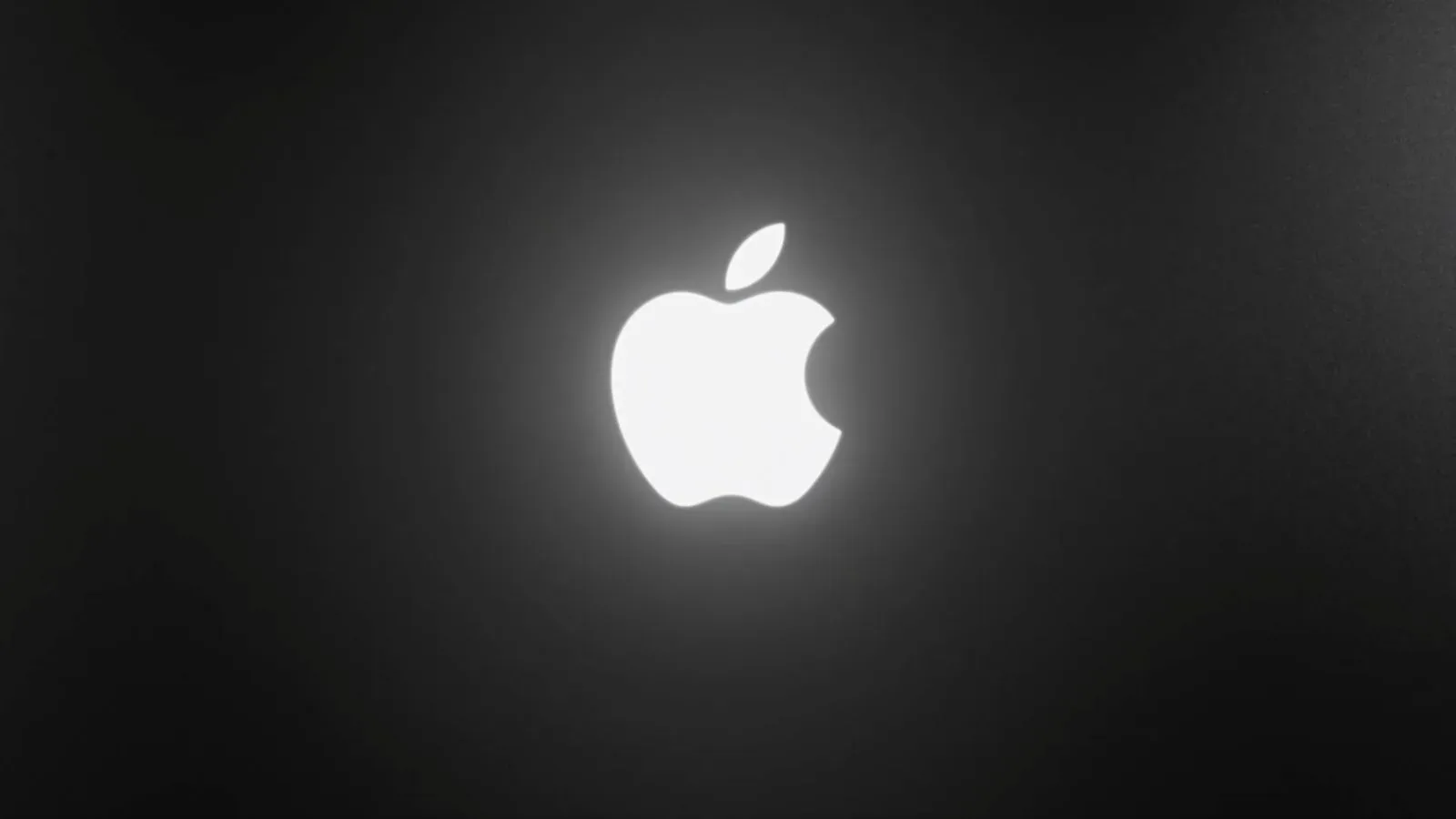
For more on one visual change that accompanies the OLED shift, see the return of the glowing Apple logo and the OLED design considerations behind it.
A slightly leaner MacBook Pro with more usable display area
The OLED models are described as up to 1mm slimmer than the existing MacBook Pro and lighter as well. The 14-inch model weighs three pounds, while the 16-inch model weighs four pounds. Those figures do not erase the distinction between Apple’s two professional notebook sizes, but they reinforce that the larger screen is not being positioned as a radically heavier workstation.
Apple has reduced the screen bezels and removed the older notch. In its place is a small Dynamic Island. The 14-inch machine now has a 14.2-inch display, and the 16-inch machine has a 16.3-inch panel. The latter is a notable point of naming versus measured screen size: the model remains categorized as a 16-inch MacBook Pro even as the display measurement is now slightly larger.
On these laptops, Dynamic Island houses Spotlight, Live Activities, and Siri AI, providing a compact area for information and interactions. The design is familiar in concept from the iPhone, but its usefulness on a laptop will depend on how often users want quick, top-of-screen status access while working in macOS. The supplied details establish its functions, rather than a broader list of compatible workflows.
The glowing rear Apple logo is another external design change. It gives the new Pro models a more conspicuous visual identity than a laptop whose changes would otherwise be primarily apparent once the lid is open. It is also notable that the company is marrying this visual flourish with a considerably more technical set of display revisions, rather than presenting it as the centerpiece of the update.
M5 Pro and M5 Max stay, while cooling gets a redesign
Apple is using the same M5 Pro and M5 Max chips found in MacBook Pro models introduced in March. As a result, the announcement is not framed around a new processor generation for this particular OLED range. The hardware update instead joins those chips to a redesigned thermal architecture that directs warm air away from the display.
Thermal architecture refers to the physical and engineering approach used to move heat away from components. It can include the pathways and mechanisms that guide warm air through and out of a computer. Apple has not provided performance results or detailed thermal measurements here, so the defensible takeaway is limited: the cooling arrangement has been altered with the display in mind, not that a particular workload will run faster or quieter.
The systems can be configured with up to 128GB of unified memory and up to 16TB of storage. Unified memory is memory shared across the processor’s relevant computing components rather than being split into separately allocated pools in the way some system designs are organized. The 128GB ceiling identifies these machines as configurations intended for memory-heavy professional use cases, although the announcement does not identify a specific application or workload threshold.
Audio has also changed. Apple says the laptop includes a new six-speaker sound system capable of 50 percent deeper bass. “Deeper bass” is a manufacturer characterization rather than a complete technical measurement, but the six-speaker arrangement makes clear that sound remains a designed-in part of the hardware package rather than a neglected concession to thinness.
Ports, wireless standards and displays keep the workstation focus
Despite the push toward touch interaction, Apple has kept an expansive port selection. The new MacBook Pro includes three Thunderbolt 5 ports, HDMI, an SDXC card slot, MagSafe, and a headphone jack. It supports up to four external displays, along with Wi-Fi 7 and Bluetooth 6.
That assortment is especially relevant to the laptop’s high-end positioning. HDMI provides a direct route to a compatible external display, an SDXC slot supports SD-format media cards, MagSafe provides the magnetic charging connection, and the headphone jack remains available for wired audio. Thunderbolt 5 is the newest named connection standard in the specification list, though the announcement does not detail the performance of individual peripherals or display arrangements.
Support for four external displays means the built-in touch OLED panel is not the only screen this MacBook Pro is designed to drive. Instead, it remains a laptop intended to sit at the center of a multi-monitor setup when needed. That balance is arguably the clearest description of the product: Apple is adding direct, handheld-style interaction to the notebook while retaining the ports, memory capacity, storage ceiling, and display support expected of a professional system.
Fast charging is rated to reach 50 percent in 30 minutes. As with the thermal claims, the announcement supplies the target figure but not the precise conditions involved, so it should be treated as Apple’s stated charging capability rather than a universal result for every configuration and charging situation.
What the new lineup means for prospective buyers
The new OLED MacBook Pro is not a conventional processor-refresh story. Buyers looking specifically for M5 Pro or M5 Max hardware now have a more consequential choice around display technology and interaction style. The touch OLED panel, high claimed brightness, antireflective treatment, optional nano-texture finish, Dynamic Island, and revised physical design are the clearest differentiators for this range.
The starting prices are correspondingly high: $2,899 at 14 inches and $3,399 at 16 inches. That makes the decision less about whether touch is novel and more about whether the entire display-and-workstation package suits the buyer’s needs. A person who relies on an external display, needs several ports, uses SD media, or requires a high unified-memory configuration may assess this product differently from someone who mainly wants a MacBook with direct screen input.
Apple’s decision to sell the OLED machines beside mini-LED models and a 14-inch M6 MacBook Pro gives the range multiple paths rather than one clean upgrade ladder. The OLED models are explicitly high-end offerings, and their price floors underline that they are not a default replacement for every MacBook Pro buyer. Still, the combination of panel-integrated touch, tandem OLED, adaptive 10Hz-to-120Hz ProMotion, M5 Pro or M5 Max, and up to four external displays makes this the most substantially reworked MacBook Pro display proposition in the supplied lineup.
Pre-orders are available ahead of the November 6 launch. Buyers evaluating the new laptops should separate Apple’s stated display and interaction capabilities from the questions that have not been answered by the announcement, including how specific macOS applications will evolve around touch-first controls and how the revised thermal design behaves in particular real-world workloads.