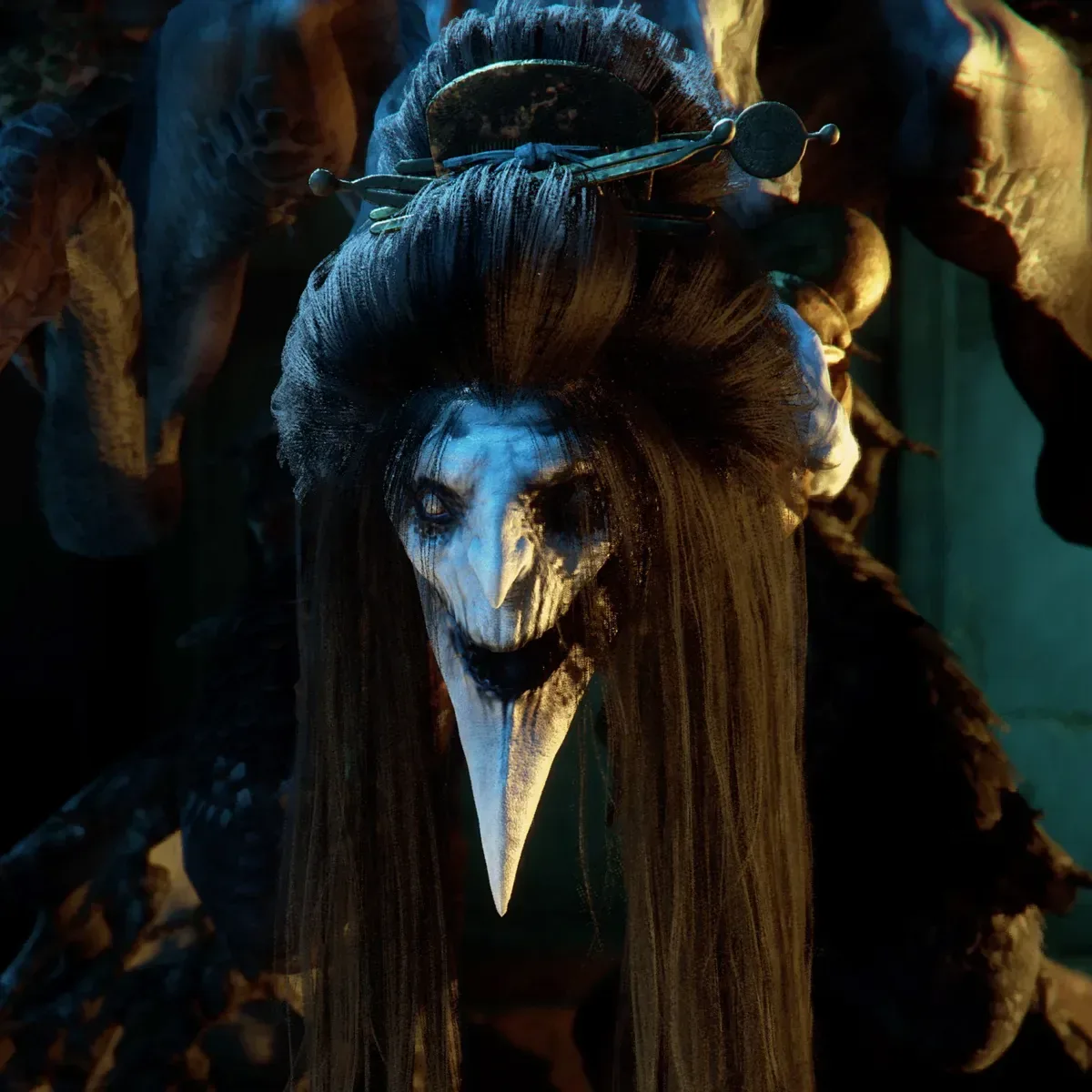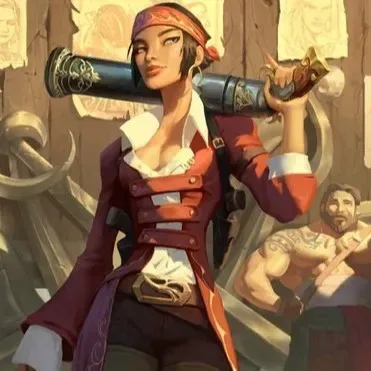
Five years after Riot Games revealed plans for a massively multiplayer online game set in the world of League of Legends, the project is still alive—and still carrying the kind of expectations that could make a dragon ask for a less stressful hobby.
At PAX, Riot co-founder Mark Merrill described the MMO as the company’s “grail quest,” a deliberately lofty label for a game that has already endured a reset, senior departures, and a long stretch with little concrete public information. His comments do not offer a release window, gameplay footage, platform list, or a promise that the game will ship. They do, however, clearly reaffirm that Riot is continuing work on the project.
For Runeterra fans, that is meaningful. It is also nowhere near the same thing as a finish line.
A giant world comes with giant expectations
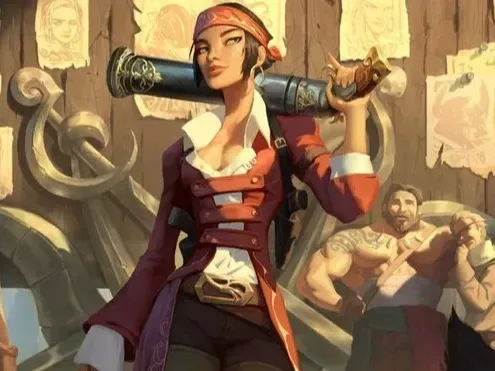
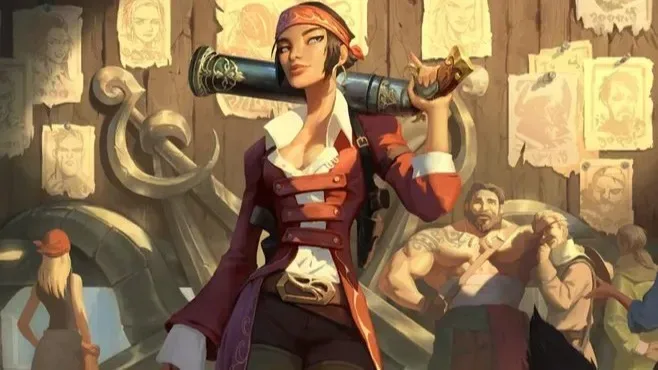
Riot announced the League of Legends MMO in August 2021. The basic appeal was immediately understandable: Runeterra has accumulated an enormous roster of champions, regions, factions, historical conflicts, magical oddities, and monsters through League of Legends, Legends of Runeterra, Arcane, cinematics, music videos, and other projects. An MMO could, in theory, provide the long-awaited chance for players to inhabit that setting rather than simply visit pieces of it between matches.
That possibility is exactly why Merrill’s “grail” analogy fits. A satisfying MMO requires much more than recognizable locations and familiar characters. It needs social systems that people want to return to, progression that rewards investment without becoming a second job, group activities that remain compelling, a stable technical foundation, and years of post-launch support. In other words, it is less like building one spectacular castle and more like opening a city where every resident expects the plumbing to function during a meteor shower.
Merrill indicated that Riot understands the hopes players have attached to the game and sees the central challenge as execution. He also acknowledged the difficulty of sustaining the desired mindset across a large organization. That is a sensible framing for a production with this scale, but it naturally leaves fans wanting the specifics: what kind of MMO is it now, what does its combat look like, and how will it distinguish itself in a genre with extremely entrenched communities?
The reset matters more than the slogan
The project’s complicated history is an unavoidable part of any conversation about it. In 2024, Riot confirmed that the MMO had been reset and that the team had returned to the drawing board some time earlier. Merrill said then that the extra distance from public updates would allow the developers to focus on the substantial work in front of them.
A reset can mean several things, and Riot has not publicly detailed every design decision behind this one. It should not automatically be read as cancellation, nor should it be treated as proof that a finished game is close. What it does establish is that Riot decided its earlier direction was not strong enough to pursue as-is. For a project aiming to carry the League of Legends universe into one of gaming’s most demanding genres, that kind of course correction may be preferable to pressing ahead with an idea the studio no longer believes can meet the bar.
But a reset also adds time, uncertainty, and cost. It turns an already long development runway into an even longer one. For players waiting to quest through Demacia, Bilgewater, Ionia, Zaun, or the Freljord with friends, it means the map remains mostly a dream rather than a destination.
The team has also seen notable personnel changes. Greg Street, who had been executive producer on the MMO, said in 2022 that there was no guarantee the game would ever release, then departed Riot in early 2023. In January, former World of Warcraft producer Raymond Bartos joined Riot Games, an addition that prompted renewed optimism among MMO followers. Experience on a landmark MMO is certainly relevant, though one hire alone cannot reveal the game’s current state or solve every challenge involved in making a new persistent online world.
Why some players are keeping their shields up
Merrill’s confidence met a predictable degree of skepticism online, especially among fighting-game players looking at Riot’s recent decisions around 2XKO. Riot has said active development on the League of Legends fighting game will end at the close of 2026 because it did not attract enough players. That news was particularly sharp because 2XKO released only in late 2025.
The comparison has limits. A fighting game and an MMO have radically different structures, development needs, player behavior, and business pressures. It would be simplistic to say the fate of one defines the fate of the other. Yet the concern is understandable: players see an ambitious game based on Riot’s flagship universe receive a short active-development lifespan, then hear the studio speak boldly about an even more expensive and complicated undertaking.
That tension is behind much of the response. Some community members worry that a Runeterra MMO could be judged against enormous genre leaders and held to unforgiving growth expectations. Others fear that even a strong initial launch might not receive the lengthy patience and support required for an MMO to establish itself. These are anxieties, not confirmed plans or outcomes, but they reflect a real trust question Riot will eventually have to address through its actions.
The core message from Merrill is not that the quest is easy. It is that Riot still considers the destination worth pursuing.
There is another reason for restraint: “MMO” remains a broad description. Riot has not provided the public with a detailed explanation of classes, combat, raids, player-versus-player systems, economy, crafting, monetization, release platforms, or timeline. Fans can reasonably imagine a broad range of possibilities from the company’s existing games, but none of those possibilities is a confirmed feature.
Runeterra is a strong foundation, not a completed game
Riot does have one crucial advantage: its universe is unusually ready for a larger shared-world interpretation. Runeterra is not a blank fantasy template. It has visually distinct nations, deep rivalries, recognizable technology-versus-magic tensions, and enough historical material to support adventures far away from the champions players already know. The right MMO could let a player be part of that world without requiring them to be another version of Yasuo, Jinx, or Lux.
It also arrives in a market where online games have to prove their staying power. Players are accustomed to ongoing updates, expansions, events, balance changes, and clear communication. Even games outside the traditional MMO label are built around long-term player retention; for an example of how active online titles keep iterating, see the recent Palworld 1.0.4 update and its new missions and systems. Riot’s prospective MMO would enter a landscape where a launch is only the beginning of the work, not a victory lap.
That is why Merrill’s choice of language is more revealing than any implied timetable. Calling the MMO a grail quest recognizes the project as a difficult, high-risk pursuit rather than a routine expansion of the company’s portfolio. It suggests Riot is still willing to commit to an unusually ambitious objective despite the possibility of setbacks along the way.
What can actually be said now
The confirmed picture remains relatively narrow:
- Riot announced its League of Legends MMO in August 2021.
- The project was reset before Riot publicly discussed that decision in 2024.
- Mark Merrill says development is continuing and characterizes it as a major internal ambition.
- Greg Street previously cautioned that release was never guaranteed and left Riot in 2023.
- Raymond Bartos, a former World of Warcraft producer, joined Riot Games in January.
- Riot has not announced a release date, platforms, gameplay format, or feature set for the MMO.
Everything beyond those points is expectation, hope, concern, and a great deal of imagined inventory management. The “grail quest” remains underway, but no one outside Riot can yet say how far the company is from the castle—or whether the party has finally agreed on which direction the castle is.