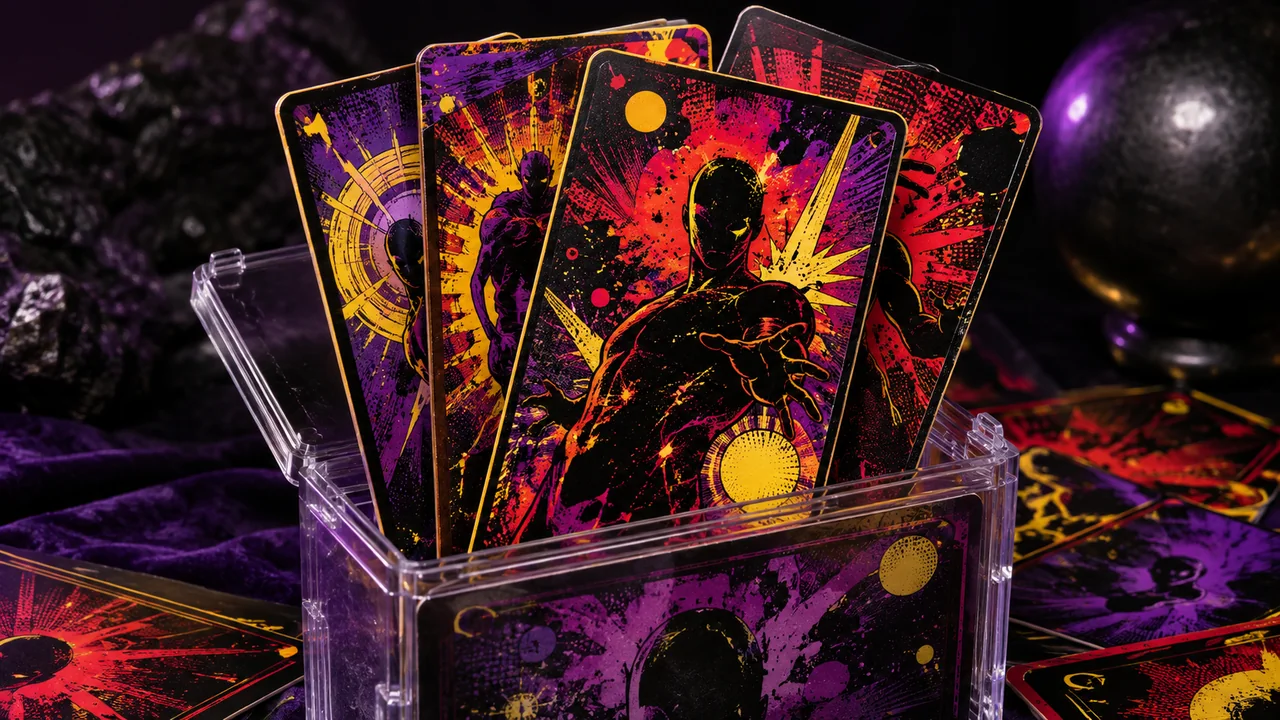
Marvel Masterpieces invites an art-first approach to collecting. A card can be enjoyable because of its composition, lighting, or interpretation of a familiar character. The practical challenge is making sure a listing describes the exact edition you want. A recurring product name and recognizable artwork are not enough on their own.
A historical anchor: Joe Jusko
FPG’s officially licensed book, Joe Jusko’s Art of the 1992 Marvel Masterpieces, documents the paintings created for that release and presents associated preliminary sketches. The publisher’s description of the project establishes the artist and release connection. That is a useful place to begin when a seller refers loosely to “the original Masterpieces art.”
Keep an artwork’s history separate from the physical card’s history. A later product may refer to an earlier year or image without being a card printed in that original year. Read the product name, copyright line, and manufacturer checklist together.
Use the exact checklist
Upper Deck publishes a separate Masterpieces ’92 Platinum checklist with named groups, card numbers, and additional product fields. Its existence illustrates why “’92” in a title cannot be the only identification step. Match the card to the complete product description instead of collapsing distinct releases into one inventory entry.
Record manufacturer, product, release identification, card number, subject, and version. For a numbered card, transcribe the actual numbering carefully. If the seller’s description and the card back disagree, resolve the difference before comparing prices.
Choose how you want to see the art
Consider whether the goal is a complete set, a favorite artist’s work, a character sequence, or a small group of images with a common visual mood. These approaches can overlap, but picking a primary goal reduces the temptation to buy every available treatment of one image.
Try designing a nine-card page on paper before buying anything. Give each position a purpose: a favorite character, a contrasting color, or a different composition. You may discover that the page needs a modest card you love more than it needs the version that appears in the most dramatic listings.
Keep condition descriptions concrete
Ask for photographs that show the actual front, back, corners, and surface. Elaborate finishes can make an item difficult to judge under a single light source. Use more than one angle and note what remains uncertain. A scan can help identify a card while still failing to show a scratch or other surface issue.
For autographs, sketch cards, or other specially described items, examine the provenance and manufacturer description as a separate task. A card being part of a familiar brand does not automatically answer every question about a signature or a seller’s claim.
Compare like with like
Before considering a market comparison, make sure the example is the same release and version. Separate graded from ungraded cards and record condition differences. Treat an asking price as an invitation from a seller, not a completed transaction. We have not inserted live values into this guide because an edition explainer is not a current sales database.
Save the source and photographs with your inventory entry. Once identification is clear, return to the reason the card caught your eye. Art collecting should leave time to look at the art. If all the available time goes toward deciphering abbreviations, narrow the project until it becomes enjoyable again.