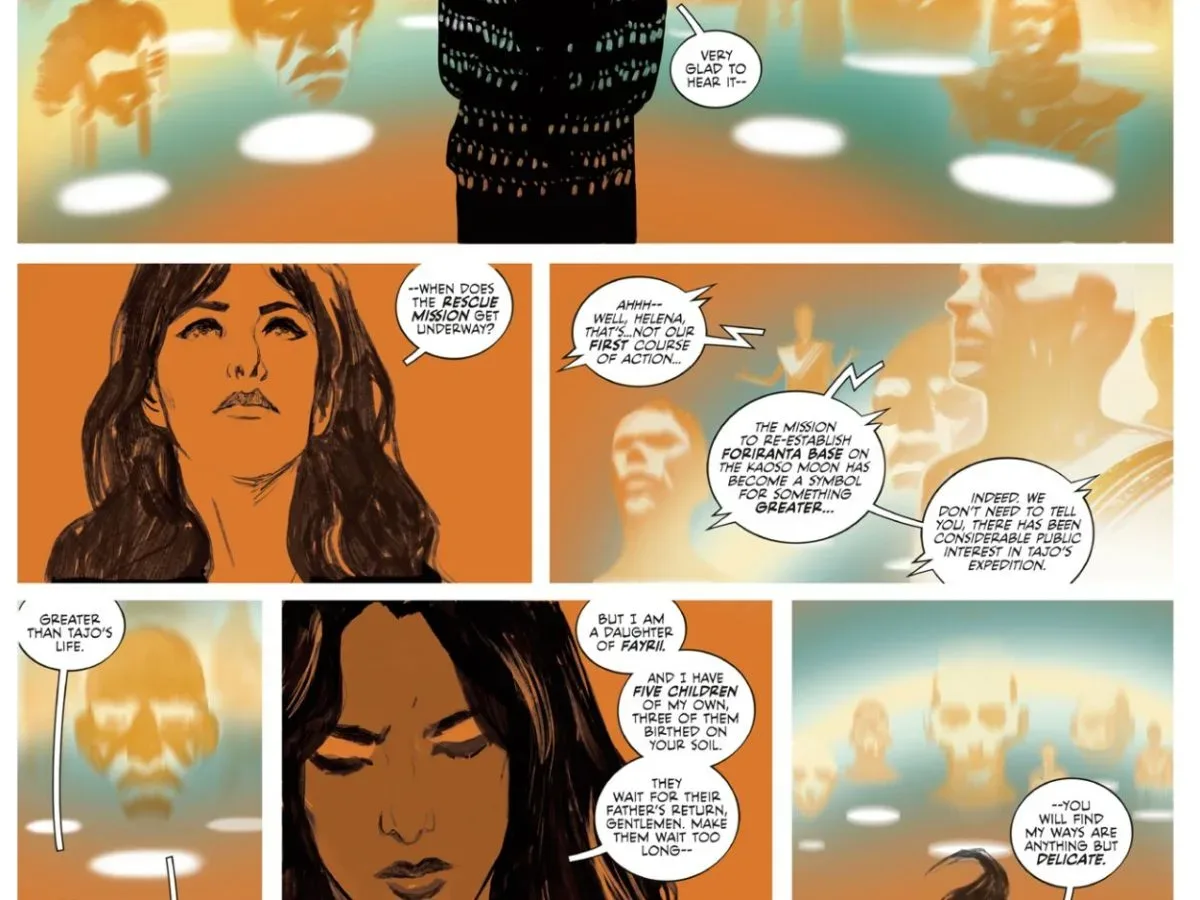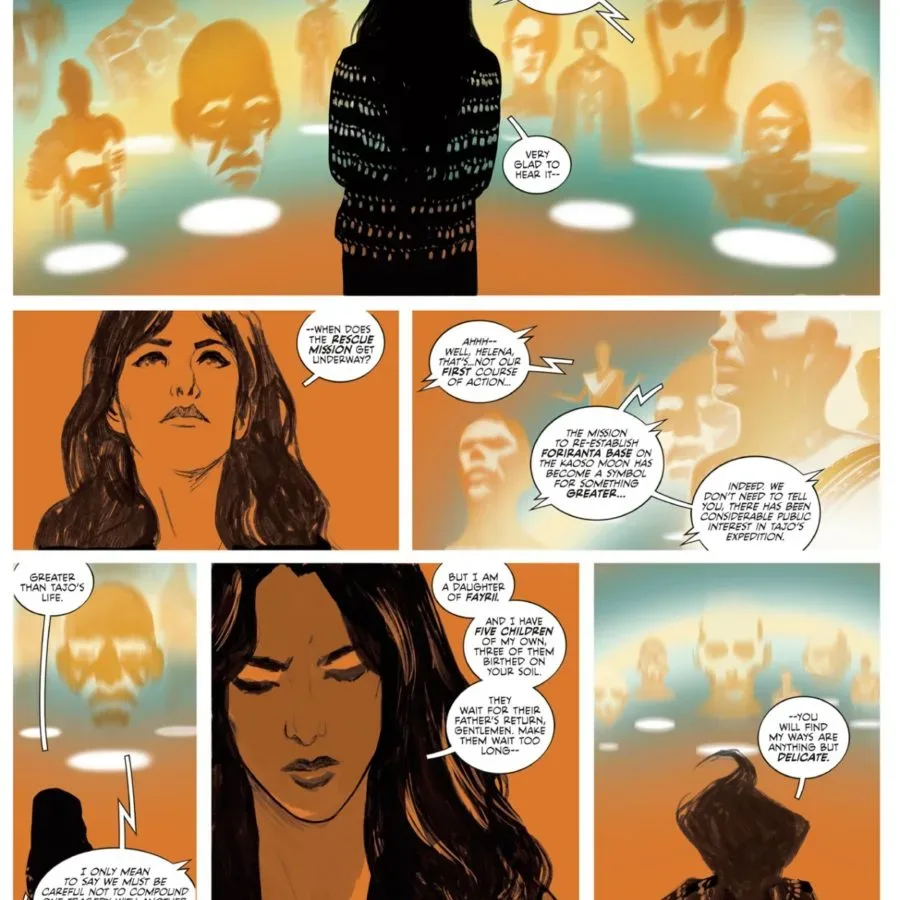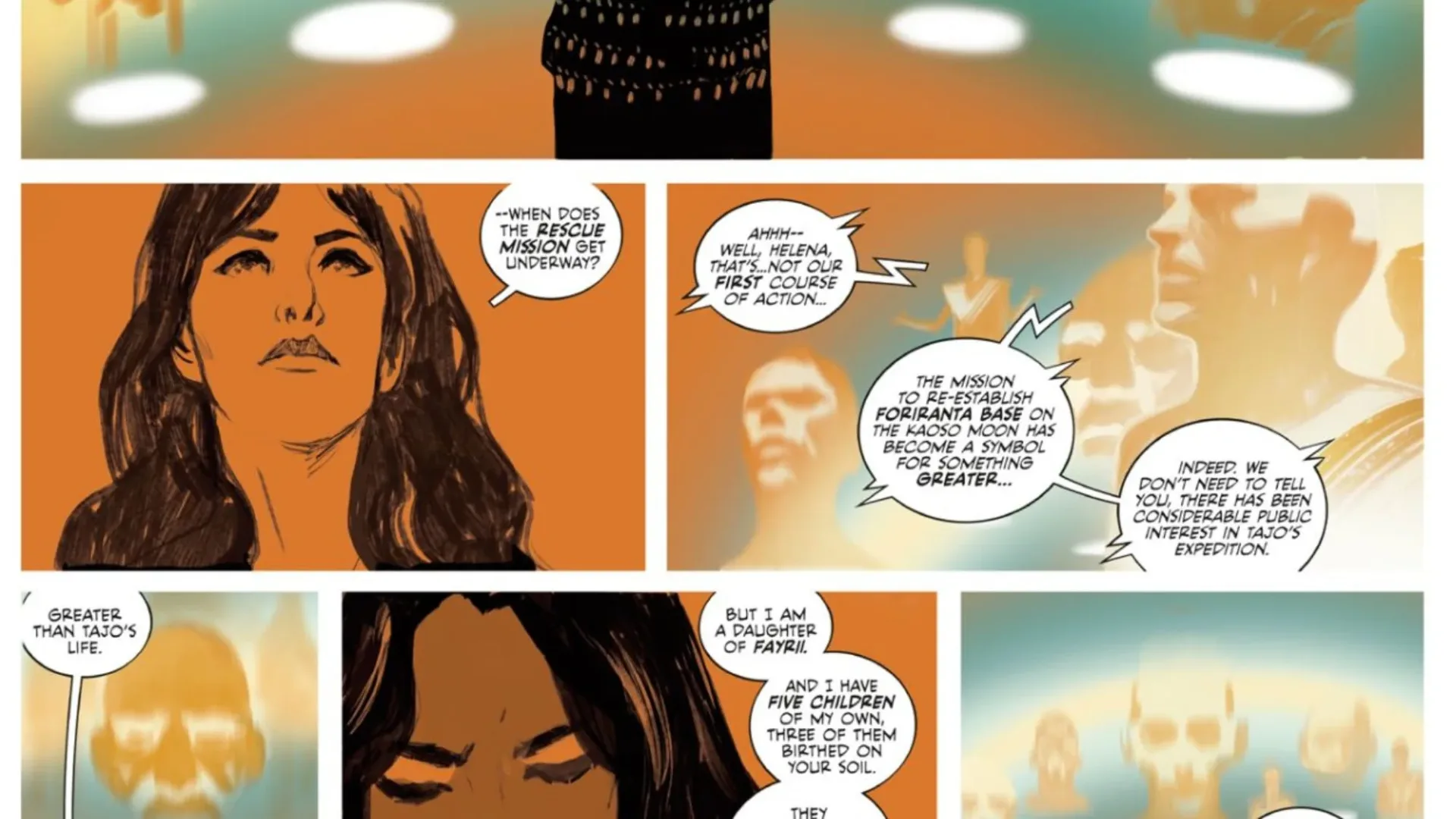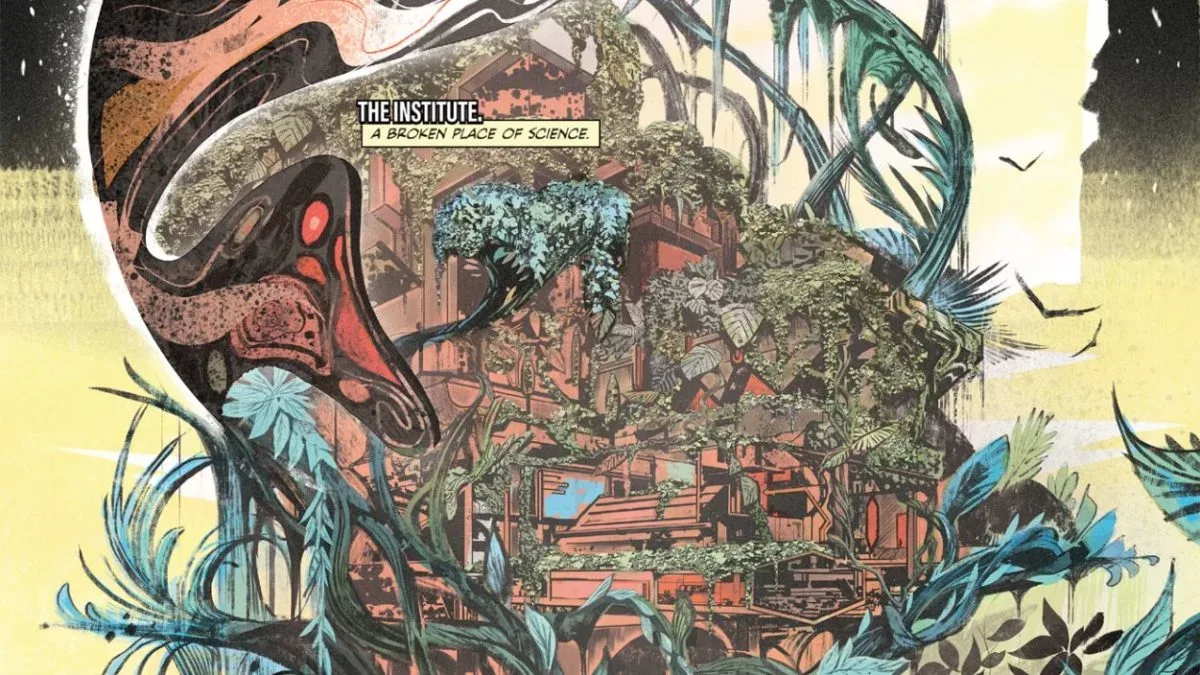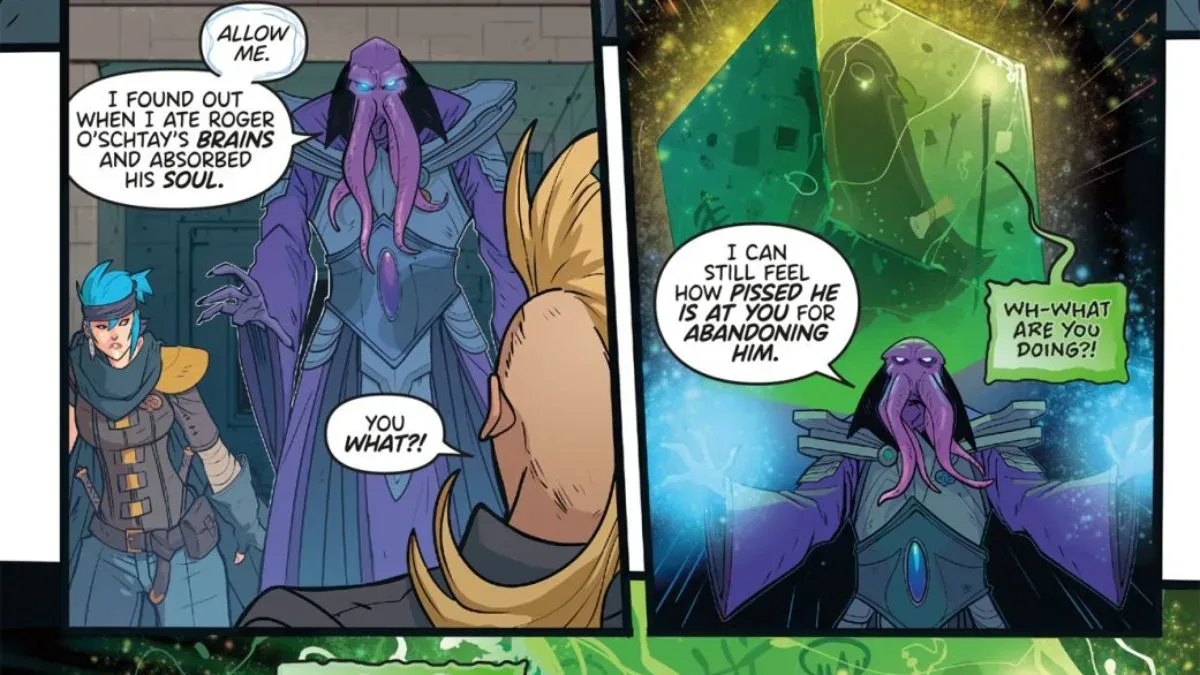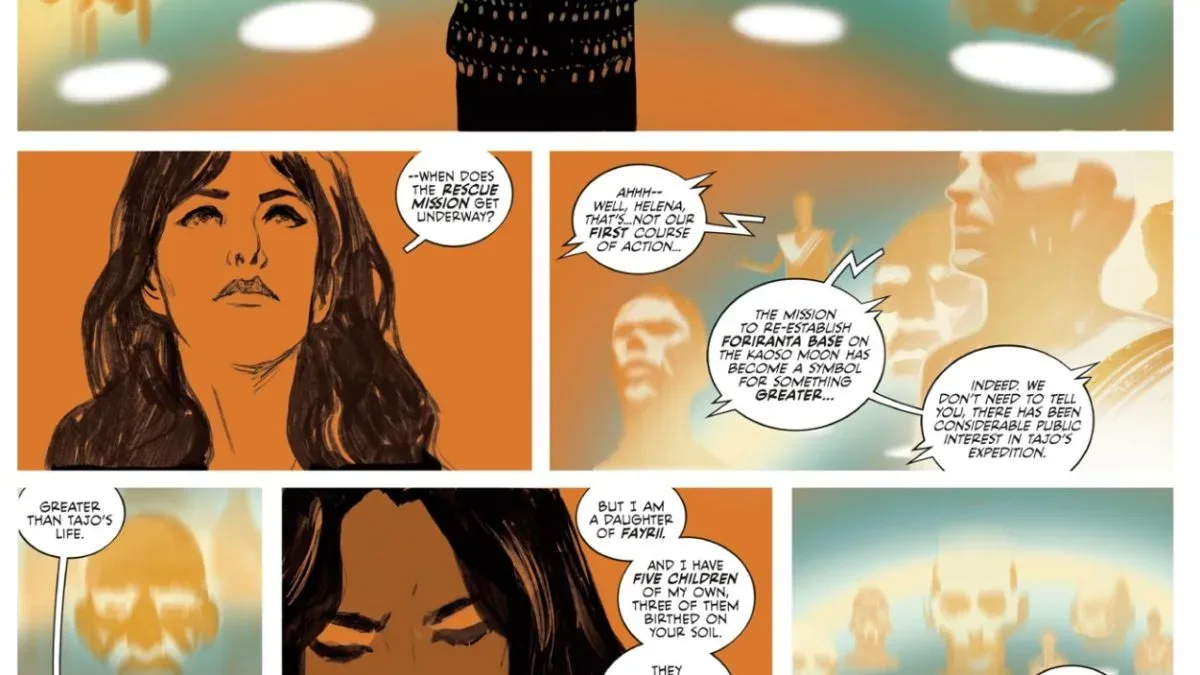
Arrivals #1 is set to introduce a new science-fiction setting from Dark Horse Comics on October 21, 2026. The 40-page debut launches a three-issue series presented by Jonathan Hickman, with Mike del Mundo, Mike Huddleston, Nick Spencer, Christian Ward, James Stokoe, Juni Ba and additional creators contributing to its opening chapter.
Its central premise starts with an absence. Astronaut and explorer Tajo Vallar vanished a generation earlier, and his children are called back to reunite around a new mystery. The complication is suitably enormous: getting everyone together means crossing a setting comprising three worlds and three moons. That makes the first issue both the beginning of a family story and an invitation to tour a deliberately large new universe.
Dark Horse is publishing the debut in a prestige, magazine-sized format rather than a standard comic-book size. The issue is listed at 8.51 by 10.85 inches, rated T+, and priced at $6.99. Huddleston provides the cover.
A mystery designed to introduce a universe
The known setup gives Arrivals two immediate jobs. It must establish what happened to Tajo Vallar, and it must show why his disappearance still has force a generation later. At the same time, it needs to orient readers within several populated locations without reducing them to a stack of maps, encyclopedic labels or interchangeable alien backdrops.
That is where the family reunion is likely to be especially useful as a storytelling device. A reader can meet unfamiliar worlds through people who have their own histories with them. The children’s journey home is not simply transportation between planets; it gives the series a reason to treat distance, separation and differing lives as part of the drama. A mystery about a missing explorer can therefore be personal before it becomes cosmic.
The publisher’s description emphasizes a guided visit to the three worlds and three moons. In comics terms, that signals an introductory issue with substantial world-building. World-building is the work of making a fictional setting understandable through its culture, technology, geography, institutions, conflicts and visual identity. It does not necessarily mean an issue will explain every rule up front. Often, the more effective approach is to establish enough texture for readers to understand what matters to the characters now, while leaving larger questions unresolved.
With only three issues announced, the balance matters. A shorter limited series does not have unlimited room for a lengthy prologue. The first chapter will need to provide a foothold in the Vallar family’s problem while also making the wider setting feel worth revisiting. The premise’s scale creates an expectation of discovery, but its missing-parent hook creates a clear emotional line through that complexity.
Why the oversized format fits the concept
“Prestige” in this case refers to a larger-format physical edition intended to give artwork more room on the page. The magazine-sized dimensions are a material part of the pitch, especially for a project featuring several artists. Bigger pages can make a landscape, architectural design, crowd scene or unfamiliar technology easier to read at a glance. They can also give color and composition more presence than they might have in a smaller trim size.
That does not automatically make a comic better, of course. An oversized page is still only as effective as the visual storytelling placed on it. But Arrivals is explicitly selling readers on the experience of visiting multiple celestial locations, so the format is well matched to the stated ambition. It leaves more space for the visual differences between worlds and moons to register as environments rather than mere names in dialogue.
The approach may also help distinguish the work of its extensive creative lineup. Del Mundo, Huddleston, Ward, Stokoe and Ba are all named among the contributors, alongside Spencer and Hickman. The supplied information does not lay out a scene-by-scene division of labor, so readers should not assume which artist handles which characters or destinations. What is clear is that the first issue is being framed as a showcase for a broad group of comics creators, rather than a conventional single-artist launch.
That collaborative structure could be particularly appropriate for a setting divided across multiple bodies in space. Distinct visual voices can potentially reinforce the notion that each location has its own personality. The essential question for the comic itself will be cohesion: whether its typography, design language, narrative focus and recurring human stakes make those contributions feel like parts of one universe.
The creative anchor behind the new series
Hickman is identified as the presenter of this new science-fiction universe and is associated here with East of West, The Manhattan Projects and Decorum. Those credits establish the broad creative context supplied for Arrivals: it arrives under the banner of a creator whose prior bibliography includes high-concept comics work.
For readers encountering the project without prior familiarity, “high concept” generally means a premise that can be conveyed with a strong, immediate organizing idea. In Arrivals, that idea is easy to grasp: the children of a vanished astronaut are pulled back together, and the truth appears to be connected to a system of three worlds and three moons. It is a concept large enough to support speculative-fiction ideas, but focused enough to give the opening issue a human entry point.
The available material does not establish answers to the central mystery, the identities of all the children, the nature of the worlds, or the technology enabling travel among them. That uncertainty is a feature of a preview-stage premise, not a gap to fill with guesses. The mystery’s contours are known; its solution and the family dynamics around it remain for the series to reveal.
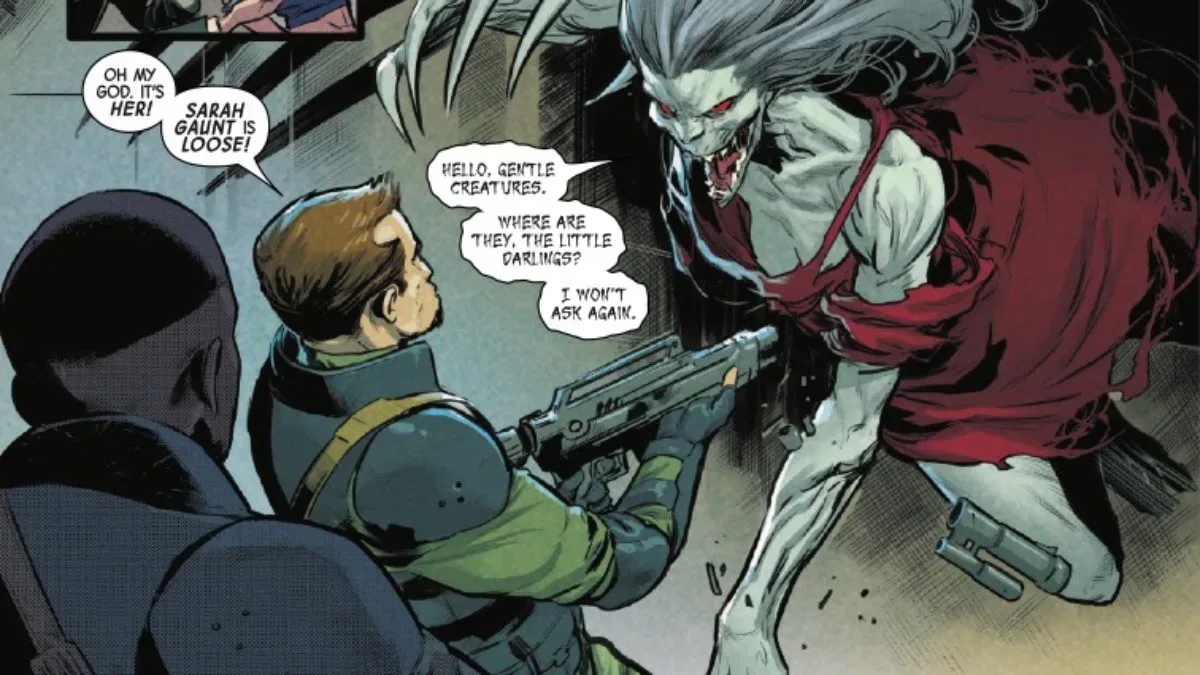
Readers looking for more superhero-comics coverage in the meantime can also see our look at Uncanny X-Men #37’s Wolverine and Sarah Gaunt matchup.
What the limited-series label means
Arrivals is listed as a three-issue series. A limited series is a comic planned to end after a fixed number of installments, unlike an ongoing title that may continue indefinitely. That format can make each issue feel consequential, because the creative team has a defined amount of space for setup, complication and resolution.
Three issues is especially concise for an original universe with multiple locations and a multi-generational family mystery. It suggests that the opening chapter may be densely packed, even at 40 pages. Readers should expect the debut to carry more than the burden of simply meeting the cast: it also has to establish the journey, the emotional consequences of Tajo Vallar’s disappearance and the immediate reason the siblings must act now.
There is a practical upside to the compact plan. A defined scope can make a new science-fiction series less intimidating than a sprawling ongoing continuity. Prospective readers do not need prior knowledge of another title to understand the advertised starting point, and the three-issue structure signals a contained initial story. It also means that readers who respond to the concept can follow its progression without assuming an open-ended commitment.
Release details for Arrivals #1
- Title: Arrivals #1
- On sale: October 21, 2026
- Publisher: Dark Horse Comics
- Format: Prestige, magazine-sized comic
- Page count: 40 pages
- Series length: Three issues
- Cover: Mike Huddleston
- Rating: T+
- Price: $6.99
For now, Arrivals #1 is defined by the tension between an intimate question and an immense stage: what became of Tajo Vallar, and what will his children find when they cross the distance to confront it? The debut’s expanded format and contributor list place unusual emphasis on the act of looking around this new setting. Whether its worlds and moons become memorable will depend on how effectively that visual scale serves the Vallar family’s mystery.