Shift is positioned as an origin-point story on an enormous scale: a journey toward Akva, the center of the universe, undertaken while the universe itself appears to be approaching collapse. The Dark Horse comic goes on sale September 30, 2026, in a 64-page prestige, magazine-sized edition priced at $9.99 and rated T.
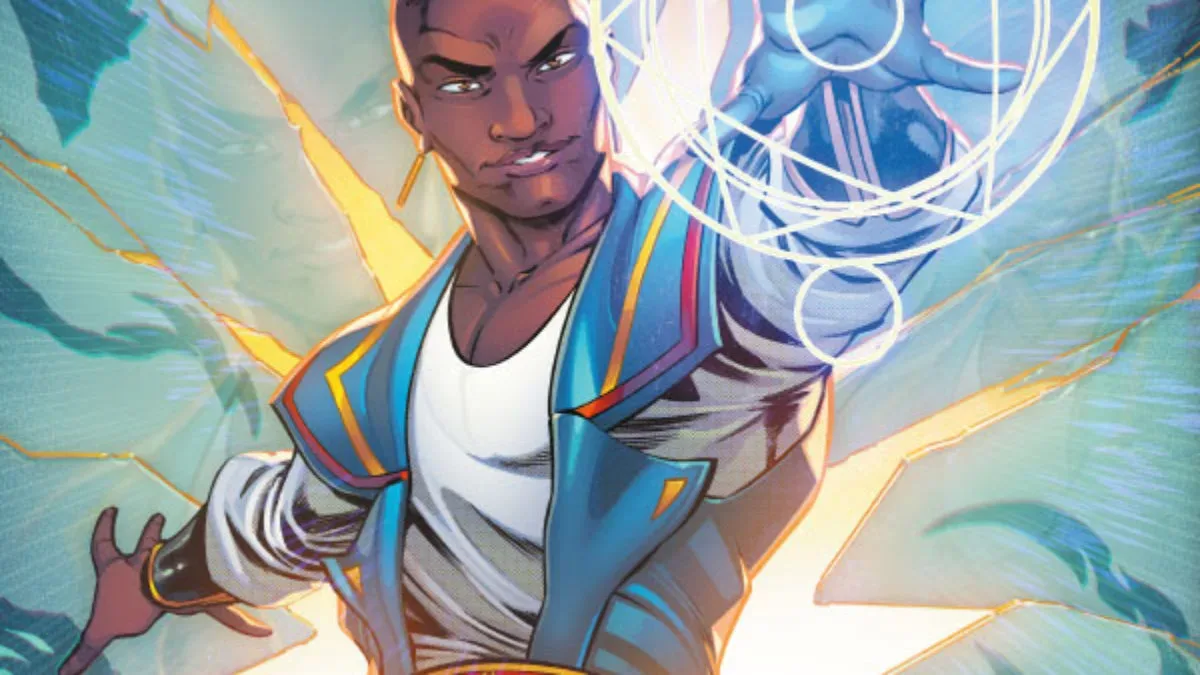
The premise follows Syg the White Hart, who rejects both his family’s wishes and the authority of the Academy. He travels aboard a Vojoganto toward Akva in pursuit of an explanation for the catastrophe he believes is coming. His companion is Markus, a lifelong friend who has been accused of heresy. Their mission is not merely to understand the danger, but to find a way to stop the worlds’ collapse before their era is overtaken by a fundamental cosmic change.
That threat has a name: the God Machine of Ordo. Forces within the setting seek to wake it, an act that would begin the next “science cycle” and bring about magic’s downfall. The central tension is therefore bigger than a single world in peril. Shift frames its conflict as a contest over what kind of reality is allowed to endure.
A prelude to the 3 Worlds/3 Moons Universe
The comic is set generations before the current science cycle in the 3 Worlds/3 Moons Universe. At this earlier point, magic is flourishing and Kaoso is thriving. That placement matters because it gives the story a deliberately unstable status quo: readers are entering a period identified by abundance and magical possibility, but one explicitly marked as vulnerable to replacement.
“Science cycle” is the key bit of terminology in the setup. It does not appear to mean scientific progress in the ordinary sense of new inventions gradually displacing old ones. Instead, the available description presents it as a sweeping era-change tied to the God Machine’s reawakening. Magic is currently at its height; science is waiting for its turn. The phrase suggests a universe whose defining rules, institutions and perhaps even everyday assumptions can be reset by a cyclical process.
That is an effective foundation for a science-fiction fantasy story because the conflict is not reduced to a simple magic-versus-technology argument. Magic is a lived reality at the beginning of this tale, while science is associated with a coming cycle and an immense mechanism that may remake the cosmos. Whether that transformation is natural, necessary, engineered or resisted is precisely the mystery Syg and Markus are heading into.
For readers who enjoy comics that use high-concept cosmic ideas to drive character journeys, the premise has a useful human anchor. Syg is not introduced as a sanctioned champion dispatched by the Academy. He is acting in opposition to family expectations and institutional authority, with an accused heretic at his side. His personal refusal to accept the prescribed path becomes inseparable from the larger refusal to accept that universal collapse is inevitable.
Syg and Markus travel into the unknown
Akva, described as the center of the universe, is the destination around which Shift turns. Syg catches a ride on a Vojoganto to reach it, a detail that immediately makes the setting feel traveled and inhabited rather than purely abstract. Even with the fate of worlds at stake, there is transportation, distance and a voyage requiring help rather than instant access.
Markus’ designation as an accused heretic is equally important. “Heretic” implies that the Academy or broader society has boundaries around acceptable belief, knowledge or practice. The preview material does not establish what Markus did, whether the accusation is true, or how far the term reaches in this setting. But it establishes a productive contrast: Syg is breaking from the authority that raised or instructed him, while Markus is already outside that authority’s acceptance.
That makes their partnership potentially central to the book’s exploration of knowledge. Syg seeks answers the Academy does not appear to be giving him. Markus, as someone branded a heretic, may embody forbidden ideas or a perspective the official order refuses to entertain. Those are interpretations rather than confirmed plot points, but the setup clearly gives their investigation a social dimension alongside its cosmic one.
The story’s stakes also leave room for a difficult question: can a cycle be prevented without causing another disaster? The campaign to wake Ordo’s God Machine is presented as a threat to magic, yet it is tied to the start of the next science cycle. In a setting shaped by repeating eras, stopping change may be as consequential as allowing it. The comic’s solicitation asks whether Syg and Markus can complete their mission before the next shift arrives, not whether the world can simply return to normal.
The God Machine, Ordo and the looming transition
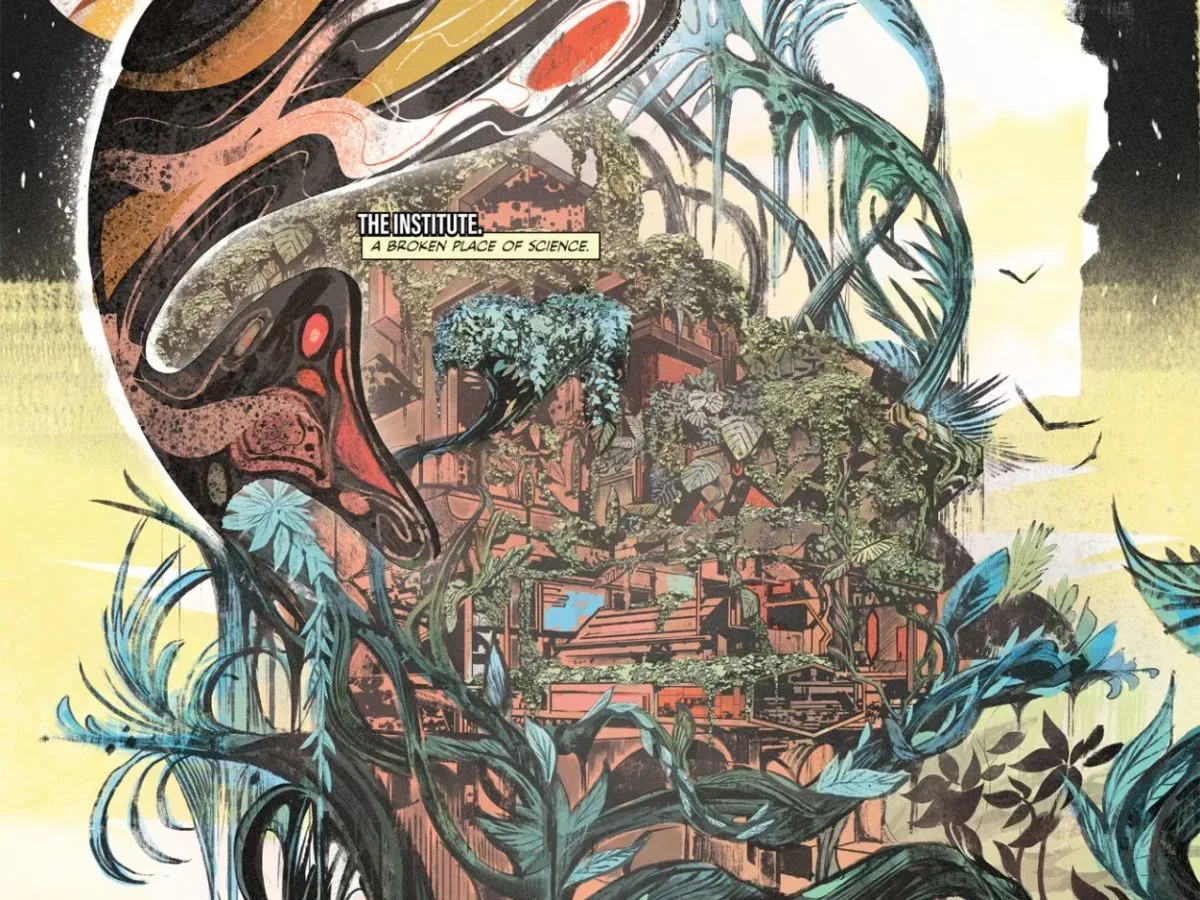
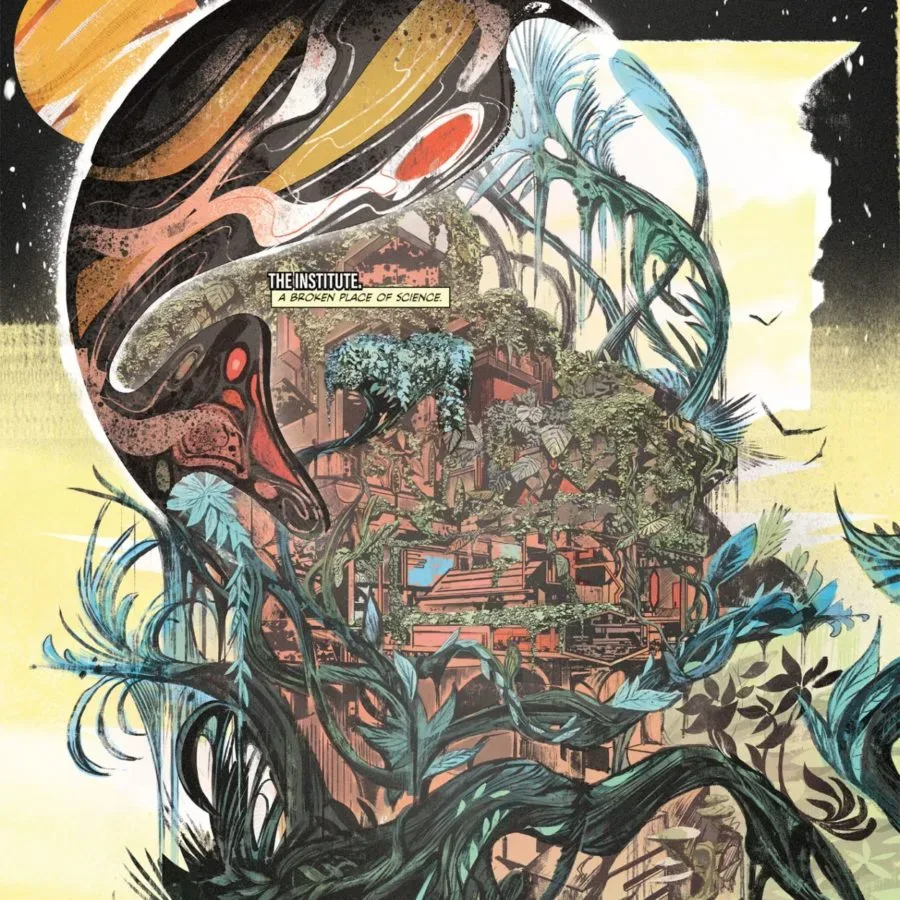
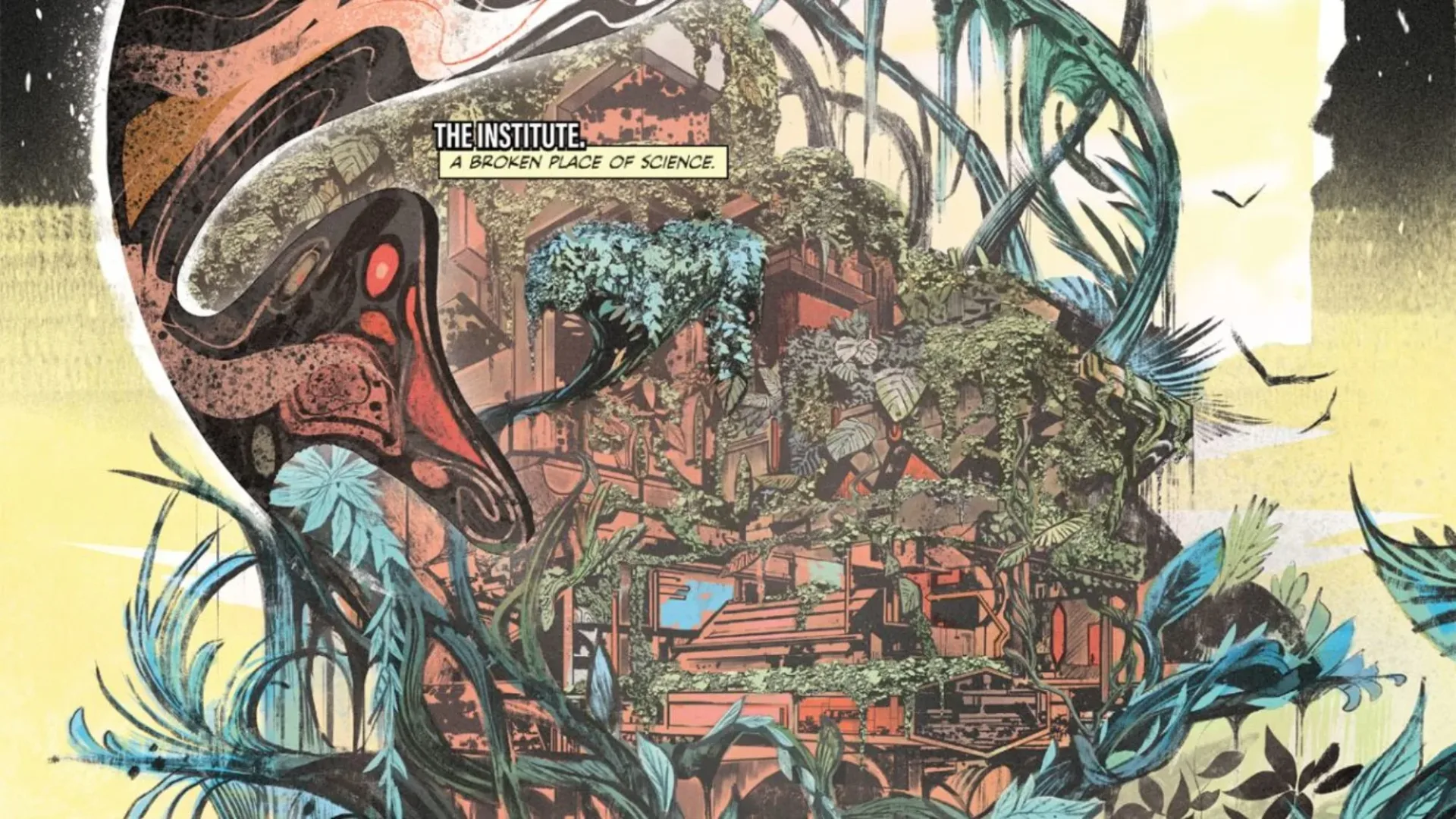
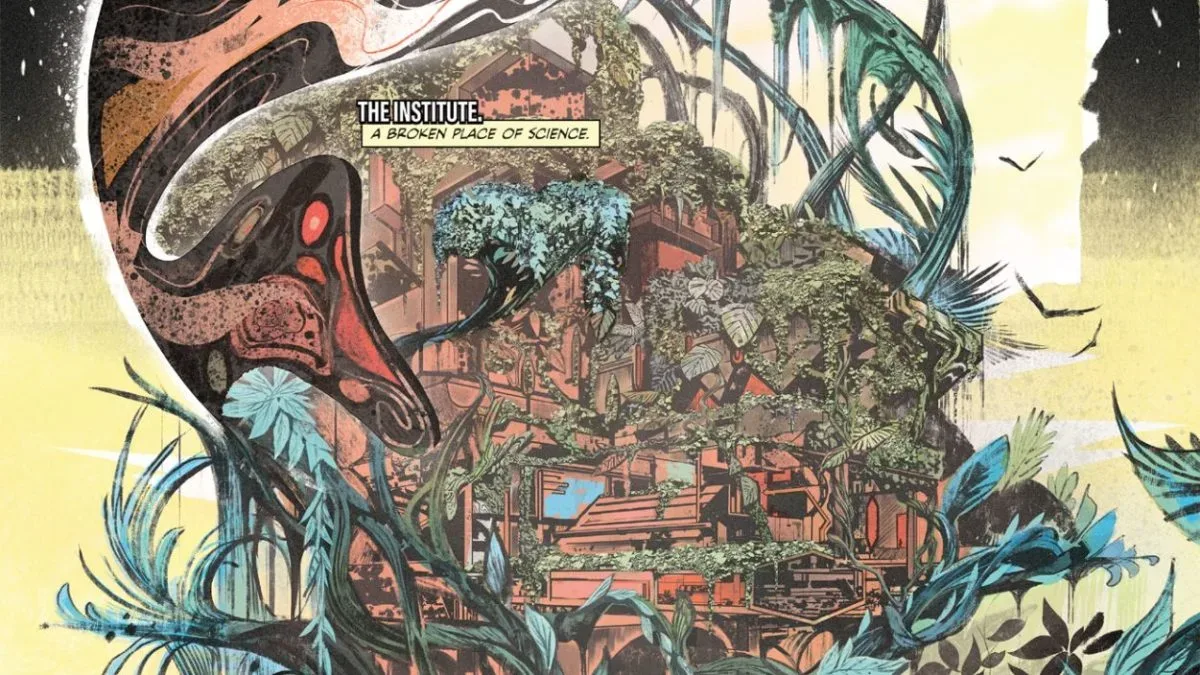
The God Machine is the story’s most ominous piece of language, and the preview imagery adds a few carefully selected details. Ordo is described as an old moon. Its Institute is broken and overgrown with vegetation, and within its Vault an elderly scientist attends to a luminous yellow specimen called Khor. The scientist periodically feeds his god while hoping to restore the world, but the cycle continues.
Those details paint a picture of systems that have outlived their visible prosperity. The Institute is not described as a pristine seat of power; it is a ruin overtaken by life. The Vault suggests containment, secrecy and preservation. Khor’s exact nature is not defined in the available material, so it would be premature to call it fuel, a life-form, an artifact or part of the machine itself. What is clear is that it is connected to the old scientist’s ritual of care and hope.
Likewise, “God Machine” should not be read as a standard robot label. In this story’s vocabulary, it points to an entity or apparatus powerful enough to begin a new cosmic era. The word “god” emphasizes its authority over the conditions of reality, while “machine” emphasizes process, mechanism and recurrence. The tension between those two terms mirrors the larger tension between magic at its peak and the incoming science cycle.
There is a compelling irony in the fact that the God Machine is both sleeping and consequential. A sleeping danger can feel distant, contained or even mythical. But Shift makes its possible awakening the hinge of history. The forces moving to revive it are not simply threatening a city or a family; they are seeking to set in motion the transformation that ends the current age.
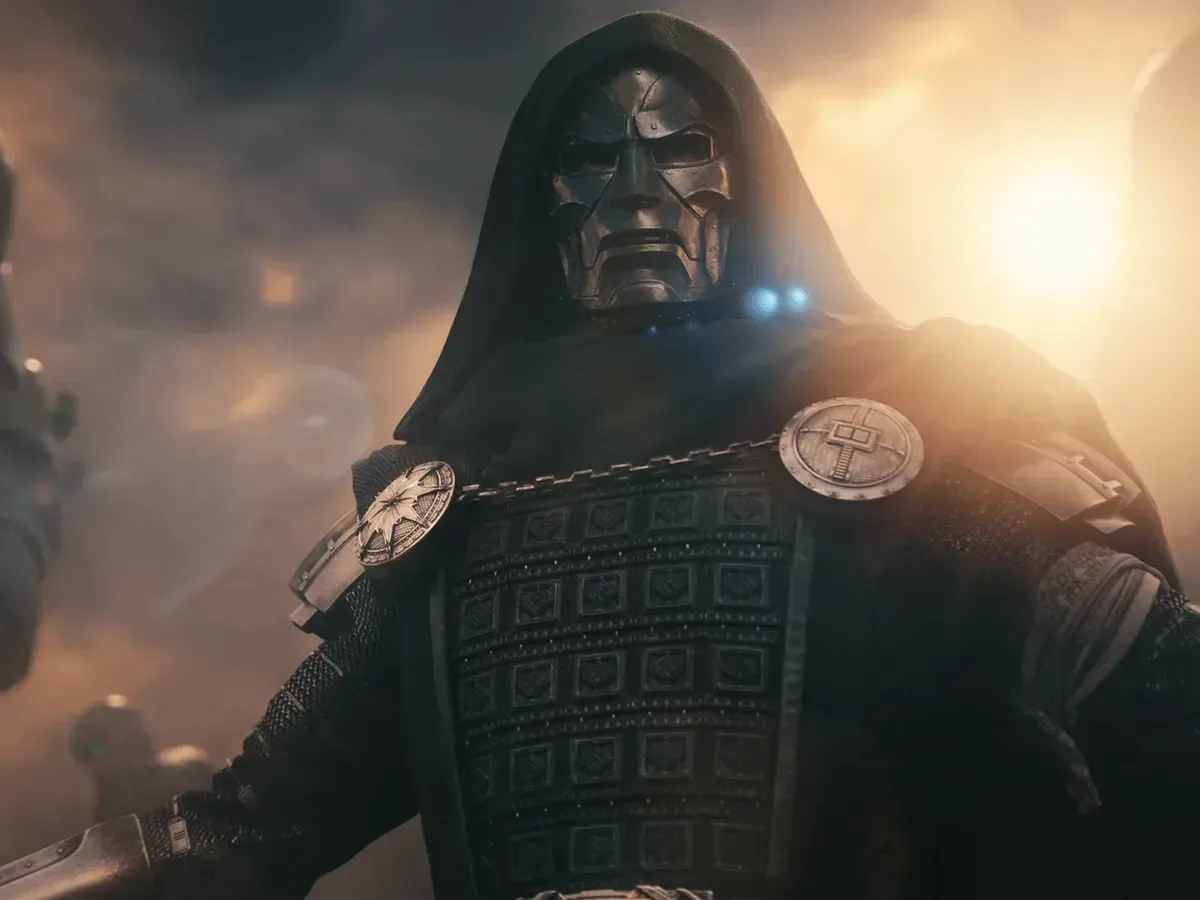
Cosmic-scale comic stories often work best when their grand vocabulary has clear narrative consequences. Here, the consequences are unusually direct: magic falls, the science cycle begins, and Syg and Markus may run out of time. Readers looking for another modern story built around a formidable figure and large-scale Marvel-style stakes can also see how uncertainty drives speculation in this look at a possible Doctor Doom and Avengers: Doomsday plot thread, though Shift stands as its own separate universe and premise.
Creators and format
The solicitation identifies Jonathan Hickman as the writer and Mike del Mundo as artist and colorist. Its listed full credits also include Nick Spencer and Rus Wooton, with a cover by del Mundo. Hickman’s previously named work includes East of West, The Manhattan Projects and Decorum.
Del Mundo’s role on both art and colors is particularly relevant to a book built around rich visual concepts: a vegetation-choked institution, an aged moon, a glowing yellow specimen, a cosmic center and a machine whose awakening could displace an entire era. The prestige, magazine-sized presentation is expressly intended to showcase the artwork, rather than treating the larger dimensions as a minor packaging detail.
For prospective buyers, the physical specifications are precise: the comic measures 8.54 inches wide by 10.89 inches high, with a 0.14-inch depth, and weighs 6 ounces. The larger-than-standard format and 64-page length suggest a release designed as a substantial single installment, but the material does not specify how many issues the project will have or what its full publishing plan may be.
What is confirmed, and what remains unanswered
There is enough in the announced setup to establish the book’s core conflict without giving away its resolution. Confirmed elements include the setting’s era of powerful magic, Syg’s break with his family and the Academy, Markus’ heresy accusation, the trip to Akva, the apparent threat of universal collapse, and the drive by other forces to reawaken Ordo’s God Machine.
Much remains deliberately open. The available details do not say why the universe is collapsing, who wants the God Machine awakened, what the Academy knows, why Markus is accused of heresy, or whether the science cycle is an unavoidable part of the universe’s structure. Khor is identified but not explained. The God Machine’s exact form and function are similarly unrevealed.
Those gaps are not shortcomings of the announcement; they are the engine of its mystery. Shift begins with a bold proposition: a world at magic’s peak can still be at the edge of extinction, and the force that might renew reality may also destroy everything that made the current era worth saving. Syg and Markus are headed toward the center of that contradiction when the comic arrives September 30, 2026.