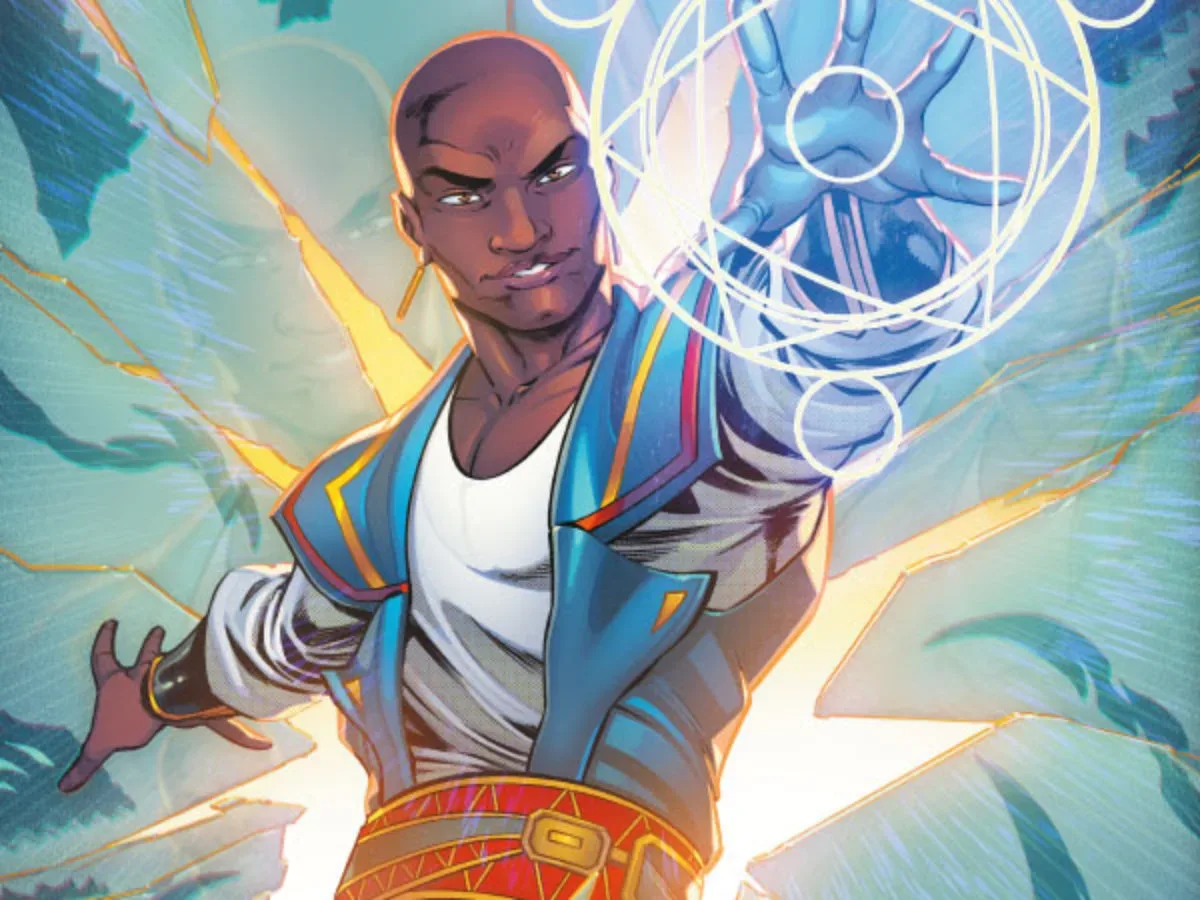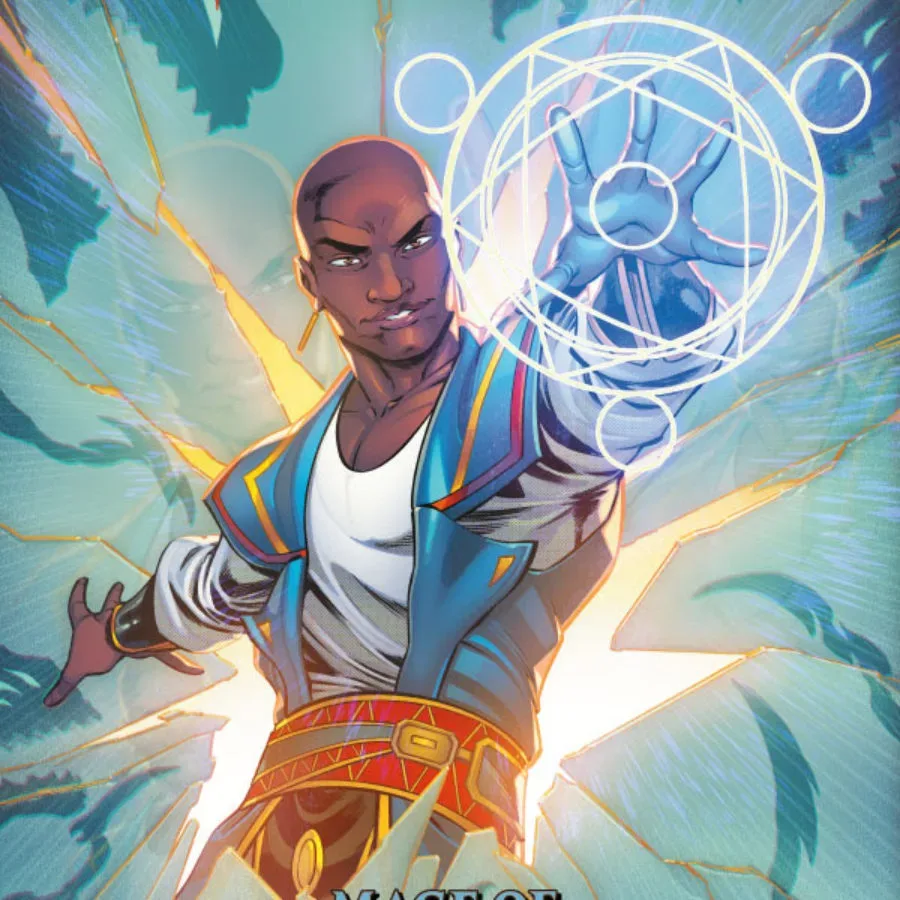
Magic: The Gathering: Mage of Zhalfir will turn the clock back for one of Dominaria’s most consequential mages. The new 12-issue Dark Horse Comics series is scheduled to start on January 20, 2027, with a story centered on Teferi Akosa during his formative years at Tolarian Academy.
Ray Fawkes is writing the series. Rapha Lobosco and Jão Canola are attached to the first four issues, while AndWorld Design is handling lettering. Paris Alleyne and Mateus Manhanini are credited for covers. The debut issue is listed at $4.99, and the overall series is set to run through 2027.
That basic premise makes Mage of Zhalfir a deliberately early chapter in the life of a character whose story is usually defined by enormous consequences: lost time, altered worlds, invasions and the burden of decisions that extend far beyond one person. Instead of beginning with the seasoned figure associated with those events, the comic goes back to an ambitious student who believes greatness is ahead of him—and whose chosen discipline makes even a small mistake potentially enormous.
A Teferi story about the years before the legend
Teferi is a human wizard from Zhalfir, a nation on Jamuraa on the plane of Dominaria. He specializes in manipulating the flow of time, making him a chronarch. In simple terms, that designation describes a time mage: someone whose magic concerns time rather than merely conventional elemental force or combat spells.
For readers encountering the character beyond card names and artwork, this is an unusually useful place for a comic to begin. Teferi is more than 1,200 years old, so his established history spans an immense period. He has been portrayed as a formidable wizard with a dry sense of humor, generally connected to blue mana and secondarily to white mana. Yet a long-lived character can be difficult to approach when their most famous actions already come weighted with centuries of context.
Mage of Zhalfir instead frames him as a student at the prestigious Tolarian Academy, studying beneath Urza. The setup is closer to a “year one” narrative than a survey of every later milestone. Teferi knows—or at least strongly believes—that he is headed toward greatness. The tension comes from the fact that reality-altering magic is not a field where confidence automatically produces safety.
Manipulating time and space is delicate work, and changing reality carries consequences.
That idea is the series’ clearest dramatic engine. A young mage’s ambition is a familiar fantasy-story foundation; a young mage working with time and space gives the premise a sharper edge. The stakes need not begin at the scale of a Multiverse-wide crisis for the premise to matter. If the magic itself can disturb reality, experimentation, pride and error can all become story problems.
Why Tolarian Academy matters
Tolarian Academy is not simply an academic backdrop. It was founded by Urza to prepare against Phyrexian threats, giving Teferi’s education a place in Dominaria’s broader history. Urza is himself a Planeswalker, a term used in Magic for a being capable of traveling among planes of existence. Dominaria is one such plane: a primary world in Magic’s setting rather than a different name for the entire Multiverse.
That distinction helps establish what the comic can explore. The academy setting puts Teferi’s private development—his magical potential, personality and appetite for achievement—beside an institution built around looming danger. The supplied premise does not lay out the series’ full plot, its supporting cast, or the exact incidents Teferi will face. It does, however, make clear that Urza’s tutelage and the academy are central to the opening premise.
Teferi was known as a talented prankster in his youth. That trait has room to matter beyond comic relief. A character who is gifted, restless and inclined to test boundaries is a natural fit for a story about hazardous temporal magic. It also provides a contrast with the older figure readers may know: a man shaped by experience, responsibility and hard choices accumulated across generations.
Later history gives the origin story its weight
The comic’s early setting is significant because Teferi’s later actions leave a long shadow. During the Phyrexian Invasion, he phased Zhalfir—and later Shiv—out of time and space in an effort to protect them. “Phasing” here refers to removing a place from ordinary time and space, rather than simply moving it across a map. It was an act tied to survival, but it also carried devastating personal and historical implications.
Those actions left Teferi associated with two seemingly contradictory titles: Father of Zhalfir and Destroyer of Zhalfir. The contradiction is important. It indicates why an origin story can be more interesting than a straightforward account of a gifted student becoming powerful. Magic’s time-mage premise naturally invites questions about control: what it means to save something by taking it away, whether power can protect without also costing something, and how intention is judged when the results are painful.
Teferi later sacrificed much of his power, including his spark for a period, in relation to efforts to restore matters or confront the effects of those earlier choices. While desparked, he established a family life, marrying Subira, who is now deceased, and becoming father to Niambi and grandfather to her children. He eventually regained his spark, worked with groups including the Gatewatch, and took part in major conflicts involving Nicol Bolas, the New Phyrexian Invasion, and subsequent events.
After those later conflicts, Teferi again lost his Planeswalker spark, as did many others. None of that confirms exactly how much future continuity will be referenced in Mage of Zhalfir. The announced description is focused firmly on the academy-era Teferi. Still, the known shape of his life gives the title an inherent dramatic irony: readers understand that the student’s experiments and choices belong to the beginning of a life that will repeatedly intersect with Dominaria’s fate.
What the creative lineup tells readers—and what it does not
The announced credits give a clear starting team but leave sensible room for caution. Fawkes is credited as writer for the 12-issue project. Lobosco and Canola are credited on the first four issues, so readers should not assume the artistic arrangement for the whole run from the initial information alone. Alleyne and Manhanini are the named cover artists, and AndWorld Design is the letterer.
That matters because a 12-issue limited series has enough space to build an arc rather than merely deliver a single issue’s character vignette. But the announcement does not specify later interior artists, variants, collected editions, retailer incentives, or detailed issue-by-issue story beats. It is best to treat those details as unannounced rather than fill the gaps with expectations.
Visually, the early-era setting has a clear storytelling opportunity: Teferi before the familiar image of the ancient, self-assured master of time. The premise can show magical learning as unstable, difficult and sometimes reckless, while the lettering and cover work will help establish the book’s presentation. That is analysis based on the story setup, not a claim about pages that have not been released.
Practical details for Magic and comics readers
- Series: Magic: The Gathering: Mage of Zhalfir
- Publisher: Dark Horse Comics
- Format: 12-issue comic-book series
- Issue #1 date: January 20, 2027
- Issue #1 price: $4.99
- Writer: Ray Fawkes
- Early interior art: Rapha Lobosco and Jão Canola, for the first four issues
- Lettering: AndWorld Design
- Cover artists: Paris Alleyne and Mateus Manhanini
For readers who enjoy the overlap between games, cards and sequential art, Teferi’s setting makes this more than a generic licensed fantasy comic. It uses a character whose mechanics and fiction both revolve around time, then places him at the point where talent has not yet been tempered by the events that define his reputation. It also joins the wider ongoing interest in graphic-novel storytelling, including initiatives supporting manga and graphic novels for young readers, though Mage of Zhalfir is its own planned single-issue series rather than a program announcement.
The most compelling question for the run is therefore not whether Teferi becomes important; his later history already establishes that. It is what this earlier version of him believes time magic can solve, what he fails to understand about its cost, and how an academy student’s certainty begins to turn into the perspective of a mage who has lived through the consequences of changing reality.