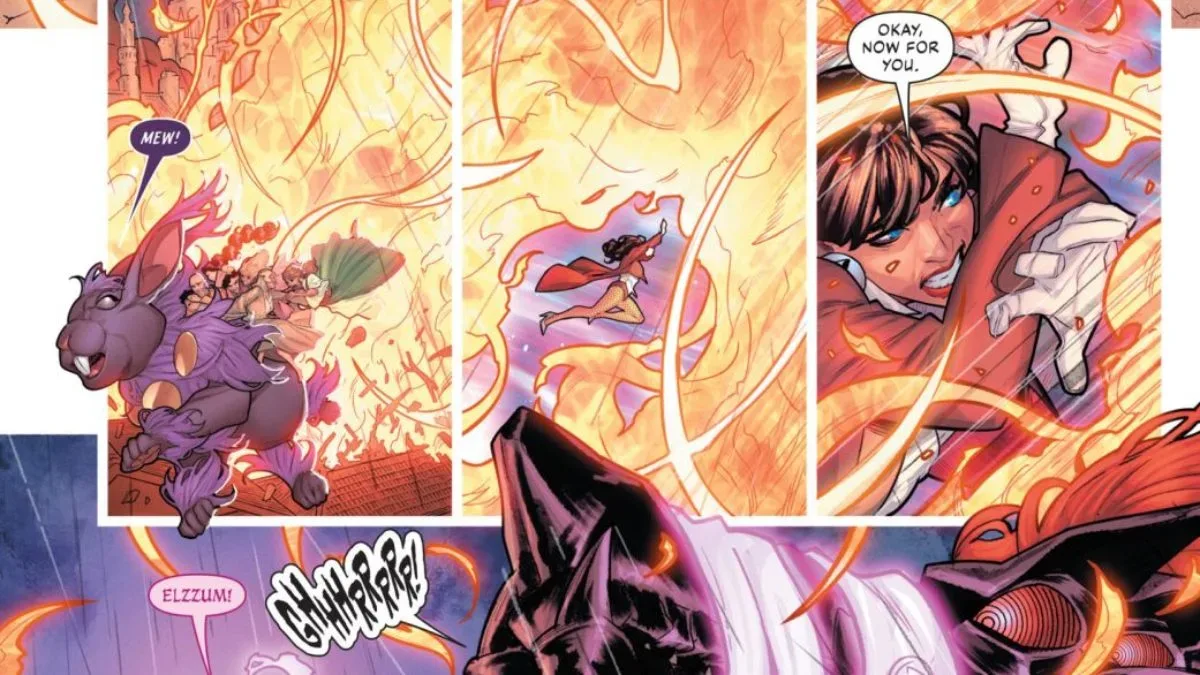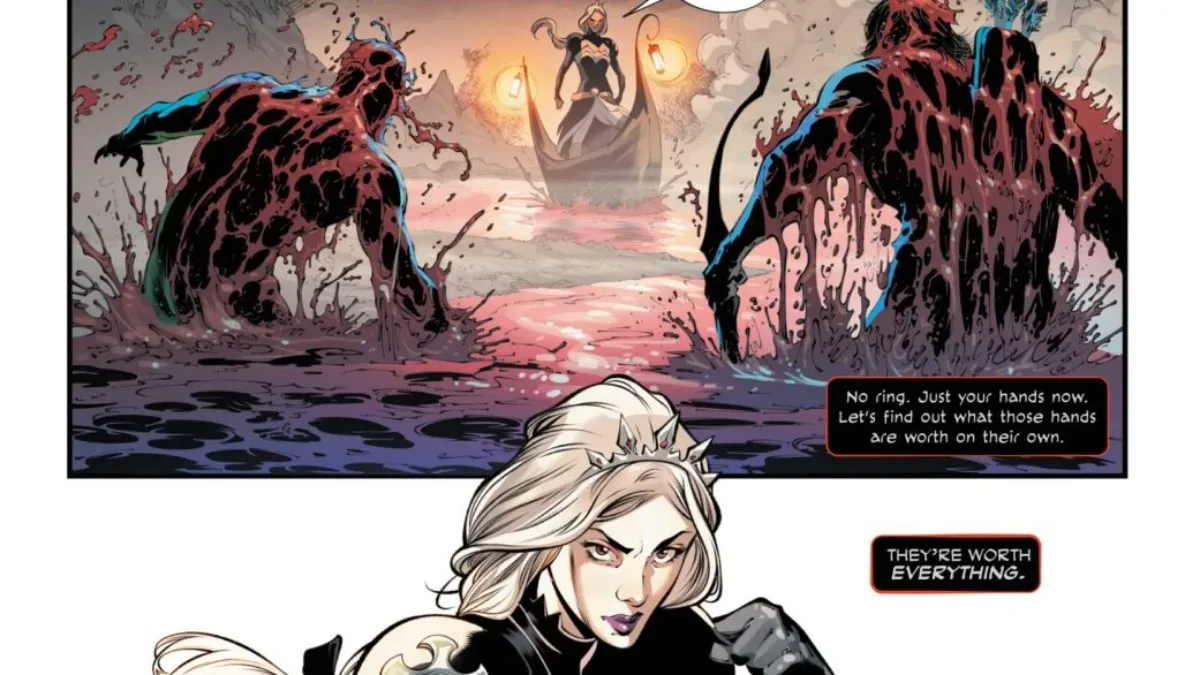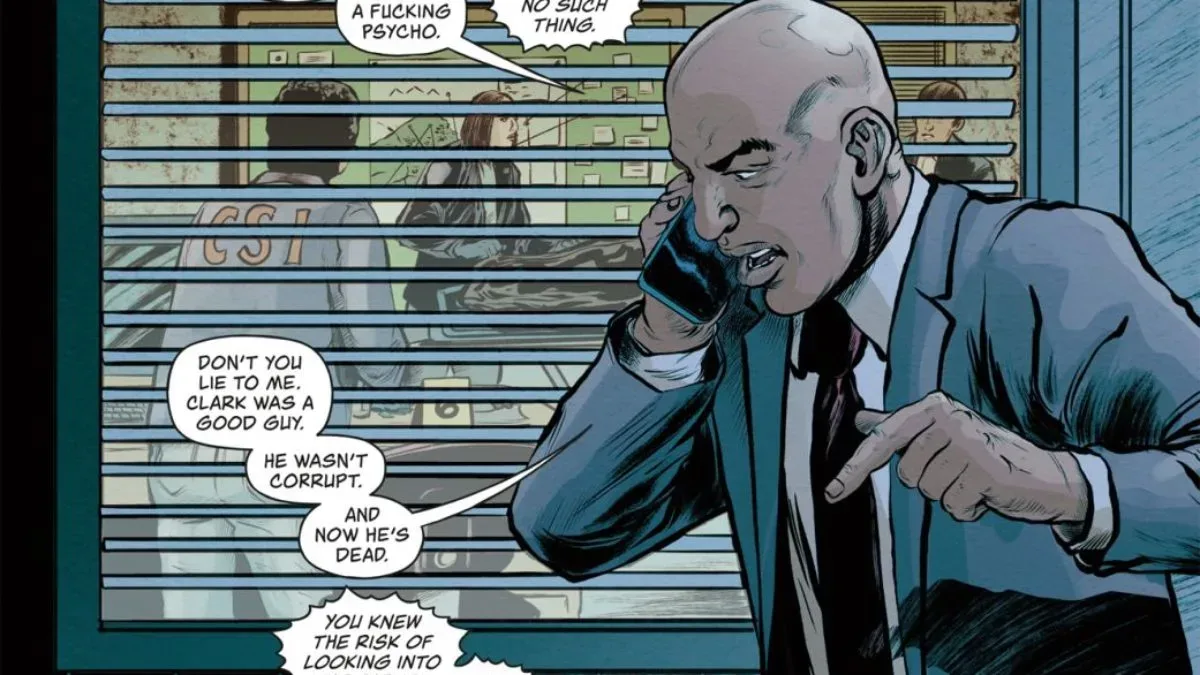
American Caper #11 is scheduled to go on sale September 30, 2026, continuing the mature crime series from Dark Horse Comics. Its 32 pages promise another crowded installment in which several character threads appear ready to collide: Marty is preparing a book-release bash, the FBI pays Aaron Olds a visit, and William receives a phone call while inside a porta potty that is said to change his life.
That alone would be an aggressively eventful issue logline. But the official setup also puts Clint and Sonny on a path from quarrel to something worse, says Dre BK “kills the devil,” and places General Chancery at a barbecue of his own. The result is a deliberately unstable list of situations: public self-promotion, federal scrutiny, interpersonal conflict, violence, and social gathering all packed into a single chapter of an ongoing series.
The setup: several problems, no obvious safe exit
The core detail for Marty is a book-release party, described as a “bash” rather than a quiet launch. That wording matters because a party is inherently public, social and difficult to control. In a crime story built around disasters unfolding across a cast, it gives the issue a likely pressure point: an occasion meant to present success can also become the place where reputations, plans and relationships come apart.
The supplied preview material depicts elements associated with Marty’s event, including social-media posturing, drugs and an unsettling green drink. It also has Marty presenting himself as a guru. Those images and details support an atmosphere of performance and excess, though readers should not treat them as proof of exactly how the party will end. A preview can establish mood and character behavior without disclosing the final shape of a scene.
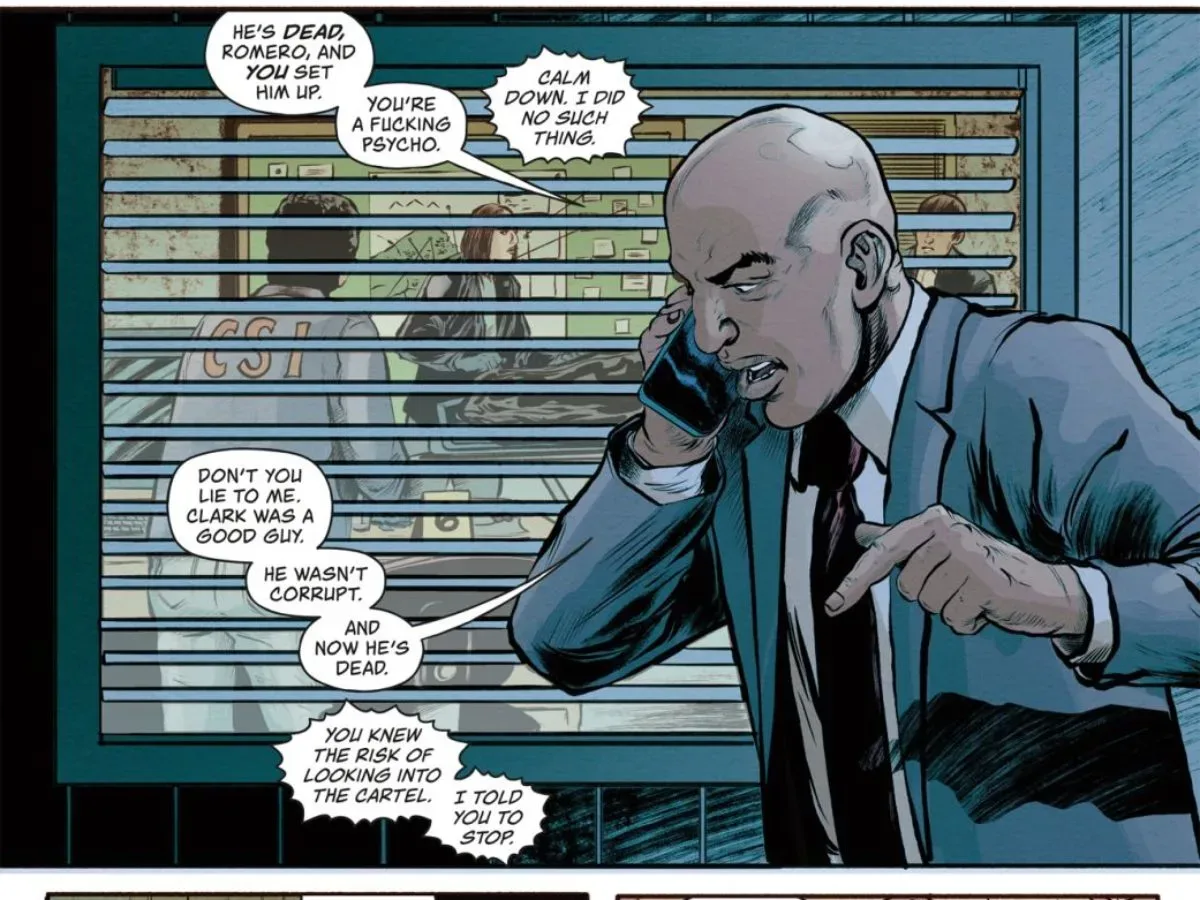
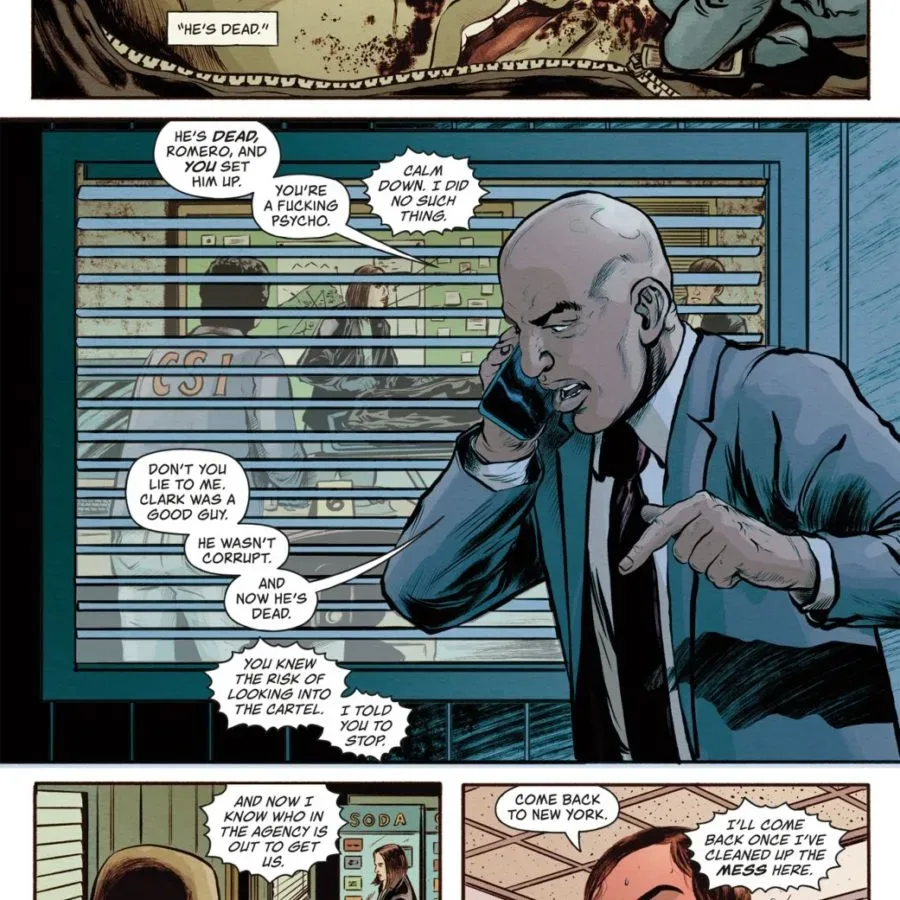
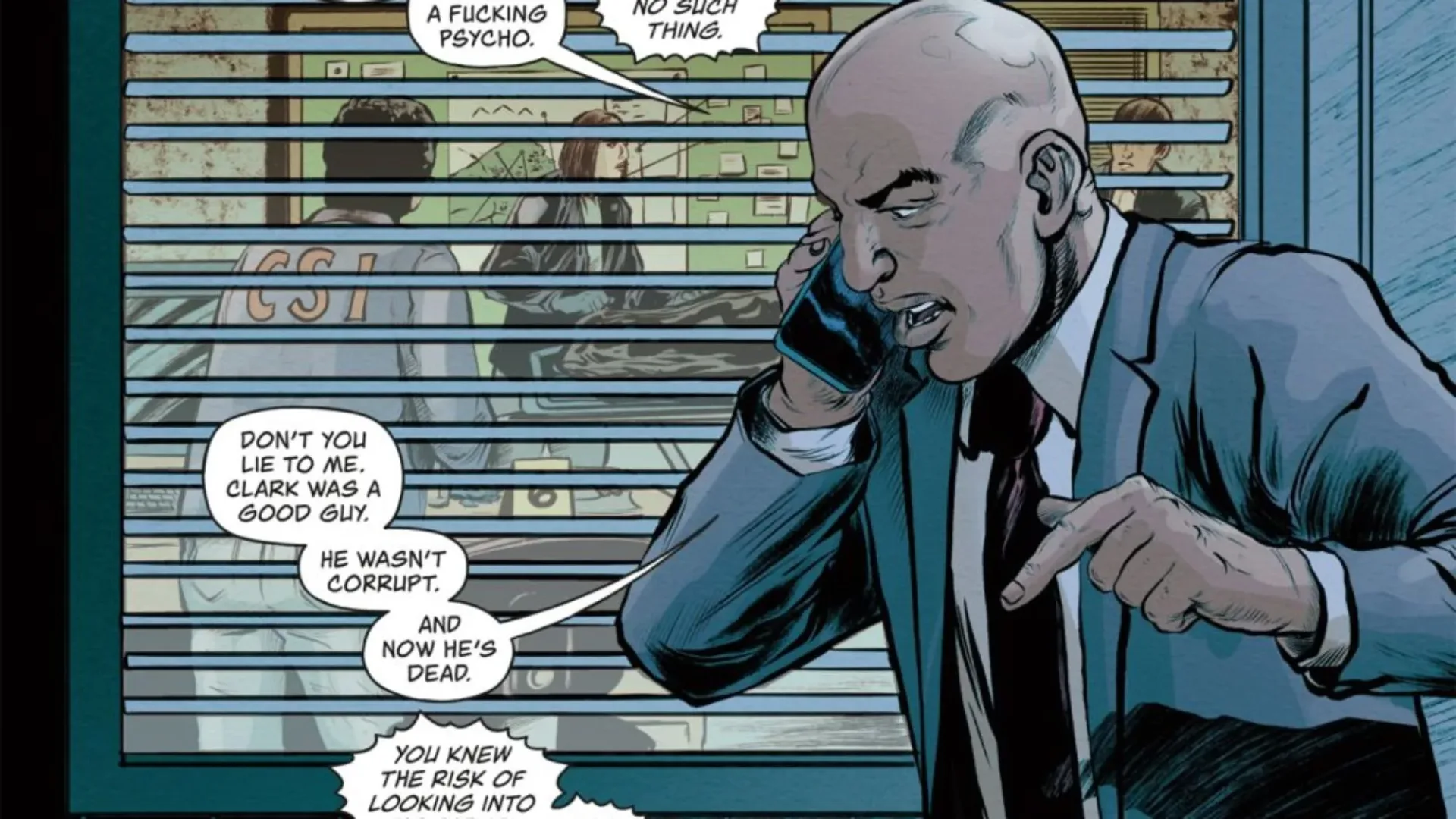
At the same time, Aaron Olds faces an FBI visit. Preview pages reportedly begin that thread at the Verona, Wyoming, field office with a dead body, followed by an agent selecting weapons from a vehicle trunk. That is a striking visual escalation, but it is important to separate what is visibly suggested from what has been confirmed: the material indicates danger and an FBI connection around Aaron, not the complete facts of the death, the agent’s objective, or the issue’s outcome.
In practical reading terms, this is the kind of solicitation that asks readers to track parallel storylines rather than expect one self-contained mission. The book bash and the FBI angle carry very different social temperatures, yet both involve people attempting to manage a situation in public or under institutional pressure. Whether they directly intersect is not stated.
William’s call is the issue’s most peculiar hook
William’s “life-changing” call is the simplest piece of the premise and perhaps the most effective. A phone call is a familiar plot device: it can deliver news, an order, a threat, a confession or an opportunity. Placing it in a porta potty strips the moment of glamour and makes the setting part of the joke, while still leaving the important question unanswered—what does he hear?
The solicitation does not say whether the call changes William’s life for better or worse. Given the broader emphasis on quarrels, FBI attention, killing and a cast of characters whose bad choices are part of the appeal, readers have reason to expect consequences rather than a cleanly beneficial revelation. That is analysis based on the issue’s framing, not a disclosed plot point.
The location also signals the series’ apparent willingness to put major turns next to the undignified and absurd. Crime fiction often uses enclosed or isolated spaces to heighten vulnerability. Here, the setting creates that isolation but adds an intentionally low-rent comic edge. It is a reminder that a “life-changing” development does not need to arrive in a conventionally dramatic room.
Clint, Sonny, Dre BK and General Chancery add more volatility
Clint and Sonny’s dispute “goes sideways,” a compact phrase that leaves the scale of the escalation open. It confirms conflict, but not its cause, participants beyond the two named characters, or whether either can pull back before the damage is done. The wording is especially useful in a preview because it promises forward motion without resolving the tension it creates.
Dre BK’s apparent act of killing “the devil” is the most ambiguous item in the issue description. It could be literal within the comic’s world, figurative language, a nickname, or a description whose context will be supplied in the issue itself. The available material does not settle that question. Readers looking for a precise supernatural reading should wait for the comic rather than infer one solely from a dramatic phrase in the solicitation.
General Chancery’s barbecue is similarly sparse in detail. A barbecue can be a simple gathering, but within this issue’s lineup it sits beside escalating quarrels and an FBI thread. The contrast between a casual social event and the rest of the chapter’s apparent instability is likely intentional. It gives the issue another venue where conversations, loyalties or plans might become complicated, without confirming that any violence occurs there.
What “ongoing series” means for issue #11
The publisher identifies American Caper as an ongoing series. In comics publishing, that means the issue is part of a continuing narrative rather than a one-shot—a single, self-contained comic—or a limited series with a pre-announced final number. Issue #11 is therefore positioned as a chapter in stories already in progress.
That matters for prospective readers. The official description spends its space naming characters and immediate situations, not reintroducing the cast or explaining every prior development. Newcomers can use it as a tone check: the premise signals a mature, chaotic crime narrative with multiple moving parts. But readers who want every relationship and earlier decision fully contextualized may prefer to start with preceding issues before jumping into this installment.
For continuing readers, the structure suggests an issue designed to advance several lanes at once. Marty’s public-facing ambitions, Aaron’s FBI problem, William’s call, Clint and Sonny’s dispute, Dre BK’s violent development, and General Chancery’s gathering are all distinct hooks. A comic can use that approach to build momentum through cutting between characters, allowing one revelation to land while another thread is left hanging.
It also places emphasis on uncertainty. The preview gives readers incidents and settings, not a tidy map of who is right, who is safe, or who has the strongest plan. That uncertainty is a feature of the pitch. The series is presented as one where watching compromised people steer themselves into trouble is part of the draw.
Creators, format and cover options
American Caper #11 credits Dan Houser, Lazlow, David Lapham and Lee Loughridge, with a main cover by Tyler Boss. The comic is listed at 32 pages, rated Mature, and priced at $4.99 in the United States.
A second cover is also listed: Cover B by Marguerite Sauvage, likewise priced at $4.99 in the United States and $6.99 in Canada. The standard edition carries item number 76156801474701111, while the Cover B variant is listed as 76156801474701121. Variant covers are alternate cover artworks for the same numbered issue; they normally give collectors and readers a visual choice, rather than indicating a separate chapter of the story. The provided listing does not identify any interior-content differences between the two versions.
- On sale: September 30, 2026
- Publisher: Dark Horse Comics
- Format: 32 pages, Mature
- Main cover: Tyler Boss
- Cover B: Marguerite Sauvage
- US price: $4.99 for either listed cover
A note on the preview’s AI material
The supplied preview text includes an extended fictional AI-overlord routine involving a wellness app, synthetic agents and “smart” porta potties. None of that is presented as comic-book solicitation information for American Caper #11, and it should not be mistaken for a real feature, announcement or plot confirmation. It is editorial framing separate from the issue’s publisher-provided description.
That distinction is useful beyond this particular preview. Claims about AI systems controlling devices, communications or people should be approached with clear evidence and concrete safeguards, not treated as entertainment copy merely because they sound technological. For related real-world discussion of AI safety priorities, see this look at the case for AI safeguards and misuse prevention.
For the comic itself, the confirmed draw is more grounded: a book launch, an FBI visit, a consequential call, a dispute that escalates, and a cast navigating another round of potentially ruinous decisions. American Caper #11 arrives September 30 with two listed cover choices for readers who want to see which of those threads catches fire first.