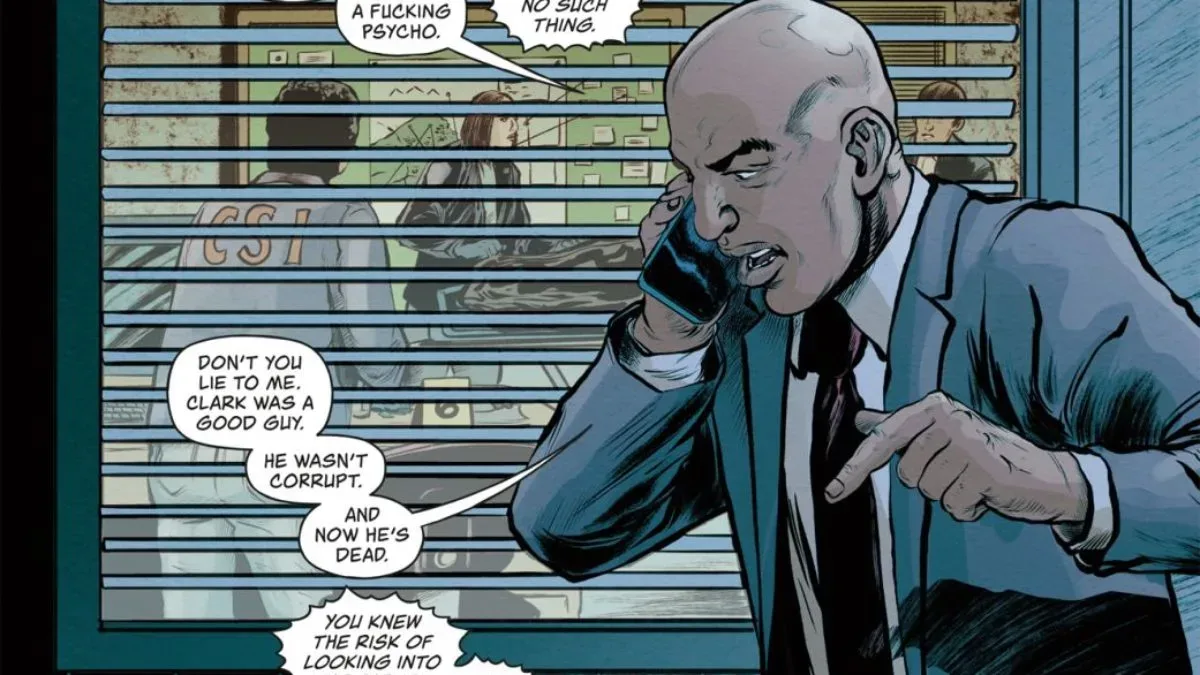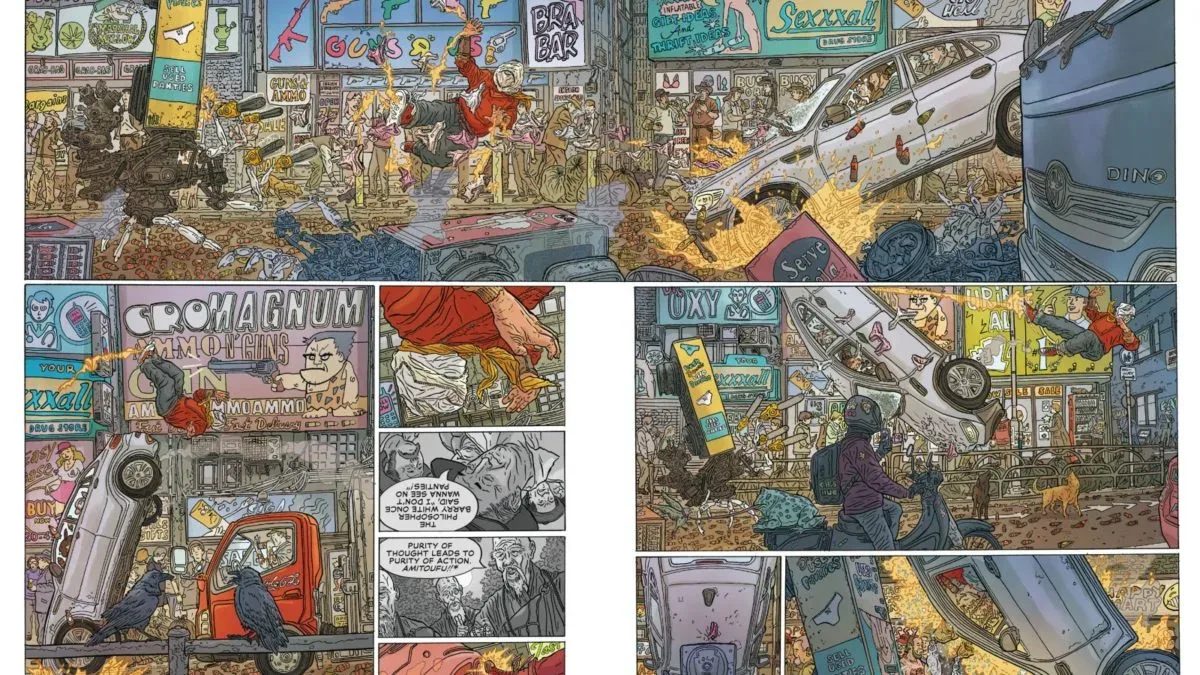
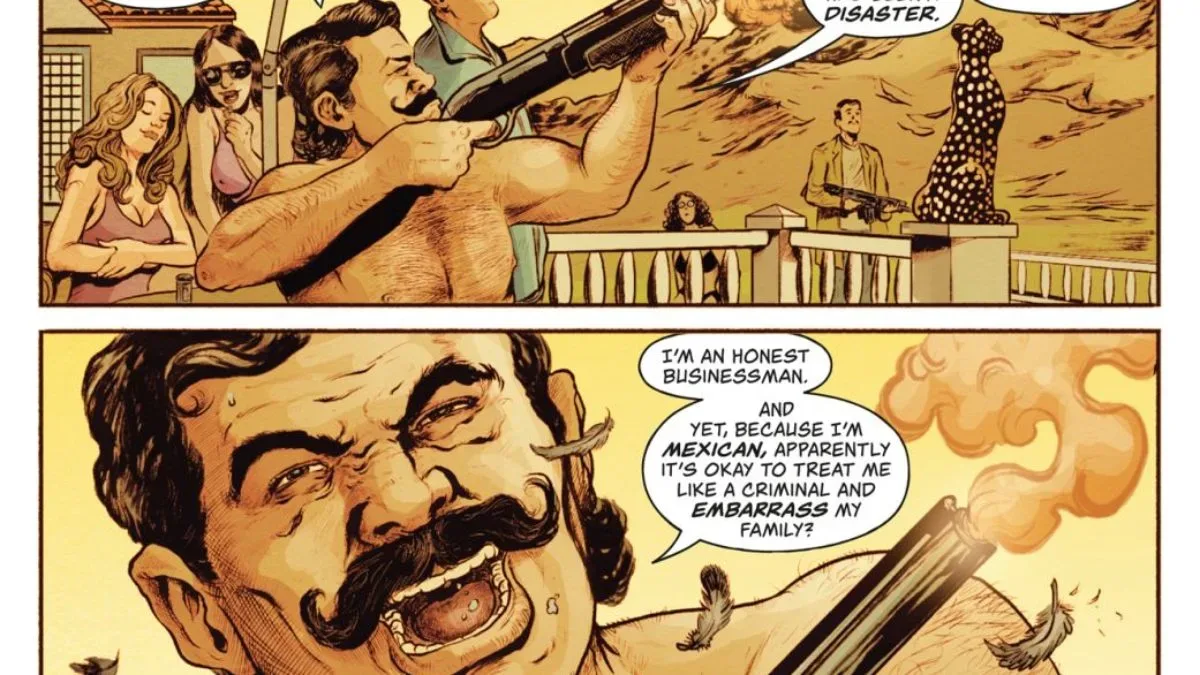
American Caper #12 is set to bring the series’ Verona, Wyoming storyline to a violent close when it goes on sale November 11, 2026. The 48-page Mature issue is built around a party gone catastrophically wrong, with private resentments and outside threats converging in one small-town setting.
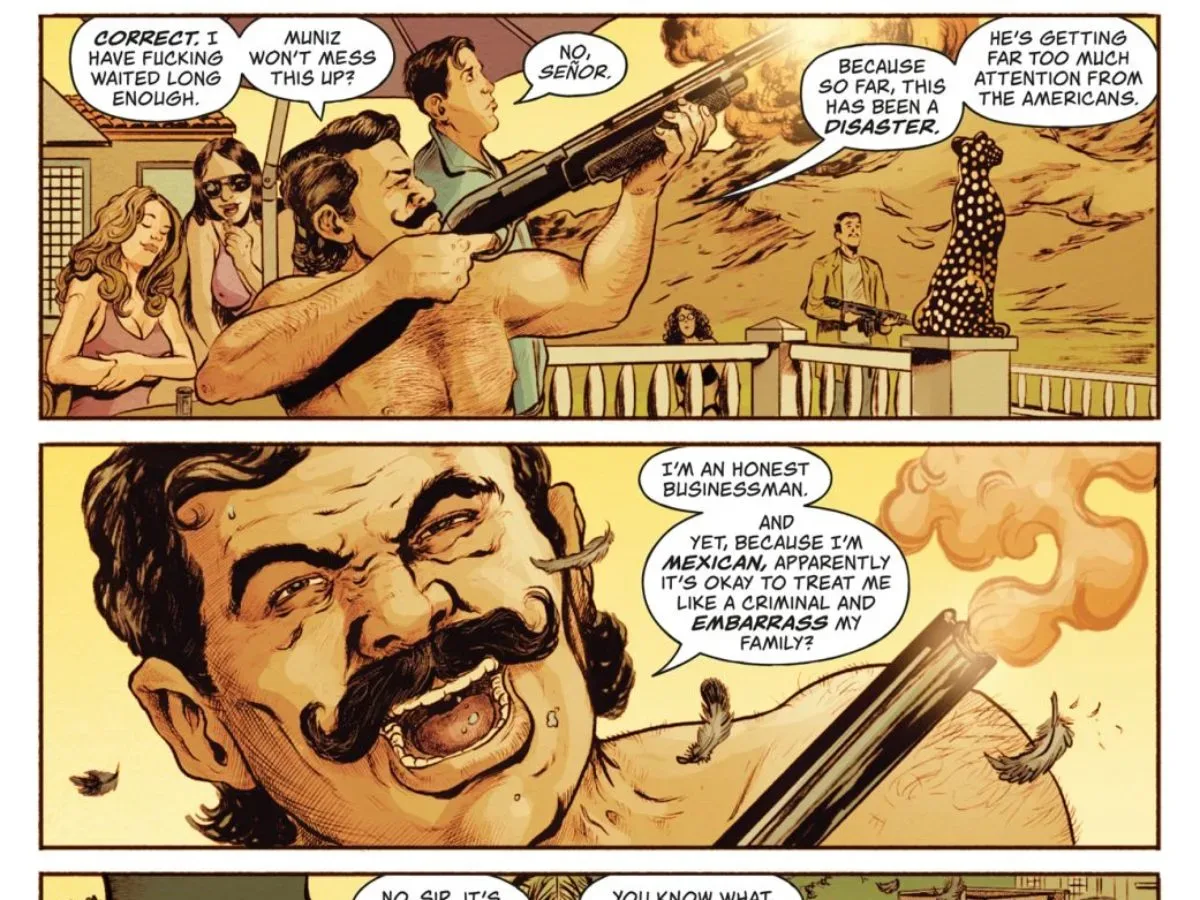
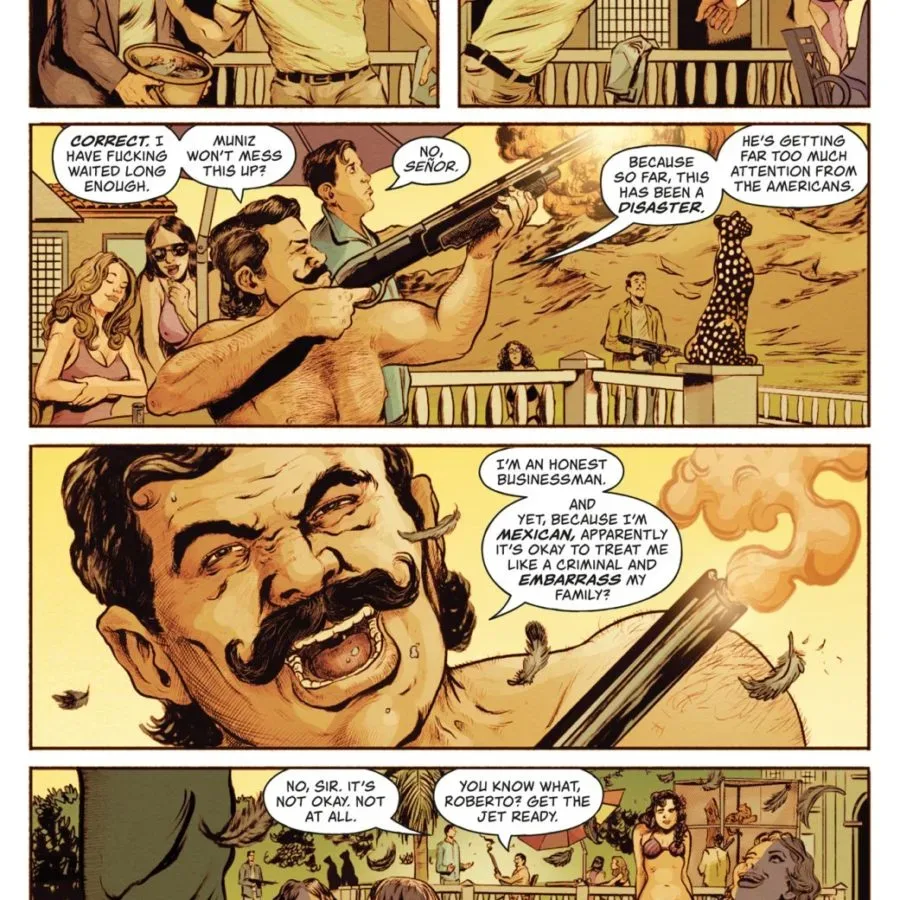
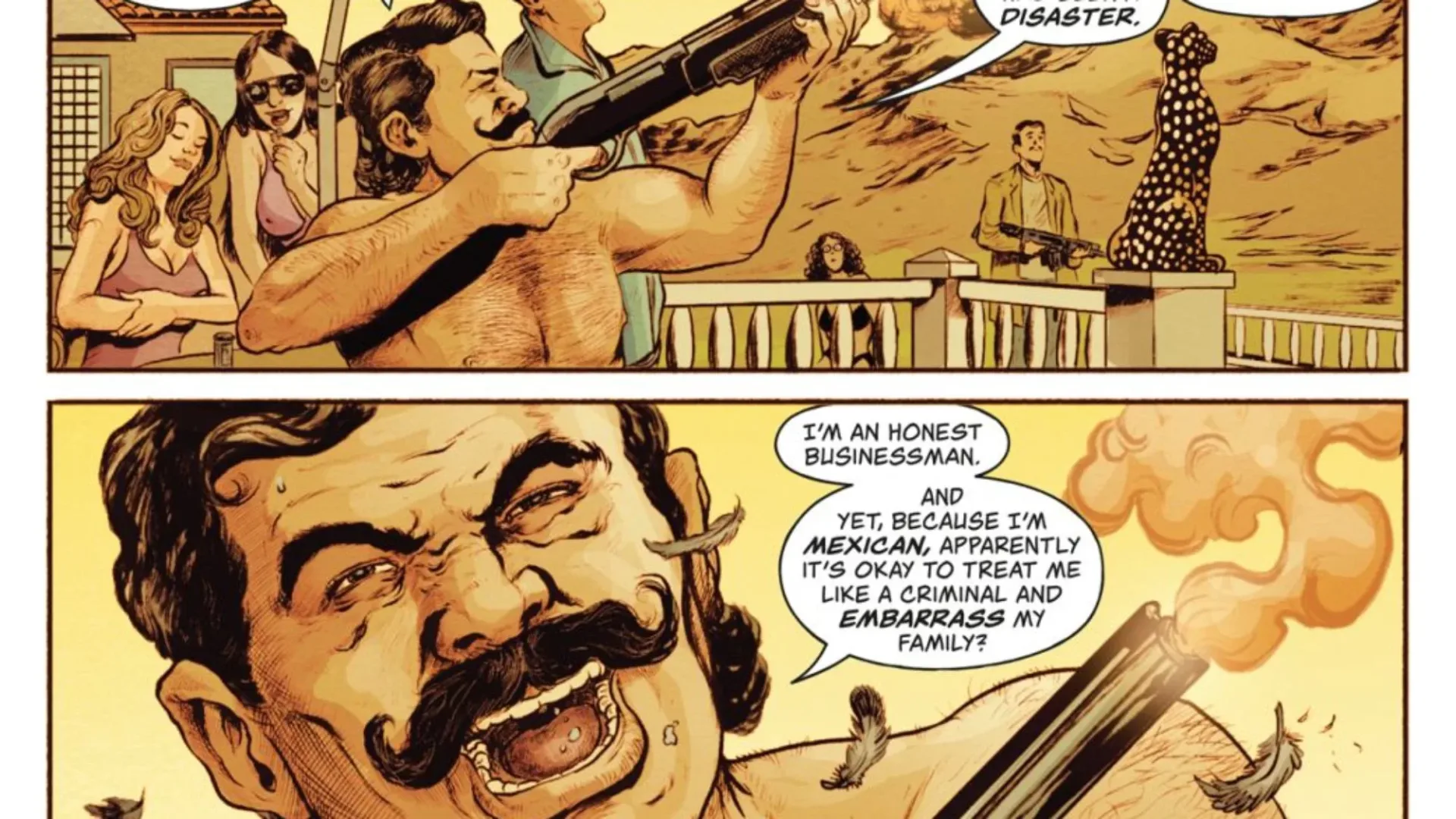
The central premise is deliberately crowded: Marty’s gathering becomes a family affair interrupted by unwelcome arrivals, and the situation splinters into several dangerous confrontations. Orson has difficult truths to share with Eliza. Marnie is pursuing her husband in search of revenge. Eva faces a cartel assassin. Meanwhile, DreBK attempts to preserve a sense of calm through yoga and hallucinations while gunfire erupts around him.
That mix positions the issue as more than a straightforward crime-comic showdown. It is a climax where emotional fallout, domestic conflict and organized-crime danger appear designed to hit at once. The promised result is not simply an action sequence, but a finale focused on how people react when a supposedly social occasion loses every last trace of safety.
A finale with several conflicts in motion
The Verona chapter’s conclusion has a clear ensemble structure. Rather than framing the conflict around a single protagonist and opponent, the issue gives named characters separate pressures that can overlap at any moment.
- Orson and Eliza: Orson’s admission introduces the possibility of a relationship-changing revelation amid the larger chaos.
- Marnie: Her pursuit of her husband is explicitly driven by revenge, making the family gathering a setting for an intensely personal reckoning.
- Eva: Her encounter with a cartel assassin brings a direct, immediate physical threat into the issue.
- DreBK: His combination of yoga and hallucinations supplies an unusual perspective on the firefight, contrasting the violence with an effort to remain composed.
“Ensemble” is a useful term here: it describes a story structured around multiple significant characters rather than one sole lead. In a finale, that approach can create momentum because each thread may alter the stakes of the others. A confession may land differently when someone is fleeing danger; revenge can become harder to contain when criminal violence overwhelms the room; a character trying to stay centered may seem either absurdly detached or unexpectedly resilient.
The available setup does not establish who will prevail, what Orson tells Eliza, or where the various confrontations ultimately leave the cast. Those details remain unresolved. What is clear is that the issue is billed as the endpoint of this particular Verona arc, not merely another stop before its central conflicts begin.
Why the party setting matters
Parties are naturally useful pressure cookers in crime and family dramas. They put people who may not want to speak to one another in the same place, lower the barrier to surprise arrivals, and create a thin surface of normality that can crack quickly. In American Caper #12, that structure is especially pronounced: a gathering becomes the common ground for admissions, marital revenge, an assassin’s presence and a firefight.
The setting also supports the “family affair” description in two senses. It suggests relatives and intimate relationships are part of the immediate conflict, while the wider assault makes those existing tensions impossible to separate from the criminal danger. The result is a story setup where the characters’ personal decisions are not safely contained in private conversations. Every decision has the potential to play out in public and under pressure.
Verona, Wyoming is presented as a small town, which intensifies the contrast between setting and scale of threat. Cartel violence and assassination are large, destabilizing forces; locating them within a local social event makes the disruption feel more intrusive. The issue’s premise does not need an elaborate escalation ladder when the basic collision is already sharp: a community-scale gathering is suddenly occupied by people carrying deeply personal grudges and lethal intentions.
DreBK’s “namaste” amid the gunfire
DreBK is the issue’s most off-kilter element. The character is described as keeping calm through copious hallucinations and yoga during the firefight. On the surface, yoga represents controlled breathing, posture and focus; in this context, it becomes a pointed contrast to panic and violence. “Namaste,” commonly used as a greeting or closing in yoga settings, is deployed here as part of a deliberately incongruous image: a person reaching for serenity while everything nearby collapses into chaos.
That contrast could provide dark humor, disorientation or a distinctive character beat without softening the issue’s stated violence. It also separates DreBK’s response from the other characters’ more direct conflicts. Marnie is actively hunting someone. Eva is facing an assassin. Orson is reckoning with an uncomfortable truth. DreBK’s approach is inward-facing, even as the danger is external and immediate.
The hallucination component is important because it means the character’s calm should not automatically be read as simple mastery of the situation. It introduces uncertainty into the scene’s perspective: readers may be asked to consider how much of DreBK’s experience is grounded, how much is altered, and how that altered state affects the tone of an already unstable event. The solicitation does not provide enough information to define the nature or consequences of those hallucinations, but it clearly identifies them as part of the issue’s strange, high-stress atmosphere.
Creative team and cover options
American Caper #12 credits Dan Houser, Lazlow, David Lapham and Lee Loughridge. Tyler Boss provides the main cover. Two additional covers are listed: Cover B by Becky Cloonan and Cover C by Caroline Cash.
For readers who buy physical single issues, variant covers are alternate cover artworks for the same issue. They do not indicate different interior stories in the information available here; they are different editions identified by separate item numbers. All three listed versions carry the same US price of $6.99, with the two named variants listed at $9.50 in Canada.
The issue is marked Mature, a designation that signals material intended for adult readers. Given the stated presence of revenge, an assassin, a cartel conflict, hallucinations and a firefight, that label aligns with the content outlined for the Verona finale.
Release details
- Title: American Caper #12
- On sale: November 11, 2026
- Publisher: Dark Horse Comics
- Format: 48 pages, Mature
- US price: $6.99
- Main cover: Tyler Boss
- Variant covers: Becky Cloonan (Cover B), Caroline Cash (Cover C)
Readers interested in comic-book storylines built around escalating secrets and heightened genre tension may also want to see how another series frames a character’s concealed history in this look at Bleeding Hearts #9.
For American Caper, though, issue #12 is about resolution at maximum volume. The Verona chapter is reaching its declared endpoint with its cast divided among confession, revenge, survival and surreal self-control. Whether that convergence produces closure or merely leaves deeper damage behind is the question the issue is positioned to answer.