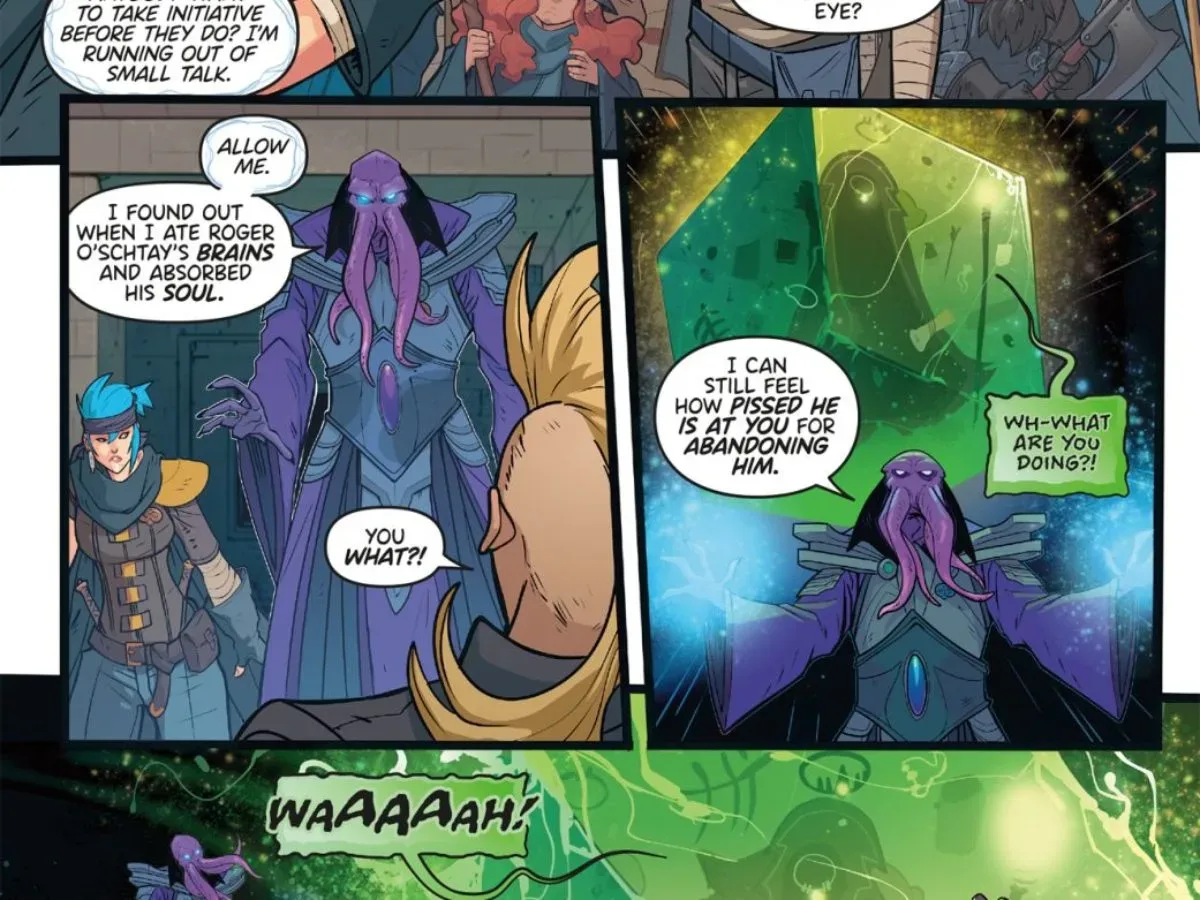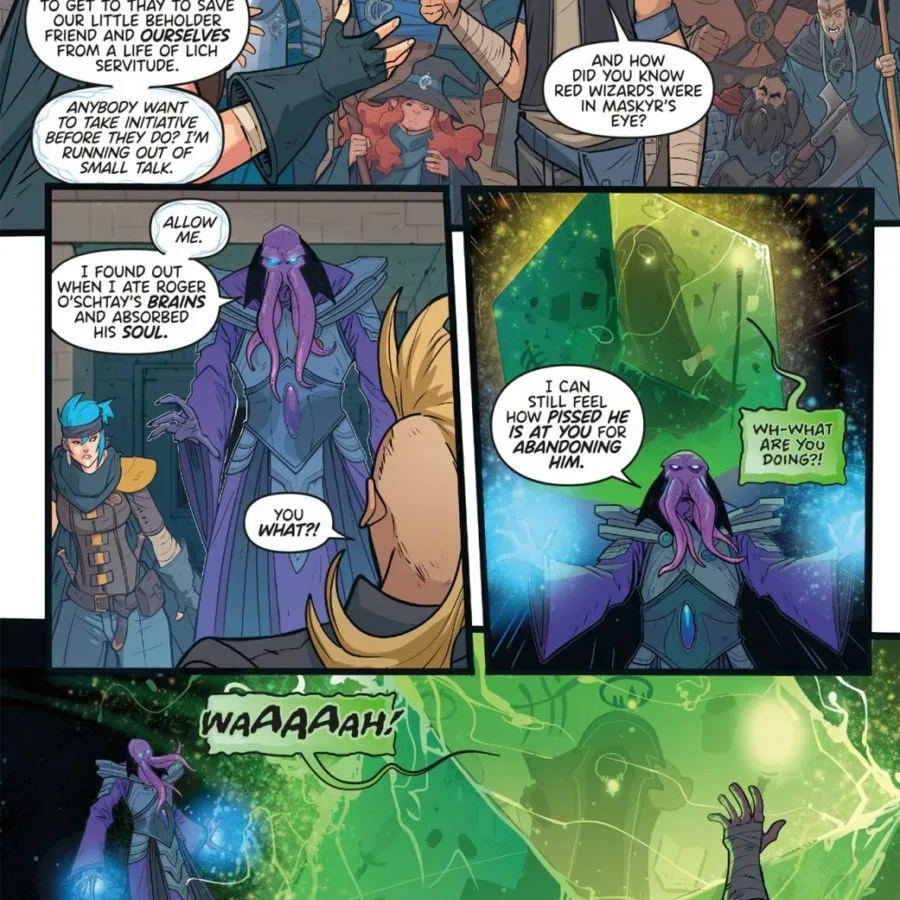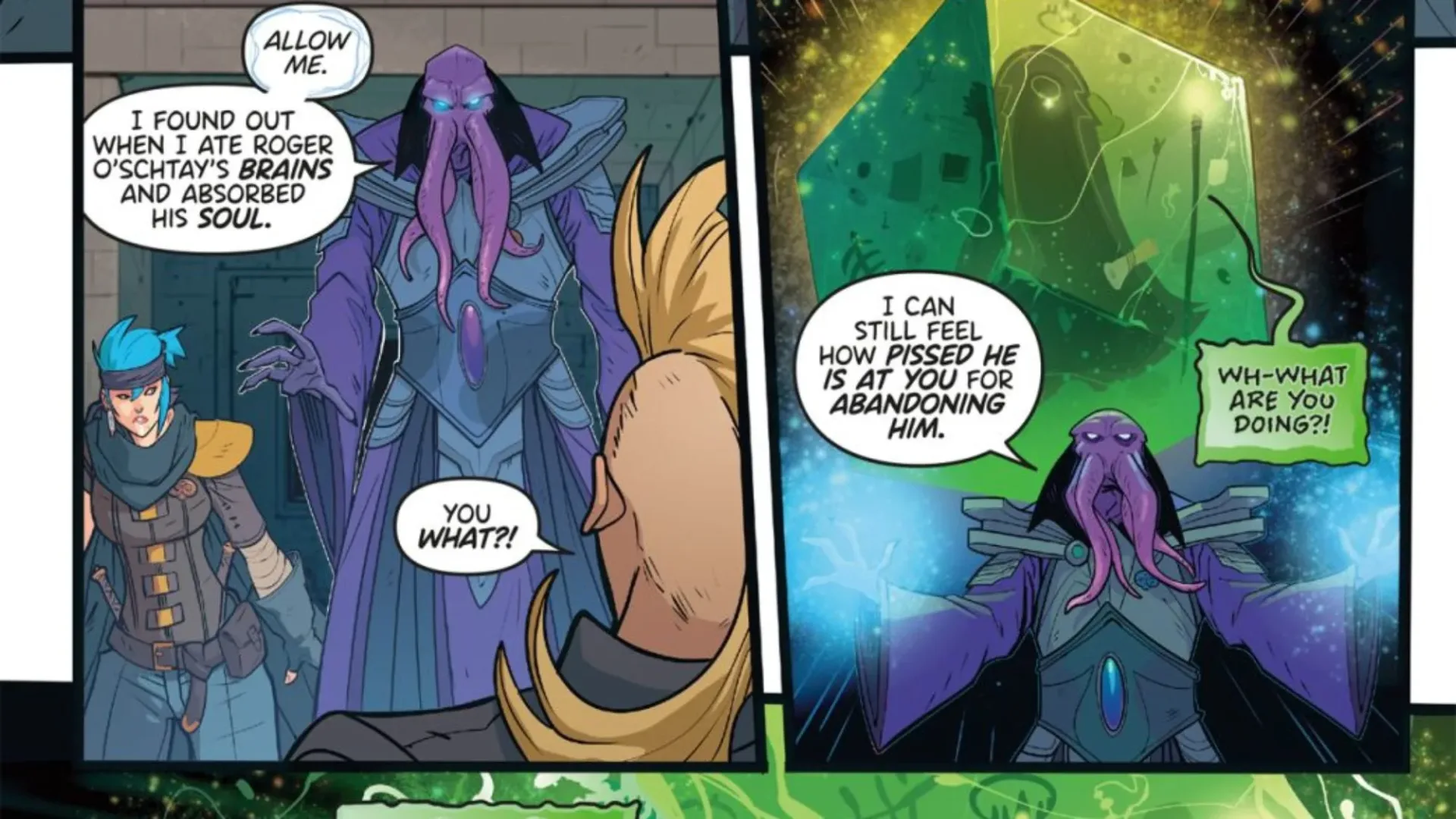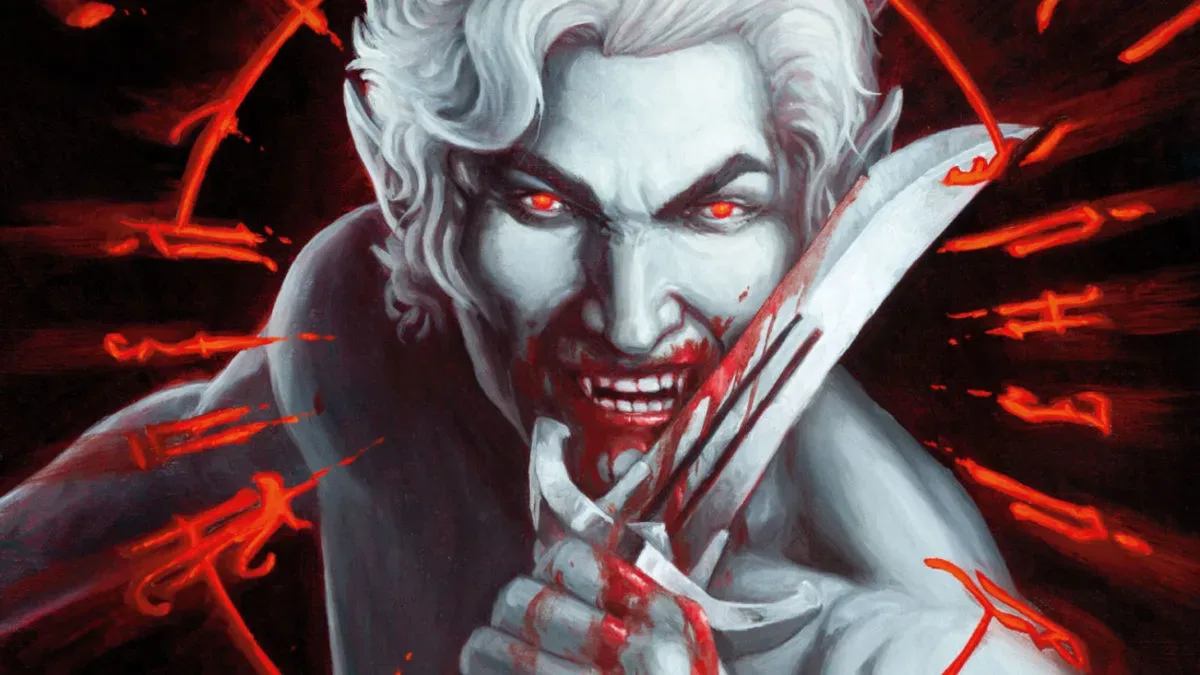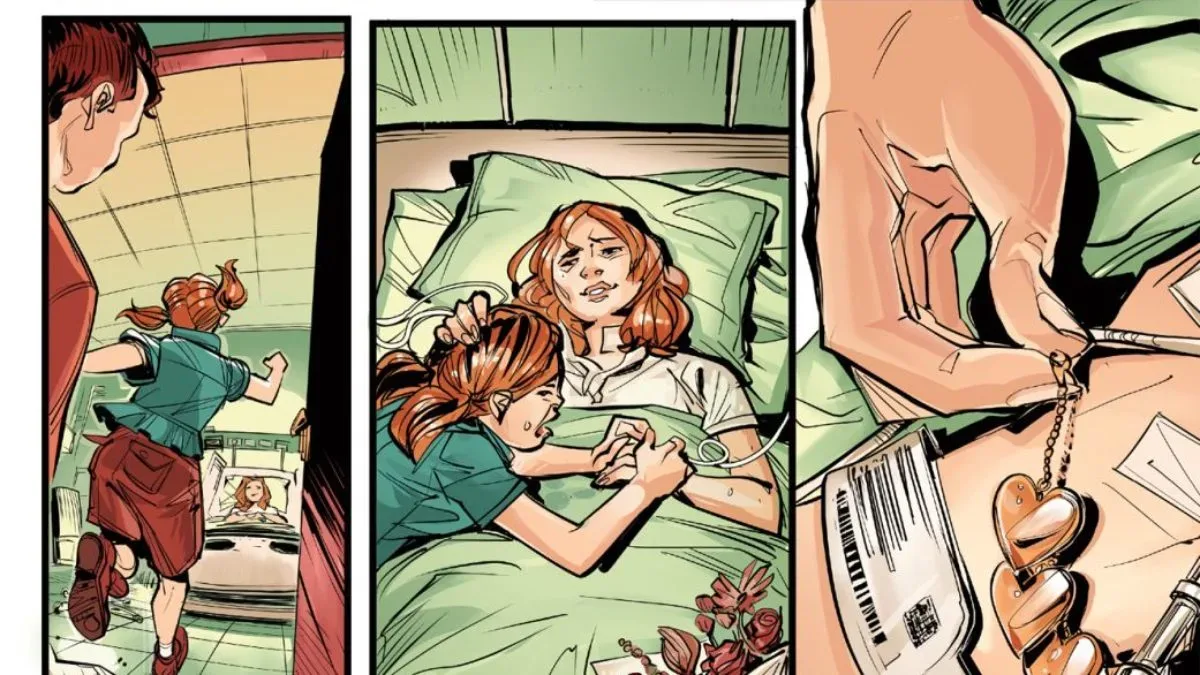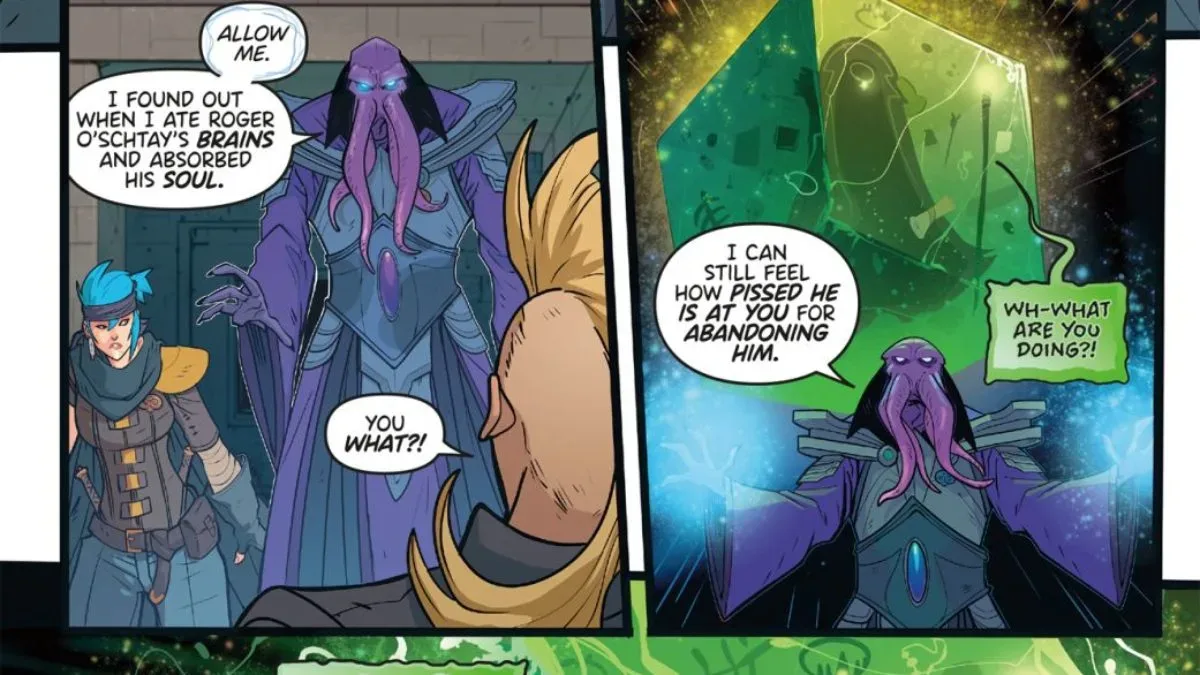
Dungeons & Dragons: Total Party Killers #3 is set to go on sale October 14, 2026, continuing Dark Horse Comics’ four-issue fantasy miniseries. The 32-page, Rated T issue places its monster-led adventuring party in immediate danger after Valindra’s scheme sends them into a secret Harper base.
That predicament is more than an inconvenient wrong turn. The Harpers are presented as a formidable obstacle, and the party must face new opponents including a clever cleric and a hulking “bard-barian.” While the heroes attempt to survive that confrontation, Valindra is pursuing the far larger objective: attuning the Gorget of Dominance and using it to rule Faerûn.
The issue is written by Christopher Hastings, with Denis Medri, Dan Jackson, and Lucas Gattoni also credited. Elizabeth Beals provides the main cover, while Fernando Blanco’s Cover B variant is also listed. Both versions carry a $4.99 US price; the variant is listed at $6.99 CAN.
A total-party-kill setup without the actual campaign reset
The title is an unmistakable wink toward the tabletop term “TPK,” short for total party kill. In Dungeons & Dragons play, the phrase describes a scenario in which an entire player-character group is defeated or killed. It is a loaded expression for any fantasy audience because it immediately suggests danger, failed plans, and the possibility that an adventure has gone badly off course.
Issue #3 uses that idea as the basis for a compressed comic-book crisis. The party is not simply entering an enemy lair deliberately; it has been tricked and teleported into the Harpers’ hidden headquarters. Teleportation is often a useful escape or travel device in fantasy fiction, but here it reverses that expectation. The arrival itself creates the problem, placing a monster party where it is least likely to be welcomed.
That framing gives the story two active fronts. On one side, the protagonists have a direct, physical survival problem at the Harper base. On the other, Valindra is working toward the magical objective represented by the Gorget of Dominance. A gorget is traditionally a piece of armor worn around the throat or neck; in this case, the named item is a fantasy artifact with control-oriented stakes. “Attunement” is Dungeons & Dragons terminology for forming the necessary bond with certain magical items in order to use their abilities. The solicitation makes clear that Valindra’s success would have consequences well beyond the immediate fight.
Looksy’s role points toward an unconventional answer
The issue’s central question is whether Looksy can stop Valindra using “adorably mischievous spells.” That description promises a contrast with the otherwise severe stakes. A villain trying to secure an artifact capable of ruling Faerûn is a classic high-fantasy threat; a character whose magic is framed as mischievous suggests that the response may rely on ingenuity, disruption, or an unexpected trick rather than a simple contest of power.
It also fits the broader appeal of a monster-party adventure. The setup puts characters who may be regarded as threats by others in the middle of a hostile situation, then asks readers to follow their effort to escape it. The danger at the Harper base is not abstract. The party has identifiable opponents to contend with, and the descriptions of a cleric and bard-barian imply contrasting challenges rather than a single interchangeable brawl.
For readers, the issue appears designed as the escalation point of a short series. A four-issue structure does not leave much room for detours, so an accidental incursion into a secret base and a separate villainous artifact plot are significant developments. With #3 being the penultimate chapter, the book has the job of sharpening both the immediate danger and the larger conflict before the finale.
What the creative credits indicate
Christopher Hastings is credited as writer, while Denis Medri, Dan Jackson, and Lucas Gattoni are named alongside him in the issue credits. The available details do not break down each contributor’s specific role, so it is best not to assume the precise division of writing, art, color, or lettering duties. What is confirmed is a multi-creator team behind this installment, with Elizabeth Beals on the primary cover and Fernando Blanco on the Cover B variant.
The distinction between a standard cover and a variant matters principally to comic buyers who choose between editions. The issue’s listed story contents, page count, on-sale date, and US price are the same in the supplied information. The provided details identify the alternate cover artist and Canadian price, but do not establish any content difference between the two editions.
Collectors who want a specific cover should confirm availability with their preferred comic retailer. The listing identifies the main edition with item number 76156801598000311 and the Fernando Blanco Cover B variant with 76156801598000321. Those numbers can be useful when ordering, particularly when a shop carries multiple editions of the same issue.
Why the Faerûn stakes matter
Faerûn is the fantasy setting named in the issue description, and it is where Valindra’s plan would unfold if she succeeds with the Gorget of Dominance. The important point for this chapter is scale: the artifact is not described as a weapon useful only in a single battle. Its stated potential is rulership over an entire realm, turning the party’s entrapment and Looksy’s intervention into parts of a much wider struggle.
That larger objective also explains why the Harper-base conflict is not merely a side encounter. Whether intentionally engineered or simply exploited by Valindra, the party’s detour keeps attention on a local fight while she seeks control of the artifact. The narrative tension comes from the time pressure embedded in that split: the heroes must handle the forces directly in front of them, but delay could enable an outcome that changes everything around them.
Fantasy stories often make magical objects important through vague language alone. Here, the solicitation gives the Gorget a concrete dramatic function: Valindra wants to attune it, and that act is tied to her ability to rule Faerûn. Readers do not need a complete rules explanation to understand the urgency. The artifact is the objective, attunement is the key step, and stopping that step is the priority.
Release details for Total Party Killers #3
- On sale: October 14, 2026
- Publisher: Dark Horse Comics
- Format: 32 pages, Rated T
- Series length: Four issues
- Main cover: Elizabeth Beals
- Variant cover: Cover B by Fernando Blanco
- US price: $4.99
- Canada price for Cover B: $6.99
The release arrives at a moment when tabletop-inspired storytelling continues to surface in different forms, from comic series to larger tabletop publishing campaigns. For another recent example of a fantasy tabletop project moving through crowdfunding, see War for Roshar’s Kickstarter milestone.
For Total Party Killers, though, the focus is firmly on the next bad roll of fate: a monster party stuck in a secret Harper stronghold, a dangerous magical artifact nearing activation, and Looksy facing the challenge of turning playful-looking magic into a real answer to Valindra’s plan.