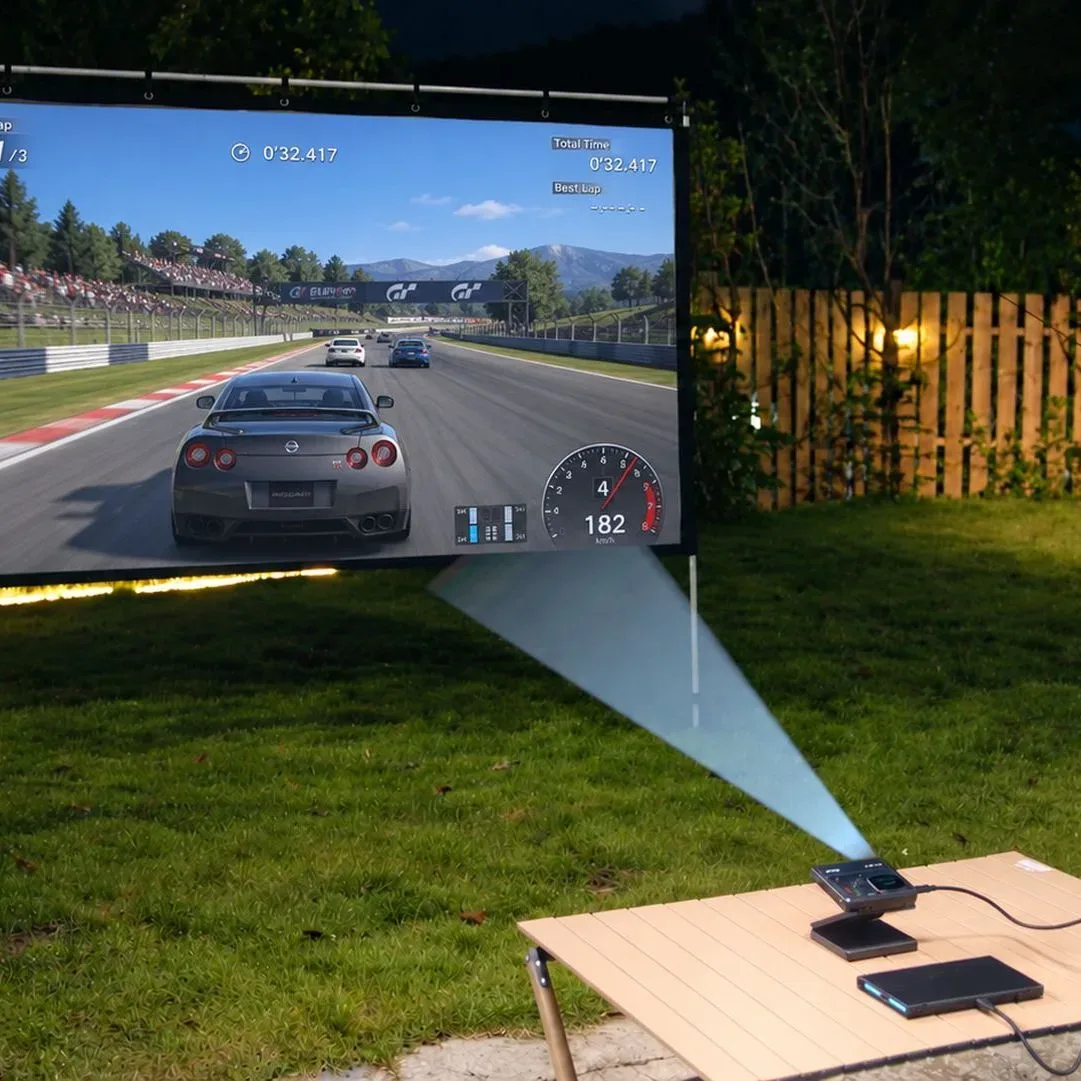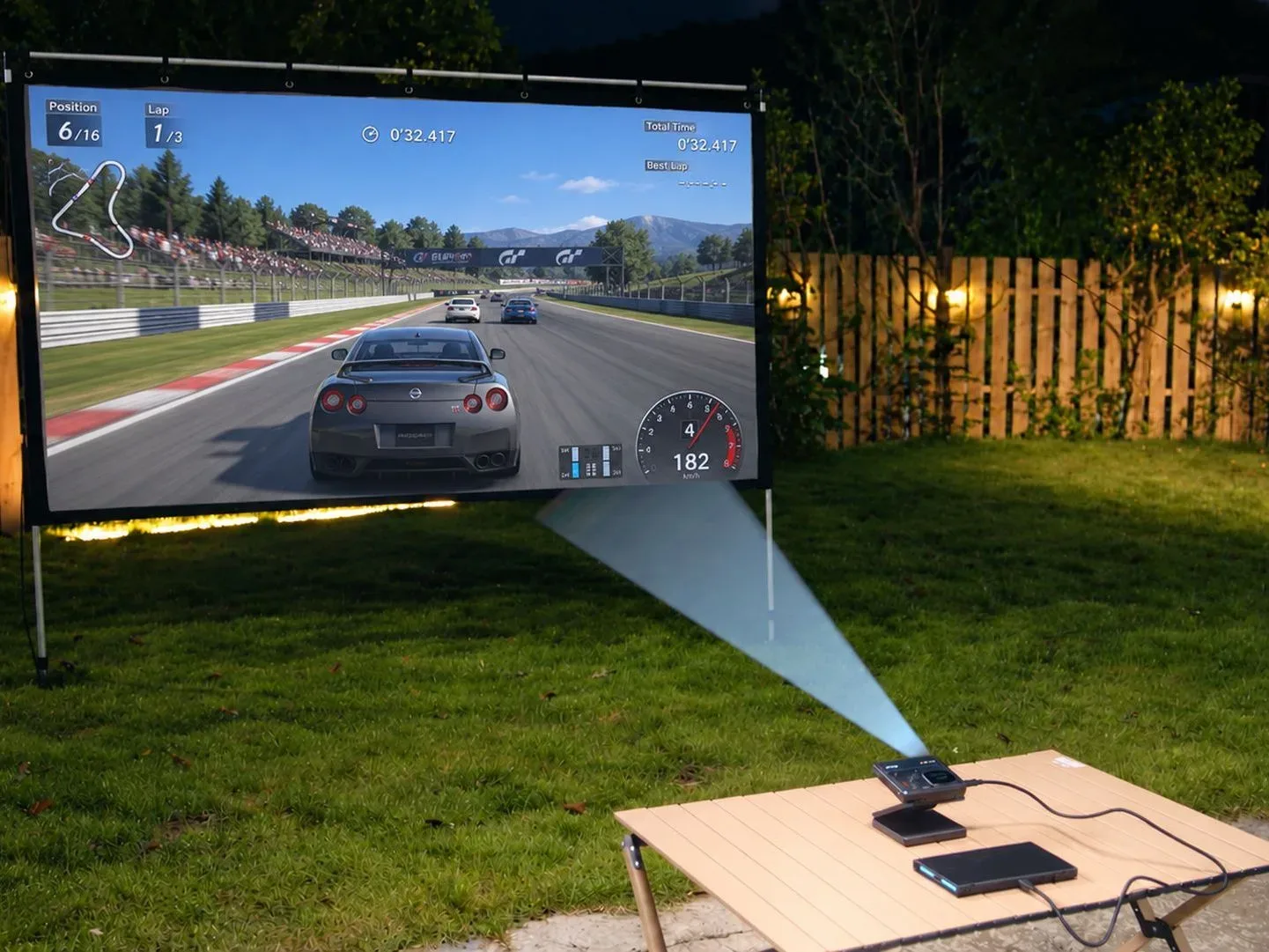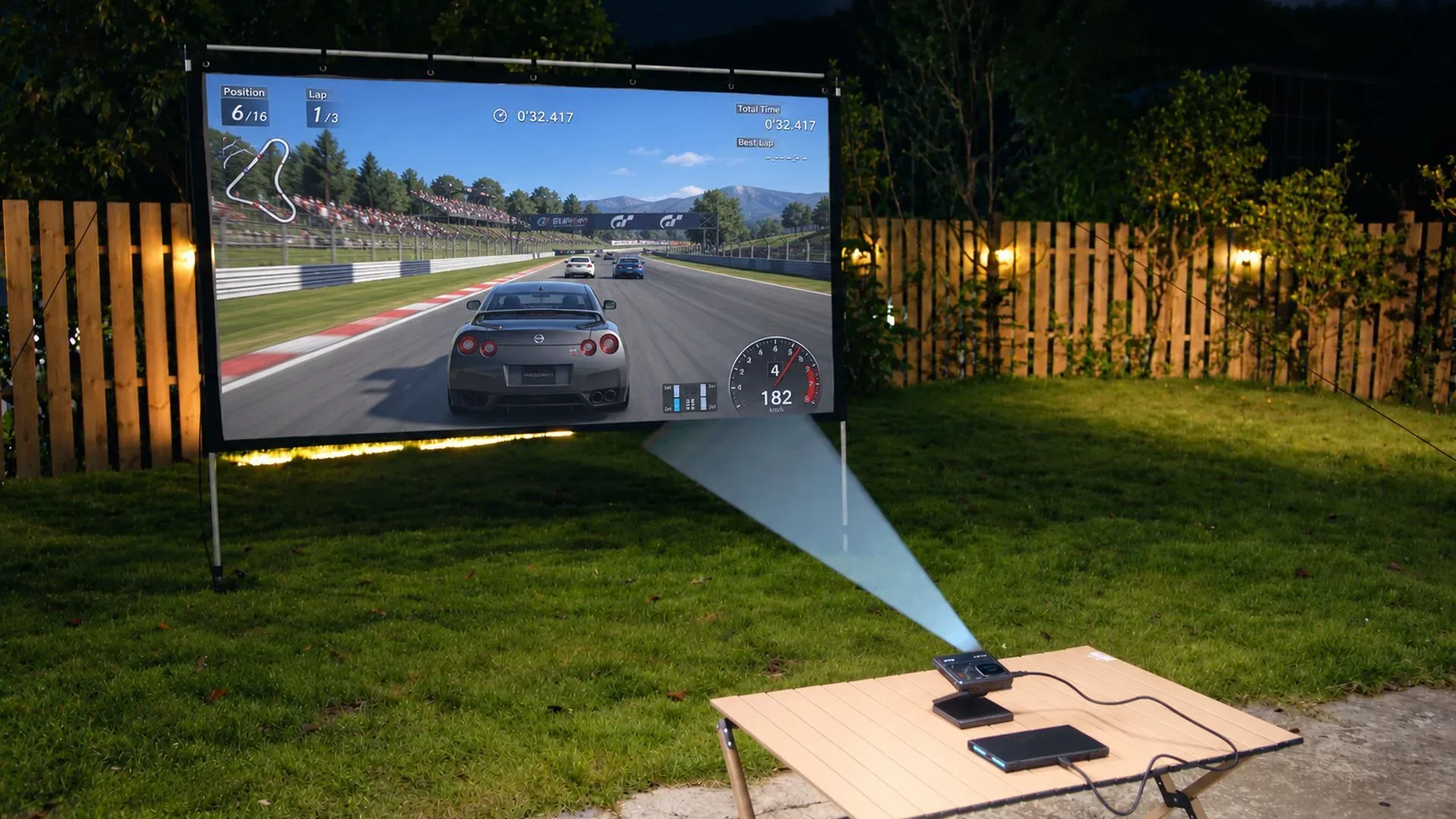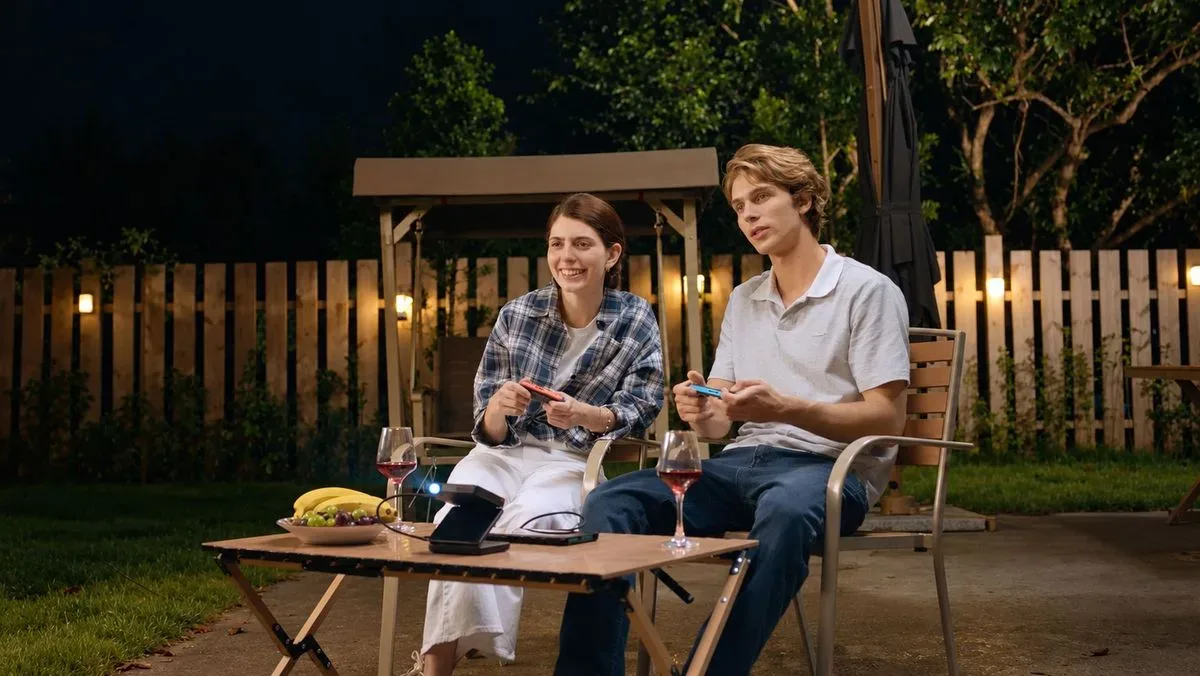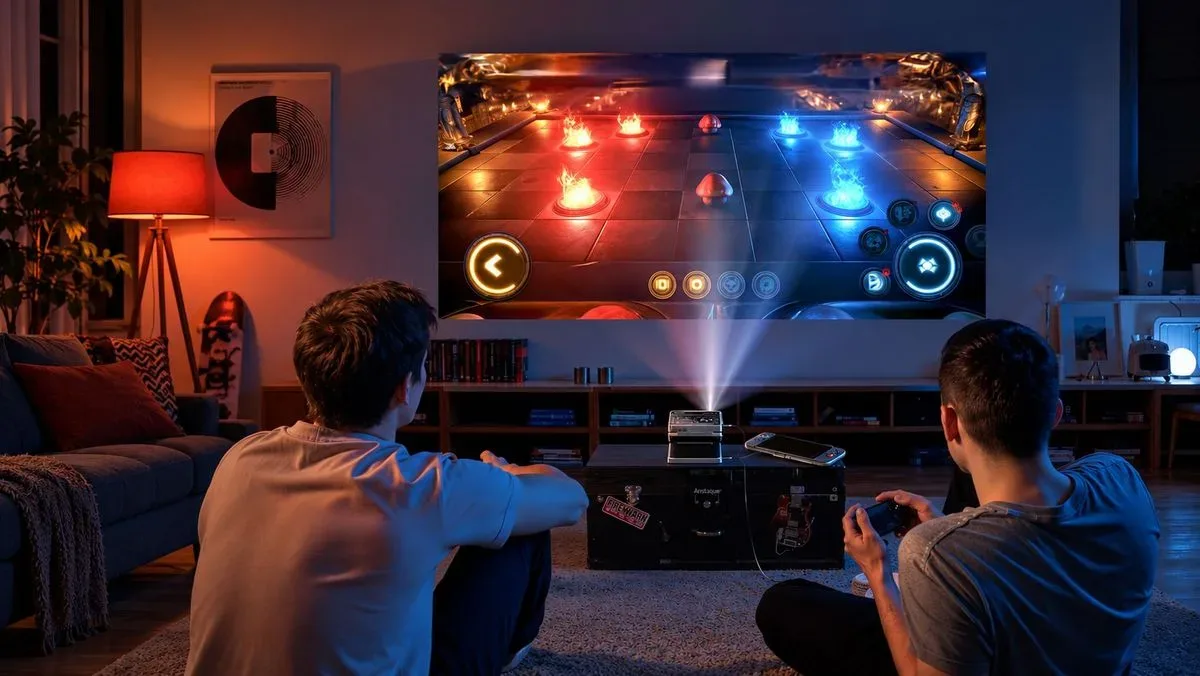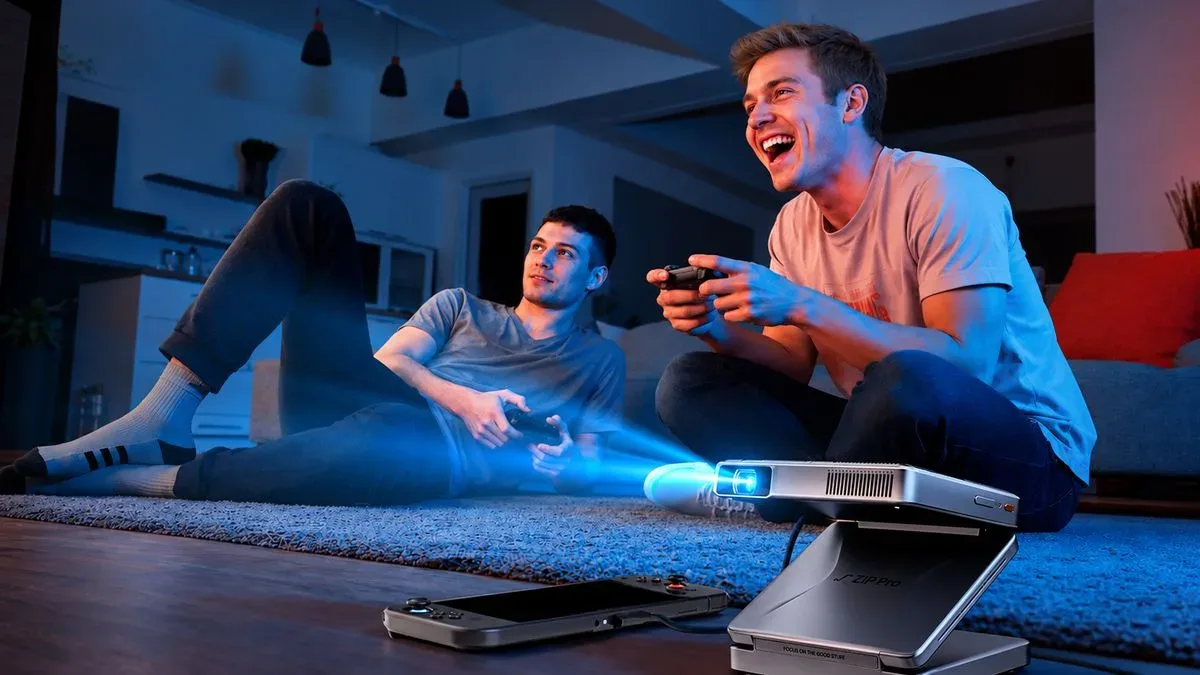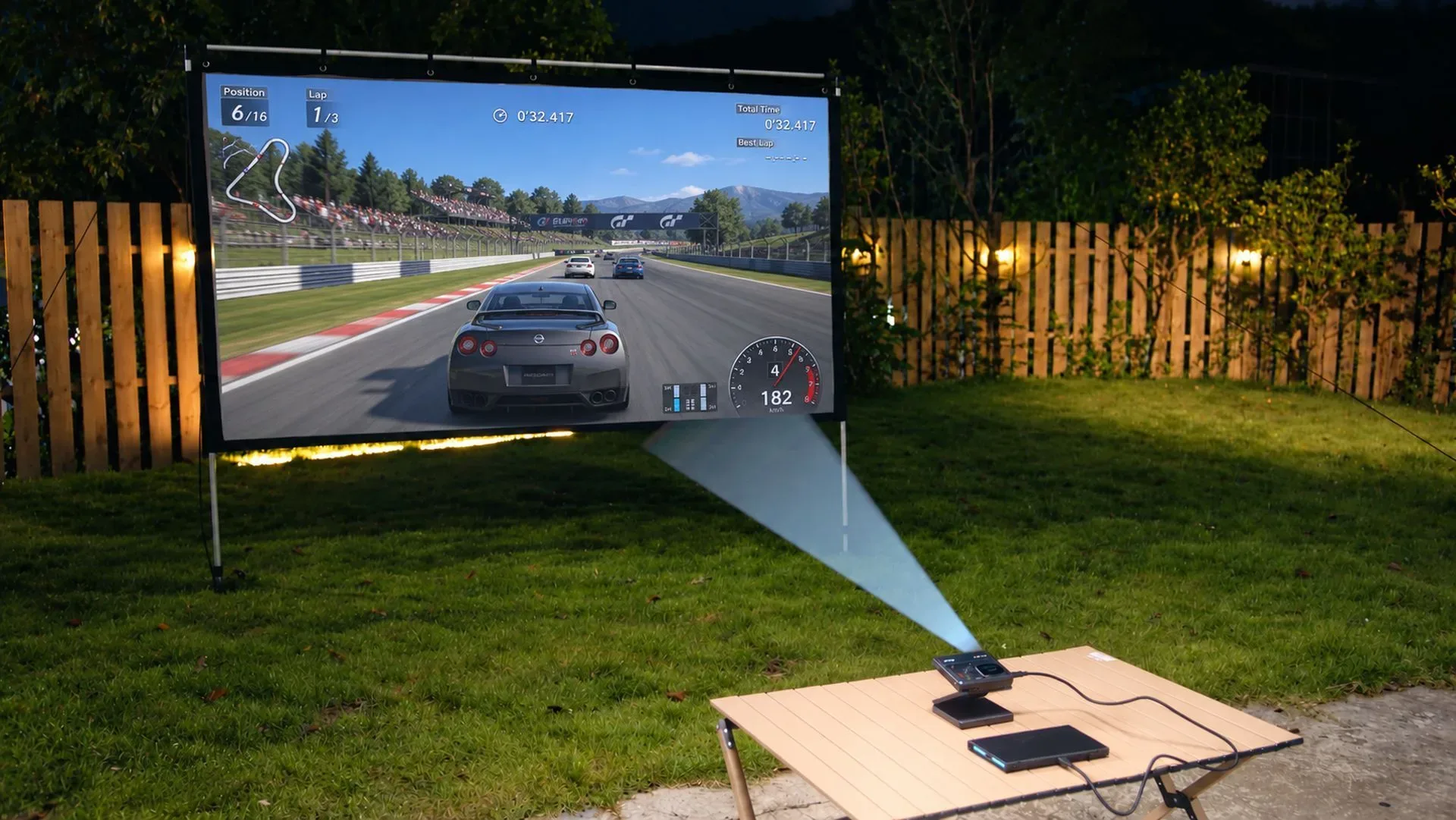
Moving a game night from the living room to a friend’s place, a spare room, or an outdoor wall usually means choosing between a small laptop display and relocating a far less portable television setup. Aurzen’s ZIP Pro is aimed squarely at that problem. The portable projector is built around a tri-fold body designed to pack down for a bag or pocket, while offering 1080p projection for games, films and shared-screen sessions.
The central promise is flexibility rather than a permanent replacement for a TV. Aurzen positions the ZIP Pro as a display that can move with a phone, laptop, console or handheld setup, rather than remaining tied to one room alongside a console dock, a display and their associated cables. That distinction matters: a projector’s appeal here is not merely a larger image, but the option to create a temporary play space where a conventional screen would be impractical.
What the ZIP Pro is designed to do
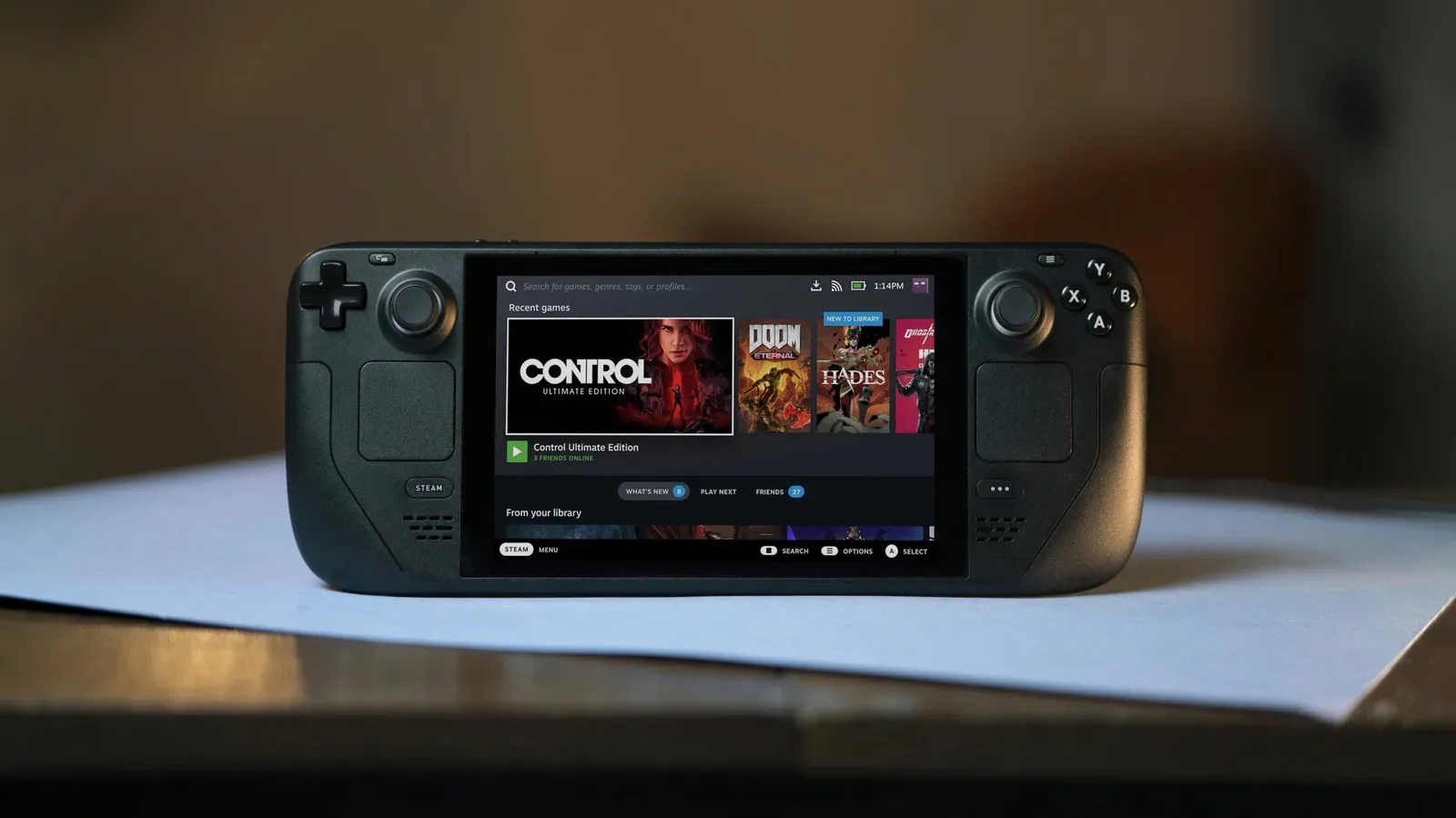
The ZIP Pro supports both wired and wireless connections and is described as working with phones, laptops, consoles and other devices, including situations without Wi-Fi. Aurzen also says the projector can connect directly to a Nintendo Switch 2 through USB-C, removing the need to travel with that console’s dock.
For portable players, that could simplify a shared setup considerably. A console, projector and suitable power arrangement may be easier to carry than a console, dock and TV. It is still important to separate the projector’s stated capabilities from the rest of the setup: a game device and its compatible connection are still required, and a projected image will depend heavily on the space, viewing surface and available light.
The company lists Full HD, or 1080p, projection. In plain terms, 1080p refers to a 1,920-by-1,080-pixel image. It remains a familiar target for games and video, particularly for devices intended to be compact and easy to move. The supplied details do not specify screen size, brightness, resolution behavior from every input, or image quality under different lighting conditions, so those are practical variables prospective buyers should confirm for their intended use.
Gaming claims: latency and image alignment
Aurzen advertises latency as low as 20ms. Latency is the delay between a game device sending a frame and that frame appearing on screen. Lower latency is generally more desirable for games that depend on fast reactions, such as fighting games, rhythm games or competitive shooters. “As low as” describes a best-case figure rather than a guarantee for every device, signal path or display mode, however. Connection method and the projector’s image processing can affect the result.
The projector also has rapid auto-focus and keystone correction. Auto-focus is intended to sharpen the projected image without manual adjustment. Keystone correction compensates for the trapezoid-shaped image produced when a projector is pointed at a surface from an angle instead of placed directly in front of it. Together, these features are meant to reduce setup friction when a table, wall or outdoor location does not allow perfect projector placement.
That is particularly relevant to the ZIP Pro’s portable premise. A display that is frequently moved will rarely begin in an ideal position. Automatic focus and image alignment can make a short-session setup more realistic than one that requires repeated manual tweaks. They do not change the physical limitations of the room, though: the projector still needs an appropriate surface and placement that works for the people viewing it.
Related coverage includes Aurzen ZIP Pro Pitches a Pocket-Sized Big Screen for Portable Game Nights.
Battery and audio for a shared session
Aurzen claims up to 2.5 hours of playback in Eco mode. Eco mode is generally a power-saving operating setting, and the stated figure is specifically tied to that mode. For a casual party game rotation, a co-op session or a film, that runtime may be a useful guide; for a longer event, users should plan around the quoted limit and their own power options rather than assume an entire evening is covered.
Audio is addressed through built-in stereo sound and dual-headphone Bluetooth. Dual-headphone Bluetooth is intended to let two people listen using Bluetooth headphones at the same time, which could be useful where speakers would disturb others or where a more private two-player session is preferred. The built-in speakers offer another route for a simple social setup with fewer separate components.
Neither option automatically makes audio a solved problem for every environment. Speakers may be the more natural choice for a group, while headphones are better suited to two listeners. The value is choice: the projector is pitched as a compact central display that does not force one fixed way to hear games or video.
Who this approach may suit
The strongest use case is someone who values changing locations over maintaining a dedicated screen in every room. That could mean a temporary multiplayer display at a friend’s home, a movie setup away from the main TV, or an occasional portable console session where carrying a full dock-and-display arrangement is unappealing.
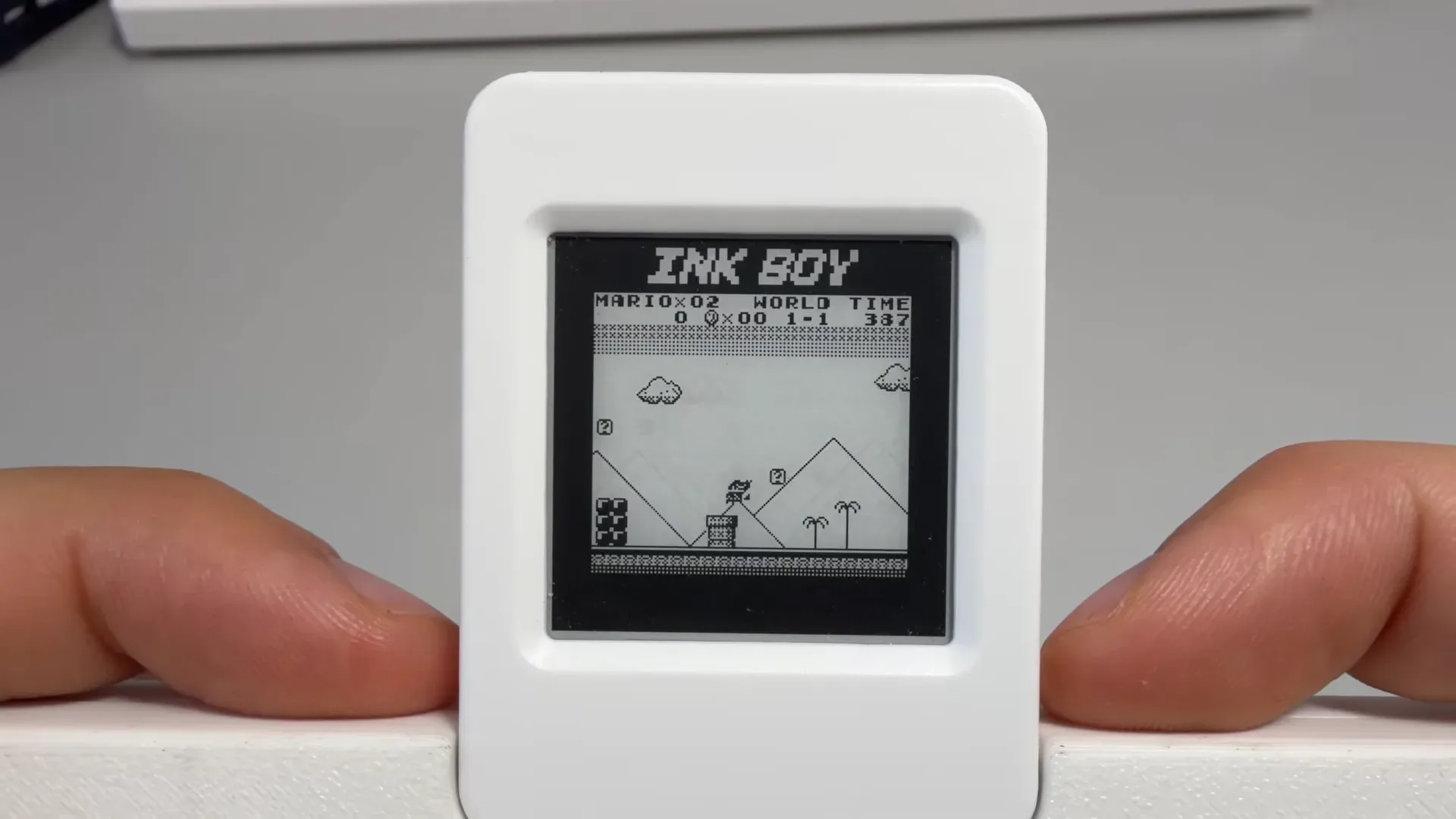
It also fits the broader interest in compact gaming gear. Portable hardware can make games easier to take along, but sharing that experience has often meant gathering around a small screen. Projects such as the Ink-Boy E-Ink Game Boy build show a very different compact-hardware idea, but the common thread is clear: small devices become more useful when their form factor supports where and how people actually want to play.
The ZIP Pro’s tri-fold design is therefore more than a visual detail. Portability is only useful if packing and unpacking does not become a chore. Aurzen says the folded projector can fit in almost any bag or pocket, and the product’s pitch rests on being easy to relocate between uses.
Price and the time-limited early-bird offer
Aurzen lists the ZIP Pro at $629.99. An early-bird offer reduces that listed price to $579.99, a discount of nearly 10%. The promotion is stated to end on October 15.
For anyone considering the projector primarily for gaming, the most useful buying question is not whether a portable projector can replace every display. It is whether its combination of claimed 1080p output, compact folding design, wired and wireless connections, direct USB-C support for Nintendo Switch 2, low-latency claim and battery-powered operation addresses a real inconvenience in their setup. The answer is likely to depend on how often a game night moves—and whether the locations involved can provide a suitable projection surface and viewing conditions.