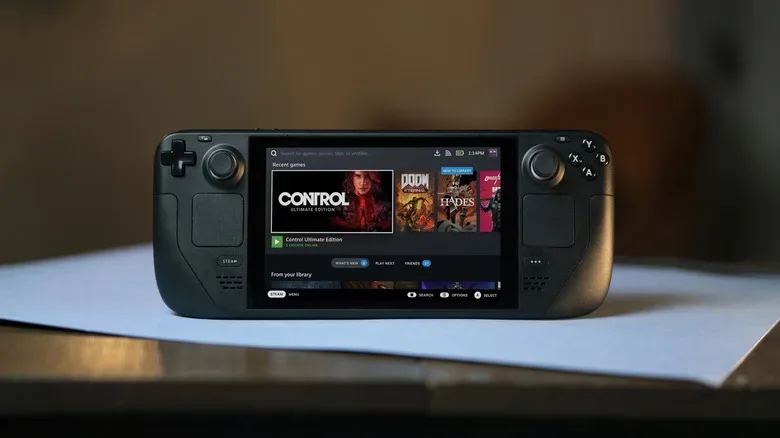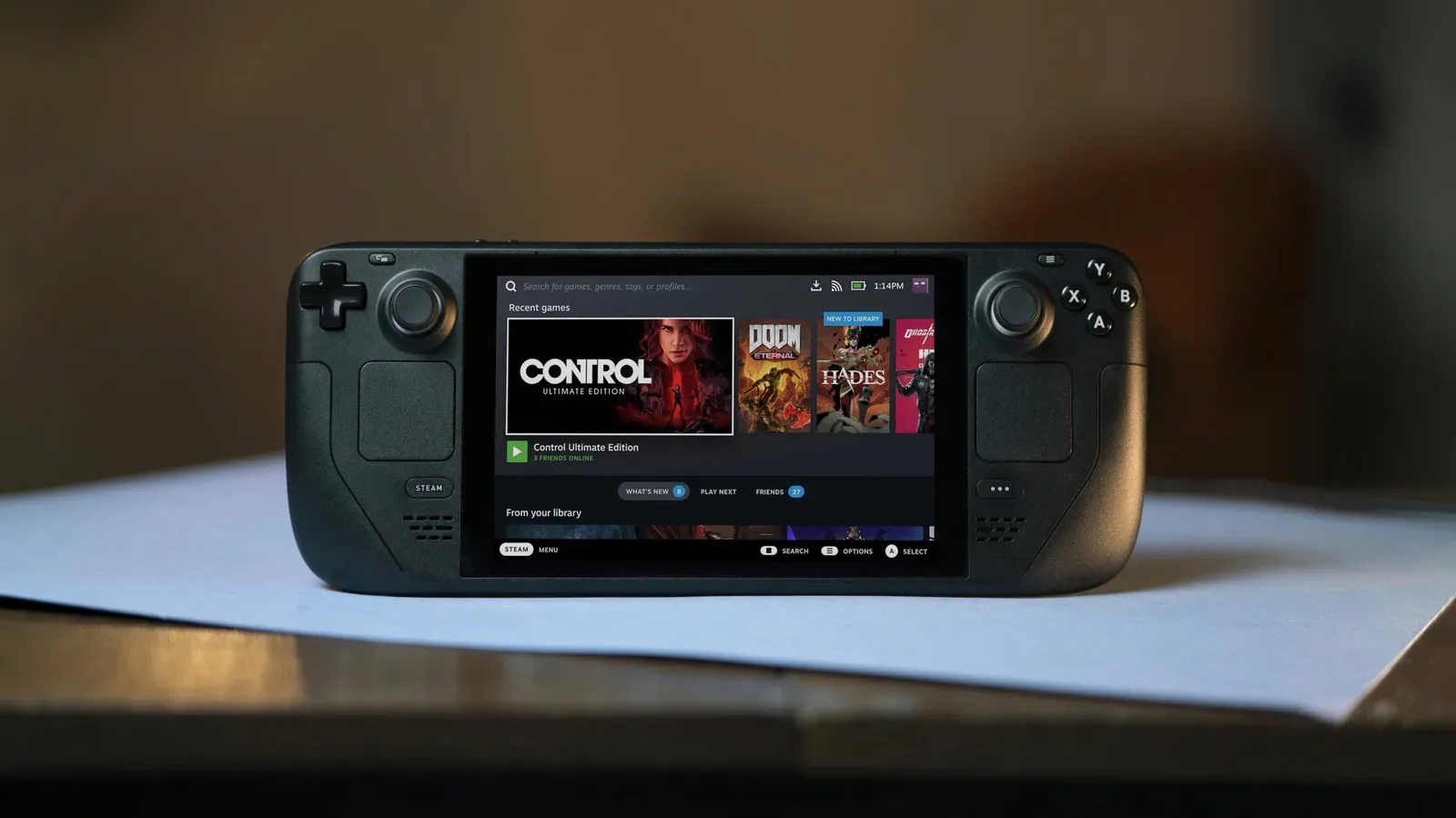
The Steam Deck arrived in February 2022 as a remarkably persuasive answer to a question PC players had asked for years: could a portable machine make a large existing game library feel console-like without demanding a laptop bag, a mouse and a tolerance for desktop fiddling? In 2026, that answer is more complicated—but it is not automatically “no.”
Valve’s handheld is no longer the fresh, uncontested reference point it was at launch. The current Steam Deck OLED remains the sole version on sale, and its 2023 revision centered on an improved display and battery life rather than a meaningful leap in processing performance. Meanwhile, current handhelds from Asus and Lenovo can post higher frame rates, while Nintendo’s Switch 2 has a lower entry price and its own distinctive software ecosystem.
Pricing has become the uncomfortable headline. The Steam Deck has reportedly risen by $300 amid a broader hardware-cost squeeze tied in part to intense demand for memory from AI data centers. That pressure is not limited to one handheld or one company; it arrives at a time when gaming hardware prices are moving in the opposite direction from the old expectation that consoles get cheaper as they age. For a wider look at the industry tension around component demand, read how AI data centers could prolong gaming’s cost crunch.
So, is Steam Deck OLED still worth considering? It is, provided a buyer values the specific things it does well: SteamOS, efficient lower-power play, a relatively light and comfortable chassis, HDR support and an enormous Steam-centered library. It is less convincing for someone chasing the best possible portable performance, the newest technically demanding releases, or multiplayer games blocked by SteamOS compatibility limits.
The performance gap is real, but it is not the whole purchase
The Asus ROG Xbox Ally family, including the Ally X, and Lenovo’s Legion Go range are the most direct PC-handheld challengers. In general benchmark comparisons, these systems deliver higher performance than the Steam Deck. Their 3DMark Time Spy scores are higher in most cases, with exceptions for the Legion Go S and a Legion Go configuration using AMD’s less powerful Z2 chip. That raw advantage often translates into better frame rates.
But a benchmark lead is not a universal verdict on the experience. Results can vary substantially from one game to the next, and in some titles the difference may only amount to a handful of frames per second. A player deciding between handhelds should distinguish between two questions: whether a rival is faster, and whether that extra speed materially changes the games they actually intend to play.
That distinction matters more as modern games become more ambitious. Unreal Engine 5 debuted only months after Steam Deck’s original launch, giving developers tools for richer and more complex visuals while also raising the strain that games can place on portable hardware. Steam Deck OLED did not receive a performance overhaul to meet that shift. It remains a device best approached with realistic expectations: reduced settings, sensible frame-rate targets, and a willingness to prioritize consistency over maximum graphical effects.
For indie games, older PC releases, many less-demanding contemporary games and players who do not require cutting-edge presentation, that compromise can be entirely reasonable. For buyers who want every major new release to look and run as impressively as possible on a handheld screen, faster Asus and Lenovo options have a clearer argument.
Related coverage includes Steam Deck in 2026: Is Valve's Handheld Still Worth Buying?.
SteamOS remains Valve’s most important advantage
Specifications are only part of handheld ownership. The software layer determines how directly a player gets from pressing the power button to playing. Steam Deck’s SteamOS remains a significant selling point because it was built around the handheld format and the Steam library. That focus makes the system attractive to people who want PC games delivered through an interface that feels closer to a dedicated console.
The ROG Xbox Ally and Ally X have an obvious appeal for people invested in Xbox titles. Not every game supports Xbox Play Anywhere, however, so buyers should confirm how their particular purchases and subscriptions fit their intended use. The other caveat is Windows. Windows grants broad PC flexibility, but it has also drawn persistent criticism as a handheld operating environment. Its traditional desktop assumptions can make the small-screen, controller-first experience feel less tidy than a purpose-built gaming interface.
Lenovo has addressed that divide with Legion Go models that run SteamOS, while its non-S Legion Go systems have another hardware distinction: detachable controllers reminiscent of Joy-Cons. Those controllers may be particularly attractive for people who expect to dock their handheld regularly and want more flexibility in a living-room setup.
SteamOS convenience also involves limitations. Certain games using particular anti-cheat implementations cannot run on it. Fortnite and Call of Duty: Warzone are key examples to check before purchasing a Steam Deck. This is not a small footnote for players whose weekly routine revolves around those games. A seemingly ideal Steam library device is the wrong device if the most-played title cannot be used on it.
A quick compatibility checklist
- List the games you expect to play most during the first few months, not merely games you might buy someday.
- Check whether those titles work under SteamOS, especially competitive online games with anti-cheat requirements.
- Decide whether access to Xbox-oriented games or a broader Windows environment is more valuable than SteamOS’s focused interface.
- Set expectations for demanding new releases: Steam Deck OLED is not the performance leader in this field.
Battery life can outweigh a spec-sheet win
One of Steam Deck OLED’s most persuasive strengths is endurance. The Xbox Ally and Legion Go lines—including Legion Go S and Legion Go 2—offer larger batteries on paper. Yet capacity alone does not guarantee a longer session. When the higher-powered competitors move beyond low-power modes and use their full performance potential, they tend to consume their charge more quickly. In practical play, Steam Deck OLED can often last longer.
This makes Valve’s device a particularly sensible prospect for flights, commutes, shared rooms and long stretches away from a wall outlet. More performance is meaningful, but so is being able to keep playing for hours without treating a charger as essential gear. The right choice depends on which inconvenience a buyer dislikes more: lower settings and lower performance ceilings, or more frequent battery management while using a faster machine.
Comfort belongs in the same conversation. Other than Switch 2, Steam Deck is the lightest of the major handhelds in this comparison. That does not mean every hand will prefer it, but weight becomes important during longer sessions. A device that looks excellent in a performance chart can be less appealing if it becomes tiring to hold.
Where Switch 2 changes the calculation
Nintendo’s Switch 2 does not compete on identical terms, since its game library is more limited than the PC ecosystems available through Steam or Windows. Still, it is an important alternative for anyone whose priority is a conventional portable console and Nintendo’s catalog.
Its price increased from $450 to $500 in September 2026, yet it remains less expensive than the Xbox Ally and current Legion Go lineups. It also has features that distinguish it from the field: Switch 2 is the only handheld discussed here with Nvidia DLSS rendering support, and it joins Steam Deck as the only other option in this group with HDR support.
For a player primarily interested in Nintendo releases, the lower cost and platform-specific games may settle the question immediately. For someone who wants a broad PC library, mods, the Steam storefront and the peculiar freedom of PC gaming, Switch 2 is an alternative rather than a replacement.
Price ladder and the practical choice
At the lower end, Switch 2 is the most affordable option. Among handhelds with access to a PC library, the standard Xbox Ally is the cheaper route, but that saving comes with the Windows tradeoff. Steam Deck OLED then sits below Xbox Ally X and Lenovo’s current Legion Go products when purchased directly from their makers. A Legion Go S may sometimes appear below its suggested retail price at retailers, but occasional discounts are not the same thing as a dependable pricing position.
That structure makes Lenovo difficult to recommend purely on value. Its detachable controllers and SteamOS options can still be compelling for particular buyers, especially those planning docked play, but price-sensitive shoppers have clearer alternatives.
The best fit for each kind of player
- Choose Steam Deck OLED if Steam is your main destination, you favor a console-like operating system, battery life matters, and you are comfortable treating demanding graphics as a compromise rather than a requirement.
- Choose ROG Xbox Ally or Ally X if higher performance and Xbox-oriented access outweigh the rougher edges of a Windows-based handheld experience.
- Consider Lenovo Legion Go if detachable controls, docked versatility or a SteamOS-equipped model addresses a specific need worth its higher cost.
- Choose Switch 2 if Nintendo’s catalog is the priority and a lower-priced dedicated console makes more sense than entry into the broader PC library.
Steam Deck OLED is no longer the easy default for every prospective handheld owner. Its higher cost and unchanged performance profile make comparison shopping essential. Yet its strengths have aged well: a focused SteamOS experience, strong real-world battery behavior, HDR, lower weight and a design that remains well suited to extended portable sessions. In 2026, it is not the most powerful answer. For the right Steam-focused player, though, it can still be the most balanced one.