Apple is reportedly inviting selected media members to an all-day product launch experience in Los Angeles on Wednesday, October 28. The reported hardware lineup is unusually broad for a single gathering: touchscreen MacBooks, Macs using M6 chips, and a new iPad mini are all said to be involved.
What remains unclear is the most important calendar detail for anyone waiting to buy hardware: whether Apple will formally reveal the products on October 28 or announce them beforehand. Earlier reporting pointed to an online video presentation and media hands-on activity on or around October 27. The newer detail identifies October 28 as the date of the in-person media experience, but does not establish that it is also the public announcement date.
That distinction is worth keeping in mind. An invitation to a media event is strong evidence that something is being prepared, but the products, specifications, names, timing, and release plans discussed here are still reported expectations rather than confirmed Apple announcements.
The rumored headline: a touchscreen MacBook Pro redesign
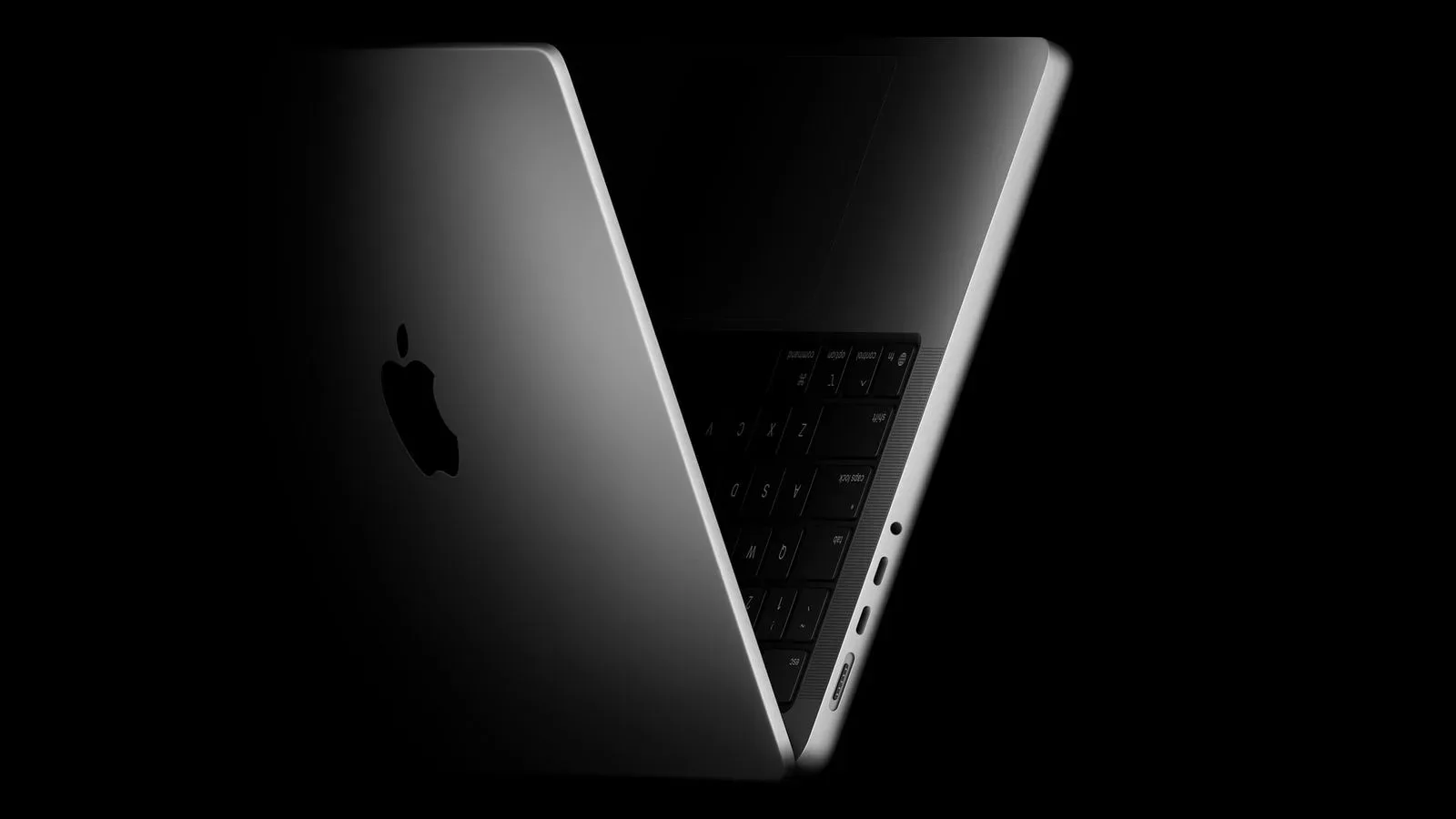
The most notable claim is that Apple could introduce redesigned 14-inch and 16-inch MacBook Pro models with touchscreens. They are expected to use OLED displays, include a Dynamic Island, and be significantly lighter than the existing high-end machines.
A touchscreen would be a meaningful shift in how Apple positions the MacBook Pro, not merely a routine processor update. A conventional laptop display is primarily for viewing material, with keyboards, trackpads, mice, and external input devices handling control. A touchscreen adds direct manipulation: tapping buttons, moving items with a finger, or interacting with onscreen elements at the display itself.
That does not automatically tell us how Apple would implement touch interaction in macOS or which software experiences would benefit most. Those are design questions that would need answers from an official presentation and hands-on reporting. But the reported change does make the potential redesign more substantial than a yearly component refresh.
OLED and Dynamic Island, explained
OLED, short for organic light-emitting diode, is a display technology in which pixels emit their own light. It differs from display approaches that rely on a separate backlight. The report identifies OLED as part of the expected MacBook Pro redesign, but does not provide details on brightness, resolution, refresh rate, battery effects, panel supplier, or any other display specification. Those details should not be assumed.
The same applies to the reported Dynamic Island. The term refers to an interface area integrated around display hardware, rather than a simple specification such as screen size. Reports currently indicate it could arrive on the redesigned MacBook Pros, but do not explain its exact layout, behavior, or software role on a Mac. It is therefore best understood as a reported visual and interface change, not as a fully defined feature set.
The suggestion that the 14-inch and 16-inch machines will be significantly lighter may matter just as much in daily use as their display changes. High-end laptops are often purchased for demanding work, yet are also carried between desks, homes, studios, classrooms, and travel destinations. Any weight reduction could have practical appeal, although the amount of the reduction has not been reported here.
MacBook Pro name reportedly survives
Earlier speculation had suggested Apple might give the touchscreen laptops a new “MacBook Ultra” name. More recent reporting instead indicates they would remain part of the MacBook Pro family.
That would make sense as a matter of product clarity, though Apple has not confirmed it. The MacBook Pro label already covers Apple’s high-end laptop line, and retaining it would frame the reported touchscreen models as a new design direction within an established range rather than a wholly separate category.
Names may sound like a small detail, but they shape how buyers compare products. A new family name can imply a distinct tier or purpose, while a continued MacBook Pro designation would suggest continuity for customers evaluating a 14-inch or 16-inch professional laptop. Until Apple supplies an official product page and specifications, however, neither the naming nor the final lineup should be treated as settled.
M6 Macs could span more than the rumored redesign
The October activity is also expected to include Macs equipped with M6 chips. Specifically, M6 versions of the 14-inch MacBook Pro and iMac are reportedly planned alongside the redesigned touchscreen models.
“M6” is the reported name for the next Apple silicon generation in this story. A chip generation label alone does not reveal performance, graphics capability, memory options, thermal behavior, battery life, or which configurations will be sold. It does, however, signal that this event may concern both a major industrial-design change at the top end and more familiar updates to existing Mac categories.
That split is practical for shoppers. People who need a new computer soon may be interested in a standard 14-inch MacBook Pro or iMac update without wanting to wait for, or pay for, whatever distinguishes the redesigned touchscreen machines. Conversely, anyone specifically interested in direct screen input, OLED, or a lighter chassis should avoid presuming that every M6 Mac will carry those features. The reporting separates the redesigned 14-inch and 16-inch MacBook Pros from the expected M6 14-inch MacBook Pro and iMac updates.
For PC gaming readers, the larger point is less about a promised game-specific capability and more about timing. New Mac hardware changes the options available to people who use one system for work, creative tools, indie games, or streaming-adjacent tasks. But nothing in the present report establishes gaming performance, game support, pricing, ports, or release dates for any of these models. Those questions will require official specifications. Readers following the wider PC hardware market can also keep an eye on recent movement around dedicated gaming CPU hardware, which is a separate purchase conversation from Apple’s reported launch plans.
An OLED iPad mini is also expected
The new iPad mini reportedly has three expected changes: an OLED display, a front-facing camera positioned for landscape video calls, and a redesigned speaker system.
The front-camera claim has an immediately understandable use case. On a compact tablet, landscape orientation is a natural choice for many video calls because it better matches the horizontal frame commonly used for conversations. A camera positioned with landscape calls in mind could make that orientation feel more intentional. Still, the report does not provide resolution, field-of-view, software features, or other camera specifications.
The redesigned speakers may similarly be relevant to people using a small tablet for calls, videos, games, or music without headphones, but the available information does not say how the system would be arranged or how it would sound. It is a reported redesign point, not a basis for quality claims.
As with the MacBook Pro rumor, OLED is the bigger display-related change. Its presence on both a prospective iPad mini and prospective high-end MacBook Pros would make display technology a clear thread in the reported October hardware story. Yet the evidence does not support assuming identical panels, identical visual performance, or identical goals across the two product types. A small tablet and a 14-inch or 16-inch laptop have different physical constraints and usage patterns.
What buyers should take from the October 28 date
The immediate takeaway is caution rather than certainty. Apple is said to be organizing a Los Angeles media experience for October 28, and the reported device slate is substantial. But the public reveal could happen before the gathering, on the day itself, or on a different schedule than observers currently expect.
Anyone considering a MacBook Pro, iMac, or iPad mini purchase around this window may want to watch for official information before deciding, particularly if the rumored hardware changes directly match what they need. That is not a claim that current models become unsuitable; it is simply recognition that a potentially imminent refresh can alter the comparison.
- Waiting for a redesign: The reported touchscreen MacBook Pros, OLED panels, Dynamic Island, lighter designs, and 14-inch/16-inch sizes are the details to monitor.
- Waiting for a chip update: The expected M6 14-inch MacBook Pro and iMac are the relevant reported products.
- Waiting for a compact tablet refresh: The expected iPad mini changes are OLED, a landscape-oriented front camera placement, and redesigned speakers.
- Waiting for a firm date: October 28 is the reported media-experience date, not a confirmed public launch date.
Apple’s approach to hardware has long been connected to the company’s broader computing identity, a theme explored through its Apple II gaming-era context and current hardware direction. The prospective October slate, if it materializes as reported, would be a modern expression of that hardware focus: a possible new kind of MacBook interaction, a new silicon generation across Macs, and a compact tablet update centered on display, calls, and audio.
For now, the safest reading is straightforward: October 28 appears to be an important reported date for media activity in Los Angeles, and touchscreen MacBook Pros, M6 Macs, and an OLED iPad mini are the devices to watch. Everything beyond that—including the precise announcement moment, final names, complete technical specifications, and availability—awaits confirmation.