October could become unusually crowded for Apple hardware watchers. Current reporting points to two separate product-launch windows: an October 13 reveal centered on the connected home, followed by a further batch of announcements in the final week of the month. The company is also set to launch the iPhone Duo on Friday, October 23.
That outline is important, but so is the distinction between what appears relatively firm and what remains speculative. A new home hub, a new HomePod mini and a new Apple TV 4K are expected on October 13. A second late-October product wave is reported, yet its full contents have not been identified. Several Mac models have been suggested as likely candidates, while a new iPad mini could fit into either window—or arrive separately.
For anyone trying to decide whether to buy a Mac, small tablet, streaming box, or smart-speaker product now, the practical message is straightforward: October is worth watching closely, but it is not yet a reliable buying guide for any particular unannounced device.
The reported October 13 trio: a home hub, HomePod mini and Apple TV 4K
The first reported launch date is Tuesday, October 13. The devices expected in that window are an all-new home hub, a refreshed HomePod mini, and a new Apple TV 4K.
The phrase home hub can be confusing because it describes a role as much as a category. In a connected-home setup, a hub is a central device that can coordinate accessories and provide an interface for managing them. The available information calls this product an all-new home hub, but does not establish its final name, feature list, price, or how it would differ from Apple’s existing home-product lineup. Those details should not be assumed ahead of an official reveal.
Likewise, the reported HomePod mini and Apple TV 4K are new versions rather than devices with confirmed specifications. A refresh could range from an internal update to a substantial redesign; the reporting here does not settle that question. It does, however, suggest that Apple may be treating home hardware as a focused launch group rather than attaching it to a broader Mac update.
That separation would make sense from a consumer-communication standpoint. A streaming box, speaker and home hub share an everyday living-room or household-management context. Macs and iPads serve different workflows, even though the products can overlap through the wider Apple ecosystem.
A second late-October launch is reported, but the lineup is not locked down
Multiple people familiar with the matter reportedly indicate that Apple intends to unveil additional products during the final week of October. The timing is more definite in the available reporting than the product names.
The leading possibilities are Macs: long-rumored MacBook Ultra models, a base 14-inch MacBook Pro with an M6 chip, and an iMac with an M6 chip. None of those products has been confirmed for the final week, so prospective buyers should treat the grouping as a list of possibilities rather than a calendar of certainties.
The rumored MacBook Ultra description includes OLED displays and a thinner, lighter design. OLED, short for organic light-emitting diode, is a display technology in which pixels emit their own light. This differs from conventional LCD panels that use a separate backlight. In simple terms, self-emissive pixels can allow very dark blacks because pixels can turn off individually. But an OLED label alone does not answer all display questions: brightness behavior, resolution, refresh rate, color performance and power use all matter too, and none of those points is established here.
“Thinner and lighter” is similarly meaningful only in relative terms. Without dimensions and weight, there is no way to tell how dramatic a redesign might be or how it could affect ports, cooling, battery capacity, or repairability. Those are precisely the kinds of trade-offs that launch details—not rumor labels—need to clarify.
The M6 references and why chip names are only part of the story
The late-October possibilities include a base-model 14-inch MacBook Pro and an iMac using Apple’s M6 chip. Apple’s M-series naming convention refers to its own system-on-a-chip approach, where major computing components are brought together in a single package. For a buyer, the chip generation is useful shorthand, but it is not the entire performance picture.
Memory capacity, storage configuration, cooling design, display, ports and the software a person intends to run all influence whether a machine is the right fit. This is especially relevant for gaming. A newer Mac chip may be appealing, but game support on macOS still depends on whether a game has a compatible version and how its graphics requirements align with the hardware. For a closer look at that practical limitation, see why compatibility remains the deciding factor for demanding games on a MacBook.
That is not an argument against waiting for a possible M6 Mac. It is an argument for defining the job first. Someone editing video, working in Apple-native creative tools, developing software, or using web-based applications will evaluate a prospective Mac differently from someone whose must-play list is predominantly Windows-only PC games.
One Mac update has a clearer official timing signal
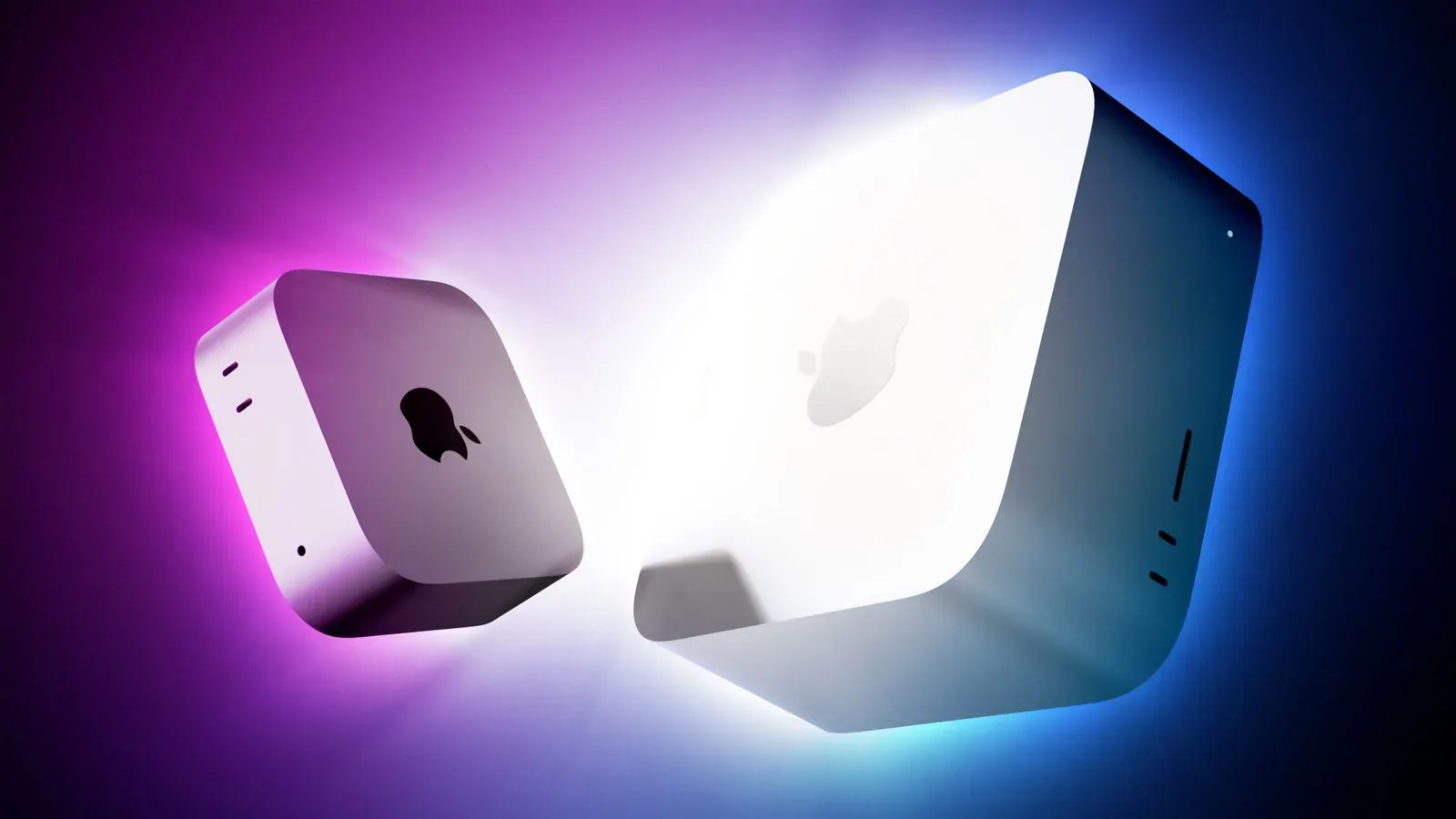
Among the late-month possibilities, one configuration has a more direct basis: Apple has previously said a high-end Mac Studio configuration with an M5 Ultra chip and 512GB of RAM will arrive in “late October.”
The notable specification is the combination of the M5 Ultra designation and 512GB of RAM. RAM, or random-access memory, is the fast working memory that active applications use while the computer is running. Very large capacities can matter for specialized professional workloads that keep substantial datasets or many demanding applications active at once. But the presence of a 512GB option does not mean every buyer needs anything close to it.
This prospective Mac Studio should therefore be read as a high-end configuration, not as a signal that mainstream Mac buyers must chase the largest possible memory figure. People considering a Mac Studio should wait for confirmed configurations and then match them to their actual workloads rather than treating an extreme specification as a universal benchmark.
The OLED iPad mini could land anywhere in the month
A new iPad mini is also expected in October, with an OLED display, an A20 Pro chip, a landscape front camera, a redesigned speaker system and additional changes. Its placement in the release calendar is unclear. It could be announced with the home hardware on October 13, alongside possible Mac announcements in the final week, or at another point in October.
The reported landscape front camera is worth explaining in plain language: it means the camera would be positioned along the device’s longer horizontal edge when the iPad mini is held in landscape orientation. This may be particularly relevant for video calls, where people commonly place compact tablets sideways on a desk or keyboard accessory. Still, the reporting does not describe the camera’s resolution, field of view, or software features, so those details remain unknown.
A redesigned speaker system could also be meaningful for a small tablet used for streaming, calls and portable play, but “redesigned” is not a performance measurement. Buyers will need official specifications and independent evaluation before concluding whether any change materially improves volume, balance or audio quality.
What to do if a purchase cannot wait
For shoppers with an immediate need, waiting solely on rumor can be counterproductive. A current product that solves a present problem may be more valuable than an unconfirmed successor with unknown timing, specifications and pricing. That is particularly true when a machine is needed for work, school or a replacement after hardware failure.
For shoppers who can comfortably wait a few weeks, October’s reported schedule creates a reasonable reason to pause. The potential product set spans home devices, compact tablets, desktop Macs and notebooks. Even if a desired current model is not directly replaced, the announcements could provide useful context about Apple’s direction or alter the available configuration choices.
- Home-product shoppers: October 13 is the key date to monitor, given the expected home hub, HomePod mini and Apple TV 4K.
- Mac shoppers: the final week of October is the reported window to watch, particularly for possible MacBook Pro, iMac and MacBook Ultra news.
- High-end desktop buyers: the M5 Ultra Mac Studio configuration has previously been indicated for late October.
- iPad mini shoppers: the new model may appear at any point in the month, so its timing is the least settled of the major expected products.
The bigger story is not that every rumored product is guaranteed to arrive in one burst. It is that Apple’s October appears set to have multiple moments, each potentially aimed at a different kind of buyer. Until official announcements provide names, specifications, prices and release dates, the safest reading is a busy schedule with a firm-looking home-device date, a reported late-month follow-up, and several major questions still waiting for answers.