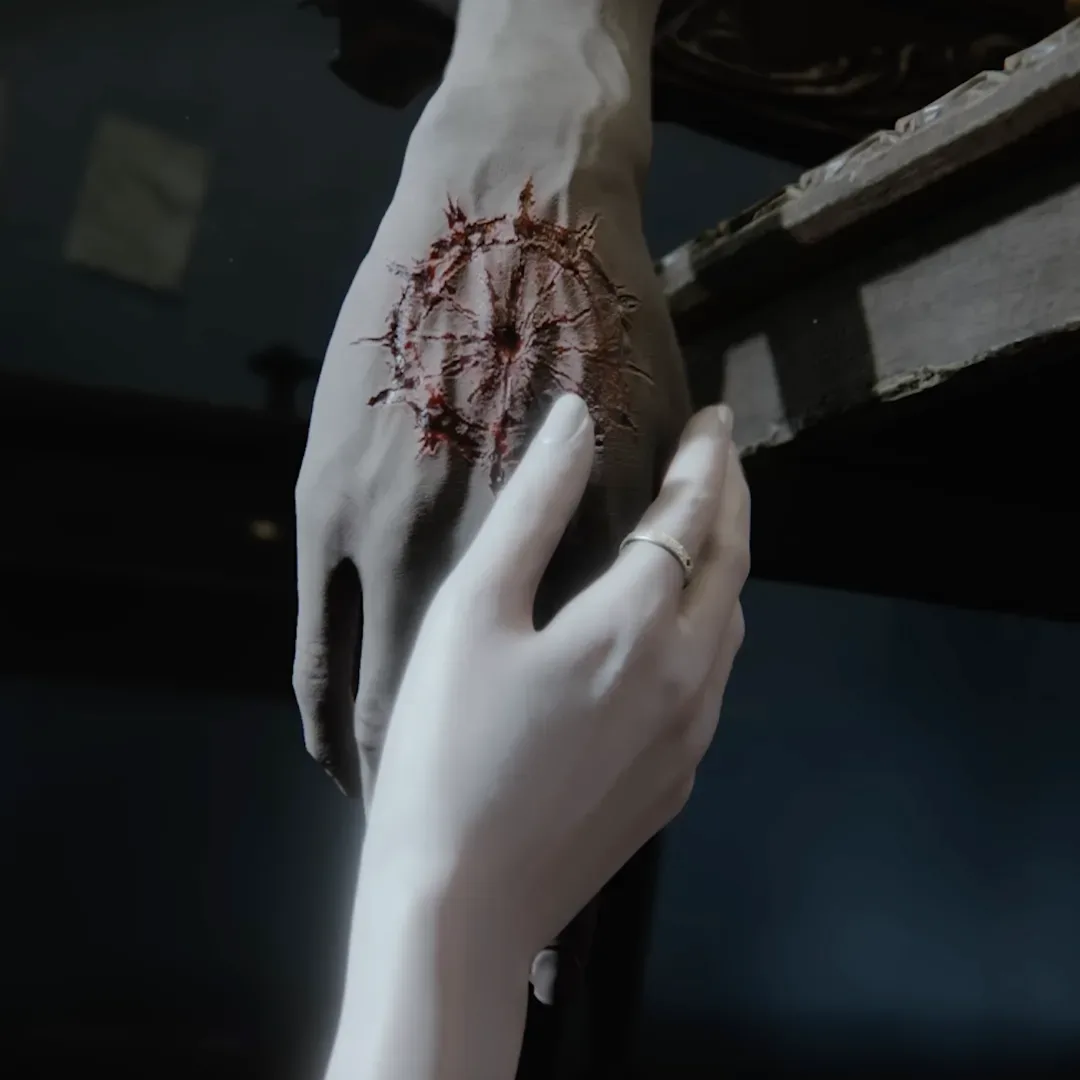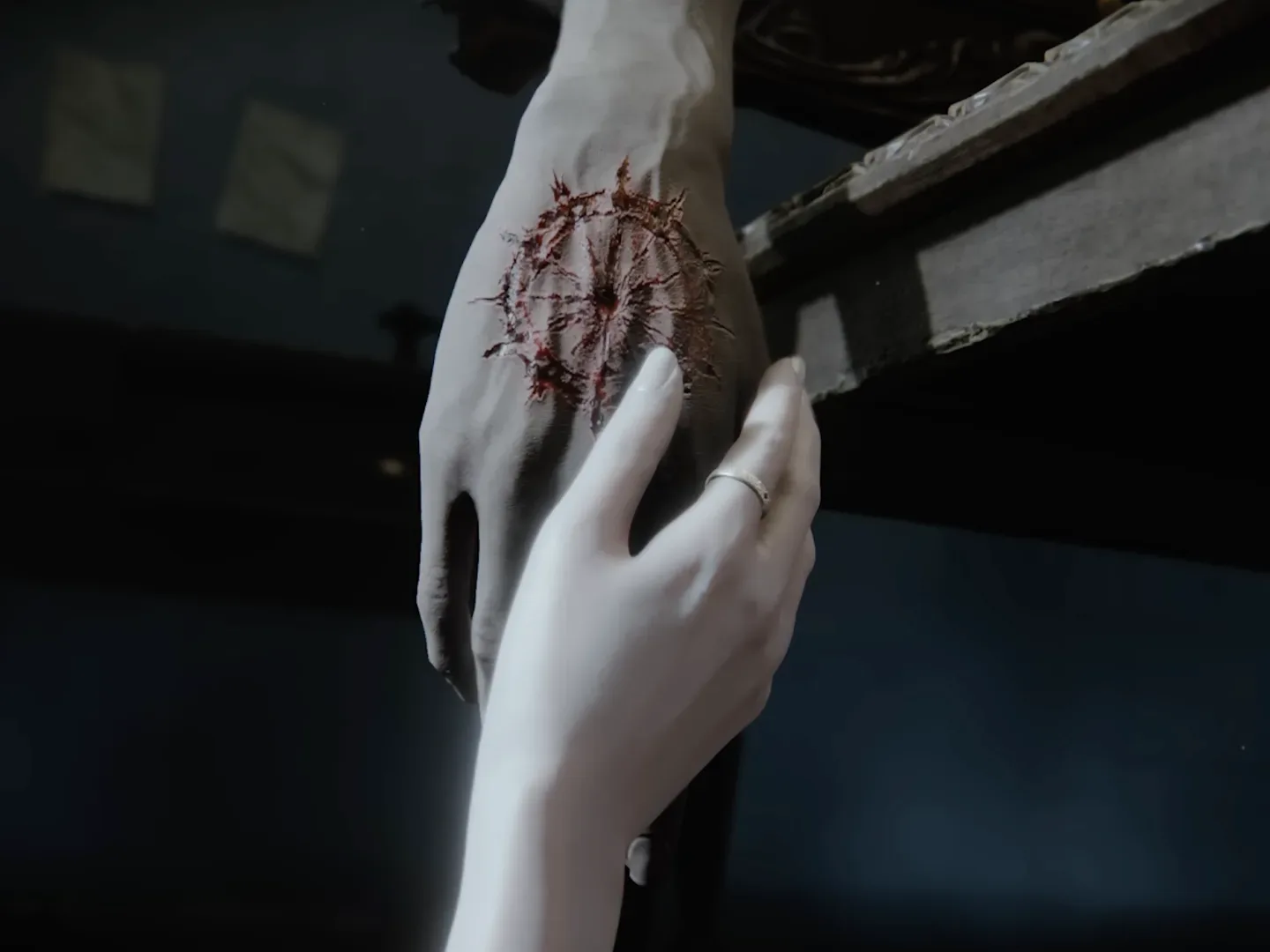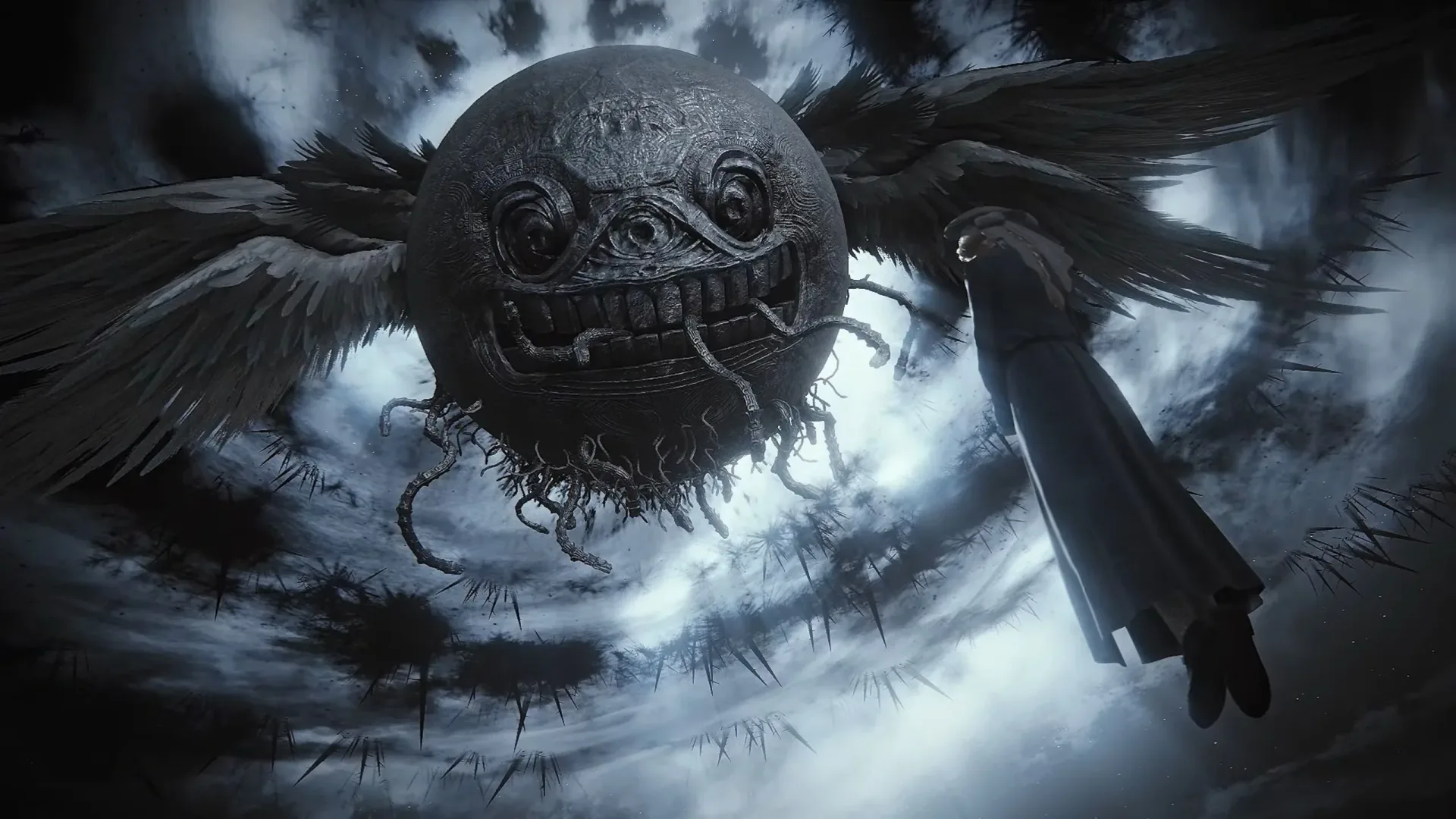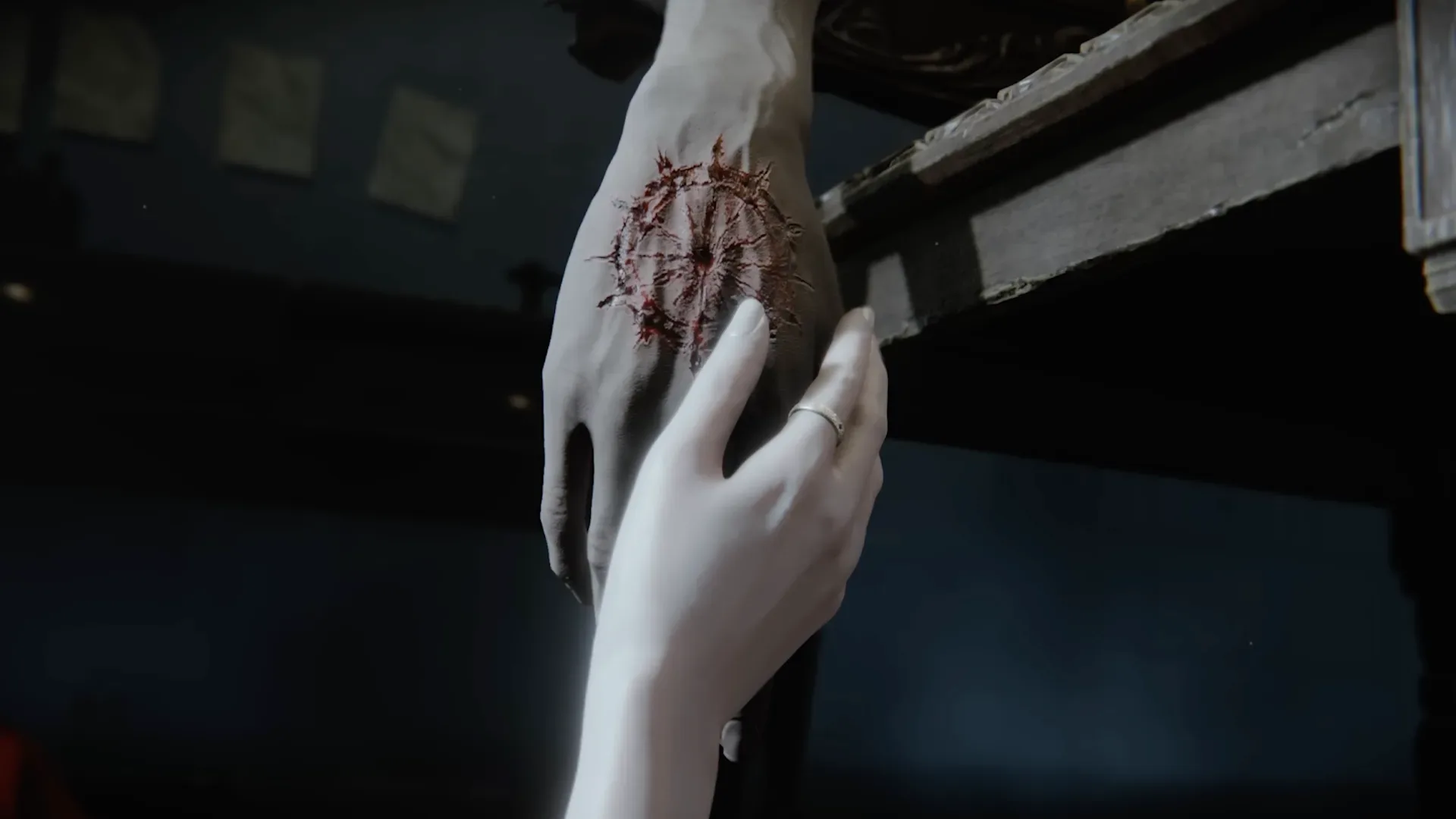
FromSoftware games have long made companionship feel dangerous, conditional, and usually one wrong dialogue choice away from catastrophe. The Duskbloods appears ready to bring that uneasy bond into multiplayer with the Love Ephemeral sigil, a mechanic that lets one player approach another, kneel, take their hands, and express devotion. It is a startlingly direct gesture for a game built around armed competitors pursuing blood amid the unnatural Dusk of Humanity.
Yet director Hidetaka Miyazaki does not seem to regard the mechanic as a straightforward digital courtship system. He has characterized the connection as something closer to dependable trust than a traditional romance: a fragile alliance with somebody who might matter when the rest of the world is hostile. That distinction is central to why Love Ephemeral is more interesting than a novelty emote. In a multiplayer game where up to eight blood-powered players can fight one another, choosing a person to rely upon is not merely sentimental. It is a decision made in public, under pressure, and presumably with plenty of sharp objects nearby.
There is an immediate comic tension in the idea. A player can make a grand, kneeling show of commitment while everyone else in the match has the opportunity to treat the scene as an open invitation to attack. Reports from network-test participants have already described players being killed while attempting the Love Ephemeral action. That does not establish how the mechanic will ultimately function or how common such betrayals will be, but it neatly demonstrates the special hazard of building trust into a competitive setting: someone may see a vow; someone else may see an animation lock.
Not a fairy-tale marriage system
The terminology around Love Ephemeral matters. “Ephemeral” does not suggest permanence, domestic bliss, or a tidy branching romance route with a bouquet at the end. It suggests something passing: an alliance that gains meaning precisely because it may not endure. Miyazaki has linked that idea to the maidens of Elden Ring, describing a recurring interest in a temporary, delicate kind of love.
“It’s not necessarily a romantic pairing,” Miyazaki said of the idea, describing it instead as having someone one can ultimately rely on.
That framing puts The Duskbloods in familiar thematic territory even while the player-to-player format is new. FromSoftware’s worlds often ask players to invest in figures who supply guidance, sanctuary, upgrades, knowledge, or access to major story paths. Such relationships are rarely uncomplicated. They can be transactional, reverent, manipulative, mournful, or all of those at once. A character who helps the player may also carry their own agenda, while an apparently safe place can become another site of loss.
The Duskbloods shifts that instability away from a scripted non-player character and onto another human being. That is a meaningful change. An NPC can conceal lore, change position, or meet a scripted fate, but a live player can panic, misread the situation, decide to pursue a separate objective, or simply get distracted by a more tempting target. The trust Miyazaki is describing becomes less author-controlled and more social. It has to survive not just the game’s fiction but the unpredictable behavior of the people holding the controllers.
For a useful reminder of how quickly cooperation develops its own etiquette, grudges, and accidental betrayals, revisit The Unwritten Rules of Couch Multiplayer, Now Written Down. The Duskbloods may not be couch multiplayer, but the same human impulses travel remarkably well across a network: protect the teammate, blame the teammate, laugh at the teammate, and perhaps refrain from eliminating the teammate during a ceremonial proposal.
From maidens to mutual vulnerability
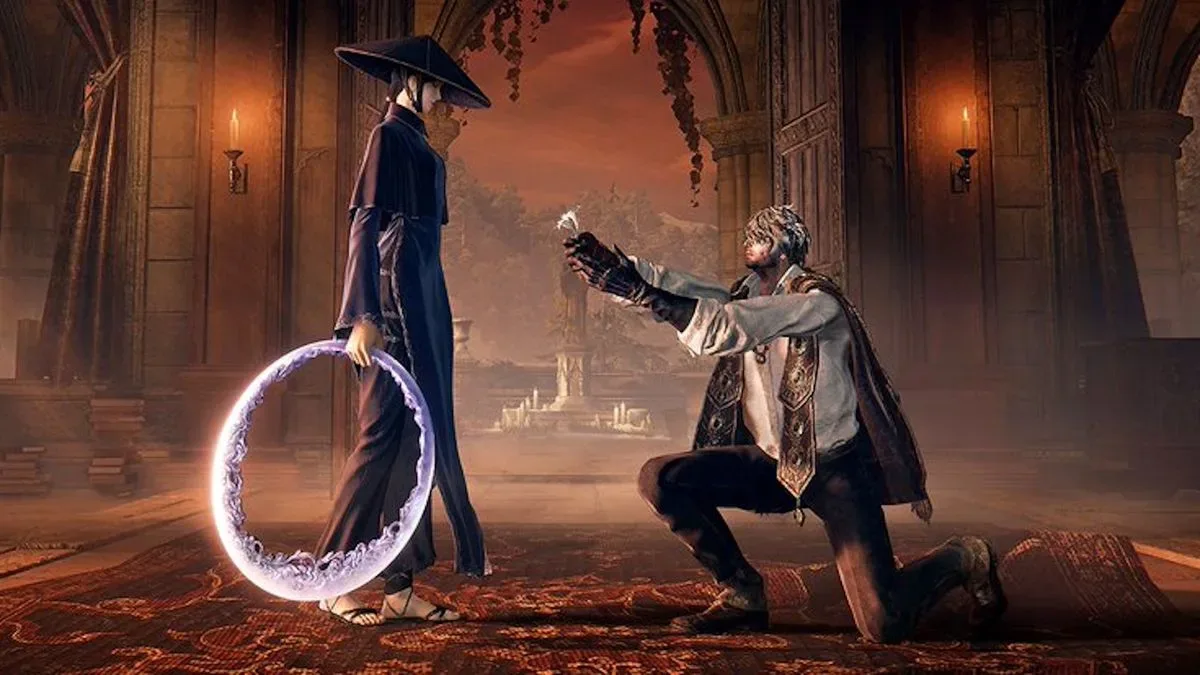
The lineage Miyazaki points to is visible across several games. In Dark Souls III, the player can marry Anri of Astora using the Ring of the Evil Eye. In 2022’s Elden Ring, an alliance with Ranni the Witch culminates in placing the Dark Moon Ring on her finger. Neither moment is a breezy genre-romance detour. Both sit within games where affection, loyalty, ritual, and ambition come with unusually ominous scenery.
Beyond literal marriage imagery, the series repeatedly establishes relationships with firekeepers, shrine maidens, and the Doll in Bloodborne. These figures are bound to vital practical functions, including character progression, but their roles also carry narrative and thematic weight. They are not simply menus wearing elaborate costumes. Their existence helps make the player’s advancement feel tied to a world of duty, sacrifice, care, and uneasy dependence.
This is why calling Love Ephemeral the studio’s first overt player romance does not quite tell the full story. It may be its clearest player-to-player expression of romantic ceremony, but the broader emotional vocabulary has been developing for years. FromSoftware is accustomed to using intimate gestures and dedicated companions to make its ruined worlds feel personal. The novelty here is asking two players to co-author that vulnerable moment rather than assigning one side of it to an NPC.
It also means the mechanic could resonate even with players who do not interpret it romantically. A pairing ritual can communicate tactical loyalty, mutual protection, role-play, friendship, or a temporary pact between strangers. The strength of Miyazaki’s description is that it leaves room for all of those readings. Secure trust is broad enough to include romance, but it is not reduced to romance.
An eight-player arena makes every gesture louder
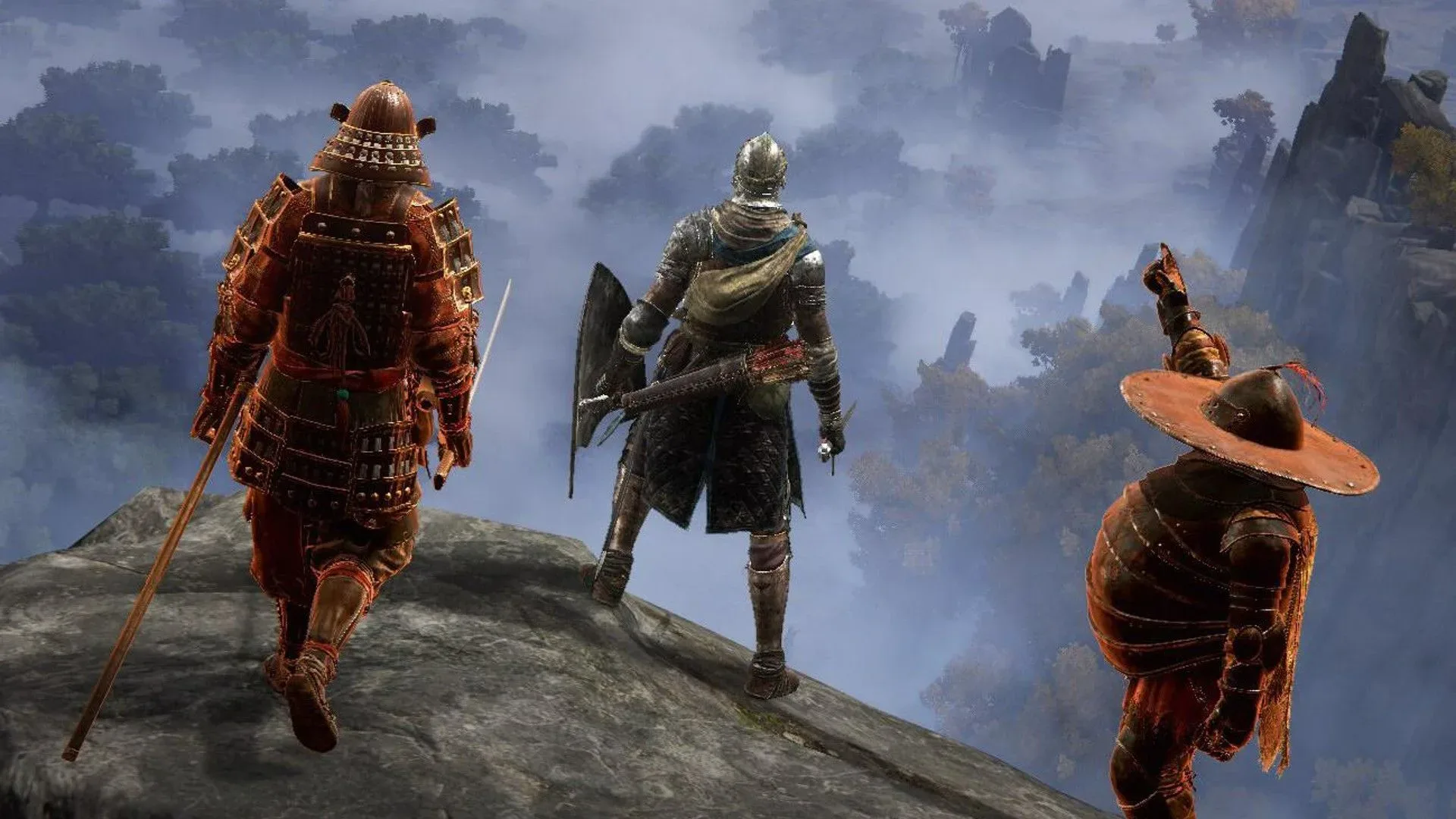
The Duskbloods is a Switch 2 multiplayer game set during the Dusk of Humanity. Its premise involves as many as eight players, powerful blood, and conflict in pursuit of a deeper red. Within that environment, a hand-holding emote is not quiet character flavor tucked safely between missions. It is a conspicuous action performed among rivals who may have every incentive to interrupt it.
That danger may be exactly what gives the gesture value. Cooperation in a low-stakes lobby is easy; cooperation when every participant can interfere is a real commitment. The sigil could therefore turn a simple emote into a miniature test of social reading. Is the nearby player actually offering protection? Are they luring an opponent into view? Are both participants making themselves briefly vulnerable because they expect a tactical return? Or is everybody involved simply willing to risk losing for the bit?
There is no need to pretend multiplayer games have not always been capable of tenderness, despite their reputation for noise and chaos. Players routinely build rituals, recurring teams, silent understandings, and improvised stories around systems that may never explicitly ask for them. A formal mechanic like Love Ephemeral gives that instinct a recognizable shape. At the same time, it gives opportunists a recognizable target. The ceremony and the danger are inseparable.
That may make the successful version of Love Ephemeral memorable in a way a standard alliance marker would not be. A player who sees the animation through has not only pressed a button; they have found another participant willing to share a vulnerable beat in a hostile space. Whether that bond survives the next encounter is another question, and one that fits the word “ephemeral” perfectly.
The persistent uncertainty around the release date
Discussion of The Duskbloods has also included a reported September release date. Nintendo has denied that date, leaving the timing uncertain. Until a date is formally confirmed, it is best treated as unverified rather than as a scheduled launch window.
For now, the more concrete takeaway is the design direction: The Duskbloods intends to make trust legible. Rather than leaving players to signal alliance solely through movement, restraint, or an exhausted crouch-spam negotiation, Love Ephemeral provides an unmistakable piece of ritual. It may yield loyal partnerships, immediate disaster, or both in the same match.
That mixture feels unusually fitting for a game about blood, conflict, and precarious human connection. A romantic-looking gesture becomes more than romance when it requires faith from two people who know precisely how badly it could go. In The Duskbloods, the promise of someone dependable may be temporary—but so is the window before a third player notices what is happening.