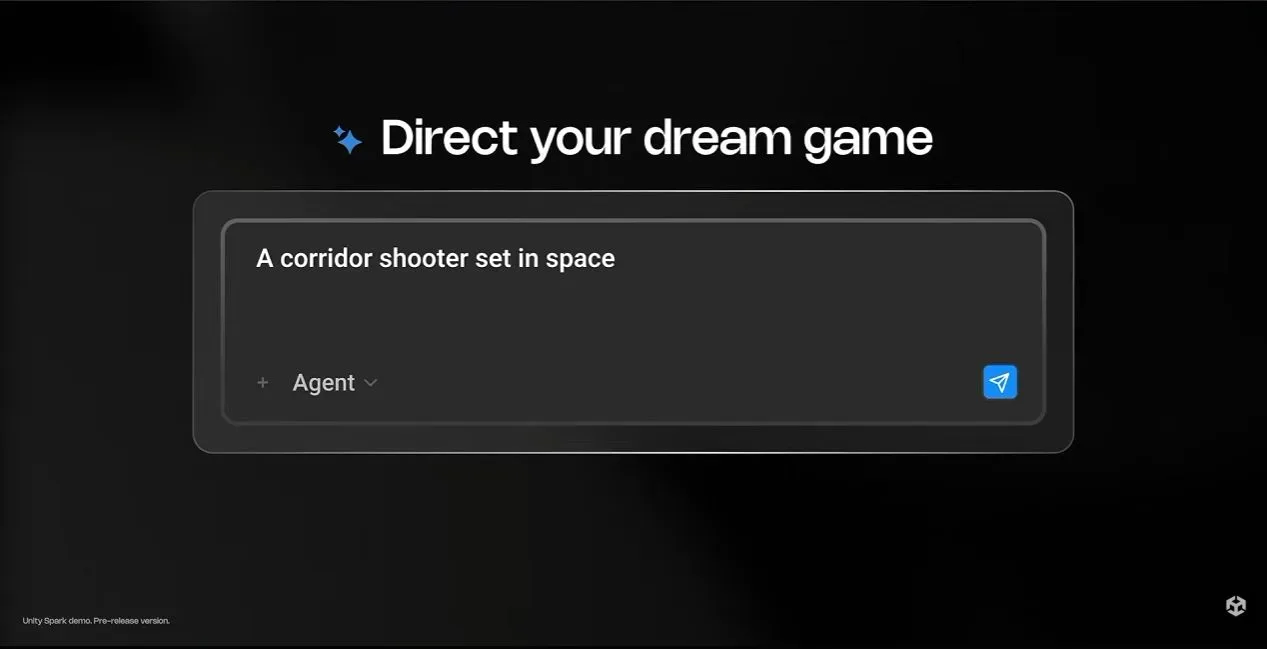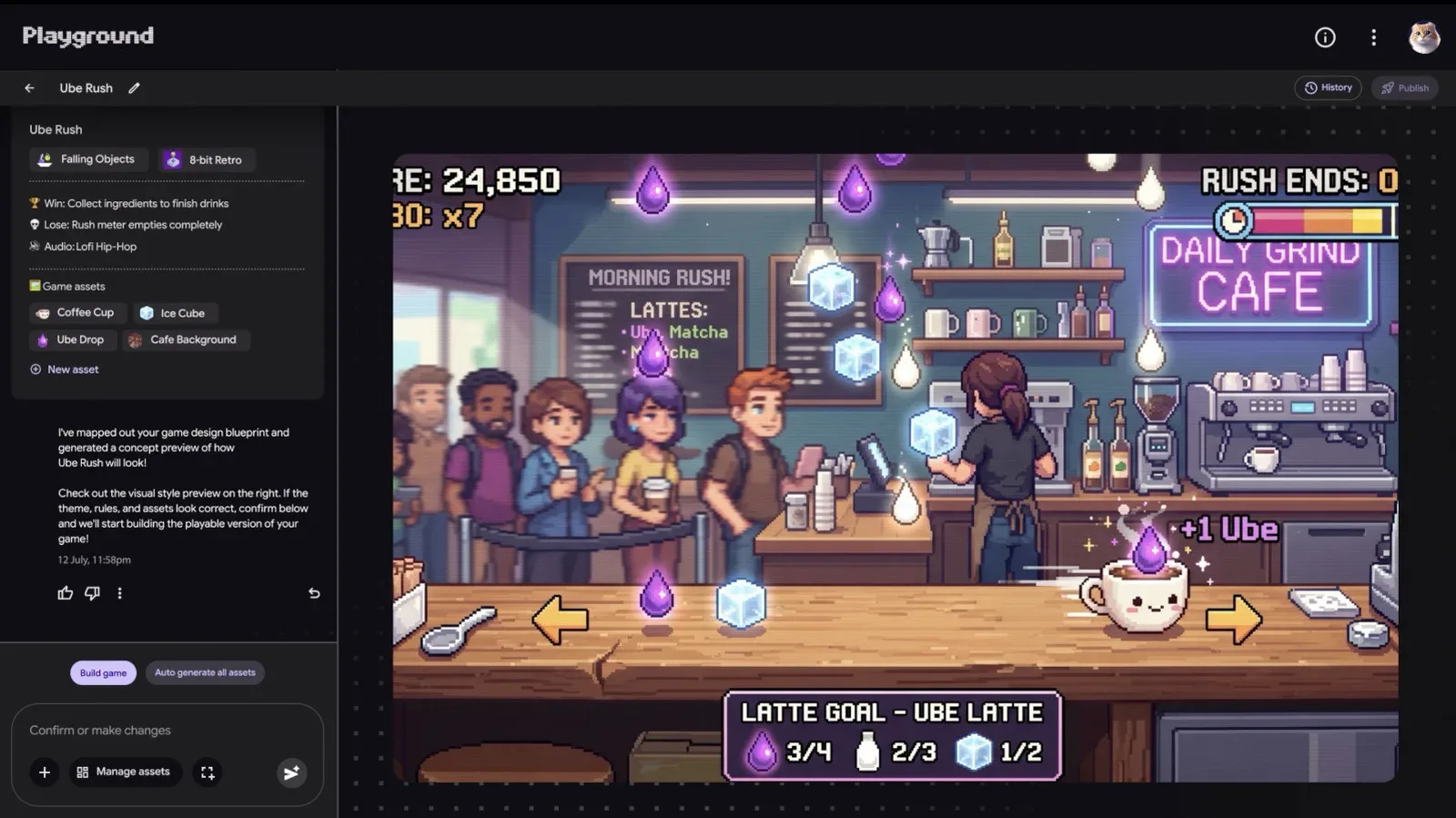
Unity Spark is being presented as a generative-AI-assisted route from a game idea to a working prototype: a creator opens a chatbot, describes what they want, and the tool helps assemble an early version of it. That is a potentially meaningful shortcut for experimentation. It is also the kind of shortcut that can be misunderstood as an automatic path to becoming a game maker.
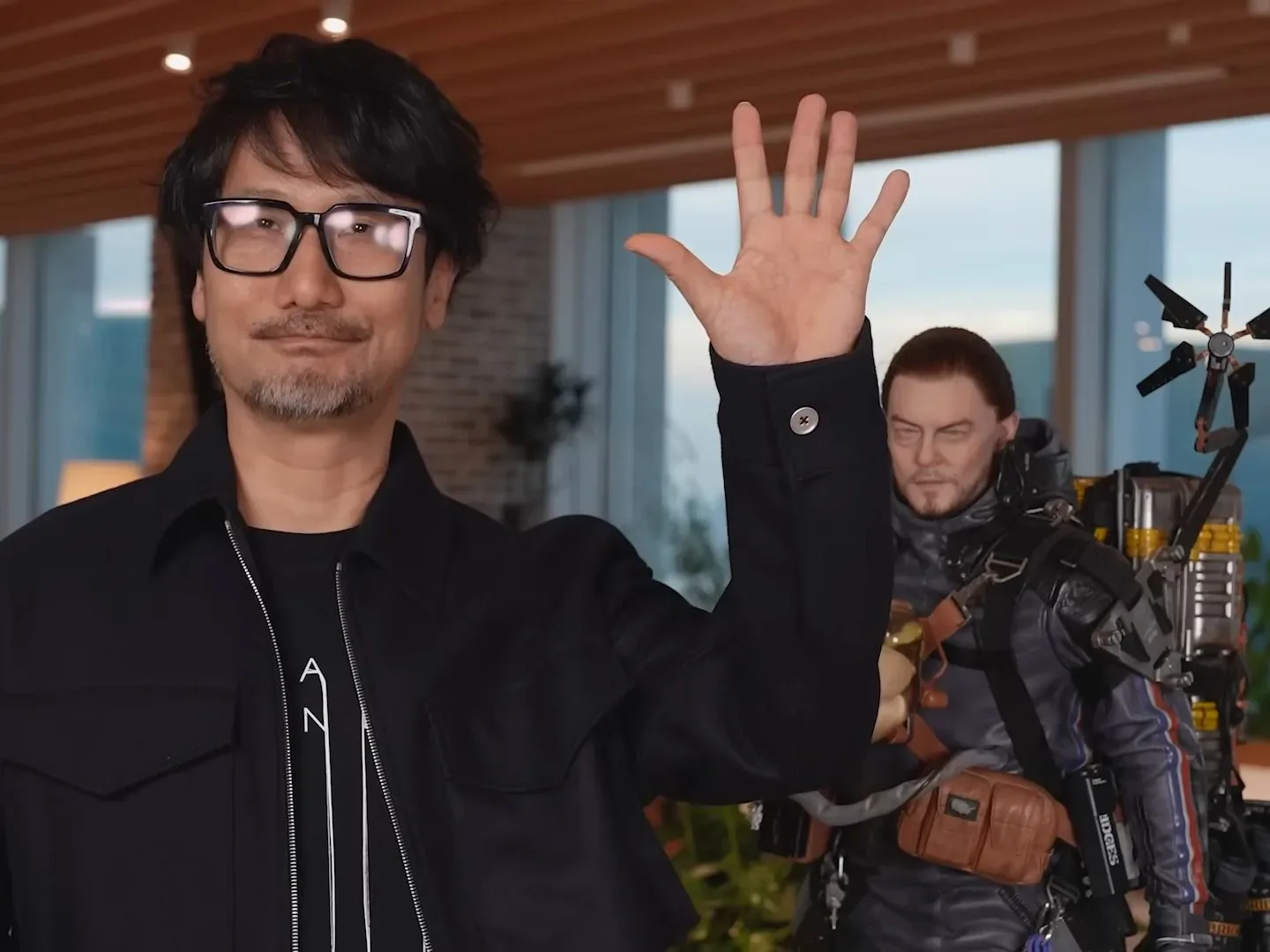
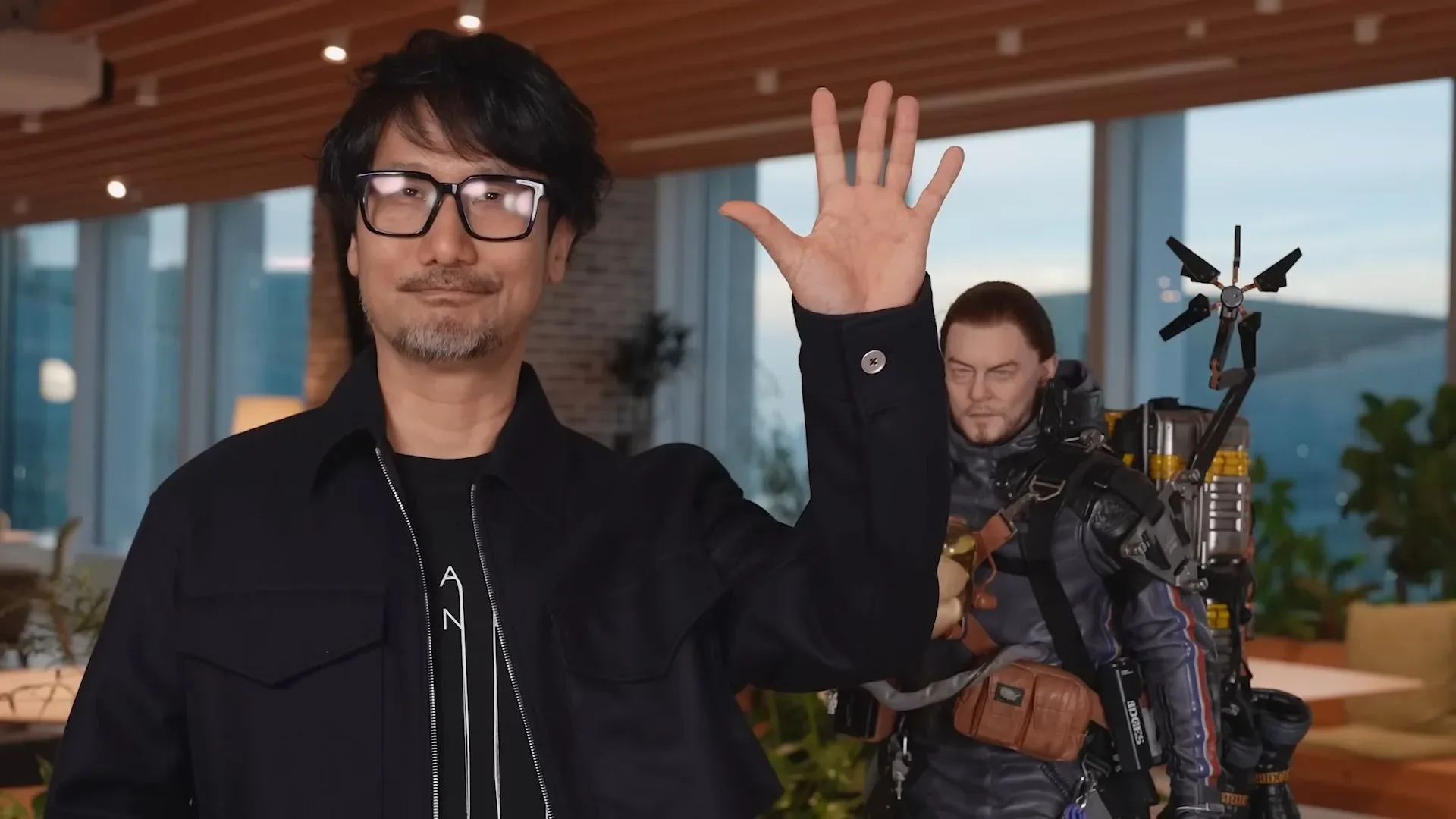
Unity CEO Matt Bromberg has drawn a sharp line between those two things. Asking an AI to recreate a game that already exists, he argued, does not make the person entering the prompt comparable to Hideo Kojima. He made the same point with a literary comparison: typing the opening of War and Peace into a word processor does not turn someone into Tolstoy.
The bluntness is useful. A prototype can demonstrate an idea, but it cannot by itself answer the harder questions that make a game distinct: what the player does repeatedly, why those actions remain interesting, which constraints are intentional, how the rules communicate with each other, and what should be removed when the first version is too busy or too dull. Generative tools may make an initial build quicker. They do not automatically supply judgment.
That distinction matters because Spark’s public framing points in two directions at once. Bromberg has said there is no interest in people “one-shotting games,” meaning producing a finished game from one instruction. Yet the product messaging uses the compact slogan “Prompt it. Perfect it. Publish it.” The first statement emphasizes iteration; the second naturally invites people to imagine a near-instant pipeline from sentence to storefront.
Both ideas can coexist in theory. A prompt may be the beginning of a prototype, followed by substantial refinement. In practice, however, the wording exposes the central tension around AI game-development tools: reducing the friction of making something is not necessarily the same as reducing the work required to make something worth playing.
What Spark appears designed to do
Based on the available description, Spark is aimed at assisting people who have a game concept but want help turning it into a working prototype. A prototype is an early functional version built to test an idea rather than a complete commercial game. It may establish basic movement, an objective, an interaction loop, or the broad shape of a level. Its value comes from revealing whether an idea works when played, not from looking finished.
That can be a legitimate and useful purpose for an AI assistant. The gap between imagining a game and building enough of it to test can be intimidating, especially for beginners. If a tool helps someone get to the point where they can identify a problem, alter the concept, and test again, it may shorten the feedback loop that makes iteration possible.
Iteration is the repeated process of changing a design in response to what the previous version revealed. A prototype might show that an objective is unclear, an obstacle is too easy, or a mechanic does not create enough interesting choices. The developer responds with a revision, then assesses that revision. The cycle is neither glamorous nor optional. It is where a vague idea becomes a designed experience.
Related coverage includes Unity Spark Puts AI Game Prototyping at the Center of a New Development Debate.
Nothing in Spark’s premise removes that need. In fact, a rapid first draft may make discernment more important. When an initial version arrives quickly, the real challenge becomes knowing what to keep, what to challenge, and what to rebuild rather than accepting the first plausible output.
Asset convenience and the problem of visual sameness
One stated part of Spark’s approach is that prompts are answered using premade assets from the Unity Store. That puts an important limitation in plain view. An asset is a reusable game-development component, such as art, an object, an environment piece, or another production-ready element. Store assets can be practical building blocks, especially for a prototype. They can save time on work that is not central to the question being tested.
But an assortment of available pieces is not the same as an authored visual identity. If many projects draw from the same pool of ready-made materials, they risk resembling one another even when their prompts differ. The term asset flip is often used critically for a game that appears to rely heavily on readily available assets without enough transformation, cohesion, or original direction to feel like a work with its own identity.
That outcome is not inevitable merely because a developer uses premade materials. A prototype does not need bespoke art to test a movement system or gameplay premise. The concern is what happens when prototype convenience is treated as publication readiness. A creator still has to make choices about tone, consistency, readability, and what the game should look and feel like. Those choices are not solved simply by selecting assets that fulfill a text request.
The difference is especially relevant to the “perfect it” part of Spark’s slogan. Perfection is a large claim for any tool, but it is particularly loaded when the visible building blocks can be shared by many other projects. Refinement must mean more than correcting an output until it functions. It should mean developing a coherent result with a clear reason for being structured, presented, and played in its particular way.
A beginner tool should not become a learning bypass
Spark appears especially relevant to newcomers who want to start realizing game ideas. That audience is worth taking seriously rather than dismissing. A beginner often needs a foothold before they can learn the vocabulary, workflows, and practical tradeoffs that development demands. An assistant that gets a concept into a playable state could make that first encounter less opaque.
At the same time, the easiest route is not always the most educational one. Building from scratch and repeatedly revising a project teaches problem-solving because it makes the links between cause and effect visible. A change breaks something else; a mechanic that sounded exciting in prose proves confusing in motion; an appealing addition competes with the actual point of the game. Those moments are frustrating, but they are also information.
There is a risk if newcomers come to see prompting as a substitute for understanding the systems behind the result. A tool may generate a starting point, but the creator still benefits from asking basic development questions: What behavior is this system meant to produce? What happens when the player tries an unexpected action? What does the game communicate clearly, and what does it merely assume? Why is this asset here? Why is this rule necessary?
Those are not demands that everyone become an expert before beginning. They are reasons to treat an AI-generated prototype as a draft to investigate, not as proof that the creative work is complete. The healthy use case is closer to “help me get something testable” than “make the game so I do not have to make decisions.”
The job question cannot be separated from the tool question
The Spark discussion also sits within a broader concern about AI and game-development work. Kojima has described AI as potentially useful while also saying he does not want people to lose their jobs because of it. That position captures the issue more precisely than a simple pro- or anti-AI label. A tool can assist people without being a justification for treating the people whose expertise shapes games as expendable.
For developers, the practical question is not only whether a system can generate an early prototype. It is who has authority over the result, who is responsible for correcting it, and whether speed is being used to support creative work or to remove the people expected to provide it. A project still requires design judgment, technical problem-solving, art direction, testing, and the ability to recognize when an apparent shortcut has created new problems.
That does not make AI assistance inherently useless. It means the value proposition should be measured against the actual work it changes. Faster prototyping could leave more time for testing and refinement. It could also create pressure to ship more quickly, with less time for either. The same capability can support very different priorities depending on how it is used.
This is part of a wider disclosure and authorship conversation already visible around AI-assisted game work, including debates raised by projects such as a PC revival project that prompted questions about AI-assisted code. Spark makes that conversation more immediate because it places prompting near the center of the development workflow rather than treating it as a peripheral experiment.
What to watch when Spark becomes available
Unity Spark is expected to be available soon, and its real impact will depend less on the promise of a chatbot than on the projects people build with it. The important evidence will be whether creators use rapid prototypes as the first stage of deeper iteration, or whether the tool primarily produces a rush of superficially similar games built from recognizable components.
- Prototype versus product: Does the generated work remain an exploratory draft, or is it immediately treated as ready to publish?
- Creative ownership: Do creators make clear design choices beyond the prompt and the available asset selection?
- Learning value: Does the process help newcomers understand and revise their games, or conceal the reasons a system behaves as it does?
- Workplace consequences: Is AI used to assist developers and make room for more iteration, or framed as a replacement for development roles?
Bromberg’s Kojima comparison gets at the heart of the matter. Reproducing a familiar result is not the same as originating a game, and generating a functional draft is not the same as designing an experience. Spark may lower the barrier between an idea and something playable. The creative responsibility begins after that barrier, not before it.