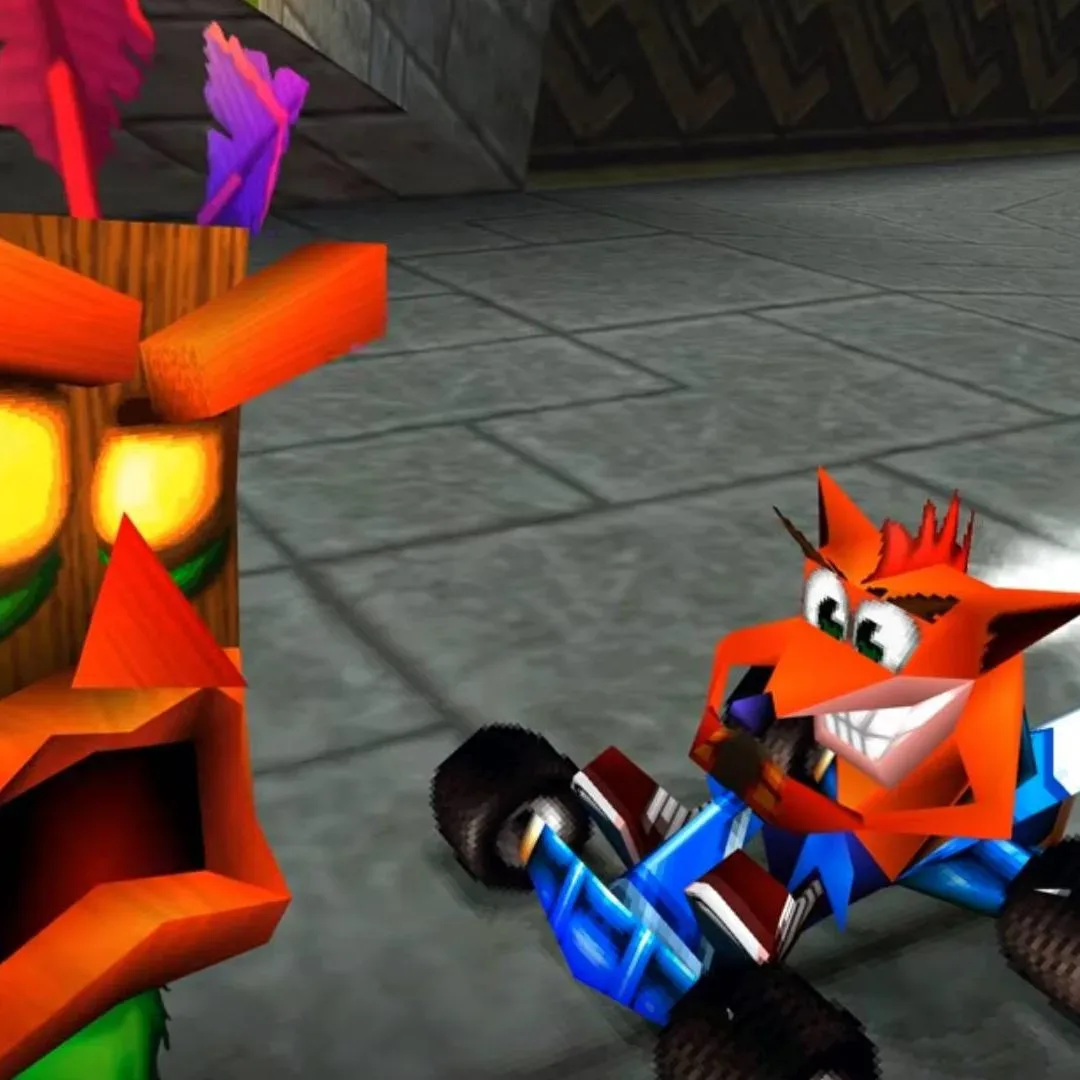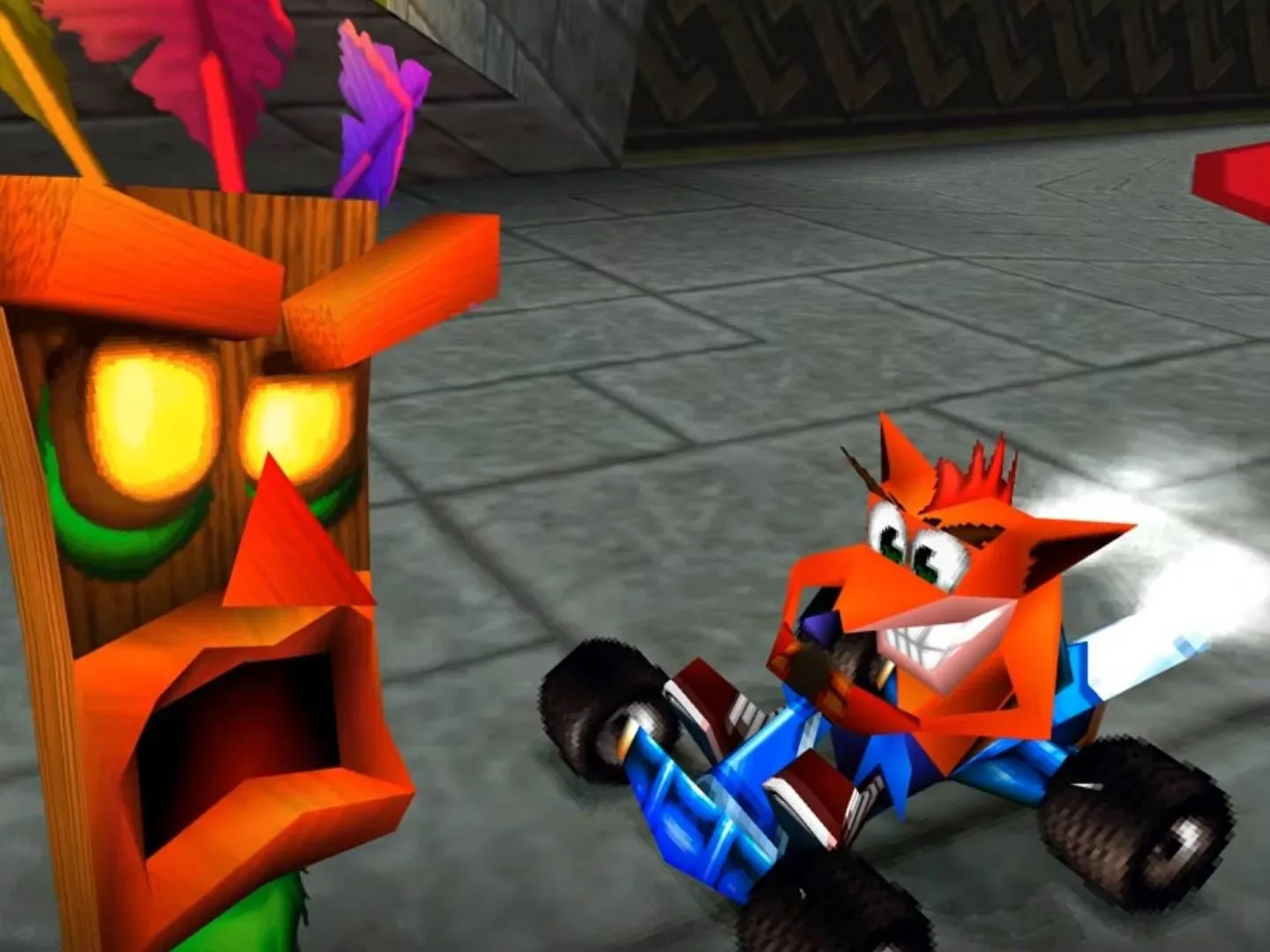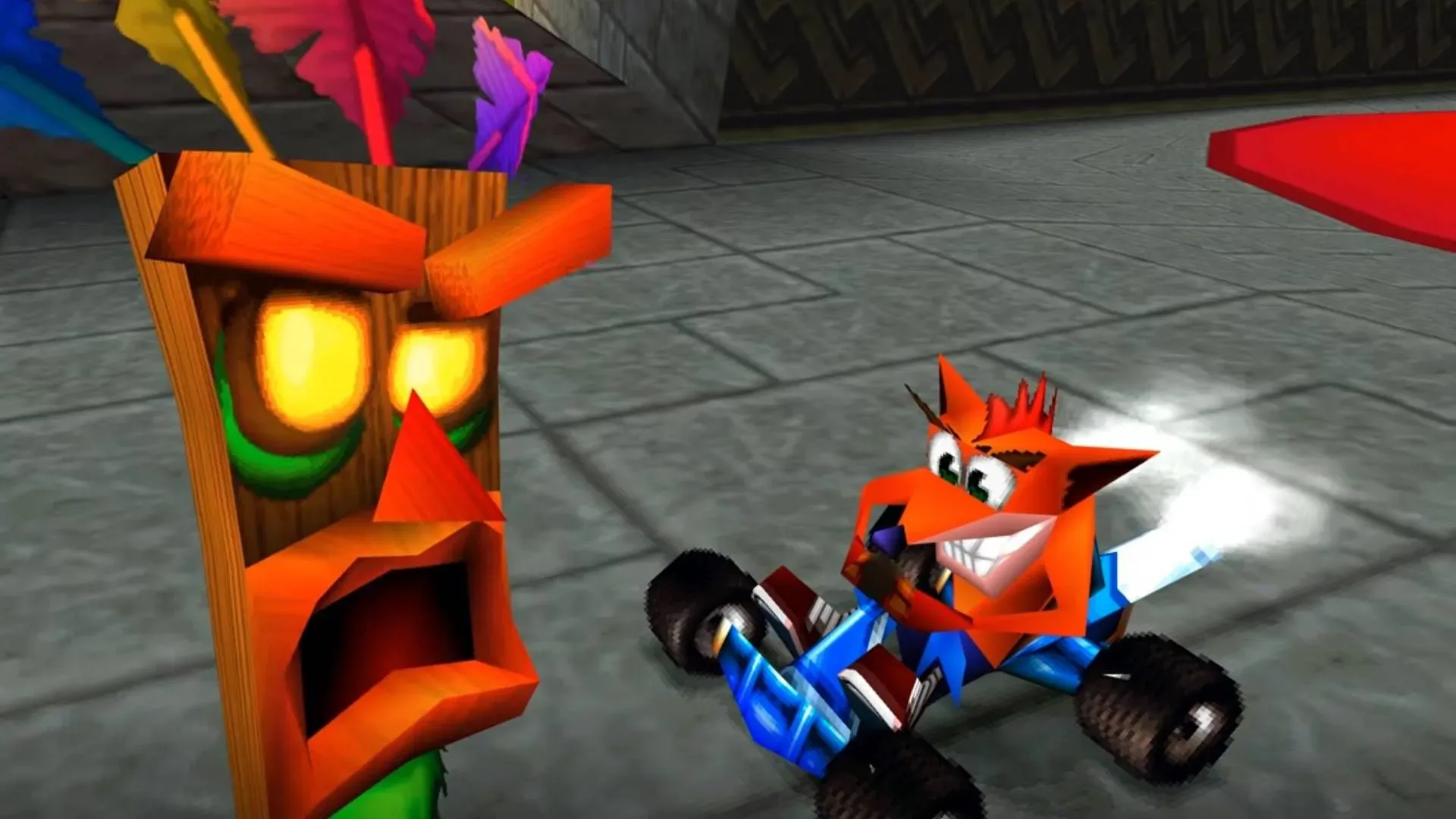
Crash Team Racing: Turbocharged gives the original PlayStation kart racer a new PC-facing path, promising native-resolution rendering up to 4K and beyond, widescreen support, enhanced textures, and frame rates reaching 240fps. For a game closely associated with late-1990s PlayStation hardware, those are substantial presentation upgrades.
But the project is attracting attention for another reason: its creator, Camzie99, has confirmed that large language models, or LLMs, were used during development. The admission does not describe a one-command process in which an AI was asked to generate an entire port. Instead, the developer says the work involved feature planning, locating the relevant places in the codebase, deciding what needed to change, then having an LLM write limited pieces of code that could be reviewed.
That distinction is important technically, but it does not settle the community question. Some players draw a firm line around any AI-generated code; others may see a controlled, reviewed use of an LLM as materially different from broadly prompting a tool to build a program with little human understanding. Either way, Turbocharged illustrates why clear disclosure now matters even for a free, enthusiast-built retro project.
A PC upgrade built on prior decompilation work
Turbocharged is based on the existing CTR native project, a decompilation effort that has been worked on by human contributors since 2021–2022. A decompilation project is an attempt to reconstruct source-level code from an existing compiled game. In practical terms, it can provide a codebase that developers can study and modify rather than treating the original release solely as a sealed PlayStation executable.
That foundation is central to what Turbocharged is trying to offer. Rather than simply presenting the original game through an emulator, the project is described as a source port based on that decompilation work. Its stated goals include rendering at resolutions far beyond the original console output, support for wider display formats, upgraded textures, and dramatically higher frame-rate ceilings.
Each item speaks to a familiar problem for retro games on modern displays. Older console software was designed around the output limits and display conventions of its era. A native-resolution rendering option can allow the game image to be drawn at the resolution selected on a modern PC rather than merely enlarged after the fact. Widescreen support is intended to fit contemporary monitor shapes. A 240fps cap, meanwhile, is aimed at displays and PCs capable of refreshing the image far more frequently than the hardware for which the original game was made.
Those headline features should not be confused with a claim that every player needs a 4K screen or a 240Hz monitor to enjoy Crash Team Racing. The practical point is choice: a project such as this can give PC players more control over how a classic game is presented. It also places the original racer in the growing tradition of technical preservation and modernization work around older games.
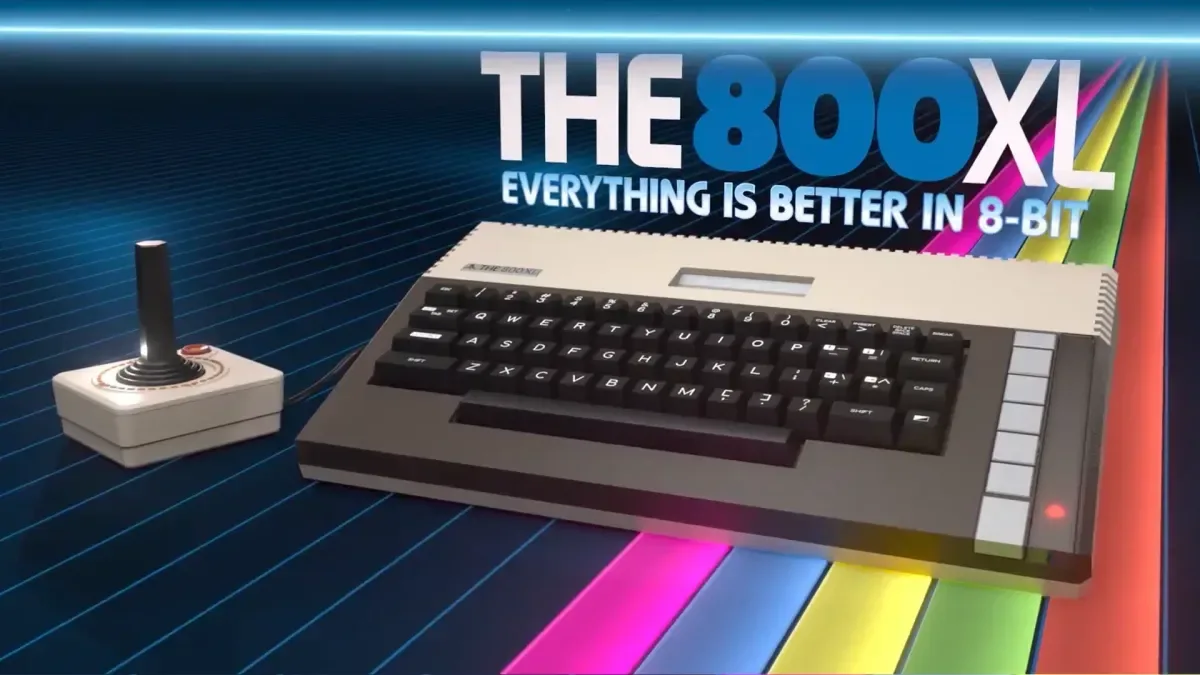
That broader impulse is visible elsewhere in retro technology. Projects rebuilding old computing experiences with modern display options continue to appear, including the Atari 800XL revival with HDMI and cartridge support. Turbocharged belongs to a different technical category, but the underlying appeal is recognizable: retain an older experience while making it more usable with current hardware.
Related coverage includes Crash Team Racing: Turbocharged Brings the PS1 Kart Racer to PC, but Its AI-Assisted Development Sparks Debate.
The AI question is not just a label dispute
The term “vibe coding” has become shorthand for asking an AI system in ordinary language to build software, often with broad requests and minimal engagement with the details of implementation. The phrase is imprecise, and Camzie99 specifically challenged whether it applies to Turbocharged.
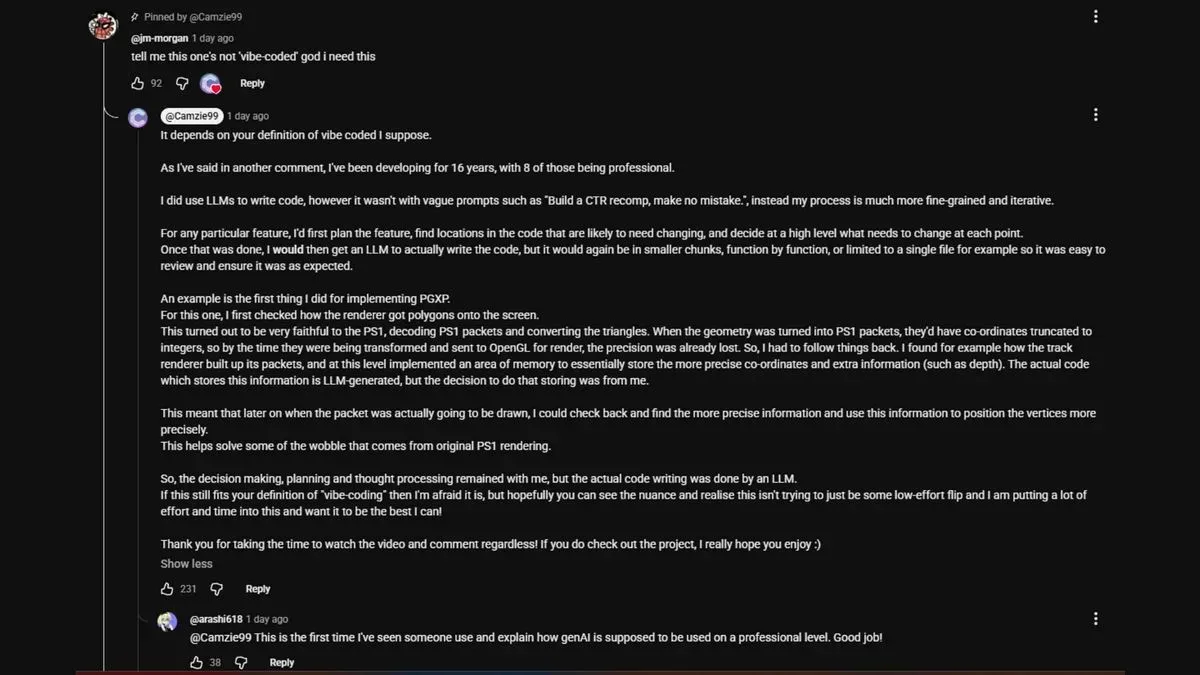
The creator’s account describes a more granular workflow. For a given feature, the process reportedly began with human planning: identify the feature, identify likely locations in the code that need modification, and decide at a high level what must change. The LLM was then used to produce code in smaller sections, such as a single function or a limited file. Those outputs were reviewed to ensure they matched expectations.
“I did use LLMs to write code,” Camzie99 said, while stressing that the process was planned feature by feature and that generated work was limited to smaller, reviewable chunks.
This is a meaningful description because programming is more than typing syntactically valid lines. Deciding what a feature should do, mapping that goal onto an existing codebase, identifying interactions between systems, and assessing whether an implementation behaves as intended are all parts of software development. Camzie99’s position is that those decisions remained human-led, even where an LLM generated the code ultimately used for a particular task.
At the same time, the developer does not claim the code was entirely handwritten. That is the point on which many players will base their own decision. A workflow can be deliberate, selective, and reviewed while still relying on generated code. Calling it something other than vibe coding may clarify the development process, but it does not erase the use of AI.
PGXP offers a concrete example
One example cited by Camzie99 involves PGXP. This is an enhancement associated with PlayStation emulation that addresses the visible polygon wobble common to many PS1-era 3D games.
That wobble is a visual artifact: as a camera moves, edges and surfaces in 3D scenes can appear to shift or jitter in a way that is especially noticeable on larger, sharper modern displays. PGXP techniques are designed to improve how positional data is handled so the image appears more stable. It is the sort of improvement that can sound obscure in a feature list but be immediately noticeable to someone revisiting a game on a contemporary screen.
The significance of the PGXP example is not merely that Turbocharged seeks to improve PlayStation-era rendering. It is that Camzie99 has used it to explain the stated workflow: feature-level planning first, narrowly scoped AI output second, review afterward. That makes the discussion more specific than a vague claim that AI “helped” with development.
Specificity, however, is only one half of transparency. Players who wish to avoid AI-assisted projects need enough information to make that choice before downloading or promoting a project. A detailed explanation buried in a comment can be valuable, but it is not necessarily the same as a straightforward notice in the project’s main materials.
Why disclosure is the practical issue
There is no single community consensus on what level of AI assistance makes a fan project unacceptable. Some people may focus on whether the creator understands, directs, and checks the generated output. Others may object to LLM use regardless of the amount of review. Still others may primarily care about the technical result: a free PC version of a beloved kart racer with modern display features.
None of those positions requires pretending that the project’s development method is simpler than it is. Turbocharged can be both an ambitious technical undertaking and an AI-assisted one. The more useful framing is not a binary contest over whether it qualifies for a loaded internet label; it is whether potential users have an accurate account of what they are supporting.
That is especially relevant in fan-led preservation spaces. Decompilation projects often depend on trust, collaboration, documentation, and careful credit for prior work. The CTR native project provided the basis on which Turbocharged was built, while Turbocharged adds its own stated rendering and presentation goals. When a new layer of AI-assisted programming enters that chain, clear communication helps contributors and players understand the project’s methods.
For players, this also keeps decisions practical. Someone excited by widescreen, enhanced textures, 4K output, and a 240fps option can assess the project on those merits. Someone who avoids software involving LLM-generated code can choose a different way to revisit the original Crash Team Racing. The key is that neither group should have to infer the project’s approach from a scattered discussion after the fact.
What Turbocharged represents for classic PC ports
Crash Team Racing: Turbocharged is a compact example of a much larger issue facing game modding, preservation, and unofficial ports. Modern tools can make it easier to extend old software beyond the constraints of its original machines. At the same time, the tools used to make those improvements are becoming part of the story, not merely invisible plumbing.
The project’s claimed feature set is easy to understand: a PlayStation kart racer rendered for modern PC setups, with options that original hardware could not provide. The development disclosure is more complicated. Camzie99 describes a hands-on, incremental process in which an LLM generated small portions of code under human direction and review. That explanation rules out the simplest picture of automated, one-prompt development, but it still leaves AI-generated code as part of the finished project.
For now, that is the clearest way to view Turbocharged. It is a PC-focused enhancement effort built on prior CTR decompilation work, with ambitious visual and performance targets, and with openly acknowledged LLM involvement once questioned about it. Whether that last point is a deal-breaker will vary from player to player. What should not vary is the expectation that projects disclose it plainly where people decide whether to download, share, or support them.
Shop the products
Check current price, model and availability at the retailer.