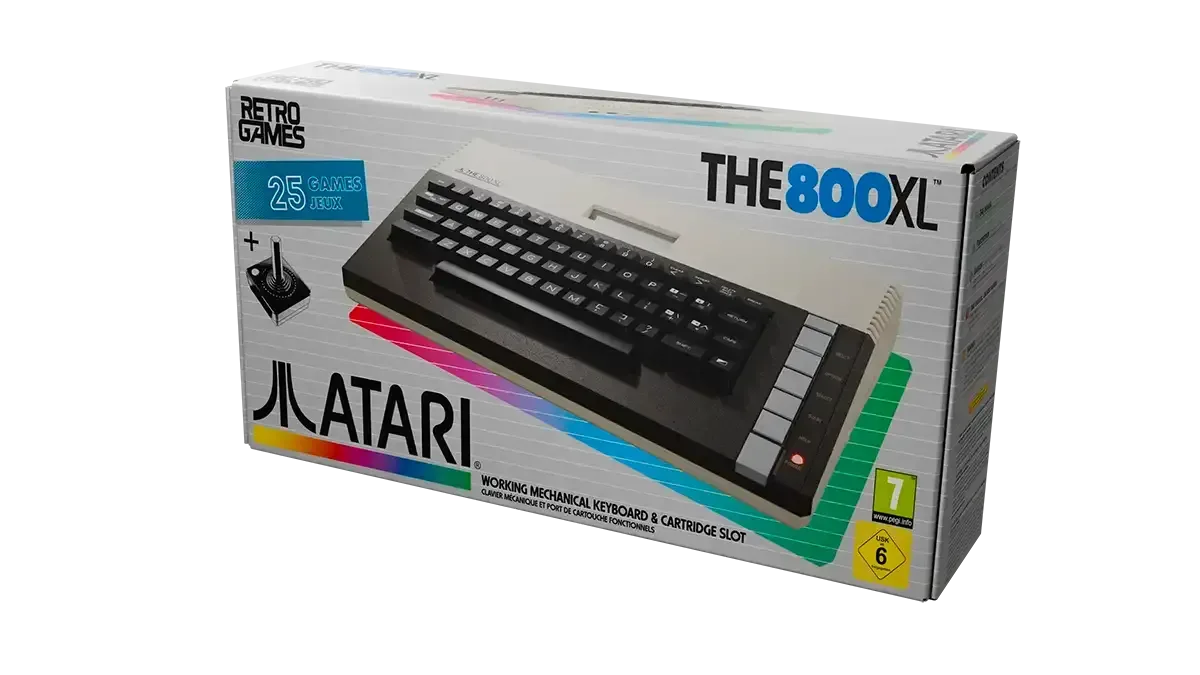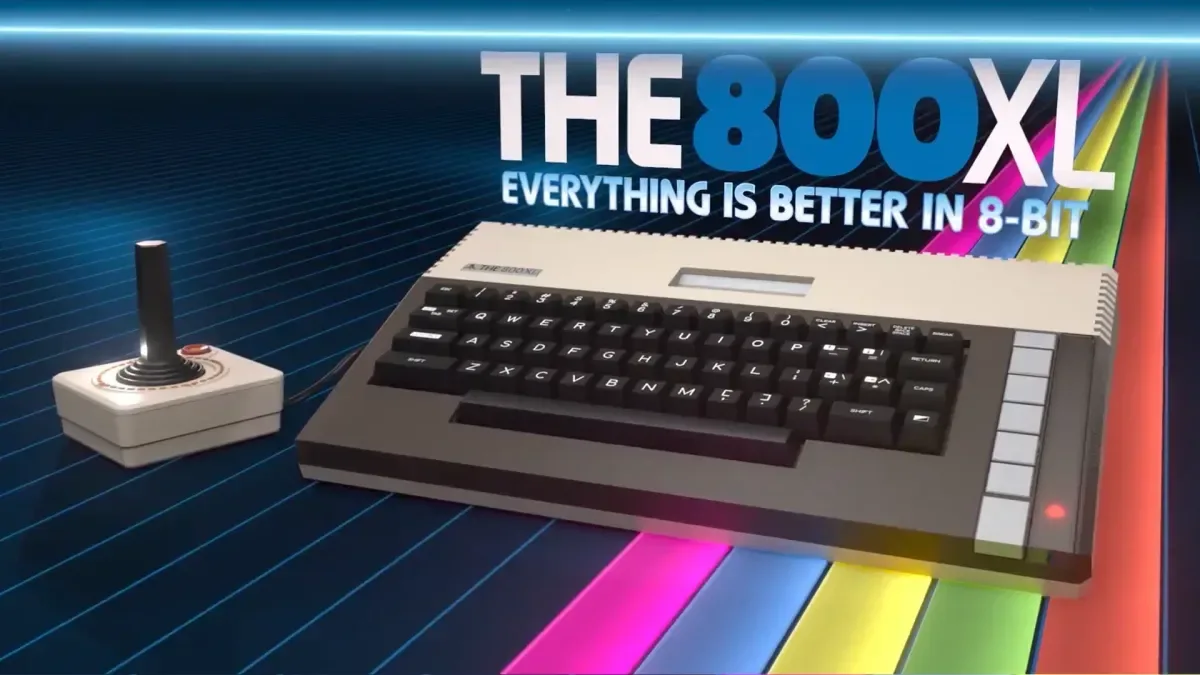
Atari is bringing the 800XL back as a modern retro computer that keeps one foot in the cartridge era and the other in the HDMI era. Designed by Retro Games Ltd. in collaboration with Atari and manufactured and distributed through Plaion Replai, the new 800XL recreates the look and purpose of Atari’s 8-bit home computer while adding conveniences intended for a contemporary television and living-room setup.
The headline features are unusually broad for a machine positioned around a legacy design: a full-size mechanical keyboard, built-in Atari BASIC, a functional cartridge slot, HDMI output, USB loading for software images, controller support and 25 included games. It is not being framed simply as a mini console stuffed with a fixed library. Atari’s stated support for original cartridges, user-loaded files and BASIC programming makes this a more flexible attempt at revisiting its 8-bit computer ecosystem.
Pre-orders are open at $219.99 in the US, £199.99 in the UK and €219.99 in Europe. Shipping is scheduled to begin on April 23, 2027.
A retro computer rather than a sealed game compilation
The original 800XL belonged to a moment when a home computer could be a game machine, a programming tool and a general-purpose creative device. That context is central to the appeal of the remake. A keyboard is not merely decorative here: the system includes Atari BASIC, allowing owners to write and save their own programs.
Atari BASIC is the programming language built into the machine. In practical terms, its inclusion means the new 800XL is designed to do more than boot directly into a game menu. It provides a route to engage with programming on the hardware’s own terms, whether that means trying existing BASIC material or creating and saving new work. The announced machine also supports software created for the Atari 400, 800, XL and XE computer families, as well as the Atari 5200 home console.
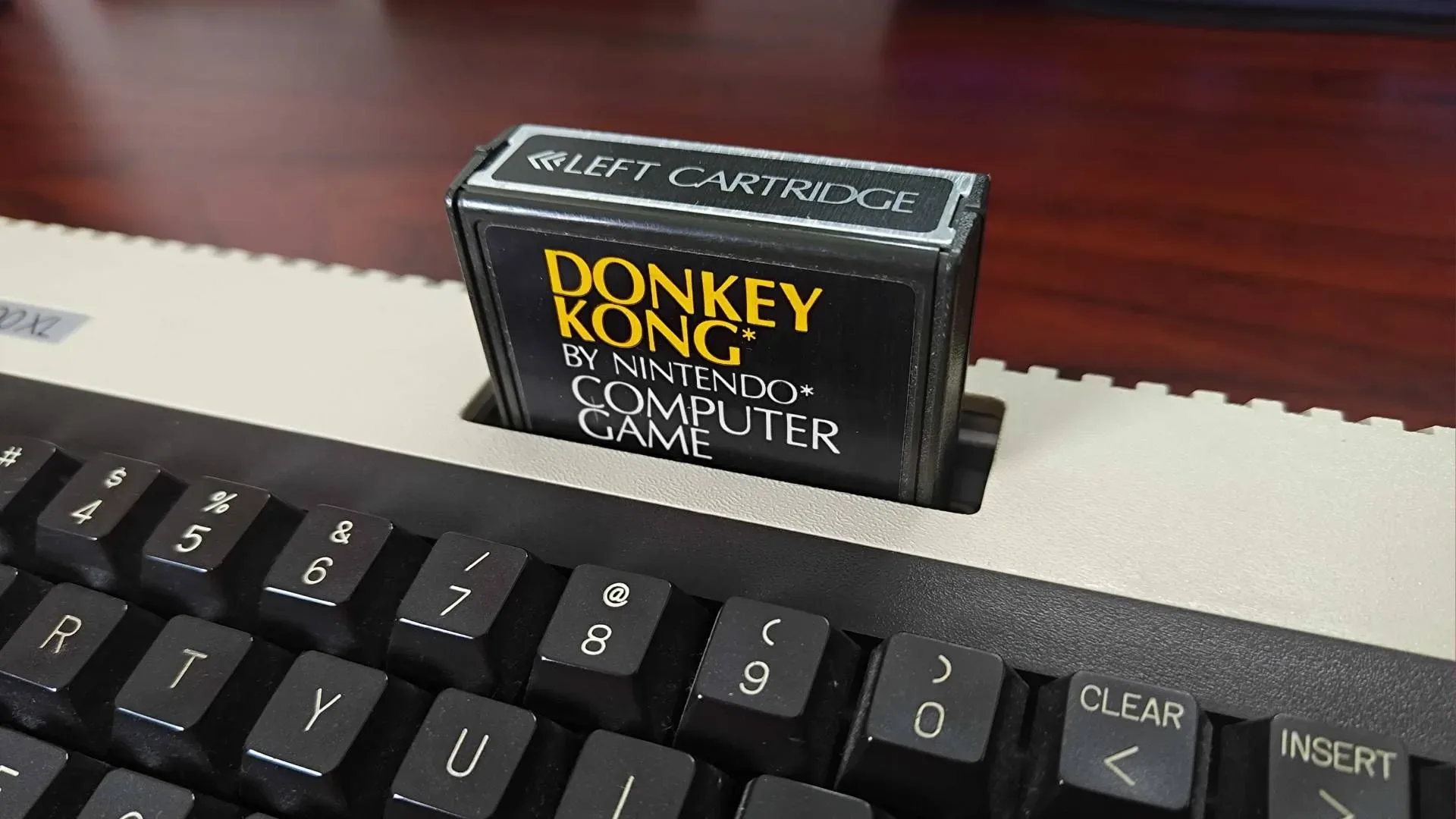
That compatibility claim is significant because it describes a wider software legacy than the 25 games included in the box. It does not mean every item of legacy software or every cartridge is guaranteed to function; the cartridge specification says the slot supports most Atari 400, 800, XL and XE cartridges. Prospective buyers with a substantial library should treat that wording carefully and check compatibility information for individual items before assuming their collection will work.
The working cartridge slot is nevertheless the most tangible difference between this device and a closed retro compilation. It gives existing physical cartridges a path onto a new display setup without making them merely shelf pieces. That continued role for physical software arrives as the nature of physical game spending continues to shift, a distinction explored in recent coverage of U.S. physical game spending and Game-Key Cards.
Modern display options, explained
The new 800XL uses HDMI, so it can connect directly to an HDTV rather than depending on older video connections. Atari says it offers correctly scaled HDMI output, with support for both PAL at 50Hz and NTSC at 60Hz.
Related coverage includes Atari 800XL Returns as a Modern Retro Computer With Cartridge Support and HDMI.
PAL and NTSC are historical television standards associated here with 50Hz and 60Hz output respectively. Their inclusion matters because vintage computer software and games can be tied to those regional timing conventions. The announced support gives users options that better align with the software and display experience they want, rather than treating all legacy material as if it came from one television standard.
The system will also include authentic 4:3 and pixel-perfect display modes. A 4:3 presentation retains the more square-shaped image associated with many older television displays, instead of stretching content across a modern widescreen panel. Pixel-perfect output is intended to present the image at a clean, even scale, avoiding uneven-looking pixels that can occur when low-resolution software is enlarged without appropriate scaling.
Optional CRT filters are also part of the feature set. These are visual effects designed to evoke characteristics associated with cathode-ray tube televisions. They are optional, which is important: users who want a clearer digital image can leave them off, while those seeking a more period-flavored presentation can enable them. The 800XL also offers 12 display frames for further personalization.
USB loading and quality-of-life tools
Beyond cartridges, the 800XL can load games and software from USB flash drives. Supported file types include cartridge, disk and cassette images. An image in this context is a digital file that represents the contents of an older piece of media, such as a cartridge, floppy disk or cassette. That support broadens the ways software can be accessed, while the exact compatibility of particular files is not detailed in the announced specifications.
There are four USB-A ports for extra controllers and USB storage. Power is supplied via the included USB-C cable. The system ships with THECXSTICK, a revised version of Atari’s joystick design. Atari says the controller incorporates eight action and function buttons within its classic-looking form, a notable expansion of its usable controls without abandoning the visual language the system is trying to preserve.
Owners can save progress at any time in one of four save slots per game, whether the game is built in, sideloaded or played from an inserted cartridge. The 800XL can also rewind gameplay by up to 30 seconds.
Save states are snapshots of a game’s precise current condition, allowing a player to return to that point later. They are different from the traditional save systems designed into individual games, and are especially useful for software that did not originally provide convenient saving. Rewind goes a step further by rolling the active play session backward for a limited period. Atari’s stated 30-second limit means a missed move or sudden failure can potentially be retraced without starting over or relying on a password system.
These features are modern additions, not a claim that the original software was built around them. Their practical benefit is accessibility: games made in an earlier period can be approached with a little more room for experimentation and recovery, while players who prefer a stricter old-school approach can simply avoid using the tools.
The 25 built-in games
The included lineup combines arcade names, strategy titles, exploration, platforming and home-computer favorites. It is a deliberately varied selection rather than one restricted to a single genre. Atari has listed all 25 games as follows:
- Airball
- Asteroids
- Basketball
- BattleZone
- Berzerk
- Boulder Dash
- Bristles
- Capture the Flag
- Centipede
- Crystal Castles
- Elektraglide
- Encounter
- Flip and Flop
- Henry’s House
- Hover Bovver
- Lee
- M.U.L.E.
- Millipede
- Miner 2049er
- Missile Command
- O’Riley’s Mine
- The Seven Cities of Gold
- Star Raiders II
- Wavy Navy
- Yoomp!
Several choices communicate what the system is aiming to represent. Centipede, Missile Command, Asteroids, BattleZone and Berzerk put recognizable arcade-rooted action on the front line. M.U.L.E. and The Seven Cities of Gold add strategy and exploration to the package, while Boulder Dash, Miner 2049er and Henry’s House provide a different kind of home-computer play from short-form arcade scoring pursuits.
The value of the list is not just name recognition. It gives new users a ready-to-play starting point while the keyboard, cartridge slot, USB support and BASIC preserve routes beyond that fixed library. For returning owners, the device’s appeal will likely rest on how those pieces combine: familiar software and physical media alongside a clean HDMI connection, modern save options and easier storage access.
What to know before pre-ordering
The 800XL’s announced package is substantial, but prospective buyers should distinguish confirmed features from assumptions. Atari has confirmed the mechanical keyboard, built-in BASIC, HDMI, PAL/NTSC output options, display modes, filters, USB-A ports, USB-C power connection, THECXSTICK, 25 built-in games, four save slots per game and 30-second rewind. It has also confirmed support for most, rather than all, relevant Atari cartridges and support for cartridge, disk and cassette images from USB storage.
That leaves sensible questions for anyone buying specifically for a particular collection or piece of software. A working cartridge slot does not erase the word “most” from the compatibility statement. USB image support does not, by itself, provide a title-by-title list of files that will load. The machine’s strongest case is therefore clear without requiring overreach: it is a modern recreation designed to make Atari’s 8-bit legacy more usable on current displays while retaining the keyboard, programming and physical-media aspects that made the original format distinct.
At $219.99/£199.99/€219.99, the 800XL is positioned as a dedicated recreation rather than a low-cost plug-and-play novelty. Its April 23, 2027 shipping date gives Atari, Retro Games Ltd. and Plaion Replai time to turn that expansive compatibility and feature promise into a finished machine. For players and programmers drawn to the Atari 8-bit era, the mix of BASIC, cartridges, USB software loading and a modern display path is the story to watch.