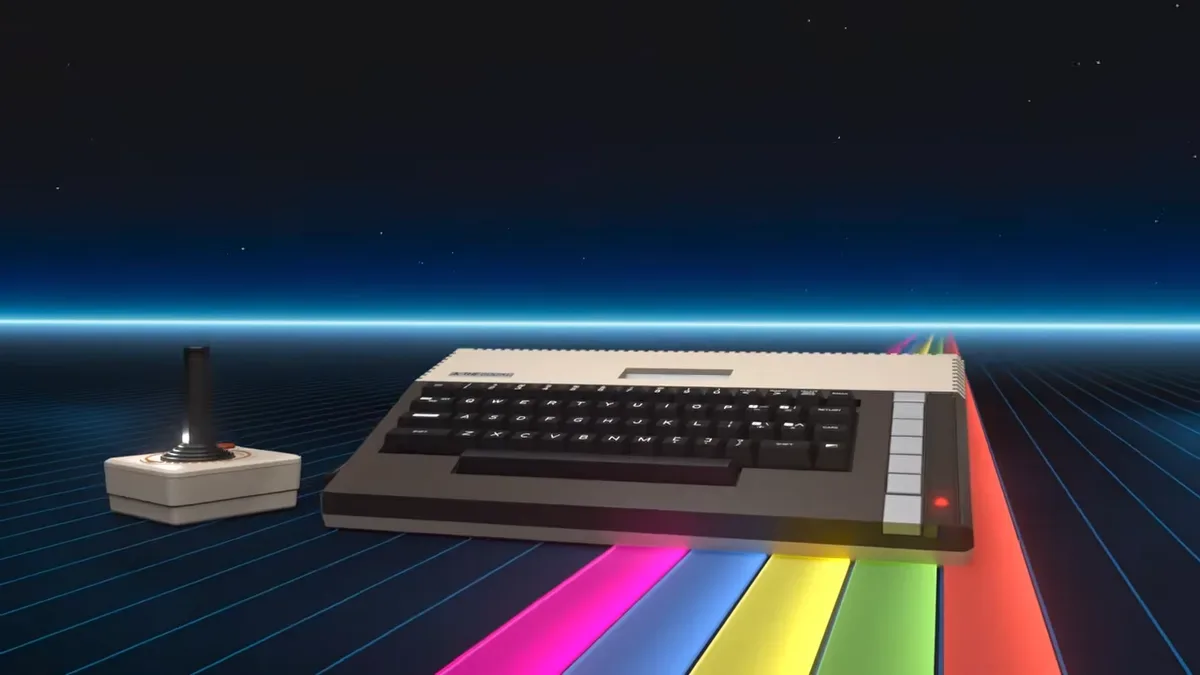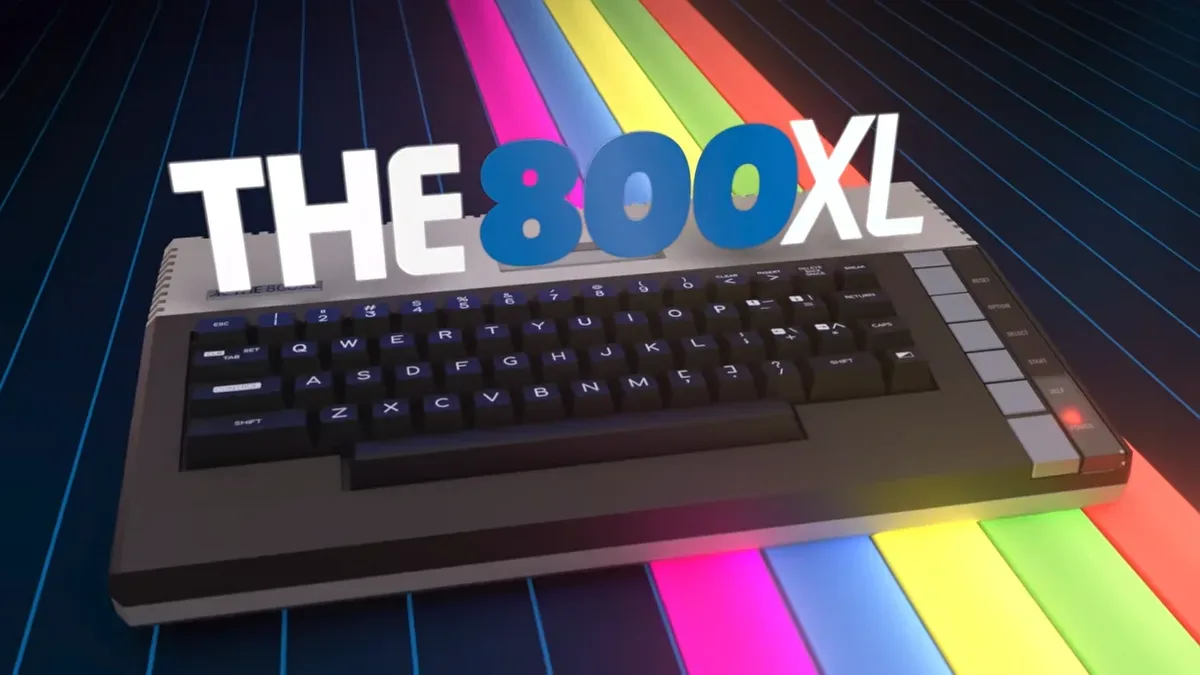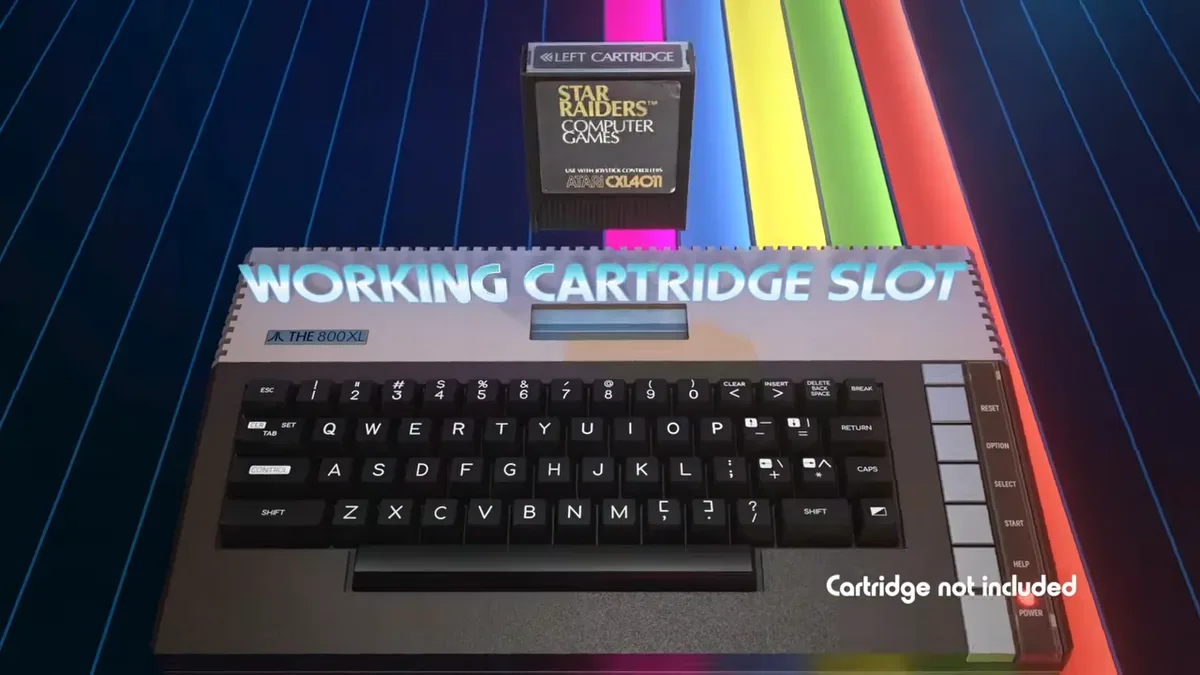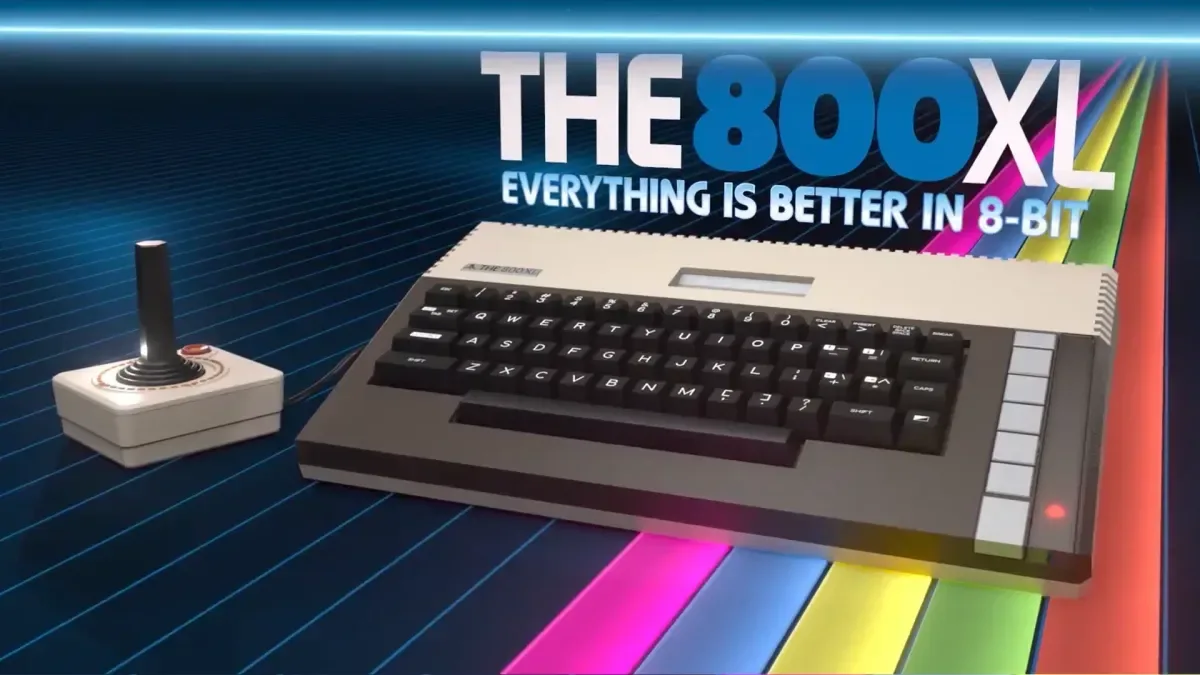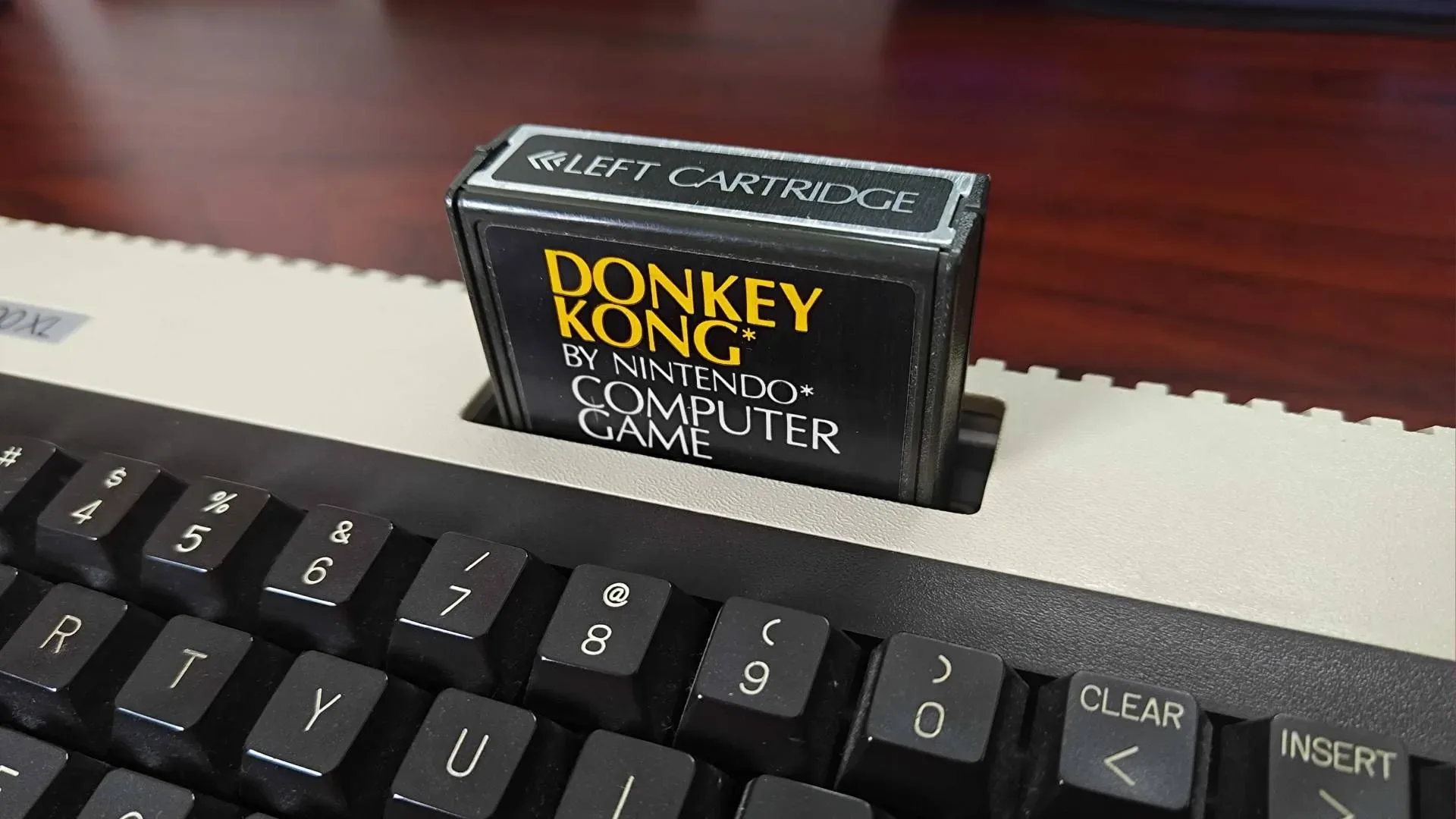
THE 800XL is officially on the way, reviving Atari’s 1980s 8-bit computer design in a modern remake built around three features that matter immediately to retro players: HDMI output, a full-size keyboard and a physical cartridge slot. Retro Games Ltd’s new machine is positioned as a faithful recreation of the best-selling Atari 8-bit computer, while also sidestepping some of the awkwardness involved in connecting original hardware to a current display.
The announced price is $219.99 / £199.99, and the system will include 25 built-in games. That makes it substantially more expensive than the Atari 400 Mini, which can run the same family of games, includes built-in software and supports USB ROM loading, but lacks both a working full-size keyboard and a cartridge slot. In other words, THE 800XL is not simply a smaller, cheaper route into Atari’s 8-bit library. It is a hardware-shaped proposition for people who value the computer format—and especially people who already own cartridges.
A separate report on the reveal likewise highlights the cartridge slot, HDMI and full-size keyboard as the central parts of the package. Those choices say a lot about where this remake sits in the increasingly crowded retro-hardware space.
The cartridge slot is the headline feature
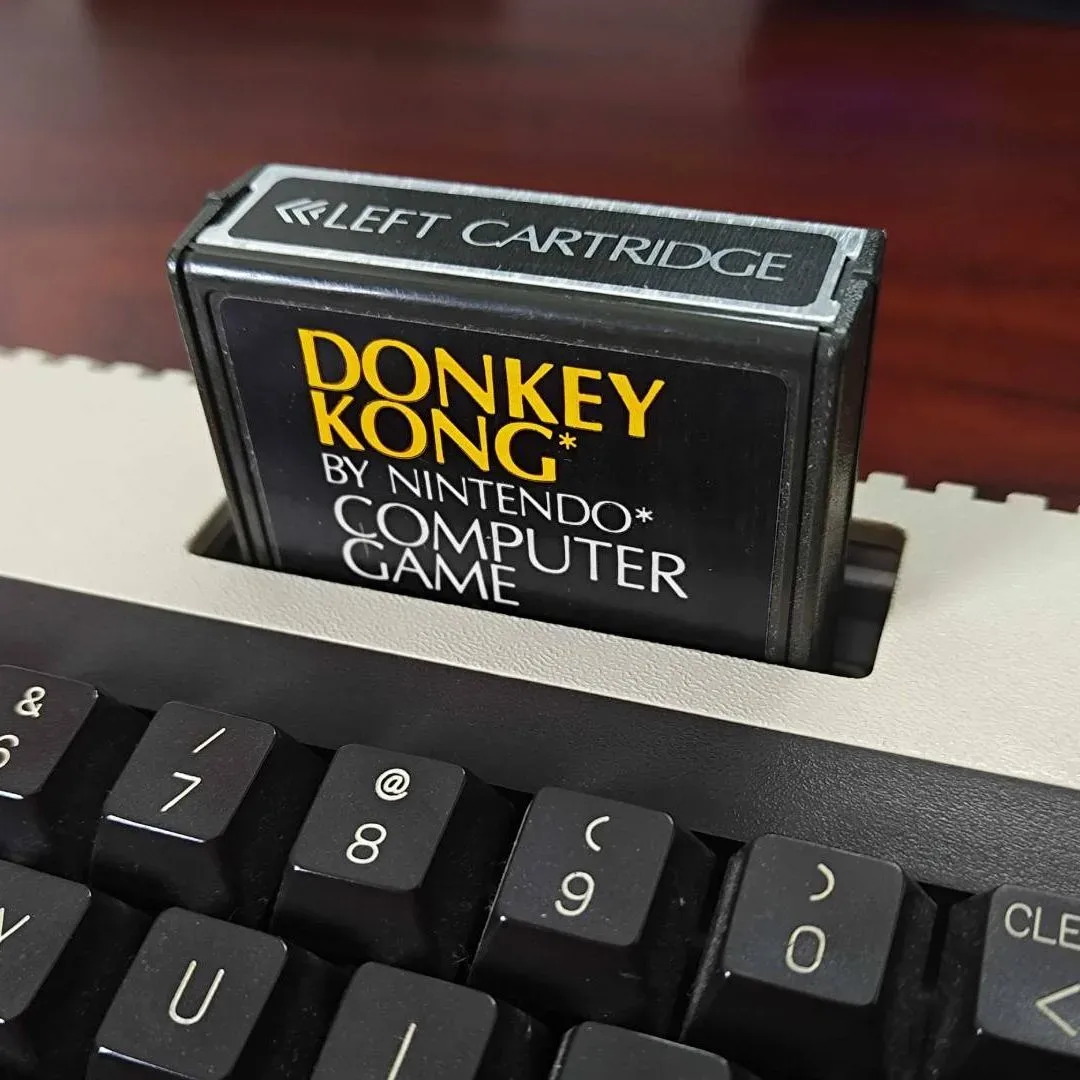
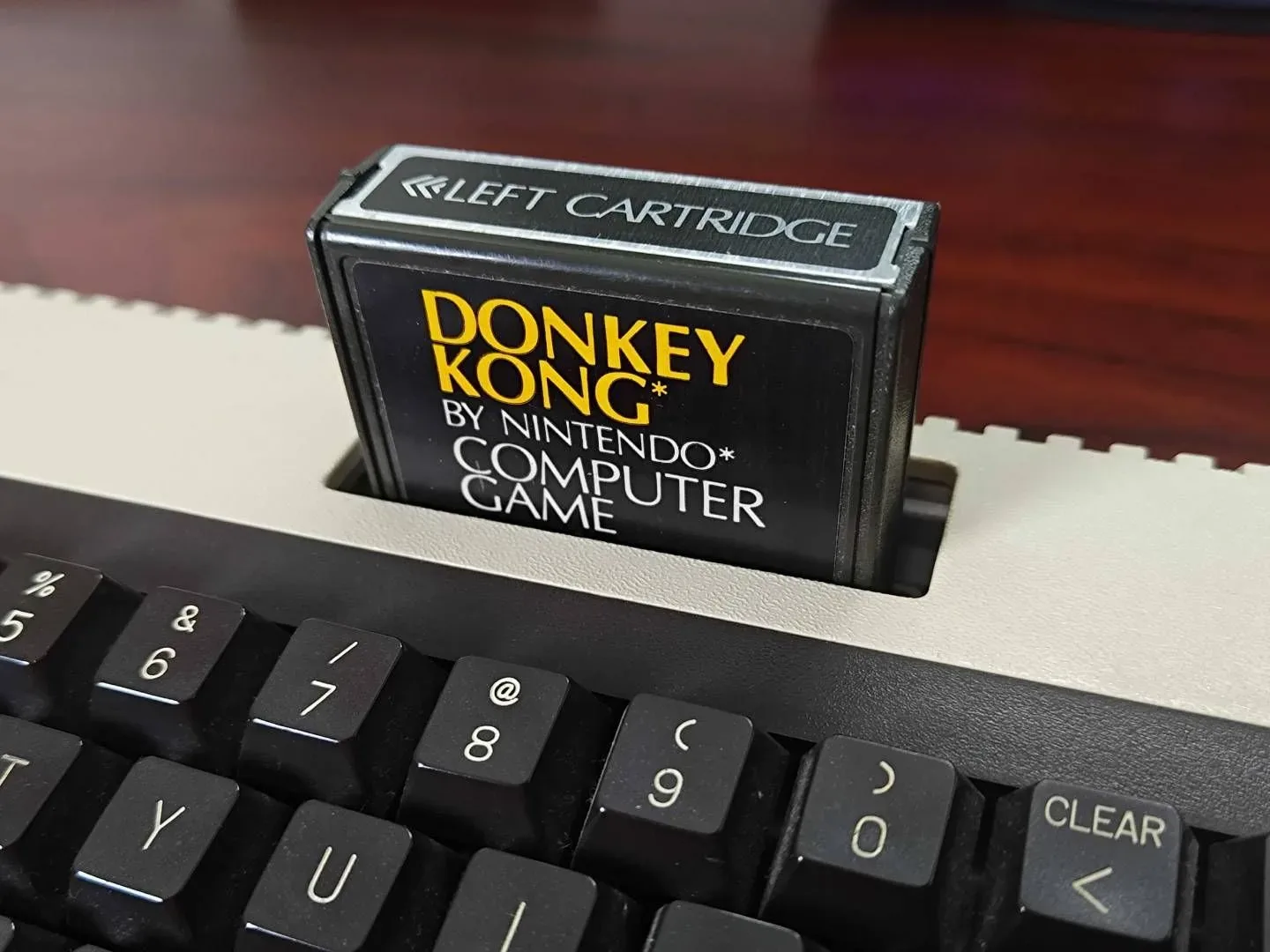
There is a major practical and emotional difference between selecting software from an on-screen menu and inserting an original cartridge. THE 800XL’s cartridge slot promises the latter: a chance to use compatible physical Atari 8-bit software with a modern display connection and a newly made machine. For existing owners of Atari cartridges, that is the clearest reason to look beyond the Atari 400 Mini.
For more context, explore Katseye’s Sophia Laforteza Set to Resume Group Activities in January 2027.
It also makes the remake more than a preloaded compilation box. The 25 included games provide an immediate starting point, but the cartridge slot potentially gives a personal library a role that is more tangible than a USB folder. A player can move from the built-in selection to their own compatible cartridges without abandoning the desk-friendly computer presentation that defined the original format.
There is, however, an important limitation to keep in mind. Original Atari 8-bit cartridges, particularly the metal examples referenced in discussion around THE 800XL, are not necessarily easy to find. A cartridge slot does not create an inexpensive software ecosystem on its own. It gives the people who already have compatible games a useful place to play them, while offering newcomers a reason to research the availability and condition of physical releases before treating the new hardware as a complete collecting solution.
The system also does not address cassette-tape software. That distinction matters because old computers were not defined by cartridges alone. The absence of tape support means THE 800XL preserves one meaningful portion of the original hardware experience rather than attempting to reproduce every historical storage format.
A full-size keyboard changes the proposition
The keyboard is just as significant as the cartridge slot, even if it is less dramatic in a product listing. Atari 8-bit computers were computers as well as game machines. A functional, full-size keyboard lets THE 800XL retain that central part of the design, rather than treating the case as a decorative shell around an emulator.
The compact Atari 400 Mini illustrates the trade-off clearly. Its smaller form factor makes it convenient and gives it an approachable role as a plug-and-play device, but it naturally cannot offer a full working keyboard or cartridge slot. THE 800XL costs more, yet it is pursuing a different kind of authenticity: not just the games, but the physical interaction of sitting in front of a microcomputer-style machine.
That does not automatically mean every buyer needs the larger model. Someone primarily interested in quick access to Atari 8-bit games may reasonably favor the less expensive mini system and its USB ROM support. Someone who wants to type, use cartridges and have the layout of a classic computer in front of them may see the higher price as the point rather than a flaw. The two devices overlap in software territory but answer different needs.
HDMI is the modern convenience that makes the old form usable
HDMI is a straightforward but vital inclusion. It is the standard display connection expected by many contemporary TVs and monitors, and it removes a common hurdle for older hardware: getting a legacy machine to display cleanly on current screens. THE 800XL’s appeal rests on combining this modern connection with old-school interaction, rather than asking players to choose only one.
That combination is the heart of the remake’s design. The goal is not a period-perfect original machine, nor a bare modern box that merely launches old software. It is a recreation that preserves some recognizable computer hardware functions—most notably the keyboard and cartridge slot—while making the display setup much simpler through HDMI.
Several practical details remain unconfirmed in the available information. Buyers should not assume anything beyond the announced HDMI output, cartridge slot, full-size keyboard and 25 built-in games. The exact scope of cartridge compatibility, the complete built-in library, the precise dimensions, and other connection or configuration options have not been established here. That caution is worthwhile for any retro remake: a familiar exterior and a strong feature summary do not answer every compatibility question.
Why the 800XL name carries more weight than the 600XL comparison
Early renders suggest THE 800XL may be somewhat smaller than the original hardware. That has prompted an interesting comparison with the Atari 600XL, which arrived alongside the 800XL as the smaller model. The 600XL had 16 KB of RAM, compared with the 800XL’s 64 KB, and that memory difference prevented it from running later XE games out of the box.
For a modern emulation-based remake, that old split is less important to game compatibility than it was in the original era. Emulation, in this context, means software recreating the behavior of earlier hardware so software made for the older machine can run on current components. The Atari 400 Mini already demonstrates the convenience side of that approach with USB ROM support and access to the same general game library.
Still, the 800XL branding makes sense for a product that wants to be read as the premium, full-keyboard version. It points toward the better-known, higher-spec identity within that paired generation, even if a slightly reduced physical footprint may make the silhouette feel closer to the smaller sibling. The machine is called THE 800XL rather than wearing an Atari-branded name, another notable aspect of the presentation.
Emulation versus full hardware replication
The missing cassette option also exposes a broader divide in retro machines. THE 800XL is described in terms that point toward an emulation-based approach. That is different from an FPGA-based design such as the Commodore 64 Ultimate, which is cited as an example of a device pursuing full hardware replication.
FPGA is short for field-programmable gate array. In a retro-hardware setting, the term generally refers to configurable logic that is set up to reproduce the behavior of a historical system’s hardware. Emulation, by contrast, uses software to imitate that behavior. Both approaches aim to let older games and software run, but they make different compromises in cost, design and which original interfaces are retained.
That distinction should not be reduced to a simplistic “one is good, one is bad” verdict. THE 800XL’s HDMI output, built-in games, modern construction and cartridge support are all practical advantages. Yet the lack of cassette support is a reminder that recreating the feel of an older computer does not necessarily mean duplicating every original input and media path. The key question for prospective owners is which parts of the experience they actually need.
The price makes this a deliberate purchase
At $219.99 / £199.99, THE 800XL will face high expectations. Its listed price is above the Atari 400 Mini’s $88.84 figure and also above the stated $189.99 / £169.99 price for the Amiga 1200 remake. The cartridge slot, full-size keyboard and 25 built-in games help explain why it occupies a more expensive tier, but they do not automatically settle the value question.
For buyers with no cartridges and no need for a full keyboard, the more compact Atari 400 Mini may remain the clearer value. For people with Atari 8-bit cartridges, a desire for a computer-like setup, or an interest in the design language of the period, THE 800XL offers a combination the smaller device cannot. The price is therefore best understood as a filter: this is an enthusiast-oriented remake, not merely the cheapest way to play Atari 8-bit games.
THE 800XL’s promise is unusually specific. It preserves enough physical character to make the cartridge and keyboard meaningful, uses HDMI to fit into a contemporary setup, and includes 25 games for a ready-to-run starting library. It does not promise every historical format, and the remaining compatibility details will matter. But for a remake centered on an iconic 8-bit computer shape, those core choices give it a distinct identity beyond nostalgia alone.
Shop the products
Check current price, model and availability at the retailer.