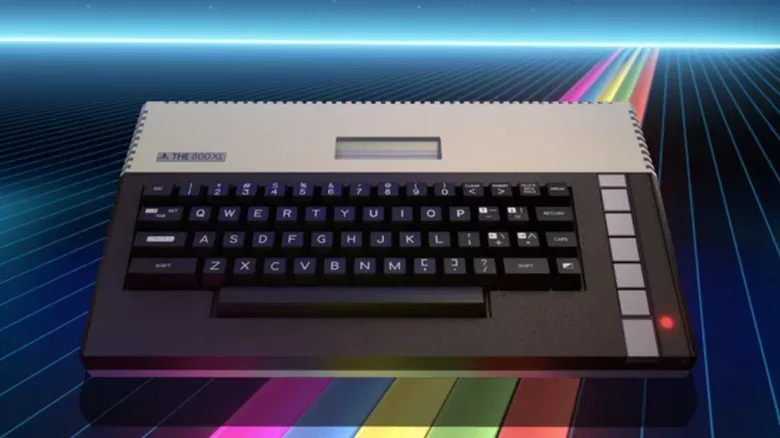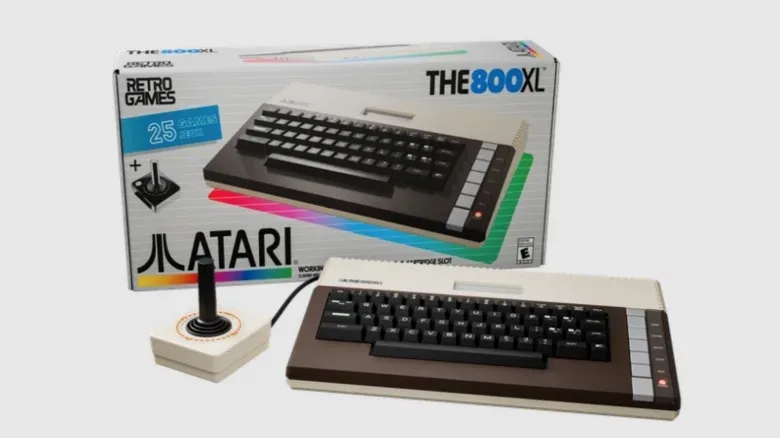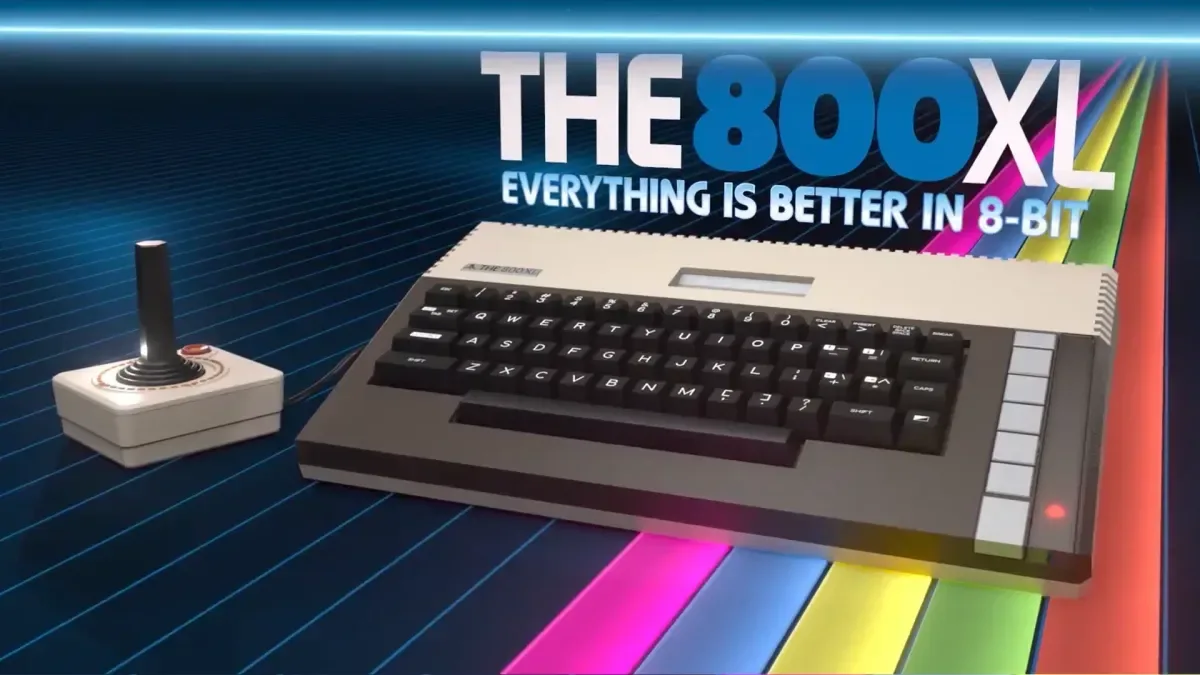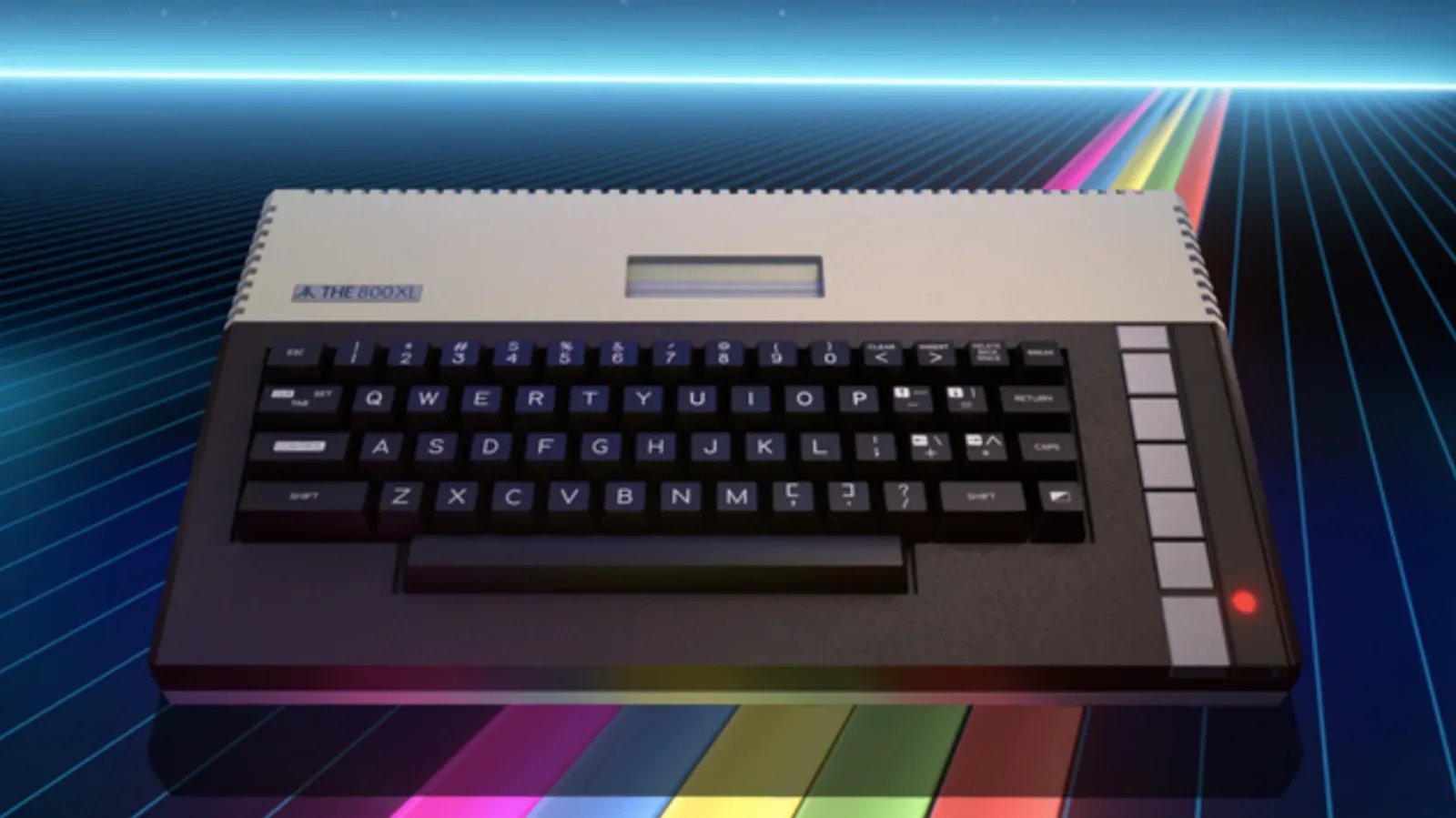
The Atari 800XL is making a distinctly computer-shaped return. A new version of Atari’s 8-bit machine pairs the visual language of the original hardware with present-day connections and conveniences: HDMI output, USB ports, a full-size mechanical keyboard, a cartridge slot and 25 included games. It is priced at $220, with preorders currently open and shipments scheduled to begin on April 23, 2027.
That combination is the essential point of the new hardware. This is not being positioned solely as a miniature retro game box with a menu of classics. The 800XL revival also retains the machine’s identity as a home computer, including access to Atari BASIC for programming. In practical terms, it aims to cover three different uses: playing included software, using compatible older game media, and writing or running software in the style associated with the original platform.
A return for Atari’s computer side
Atari is often most closely associated with the 2600, but the 800 family was an important part of the company’s history as well. The 800XL itself was a refreshed version of the original 1979 Atari computer, with a larger form factor and an industrial design that has remained recognisable to retro hardware fans. Atari’s 800 line was eventually discontinued in the early 1990s.
The modern 800XL follows that computer lineage rather than treating the name as a label for a generic plug-and-play console. Its full-sized mechanical keyboard is therefore more than a decorative feature. It is central to the machine’s second job: letting users interact with Atari BASIC and create programs, including games, rather than only selecting a title and playing it.
Atari BASIC is the platform’s programming environment. BASIC is a programming language designed to be comparatively approachable, particularly for the home-computer era. The presence of Atari BASIC means the new unit preserves a route into the creative side of 8-bit computing. Patience will still be required; a keyboard does not make programming effortless. But it does mean the system’s purpose extends beyond emulating the experience of a single old console.
Modern connections, period-minded hardware
HDMI is among the clearest quality-of-life changes. The original 800XL belongs to a period when connecting computers to household displays was a very different proposition. With HDMI, the new model is designed for easier connection to contemporary televisions and monitors without making an older-style display setup part of the process.
It also includes several USB ports. USB has two stated functions here: adding accessories and loading games from other Atari systems, including the Atari 400 and Atari 5200. That does not turn every piece of legacy Atari software into an automatic certainty, but it establishes a broader route for using Atari material than the 800XL’s cartridge slot alone.
The cartridge slot is another significant inclusion. It is designed to accept titles originally released for the system, giving people with compatible 800XL-era cartridges a physical-media option rather than restricting the device to its internal library. For prospective owners interested in original cartridges, condition and seller credibility remain worth considering—particularly when a listing’s photos and descriptions are limited. Our guide to reading seller ratings for retro games outlines habits that are also useful when assessing older physical releases generally.
A period-accurate joystick is included and can be recharged over USB. That detail neatly illustrates the product’s approach: retain the feel and familiar control format of the era, while replacing a more cumbersome aspect of older hardware ownership with a current charging method.
The built-in game selection
The machine will arrive with 25 pre-loaded games. Named titles include Centipede, Crystal Castles, Millipede and Missile Command. These games give the package an immediately playable arcade-leaning foundation, even for buyers who do not own original cartridges or intend to write BASIC programs.
The system is described as an 8-bit machine, with graphics broadly comparable to the original NES era. That comparison is useful as a rough expectation-setter, not as a promise that every game will look or behave the same way as software on Nintendo’s hardware. “8-bit” is commonly used as shorthand for a generation of systems, but it does not itself describe every technical distinction between separate machines. For this release, the important implication is straightforward: its visual identity remains rooted in the period rather than being rebuilt around modern high-definition graphics.
The included software and USB-loading support create two separate ways to start exploring. The internal lineup offers a low-friction entry point. USB support provides a stated avenue for bringing in games associated with other Atari hardware, while the cartridge slot preserves use of titles originally released for the 800XL system. Those paths are meaningfully different: one is instant access, one involves external files or accessories, and one centres on legacy physical cartridges.
Why the computer functionality matters
The most distinctive part of this revival may be its ability to run older homebrew content. Homebrew refers to software made independently by enthusiasts rather than as an official commercial release. In this case, the system can run homebrew made during the 1980s, allowing users to explore what people were creating around the original machine’s lifespan.
That capability matters because it frames the 800XL as an environment, not merely a museum piece. Commercial game libraries are one record of a platform, but programming experiments, small games and user-made projects show another side of how a computer was actually used. The keyboard and Atari BASIC supply a way to participate in that tradition, while legacy homebrew compatibility supplies an archive-like connection to it.
There is also a practical distinction between a keyboard-equipped retro computer and a keyboard that exists only for appearance. Here, access to BASIC gives the keys a stated purpose. Someone who only wants Centipede can use the system as a game device. Someone drawn to 8-bit programming can use it as a place to learn, revisit or experiment. Someone interested in historical community-made work can load and inspect homebrew from the period. The value proposition is likely to vary sharply depending on which of those uses matters most to a buyer.
What is confirmed—and what buyers should keep in view
Plaion Replai designed the hardware. The company is also associated with a Commodore 64 remake and an upcoming Neo Geo product, placing the 800XL within a broader run of retro hardware revivals.
The confirmed headline specifications are substantial: HDMI, multiple USB ports, a mechanical keyboard, Atari BASIC access, a rechargeable joystick, 25 built-in games, a compatible cartridge slot, USB support for material from the 400 and 5200, and support for 1980s homebrew. The listed price is $220.
At the same time, it is sensible to distinguish those confirmed points from assumptions that could be drawn from them. The details provided do not identify every game in the 25-title library, every supported accessory, or the full boundaries of compatibility. They also do not explain the precise process for loading USB software. Buyers whose interest depends on a particular cartridge, peripheral or program should avoid assuming universal compatibility from the general feature list alone.
Likewise, HDMI support answers the question of modern display connection, but it does not by itself describe every possible display setting or visual option. The supplied information establishes a modern HDMI connection, not a complete technical specification sheet.
An unusually broad kind of retro revival
Many retro products concentrate on convenience: a compact library, a modern cable and a controller. The new Atari 800XL takes a wider approach because the original machine was both a games platform and a computer. Its modern features reduce friction around displays, charging and accessories, while its keyboard, BASIC access, cartridge support and homebrew capability keep its computer identity visible.
For players, the 25 bundled games and classic Atari names offer the clearest entry. For existing Atari enthusiasts, the cartridge slot and USB support may be the more consequential features. For people curious about older programming culture, BASIC and legacy homebrew are the differentiators. The new 800XL’s pitch is not that the 8-bit era needs to look modern; it is that an 8-bit computer can be made easier to connect, easier to use and still open to making things.
With preorders open, the release remains ahead rather than immediate. Shipments are expected on April 23, 2027. Until then, the most useful way to view the product is as a hardware revival with a deliberately mixed identity: part pre-loaded Atari game machine, part cartridge-friendly legacy platform, and part usable introduction to the programming side of the 800XL tradition.