
A high seller percentage can make a listing feel safe, especially when the item is a familiar game such as Super Mario 64, The Legend of Zelda: Ocarina of Time, Shadow of the Colossus, God of War, Phoenix Wright: Ace Attorney or Final Fantasy III. It is useful evidence, but it answers only a narrow question: how buyers who left feedback rated previous transactions. It does not authenticate the pictured game, prove that the exact item works or guarantee that it was packed well.
Read the seller profile and the individual listing together. Your goal is to establish whether this seller has recently handled the same kind of physical media, described condition accurately, responded clearly to item-specific questions and used packaging appropriate for a cartridge, disc or complete-in-box release. Then check the marketplace’s current protection rules before paying, because reputation and buyer protection solve different problems.
Start with the percentage, then ask what it represents
On eBay, the visible feedback percentage is based on buyers who left feedback. A displayed score of 99.5 percent means that 99.5 percent of those buyers reported a positive experience; it does not mean every order was independently assessed. eBay also displays the number of feedback entries, which gives the percentage important context. Other marketplaces may calculate and present ratings differently, so do not assume that a score has the same meaning everywhere.
Feedback volume changes how much weight a percentage deserves. A strong score backed by hundreds or thousands of transactions gives you more evidence than the same score attached to a new account with only a small number of ratings. Volume is not proof of expertise, however. A seller with extensive feedback for clothing, phone cases or household goods may have little demonstrated experience with Nintendo 64 GamePaks, PlayStation 2 discs or Nintendo DS cards.
Check the account’s registration date, total feedback, recent activity and the kinds of items mentioned in comments. A long-running account that has only recently begun listing collectible games deserves the same media-specific questions as a newer specialist. The profile can establish a history of transactions, but it cannot establish the identity or condition of the particular game in front of you.
- Record the displayed percentage and feedback count.
- Check the account age and whether the seller has recent activity.
- Look for feedback involving the same physical media.
- Treat the score as evidence about past transactions, not as a warranty or authenticity certificate.
Separate headline feedback from transaction details
A seller’s overall score can hide useful differences between description accuracy, communication, shipping speed and shipping-and-handling charges. eBay’s detailed seller ratings divide those subjects into separate categories, allowing buyers to distinguish a seller who ships promptly from one who consistently describes items inaccurately.
For used games, description accuracy deserves the greatest attention. Fast shipping does not compensate for a missing manual, wrong edition, reproduction label or disc that cannot be read. Shipping-time feedback matters when you have a short inspection window, but it should not outweigh repeated complaints that items were materially different from their listings.
Read written comments rather than relying only on star averages. Look for specific references to the item arriving as pictured, the correct region being sent, complete contents, disc condition, cartridge damage and how the seller handled a problem. A short comment such as “great seller” offers less evidence than a buyer explaining that the exact photographed item arrived securely packed and matched the stated contents.
eBay’s feedback profile can show the overall score, positive-rating percentage, recent comments and images, detailed seller ratings and registration date. Those details make the profile more useful than the headline percentage alone, although they still describe the seller’s history rather than guaranteeing your particular purchase.
- Prioritize description accuracy for collectible or condition-sensitive games.
- Use shipping comments to assess delivery and inspection risk, not product quality.
- Look for comments that identify the media, edition or contents involved.
- Compare written feedback with detailed categories instead of assuming the headline score tells the whole story.
Read complaints as patterns, not isolated drama
One negative comment is not automatically a reason to reject a seller. Packages can be mishandled by carriers, buyers can misunderstand an edition and feedback can describe a problem unrelated to your purchase. The more useful question is whether several complaints point to the same process failure.
Group comments by subject and date. Repeated reports of thin mailers, loose discs, crushed cases, cartridges arriving outside protective cases or items rattling inside boxes indicate a packing habit rather than one unlucky delivery. A recent cluster deserves particular weight because it may reflect a change in inventory source, staff, listing volume or fulfillment routine. An older isolated complaint may be less predictive, although it still matters when the issue involves counterfeit concerns or materially inaccurate descriptions.
Also group complaints about missing manuals, wrong regions, undisclosed damage, reproduction packaging and testing claims. A seller who resolves an occasional problem promptly is different from one who disputes every discrepancy, but a pleasant response does not erase a recurring defect. Feedback should help you decide what to verify before purchase, not persuade you to overlook missing evidence.
- Sort recent complaints by topic: packing, authenticity, contents, condition and shipping.
- Give more weight to repeated or recent patterns than to one vague comment.
- Notice whether the same failure appears across different product categories.
- Treat repeated counterfeit or materially-not-as-described complaints as major warnings.
Match seller experience to the game’s physical media
Category experience is more valuable than generic transaction volume because these formats fail and travel differently. Nintendo describes N64 GamePaks as high-precision electronics and warns buyers not to drop, wet, abuse or clean them with solvents. The guidance also says to inspect the edge connector for foreign material before insertion. That makes a seller’s handling and packing history relevant even when the cartridge looks acceptable in photos.
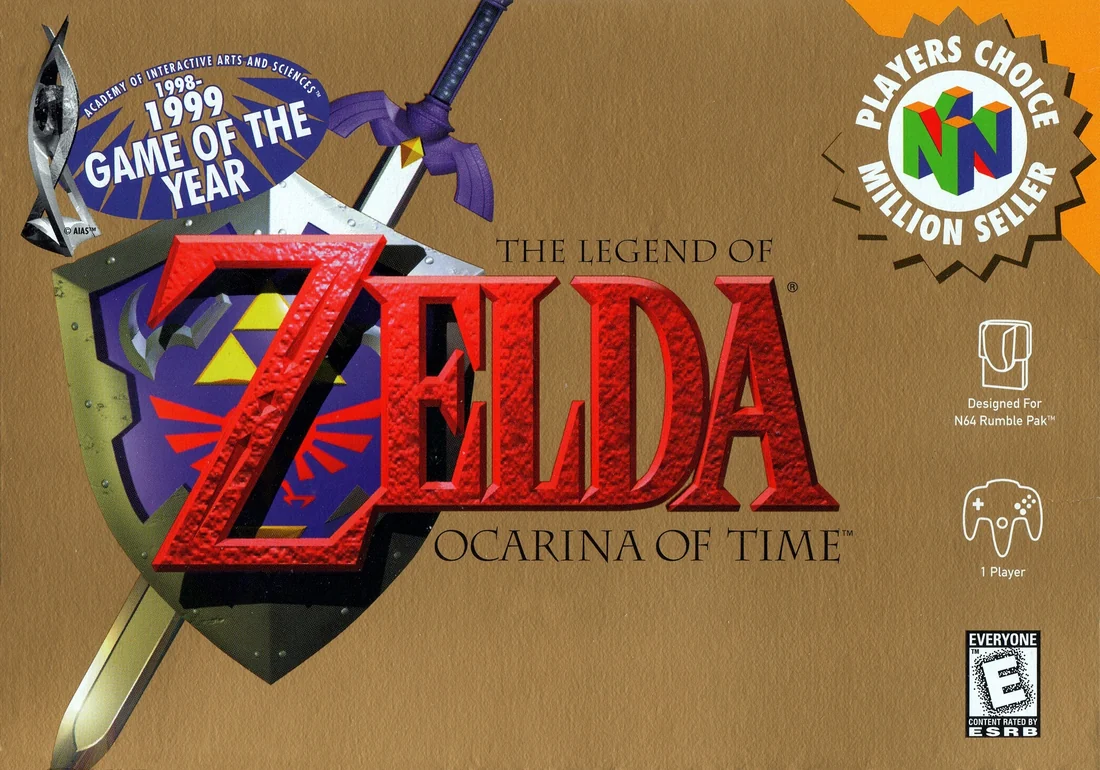
For Super Mario 64 or The Legend of Zelda: Ocarina of Time, look for feedback involving loose cartridges, damaged labels, cracked shells, corrosion claims and poor protection. If you are buying a complete-in-box copy, add feedback about crushed corners, torn inserts, sun fading and replacement boxes. A seller experienced with boxed collectibles may be a better fit than a high-volume general seller with no relevant history.
PlayStation 2 games use optical discs. For Shadow of the Colossus or God of War, inspect feedback for cracked cases, broken hubs, loose discs, deep scratches and poor separation between the disc and the case. A seller experienced with books or clothing may have excellent shipping feedback but no demonstrated process for preventing an optical disc from escaping its hub during transit.
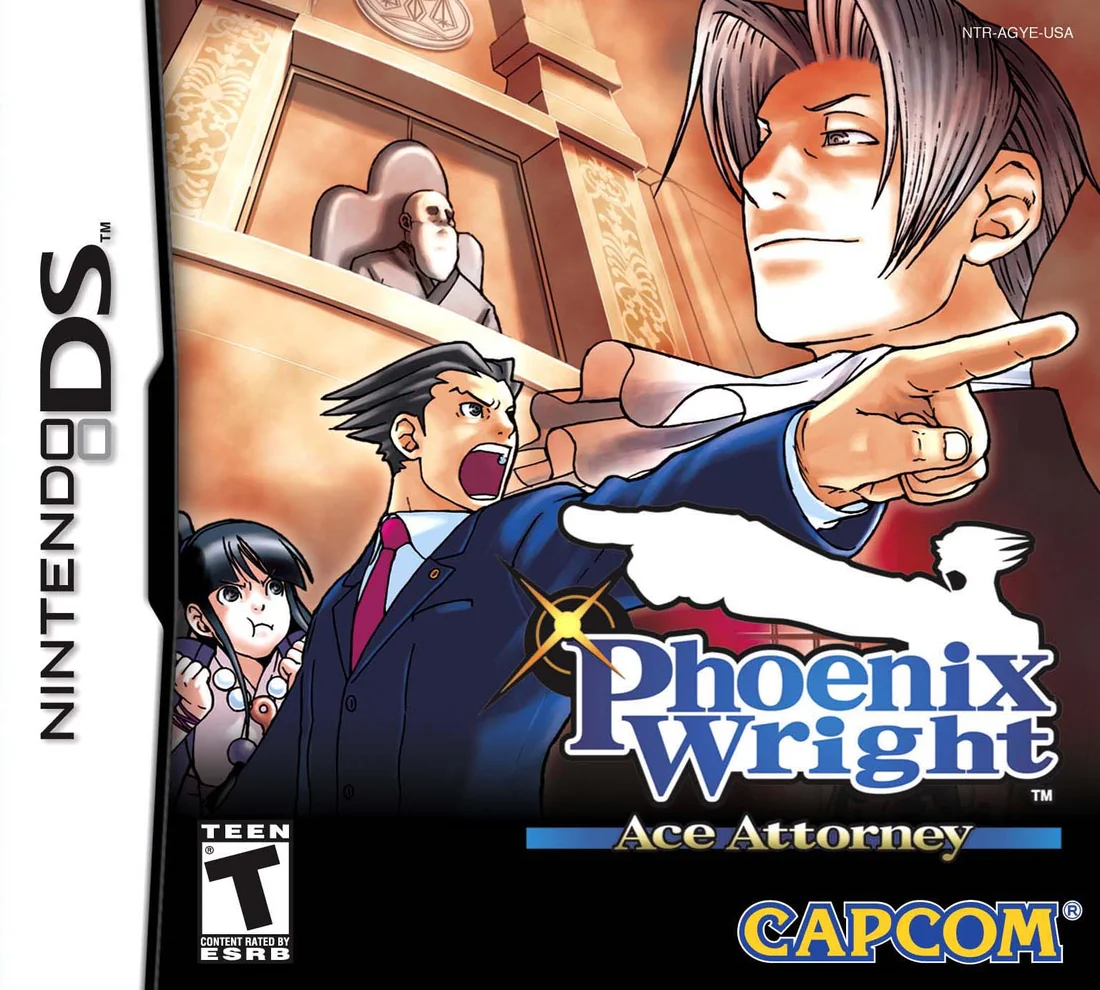
Nintendo DS cards are small and easy to misplace or damage. For Phoenix Wright: Ace Attorney or Final Fantasy III, look for experience with handheld cartridges and clear photographs of the card. Nintendo’s support guidance warns that bent or contaminated connector pins may prevent operation and can damage a Nintendo DS system. A rating cannot tell you whether the connector edge is clean or intact.
The supplied game artwork and screenshots can help identify the general subject of this guide, but they are editorial media rather than photographs of a seller’s item. Do not use them as evidence that a marketplace listing contains the same release, condition or contents.
- Compare the seller’s history with cartridges, discs, DS cards or complete-in-box games specifically.
- For PS2, look for packing complaints involving loose discs and cracked hubs.
- For N64 and DS, ask whether the connector edge was inspected without requesting invasive repair.
- For complete items, check feedback about cases, manuals, inserts and box damage.

Ask questions that produce evidence
A useful message reduces a specific uncertainty. Ask whether the photographs show the exact item that will ship, whether all pictured contents are included and which region and edition the listing represents. If the seller uses stock images, ask for current photographs of the cartridge or disc, front and back, plus the case, manual and relevant connector or disc surface. A refusal is not proof of wrongdoing, but it leaves you with less evidence.
Clarify the meaning of “tested.” Ask which compatible system was used, whether the game reached actual gameplay rather than only a title screen, whether save behavior was checked where relevant and when the test occurred. A clear answer establishes what the seller observed; it does not prove long-term reliability. “Untested” should be treated as unknown, not as a quiet promise that the item probably works.
Ask about known flaws in plain language: label lifting, marker, corrosion, cracks, resurfacing, deep scratches, reproduction packaging, missing inserts or a replacement case. Also ask how the seller will protect the item. A PS2 disc should be secured in its hub and separated from hard surfaces, while a cartridge should not be allowed to move freely inside a loose envelope.
Keep questions inside the marketplace’s messaging system. This preserves a record of the seller’s answers and avoids turning an informal promise into an unsupported assumption.
- Is the photographed item the exact item being shipped?
- Which region, edition and included contents apply?
- What system and result support the word “tested”?
- What flaws are known but not visible in the current photos?
- How will the item be immobilized and cushioned during shipping?
Use photographs as evidence, not authentication
Photos help you compare the listing with the expected release and identify visible damage. A Nintendo 64 or Nintendo DS label can reveal tears, fading, residue or an obvious mismatch. Connector-edge photographs can show bent or contaminated contacts. A PS2 disc image can reveal scratches, label damage, a cracked center hub or signs that the wrong disc was photographed. Case and manual photographs can establish what the seller claims is included.
None of those views proves authenticity or function by itself. A clean label can be placed on an aftermarket shell, a convincing disc image can still fail to show reading performance and a sealed-looking package can contain the wrong or counterfeit item. Nintendo advises buyers to confirm region and language and to be cautious with used games that may be counterfeit. Do not declare a game genuine from one logo, screw, seal, board glimpse or software screen.
Compatibility requires its own check. Nintendo states that older Nintendo DS and DS Lite software is region-free in most cases, while DSi-exclusive game cards are region-locked. The exact release and system combination still matters, particularly when a listing uses vague language such as “works on DS.”
For Nintendo 64 and PlayStation 2, verify the game’s region, your console’s compatibility and any edition-specific differences. A seller’s confidence is not a compatibility test. When authenticity remains central to the purchase and the available evidence is incomplete, seek qualified specialist help rather than treating one photo as conclusive.
- Compare the actual photos with the correct region and edition.
- Request views of the back, connectors, disc surface, case and included contents.
- Do not infer authenticity from a single label, seal, screw, board or screen.
- Confirm the exact game and console region before purchase.
- Stop and seek specialist help if authenticity is important and the evidence remains incomplete.
Judge packing promises against the item’s risk
Shipping feedback is most useful when translated into a concrete packing plan. USPS guidance recommends cushioning fragile items, separating them from container surfaces, wrapping items individually and preventing movement. Its packaging guidance also distinguishes small odd-shaped items, fragile items and shifting loads, reinforcing the basic principle that the contents should not rattle freely inside the package.
Ask the seller to describe the method without requesting unsafe handling. A loose N64 cartridge might need a protective sleeve and rigid cushioning. A DS card needs a secure small container so it cannot disappear inside packing material. A PS2 case should hold the disc firmly, with enough cushioning around the case to reduce impact. A boxed game may need corner protection and a box that does not leave room for shifting.
Do not treat a promise of “careful shipping” as evidence until it is specific. Repeated feedback about loose discs or crushed cases should override a generic assurance, especially when the seller will not provide a packing explanation. Strong seller feedback cannot make fragile packaging appropriate.
Packing feedback should also be interpreted alongside the item’s condition. A loose cartridge may survive ordinary movement better than a complete-in-box release with fragile corners, while a scratched PS2 disc may become more difficult to evaluate if it arrives loose against a broken case hub.
- Ask what prevents movement inside the package.
- Confirm that the PS2 disc will be secured in its hub.
- Confirm that a loose cartridge or DS card will not travel in an unprotected envelope.
- Look for repeated complaints about thin mailers, crushing or rattling.
Calculate total cost and protection before paying
The cheapest listing is not necessarily the lowest-risk purchase. Add the item price, shipping, taxes, marketplace charges and possible import costs. For incomplete copies, include the likely cost of a replacement case, manual or insert. Also account for time spent asking questions, documenting a problem, arranging a return and finding another copy if the first listing is wrong.
Check the marketplace’s current protection rules before checkout. eBay’s Money Back Guarantee covers eligible transactions when an item does not arrive, arrives broken, damaged or faulty, or does not match the listing. Eligibility depends on completing the transaction through eBay checkout, using an eligible payment method, meeting required time limits and avoiding applicable exclusions. The policy is protection for defined transaction problems, not a general warranty that an old game will remain functional indefinitely.
Mercari currently states that buyers have 72 hours after confirmed delivery to report an item that is not as described. If no claim is made within that period, payment can be released automatically and the sale becomes final under the stated policy. Mercari also applies a buyer protection fee, so include platform-specific charges when comparing total cost. Check the current rules on the marketplace you are actually using rather than relying on a general memory of buyer protection.
Save the listing, photos, description and seller messages within the platform. When the package arrives, inspect it promptly and keep the packaging if there is a dispute. Follow the platform’s official process and do not move payment or resolution off-platform. Protection is strongest when the transaction, evidence and communication remain where the marketplace can review them.
- Total the item, shipping, tax, fees, import and completion costs.
- Find the exact inspection and reporting deadline before ordering.
- Save the listing and messages, then inspect promptly after delivery.
- Use the platform’s official return or dispute process.
- Do not treat a return policy as a long-term product warranty.
Set stop conditions before the rating persuades you
Decide in advance what would make you walk away. A high score should not rescue a listing with no photos of the actual item, vague “good condition” language, contradictory answers or an edition that cannot be identified. Reject the purchase when the seller refuses reasonable item-specific photographs, will not explain what “tested” means or dismisses repeated packing complaints without offering a credible method.
Stop if the seller pressures you to pay outside the marketplace, asks you to ignore the stated condition, proposes an undocumented substitution or encourages you to bypass buyer protections. eBay’s policy excludes payments made partly outside eBay from Money Back Guarantee coverage, making off-platform payment an especially serious risk.
Also stop when recent feedback repeatedly mentions counterfeit concerns, missing contents, damaged packaging or items that do not match their descriptions. A lower-rated specialist with detailed photographs and clear answers may present less uncertainty than a highly rated general seller with no relevant evidence.
Finally, stop when the remaining uncertainty matters more than the potential saving. This is especially important for a complete or expensive copy, a region-specific release or a game whose authenticity is central to your collection. Waiting for a better-documented listing is a valid buying decision.
- No exact-item photos when the listing requires condition judgment.
- Contradictory answers about region, edition, testing or contents.
- Repeated recent complaints about counterfeit items or inaccurate descriptions.
- Pressure to pay off-platform or bypass marketplace protection.
- Packing plan remains vague after you ask a reasonable question.
- The evidence is insufficient for the item’s importance or total cost.
Use a compact seller worksheet
Before buying Super Mario 64, Ocarina of Time, Shadow of the Colossus, God of War, Phoenix Wright: Ace Attorney or Final Fantasy III, write down the evidence rather than relying on an overall impression. Record the score, feedback count, account age and recent relevant comments. Then write the exact media type, region, edition and contents you expect. This prevents a seller’s broad reputation from replacing the requirements of your particular purchase.
Give each uncertainty one of three labels: confirmed by the listing or seller, visible but not conclusive, or unknown. “Disc surface photographed” is visible but not conclusive; “seller says tested” is a claim that needs clarification; “manual shown and listed as included” is stronger but still worth checking on arrival. If a critical field remains unknown, either ask one focused question or reject the listing.
The best seller decision is not always the seller with the highest percentage. It is the transaction where relevant experience, recent behavior, accurate documentation, appropriate packing, compatibility and platform protection line up with the item’s risk.
- Seller score and feedback volume: recorded.
- Recent relevant comments: reviewed by date and topic.
- Media experience: cartridge, disc, DS card or complete-in-box.
- Exact item, region, edition and contents: confirmed.
- Condition and testing claims: clarified without overtrusting them.
- Packing method: specific and suitable.
- Total cost and protection deadline: understood.
- Stop conditions: checked before payment.
Seller ratings are valuable when they help you form better questions. They are weak when treated as a substitute for item-specific photographs, compatibility checks, condition details and a clear return path. Read recent feedback for patterns, give greater weight to experience with the same physical media and treat packaging complaints as evidence of process.
For a retro-game purchase, make the final decision from the complete risk picture: what is shown, what is confirmed, what remains unknown, how the item will travel and how quickly you can report a mismatch. If the seller cannot close an important uncertainty while keeping the transaction inside marketplace protections, walk away regardless of the headline score.