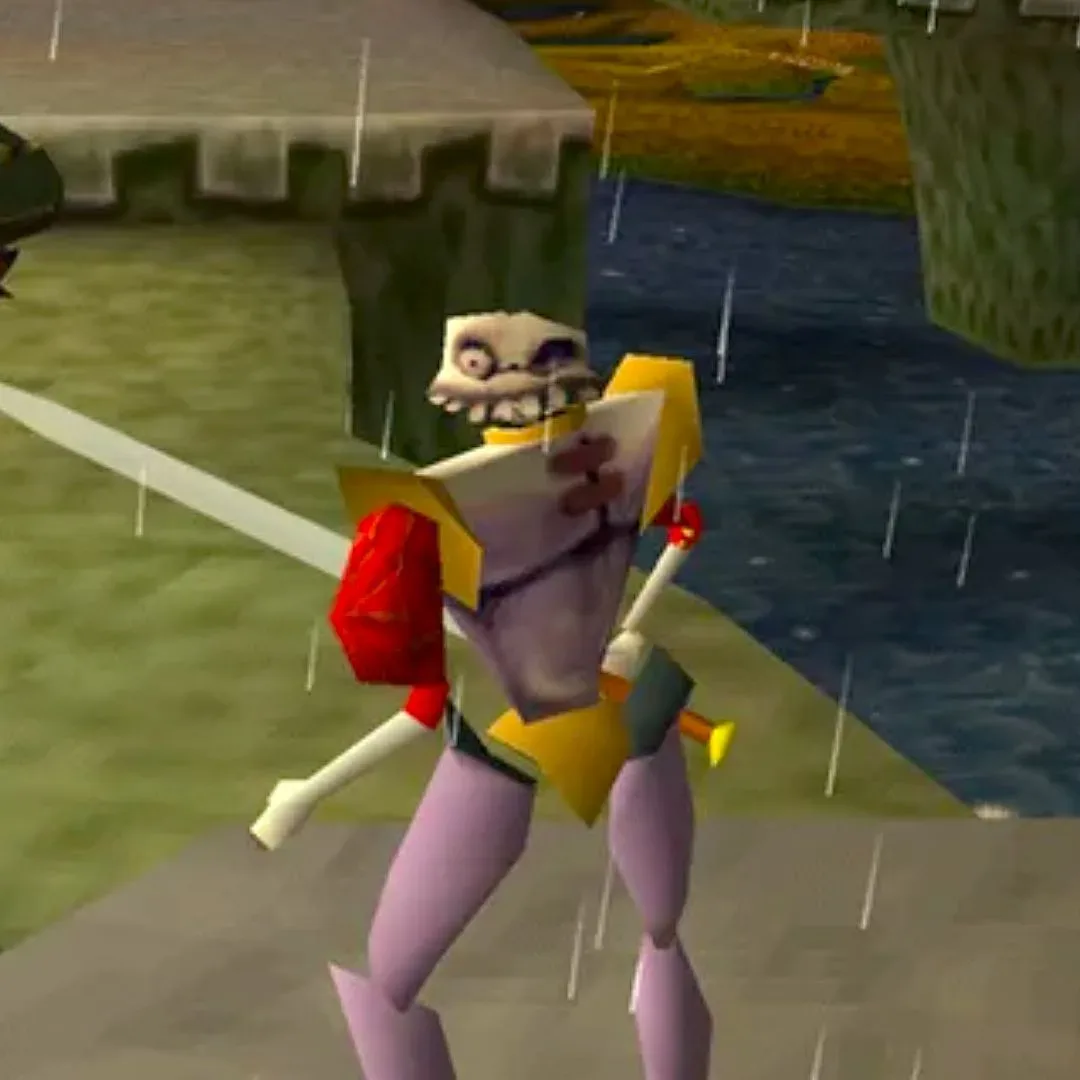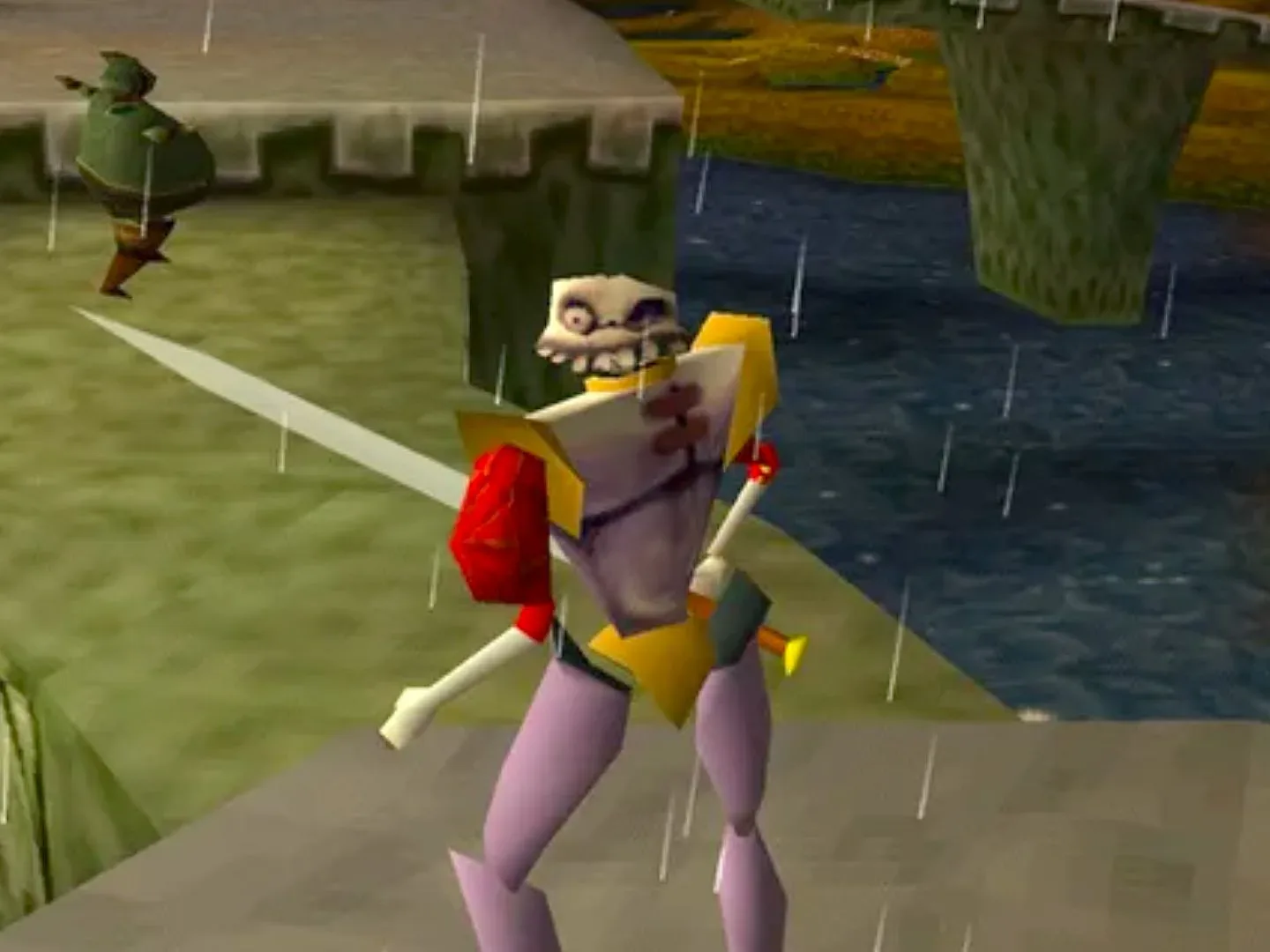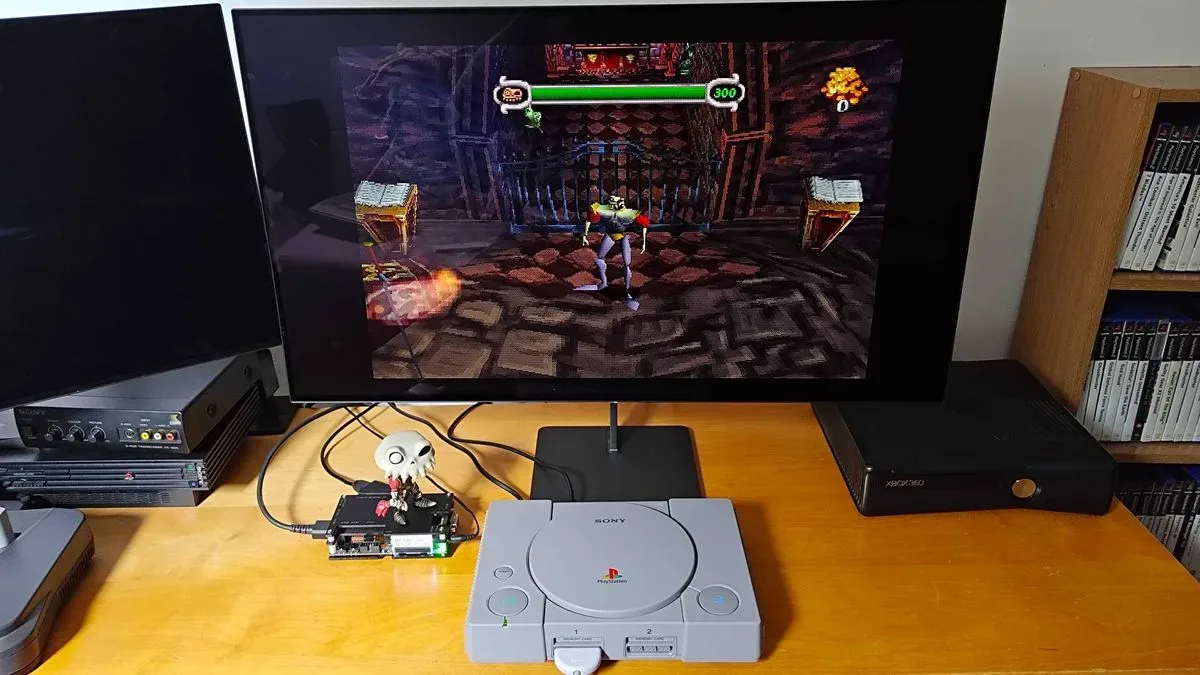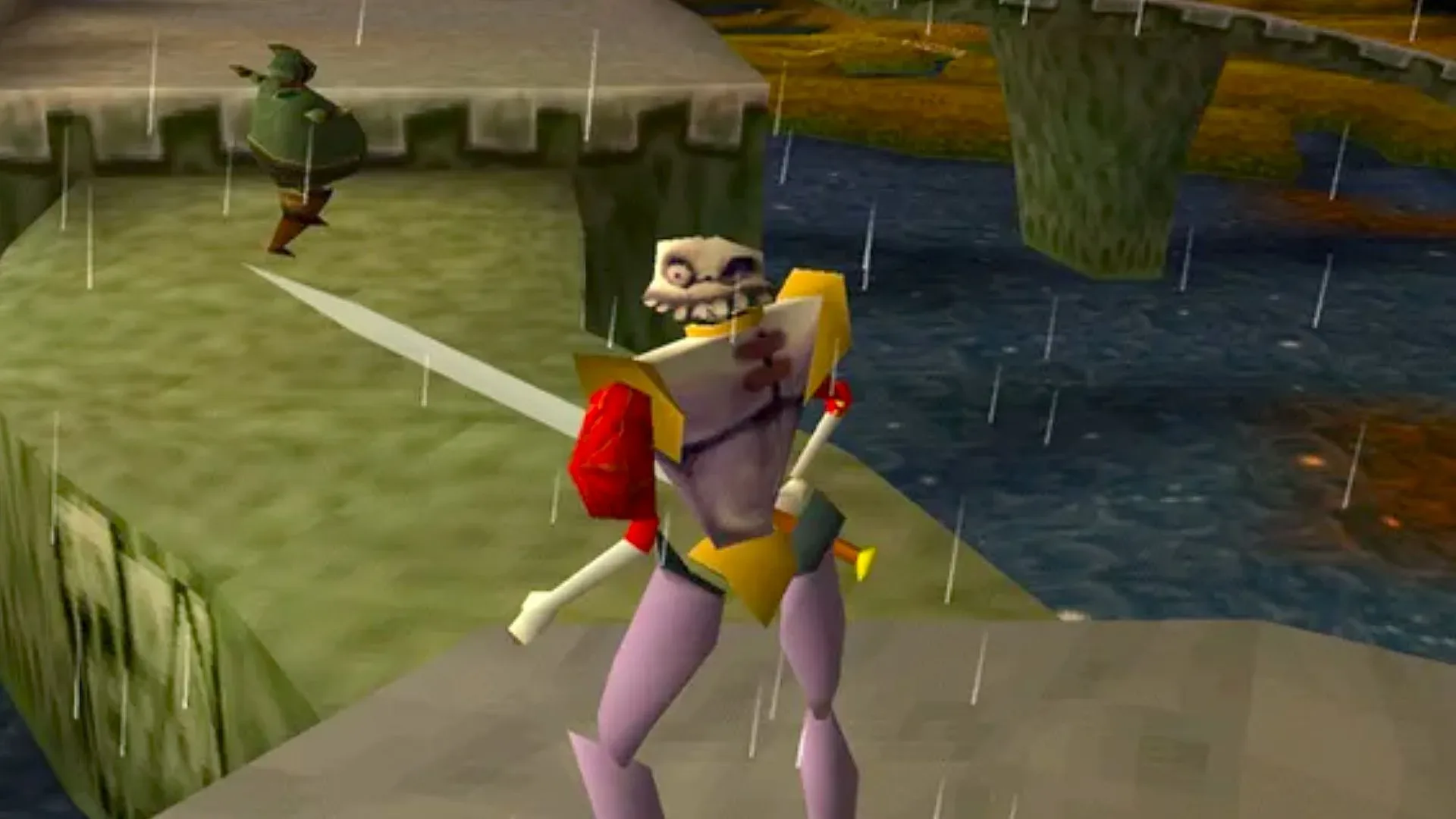
MediEvil Recomp, a fan-made PC recompilation project from BlackLabelHQ, has released its first beta. The project is built around bringing the original PlayStation gothic platformer to PC while offering a collection of modern display and performance options: widescreen support, scalable aspect ratios, increased draw and render distance, increased FPS support, improved textures, PGXP, Better Terrain and frame interpolation are among the listed features.
Those are substantial changes for a game whose identity is so closely tied to the look of early 3D PlayStation hardware. MediEvil’s spooky comedy, crooked silhouettes and deliberately theatrical atmosphere have endured in part because its visual constraints feel inseparable from its character. More distant scenery, sharper textures and a wider screen can make Sir Daniel Fortesque’s return more convenient on a current PC, but they also inevitably alter how the original world is framed and perceived.
The beta has therefore drawn attention for more than its technical ambitions. BlackLabelHQ has publicly set out an explicitly human-made policy for contributions, stating: “we value human work; PRs made with AI will be closed.” In this context, “PR” means a pull request: a proposed change submitted to a collaborative software project for review. The position means contributors using generative AI to create material for those submissions will not have that work accepted.
That policy has resonated with MediEvil co-creator and lead designer Jay Wilson, also known as Jay Gunn. While making clear that he knew the project only from what had been posted publicly, Wilson backed the sentiment in emphatic terms.
“Keep GenAI the fuck away from MediEvil… now and in the future! The charm of those days of dev’ was that everything was handmade with barely any premade tools or shortcuts.”
It is a direct statement of values rather than a technical assessment of the beta itself. Still, it identifies the tension at the center of modern preservation-minded projects: it is possible to use contemporary programming and rendering techniques to make an older game easier to run and easier to see, without replacing the human craft that made its original style distinctive.
A PC restoration effort, not a reason to erase the PS1 look
“Recomp” is short for recompilation, and the label signals an effort focused on getting an older console game running natively on PC rather than simply presenting it through an emulation setup. The important player-facing point is not the terminology but the menu of proposed improvements. MediEvil Recomp is intended to retain the underlying game while allowing users to adjust technical limitations that were common in its original environment.
Widescreen support is the most immediately visible example. The original game was created for the display conventions of its era, while modern monitors and handheld screens are commonly much wider. A widescreen option can eliminate side bars and expand the view, but the change is not automatically neutral: a wider presentation reveals more of the scene at once and can subtly change composition. For a game with unusually stylized environments, that is part of the appeal and part of the trade-off.
Related coverage includes MediEvil Recomp Beta Brings Sir Daniel Fortesque to PC With Modern Visual Options.
Scalable aspect ratio similarly gives players control over how the image occupies a display. An aspect ratio is the proportional relationship between a screen’s width and height. Scaling can be useful for people playing on different panel sizes and resolutions, yet purists may prefer a presentation closer to the original proportions. The value of an option-rich PC project is that neither preference has to be mandatory.
Increased draw distance and render distance deal with how far into a 3D scene the game draws objects and environment detail. Early 3D games often used short distances as a practical compromise, reducing the amount the hardware needed to process at any moment. Extending those distances can make traversal more legible and remove abrupt visual cutoffs, but it may also lessen some of the haze and concealment associated with the original hardware presentation.
The same balancing act applies to texture improvements and Better Terrain. MediEvil’s low-detail surfaces and constrained image quality were not necessarily intended as an aesthetic manifesto; they were also the result of technical limits. But decades later, those limits contribute to the game’s texture, just as brushwork contributes to a painting. A visual option is most useful when it gives players a choice, rather than insisting that fidelity has only one meaning.
What the beta’s technical options mean
Several of the project’s stated features are likely to matter most to people playing on modern PC displays. Higher frame-rate support aims to make on-screen motion update more frequently than it did on original hardware. The practical benefit can be a smoother-feeling image, particularly on high-refresh screens. It does not automatically change the game’s design, but it changes the rhythm through which players see animation and camera movement.
Frame interpolation is a separate concept. Rather than relying only on frames directly rendered by the game, interpolation creates intermediate visual frames to give motion a smoother appearance. Some players welcome the extra smoothness; others prefer the original cadence because it remains closer to how the game looked and felt in its initial form. Its inclusion as an option is notable precisely because it leaves room for both approaches.
PGXP is also listed for the beta. The project’s announcement does not spell out its specific implementation, so it would be premature to promise a particular visual outcome. In broad practical terms, its presence belongs to the project’s wider goal of improving how an old 3D PlayStation game is presented on PC. Anyone interested in a specific setting should check the beta’s own documentation and release notes rather than assume every listed feature behaves the same way across every system.
The project is still described as a first beta, which matters. A beta is unfinished software released for testing and feedback, not a declaration that all work is complete or that every configuration will behave identically. Players should approach it with appropriate expectations, especially where performance, compatibility and visual preferences are concerned.
Why the anti-GenAI policy is part of the story
Generative AI, often shortened to GenAI, refers here to systems used to generate material such as code, images or text from prompts. The concern voiced around projects like this is not that every new technical convenience is inherently hostile to old games. MediEvil Recomp itself is premised on modern tools improving compatibility and presentation. The concern is whether an automated, prompt-led process displaces intentional human contribution in work devoted to preserving and revisiting a handmade classic.
That distinction is important. A PC recompilation with adjustable rendering features can be understood as an attempt to give an older game more ways to survive on newer hardware. An AI-generated port or contribution raises a different question: who made the work, how carefully was it understood, and whether the project is treating the game’s creative identity as something to study or simply something to imitate.
Wilson’s response connects that issue to MediEvil’s particular appeal. The game is not merely a checklist of assets that can be reproduced at higher resolution. Its personality comes from the meeting of unusual art direction, limited technology and deliberate hand-built choices. Even the features that now look rough around the edges can help make the game feel uncanny, comedic and unmistakably of its era.
That does not mean every player must prefer the untouched original. A person using a modern monitor may reasonably want clearer terrain, a wider image or more fluid motion. Another may want the original disc running through old hardware and a CRT. These are different ways of engaging with the same game, and the stated philosophy behind MediEvil Recomp suggests a useful boundary: technical modernization can coexist with respect for human authorship.
Who the beta may appeal to
The project has an obvious audience among MediEvil fans who want a PC-native route with contemporary visual controls. It may also be of interest to players whose first contact with Sir Dan comes through current hardware rather than an original PlayStation setup. For them, wider display support and performance-oriented options can reduce the friction of trying an older 3D platformer without requiring the game’s personality to be rebuilt from scratch.
For preservation-minded players, the appeal may be more selective. The best use case may be treating the beta as one presentation option among several rather than the definitive replacement for original hardware. Keeping settings configurable matters because it lets people decide whether they want a modernized view, a closer approximation of the older image, or something in between.
The conversation also lands at a moment when PC gaming’s relationship with AI is under close scrutiny. As explored in our look at AI game mashup mods, a flashy automated result is not the same thing as a durable, playable and thoughtfully made game project. MediEvil Recomp’s public contribution rule makes a clear case that a technically ambitious fan effort can reject that shortcut.
For now, the concrete news is straightforward: the first MediEvil Recomp beta is available, with a feature set aimed at widescreen PC play and upgraded presentation. The more meaningful point is the project’s declared method. In revisiting a game loved for its odd, hand-built gothic charm, the team is drawing a firm line around the kind of work it wants involved in Sir Dan’s resurrection.
Shop the products
Check current price, model and availability at the retailer.