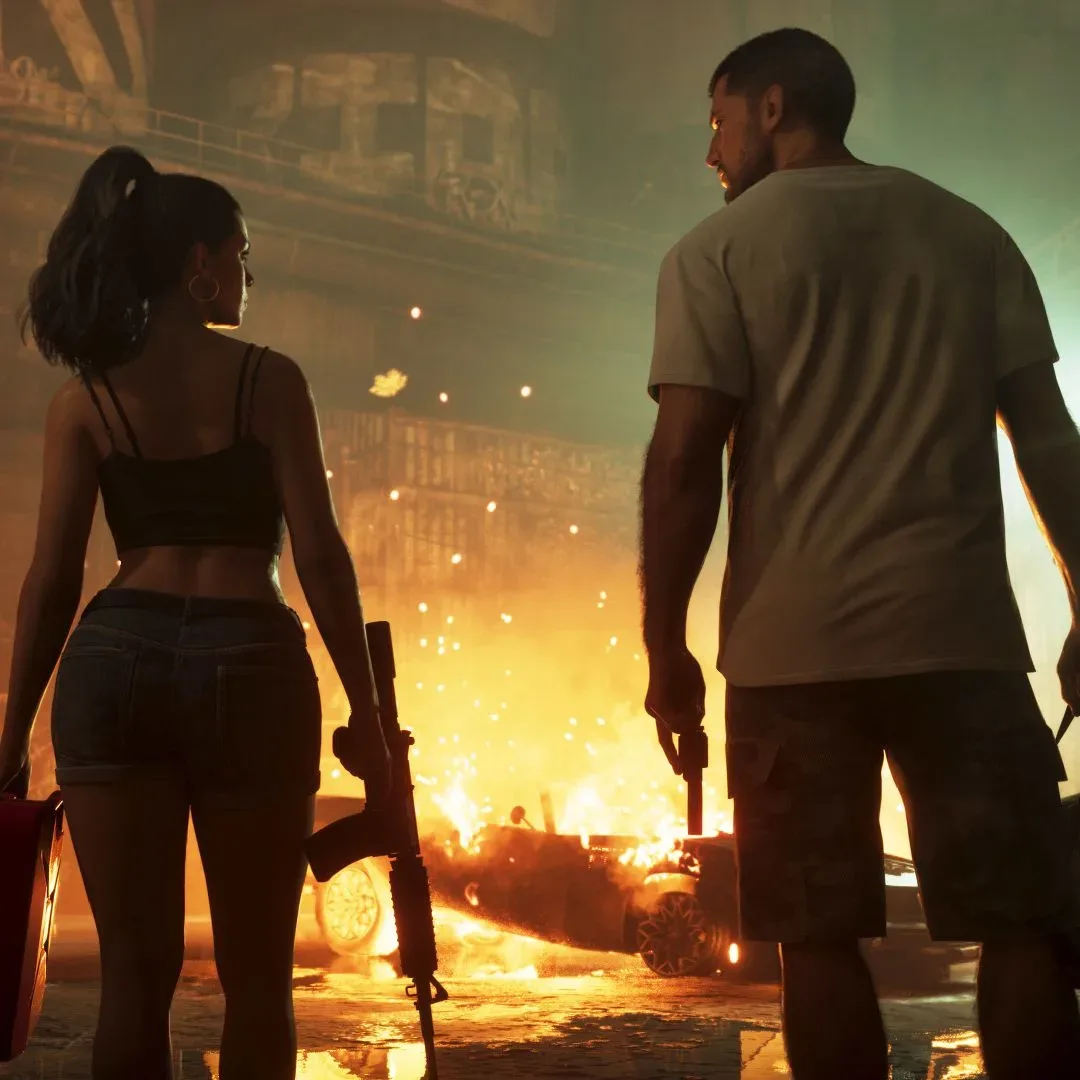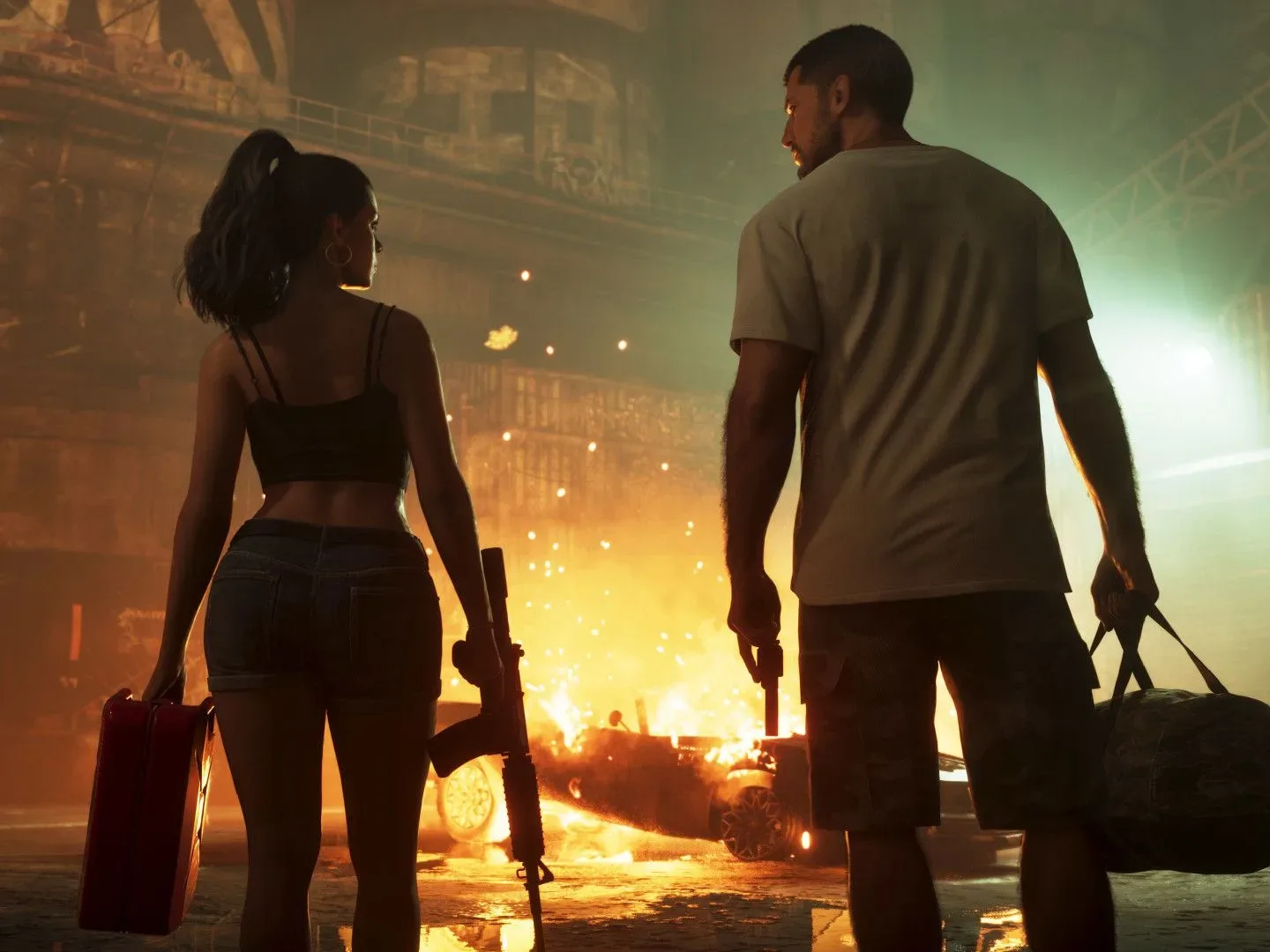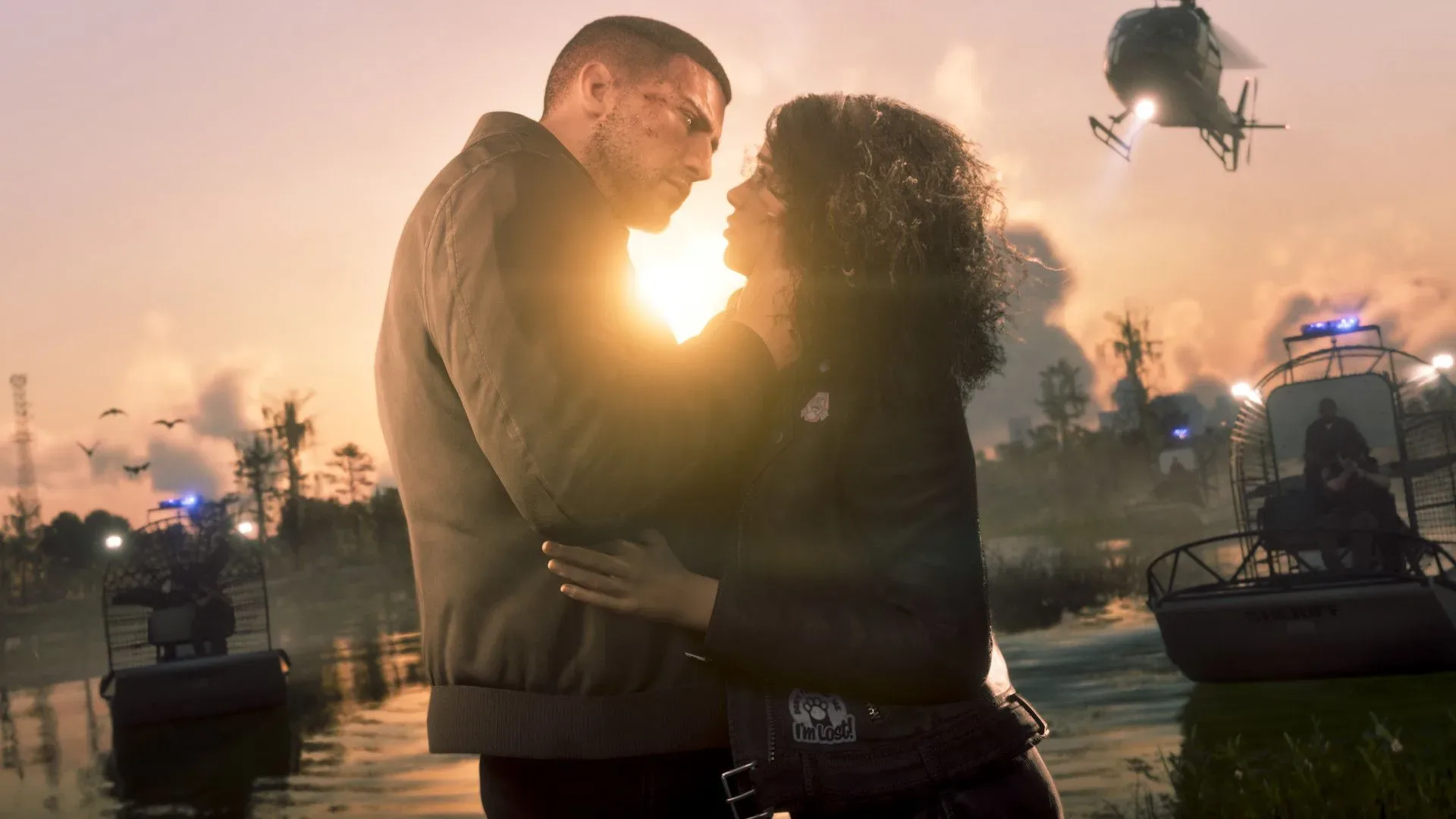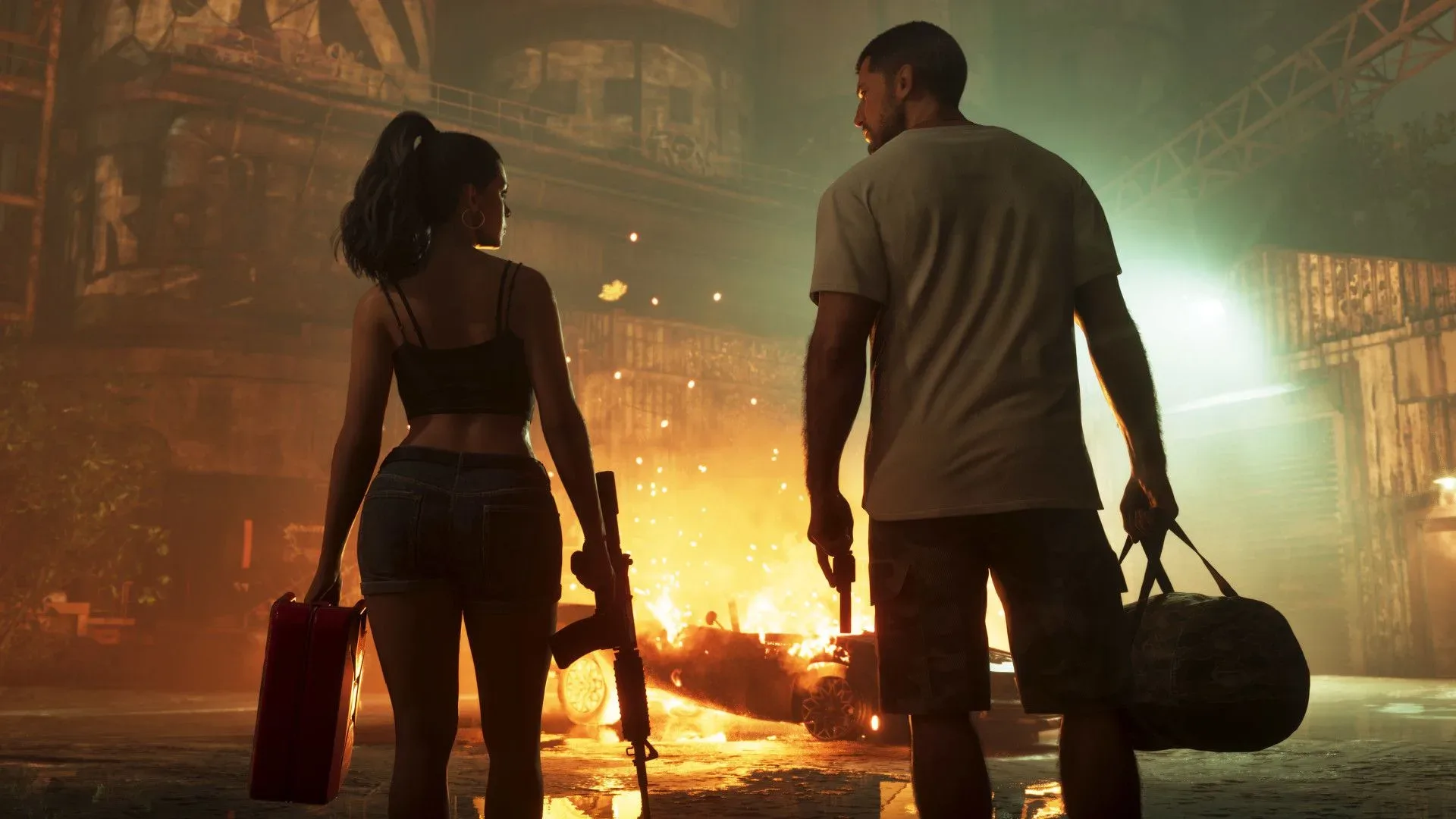
Grand Theft Auto has rarely had trouble making an entrance. Fast cars, criminal schemes, overheated satire, and chaotic escapes have long supplied the series with its trademark opening argument. Grand Theft Auto 6 appears to be adding a more intimate ambition to that formula: Rockstar wants players to form a substantial emotional attachment to its central pair, Jason and Lucia.
That target is not a small one. Rockstar North co-studio head Rob Nelson has pointed to the bond players built with Arthur Morgan in Red Dead Redemption 2 as an important creative reference point. The studio wants to carry forward both the more layered interaction offered by that game’s world and the strength of its character-focused storytelling, then bring those elements into the very different setting and tone of Grand Theft Auto 6.
For a series known for spectacle, that does not necessarily mean GTA is preparing to trade neon, mayhem, or criminal escalation for a quiet life. It means the people at the center of those events may matter in a more immediate way. Jason and Lucia are being positioned not simply as two playable viewpoints, but as a couple whose connection can give the game’s larger set pieces added stakes.
Arthur Morgan is a formidable benchmark
Arthur Morgan became a defining modern Rockstar protagonist because his story had room for contradictions. He could be capable, callous, funny, loyal, reflective, and increasingly aware of what his life had cost. Red Dead Redemption 2 placed him in a huge open world, but it also lingered on camp conversations, fraught friendships, small favors, mundane routines, and moments where the player could sense a person behind the outlaw role.
That is the standard Rockstar is invoking with Jason and Lucia. Nelson’s comments do not promise that the new pair will be copies of Arthur, nor should they be. Arthur’s journey belongs to a dying frontier and an unraveling gang; GTA’s contemporary crime story has entirely different pressures. But the desired outcome is clear: players should feel invested enough in these characters that their peril lands as more than a temporary obstacle between missions.
The challenge is especially notable because Rockstar has already created memorable leads across both major series. John Marston remains central to the identity of Red Dead Redemption, while Grand Theft Auto has supplied figures such as Niko Bellic. The three-protagonist structure of Grand Theft Auto 5 also showed the studio’s comfort with shifting perspective. Its ensemble generated energy through collision: three radically different criminals forced into one orbit.
Jason and Lucia suggest another possible use for multiple protagonists. Rather than emphasizing a volatile trio, Rockstar can explore what happens when two leads have a relationship that is central to the story’s emotional machinery. Their viewpoints can turn the act of switching characters into more than a structural novelty. A switch can reveal distance, uncertainty, concern, or the fact that one character cannot immediately know what the other is experiencing.
Quiet scenes can change the meaning of loud ones
Nelson has stressed that the calmer material is intentional. Footage discussed in the conversation includes Jason and Lucia getting ready to head out, a comparatively ordinary situation that helps establish familiarity between them. Scenes like that can do significant narrative work without needing a chase, a shootout, or a punchline. They show how two people share space, handle routines, and respond to one another when the plot is not forcing them into an emergency.
Related coverage includes Rockstar Aims for GTA 6's Jason and Lucia to Build an Arthur Morgan-Level Emotional Bond.
That foundation matters because action carries more weight when it interrupts something recognizable. Nelson highlighted a moment in which Lucia is thrown down stairs; after switching to Jason, the player cannot hear her. The important element is not merely the violence of the event, but the gap in knowledge it creates. Jason’s inability to hear Lucia becomes an invitation for the player to share his alarm.
The intended feeling is concern—not just excitement at a dramatic cut or the mechanical need to complete an objective.
It is a simple idea, but it could be a meaningful tonal adjustment for GTA. The franchise’s best missions often use escalating disorder as comedy, commentary, or both. A relationship-driven structure can still support all of that, while allowing some episodes to register as frightening because someone the player understands is at risk. If the quieter scenes succeed, players may carry their memory of those scenes into every high-pressure encounter.
There is also a practical advantage to a two-character focus. A trio can provide contrast and a rapid supply of jokes, but a couple can create a different kind of dramatic continuity. Every decision one person makes has the potential to affect the other. Trust can be tested; loyalty can be reaffirmed; silence can mean something. Rockstar’s stated interest in making the protagonists’ actions more consequential than they were in the previous game’s trio points toward this kind of relationship-centered design.
Depth, interaction, and a contemporary crime story
Rockstar is not framing character attachment as separate from world design. The aim is to bring the depth and more meaningful world interaction associated with Red Dead Redemption 2 into GTA 6 as well. That language is broad, and it does not define a specific gameplay system. Still, it indicates that the team sees environmental interaction and emotional storytelling as connected rather than competing priorities.
In an open-world game, the world is often the stage on which characters become believable. Optional encounters, transitions between major missions, ambient exchanges, and low-stakes activities can all provide texture. The story does not need to pause for a grand revelation every time; it can build understanding in smaller increments. Red Dead Redemption 2 frequently relied on that accumulation, allowing Arthur’s personality and relationships to develop in the spaces between major events.
Whether GTA 6 applies the same patience remains unknown, and it would be unwise to treat a creative goal as a guarantee of execution. The rhythms of a modern GTA game are not those of a Western, and Jason and Lucia will need their own voice rather than borrowed emotional shorthand. Yet Rockstar’s focus on intimacy is meaningful precisely because it identifies a different priority from the usual conversation around cars, cities, crime, and map size.
For players interested in how Rockstar’s systems and hardware history have evolved, the company’s journey can also be viewed against unusual pieces of PlayStation-era technology, including the Sony PSX, the Japan-only PS2 DVR hybrid. It is a reminder that gaming’s technical progress has often been accompanied by changing expectations about what an interactive world can hold: not only more activity, but more atmosphere and context.
Trailer 1 was an early statement, not a finished blueprint
The discussion around GTA 6’s characters also sits alongside an important clarification about its first trailer. Rockstar leadership has said the game was not fully formed when Trailer 1 arrived. That makes sense of the trailer as a statement of direction rather than a complete declaration of every final detail.
Its use of Tom Petty was described as a mission statement for the game’s destination. That framing is useful for interpreting the footage: it presented mood, place, momentum, and the central duo, while the project itself was still taking shape. It does not settle questions about every mechanic, plot turn, or final structure. It does, however, align with the larger theme now being discussed—GTA 6 wants its crime-driven world to be experienced through characters with a relationship audiences can feel.
What to watch for with Jason and Lucia
As more of GTA 6 becomes visible, the most revealing material may not be its biggest stunts. The decisive clues could arrive in small exchanges and perspective shifts: how Jason and Lucia talk when no job is underway, whether each has a distinct inner life, and how the game handles separation or disagreement.
- Everyday interaction: Brief domestic or social scenes can establish the texture of the relationship.
- Perspective switching: Moving from one lead to the other may be used to produce empathy and tension, not simply variety.
- Consequences: The game’s action will be more affecting if it changes how the pair see each other or what they risk losing.
- World response: More meaningful interaction could help make their story feel rooted in the setting rather than detached from it.
Arthur Morgan’s popularity came from more than strong writing in individual scenes. It came from sustained time with a character, a world built to support that time, and a story willing to let quiet moments matter. Rockstar’s stated goal for Jason and Lucia is ambitious because it seeks a comparable attachment in a franchise with a faster, sharper, and more chaotic identity. If GTA 6 can make room for both its signature excess and genuine concern for its leads, its biggest escape may be emotional rather than vehicular.