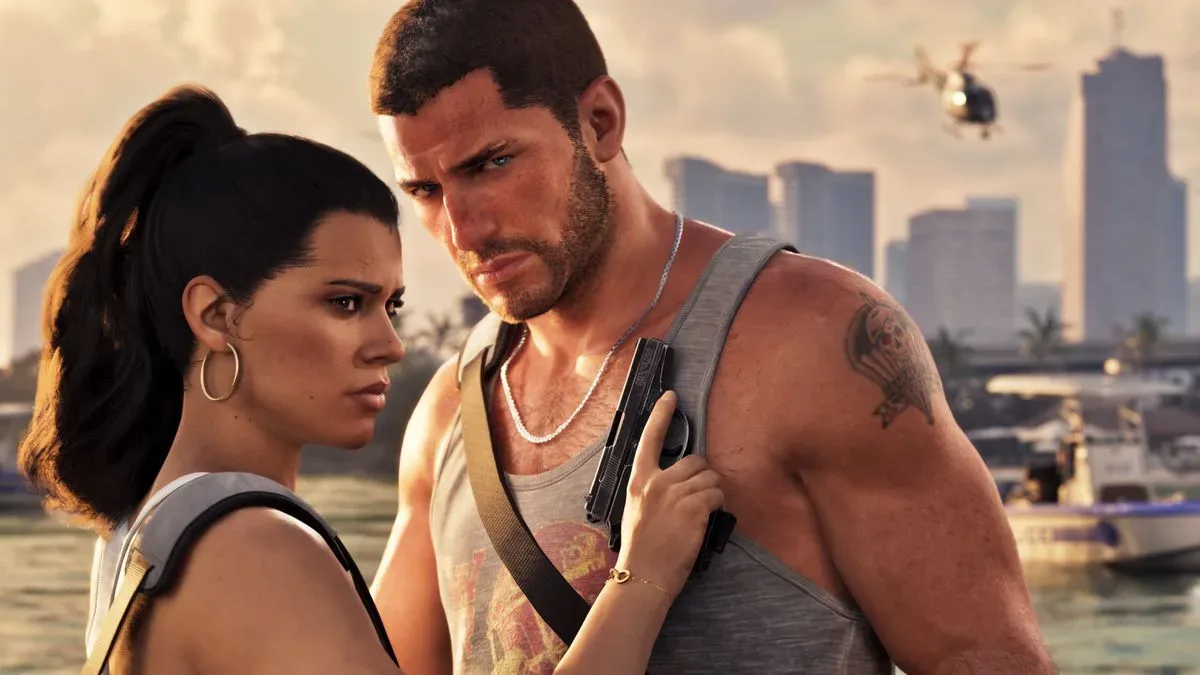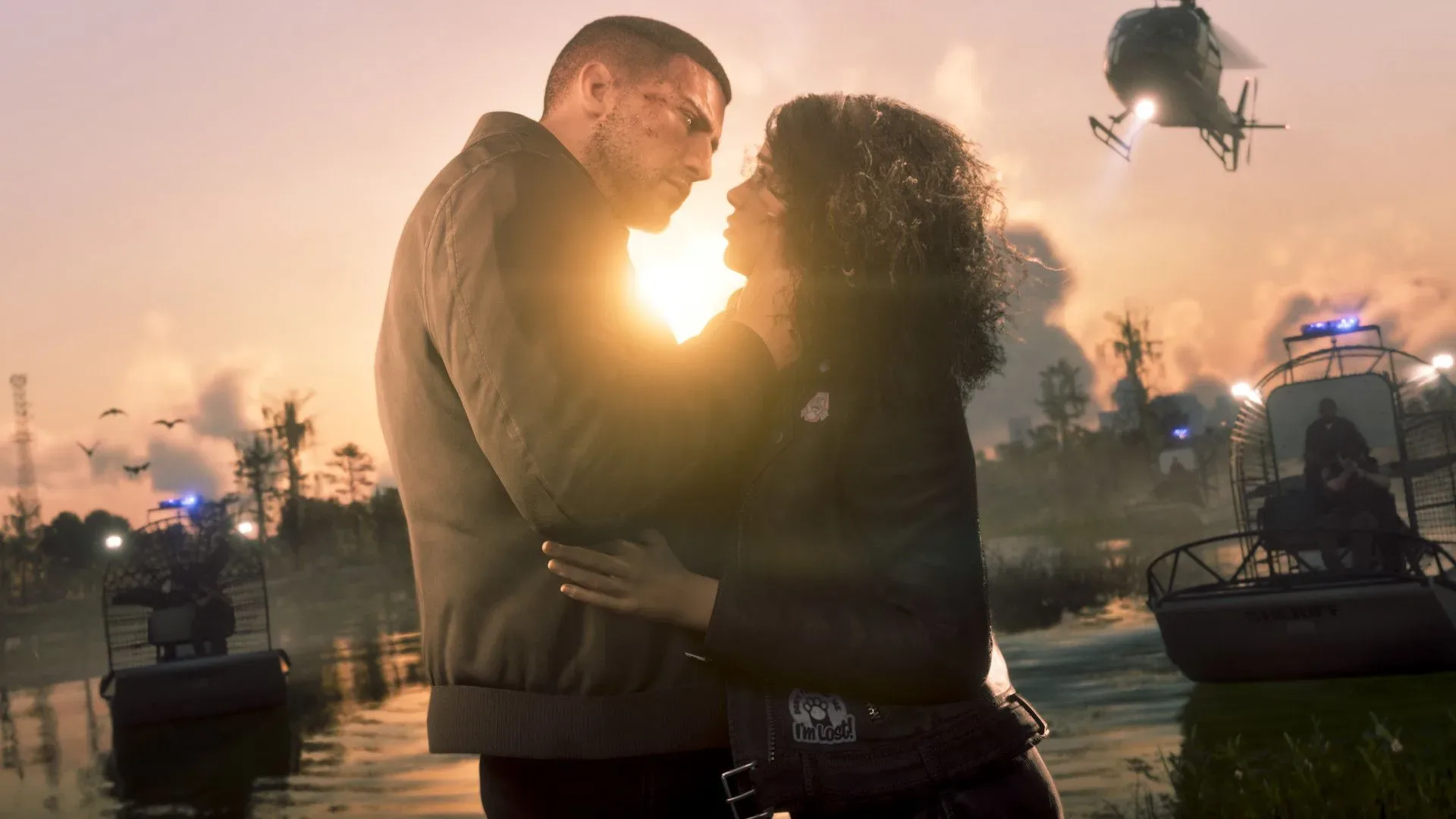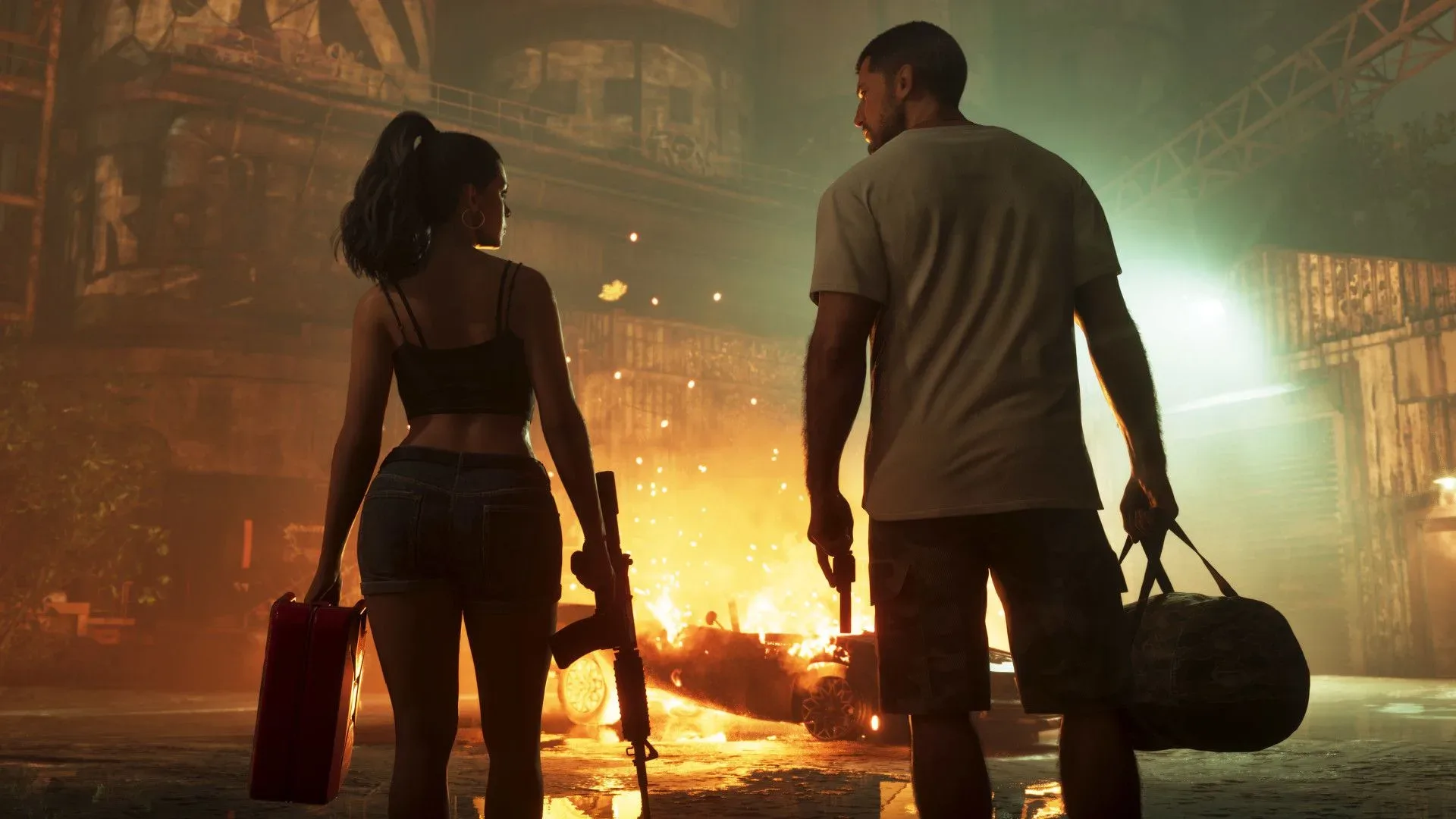
Grand Theft Auto 6’s first trailer did more than put Vice City, Lucia, and the then-unmet Jason in front of an enormous audience. It also supplied a remarkably clear emotional pitch for a game that, internally, was still coming into focus. Rockstar North co-studio head Rob Nelson has said the project was not “fully formed” when that trailer arrived, but its use of Tom Petty’s Love Is a Long Road represented a mission statement for the direction the team was chasing.
That framing explains why the trailer has lingered so strongly in the public imagination. A debut video can be a sales tool, a technical showcase, or simply a way to confirm that a long-rumored game exists. In GTA 6’s case, the choice of music appears to have had another function: it helped give a giant, still-evolving production a shared feeling to pursue. The song’s restless momentum and road-bound perspective made a natural companion for imagery of modern Vice City, its traffic, nightlife, waterways, social-media spectacle, and the central pairing of Lucia and Jason.
A trailer as a creative compass
Nelson described the early stages of Rockstar’s game development as a process where a team does not automatically begin with one perfectly aligned vision. A single image may become a reference point, he said, while music can often be the thing a group gathers around. That is an especially useful idea for a project on GTA 6’s scale. Before every character detail, mission, system, and visual decision has landed, a song can communicate pace, mood, attitude, geography, and aspiration in a matter of minutes.
In that sense, the first GTA 6 trailer was not necessarily a declaration that every part of the final game had already been locked into place. It was a presentation of the strongest available version of the game’s identity at that moment: the best material the team had, arranged in a way that could point both the audience and the developers toward the intended destination.
“You don’t have the game fully formed, you have an idea of what it’s going to be,” Nelson said of the first trailer and its music selection.
That is not a particularly shocking admission, but it is a valuable one. Development is iterative, and large open-world games change constantly as ideas are tested, discarded, expanded, and reconnected. Players sometimes treat a polished reveal trailer as a snapshot of a finished product awaiting release. Nelson’s comments instead suggest a more practical reality: polished marketing can coexist with an active creative search, provided the team has identified the feeling it wants the finished work to deliver.
Why Vice City starts with being there
Nelson also outlined a location-first method behind Rockstar’s approach. Once a setting has been selected, the team goes there, drives around, takes photographs, absorbs details, and talks through what elements speak to them. The goal is not merely to collect reference material for buildings, roads, signage, or vehicles. It is to capture the less measurable texture of a place: its rhythm, contradiction, heat, crowd behavior, visual clutter, sense of distance, and the tiny moments that make a fictional world feel rooted in something recognizable.
For GTA 6, that process leads back to Vice City. The trailer used the setting as more than a familiar label in the Grand Theft Auto universe. Its scenes emphasized an exaggerated, contemporary Florida-like atmosphere packed with spectacle and personality. The choice of Petty’s track helped connect those images. Music can bind a rapid montage together, but it can also tell the creators which images belong in the same world and which do not.
Nelson said development often involves pursuing something that remains just out of reach. A visual fragment, a piece of music, and an evolving group of ideas begin to reinforce one another until the game gradually pulls itself together. That description makes GTA 6’s trailer feel less like a final blueprint and more like a concentrated expression of the target: a piece of work designed to crystallize what the project needs to feel like, even while the details continue to be built.
Tom Petty’s track did more than provide a soundtrack
Love Is a Long Road was an unusually pointed choice for a trailer centered on Lucia and Jason. The first footage did not spell out every dimension of their relationship, but it made their partnership a focal point. The song naturally encouraged viewers to read the material through ideas of commitment, escape, friction, longing, and a difficult journey undertaken with someone else. That does not confirm story specifics, and the trailer should not be treated as a plot outline. It does show how carefully a licensed song can add narrative suggestion without a character ever needing to explain themselves.
There is an important distinction between a song that merely sounds good in a trailer and one that can organize a project’s tone. Nelson’s account places Love Is a Long Road in the second category. The music was a guiding reference for the creative team, not just an audience-facing needle drop selected after the meaningful decisions had been made.
It also helped make the long gap after Trailer 1 more complicated for fans. For an extended period, that footage was the primary official window into GTA 6. It introduced Lucia, showed the Vice City setting, and established the game’s atmosphere while leaving major questions unanswered. The original 2025 release window later became outdated, reinforcing the sense that the wait had become part of the game’s story before the game itself was even playable.
Rockstar’s restrained public approach has left room for people to revisit each image, lyric cue, and character moment from the trailer. Nelson’s remarks give that rewatching a new layer. The song was not simply there because it matched a sunset drive or a fast-cut montage. It reflected the internal effort to unite pieces of a massive game around a consistent mood.
What “not fully formed” does—and does not—mean
It would be a mistake to interpret the phrase as evidence that GTA 6 lacked direction when Trailer 1 launched. The trailer itself already presented a coherent impression: a return to Vice City, a modern-day social environment, and two protagonists at its center. Rather, Nelson’s point is that a coherent impression can arrive before every piece of a game is settled. Teams need a strong enough understanding of the destination to create a trailer, while still doing the difficult work required to reach it.
That tension is central to blockbuster game production. A developer must make creative choices early enough to give thousands of connected tasks a purpose, yet remain flexible enough to improve the game over time. Music, photographic research, travel, and discussion can all serve as anchors when individual features and scenes are still shifting.
It is also a useful reminder that trailers are crafted objects in their own right. They can capture the spirit of a game without documenting every stage of production. GTA 6’s debut now looks like an example of that principle: an intentionally assembled glimpse of a work in progress that gave the project a recognizable emotional lane.
Rockstar’s longer-term problem: keeping satire fresh
Nelson’s comments sit alongside another challenge facing a game with a lengthy development cycle: satire can date quickly. He has indicated that there will always be material worth satirizing, but that Rockstar has to be selective because a target identified many years earlier may be gone, changed, or already feel old by the time a game launches. After 11 years of development, that concern is hardly abstract.
The observation is particularly relevant to GTA, a series associated with sending up the culture surrounding its fictional cities. A contemporary setting creates opportunities, but it also places pressure on the writers and designers to avoid jokes or targets that expire before players encounter them. The same research process that helps a team understand a location may also help it decide what remains durable enough to include.
Those questions are part of a wider industry conversation about how enormous productions are made and sustained. The human side of that work remains important too, as seen in developments such as contract protections secured by Blizzard workers amid looming Microsoft layoffs. GTA 6’s scale may make its trailers feel monumental, but Nelson’s description brings the process back to people sharing references, traveling, looking closely, and trying to articulate a common creative goal.
For GTA 6, that goal has been partially audible from the beginning. Trailer 1 did not reveal a game that was complete; it revealed a game with a clear sense of the road it wanted to travel. Tom Petty’s song, it turns out, was not just playing over the journey. It was helping chart it.