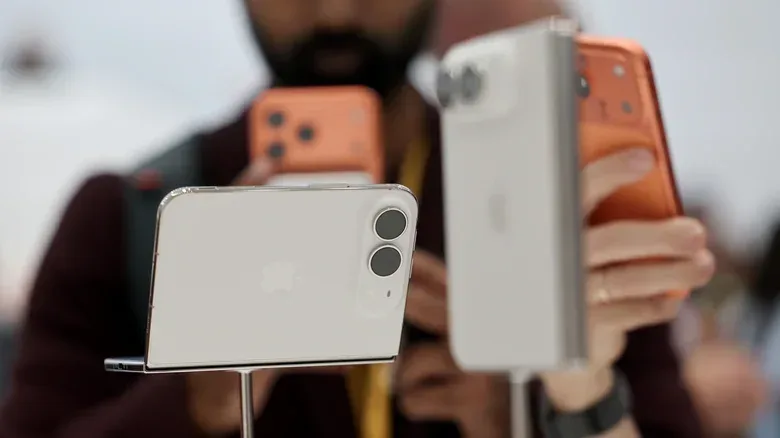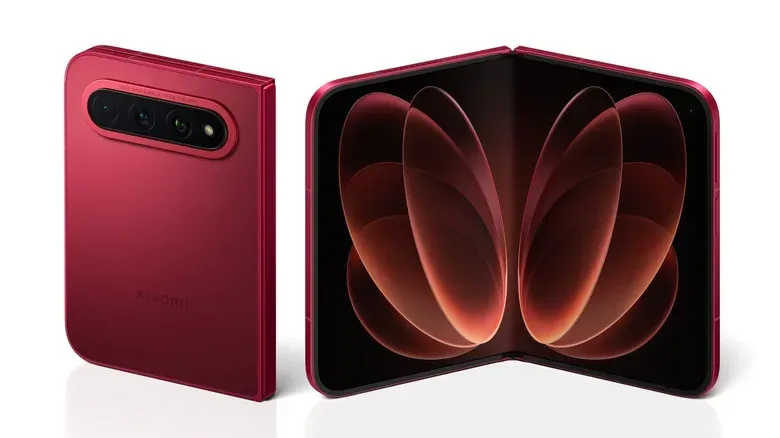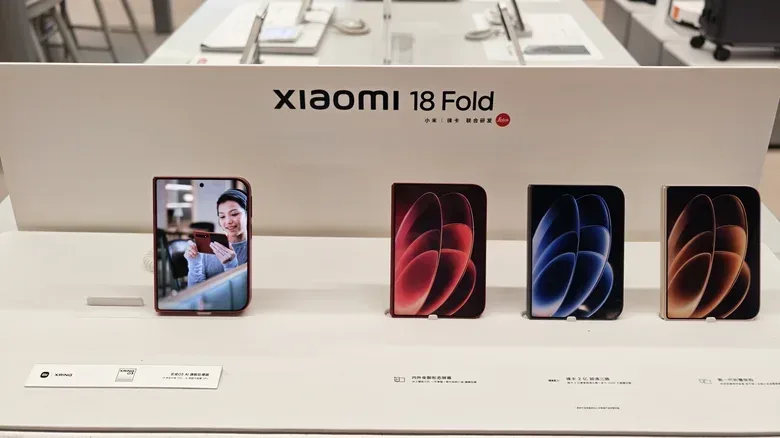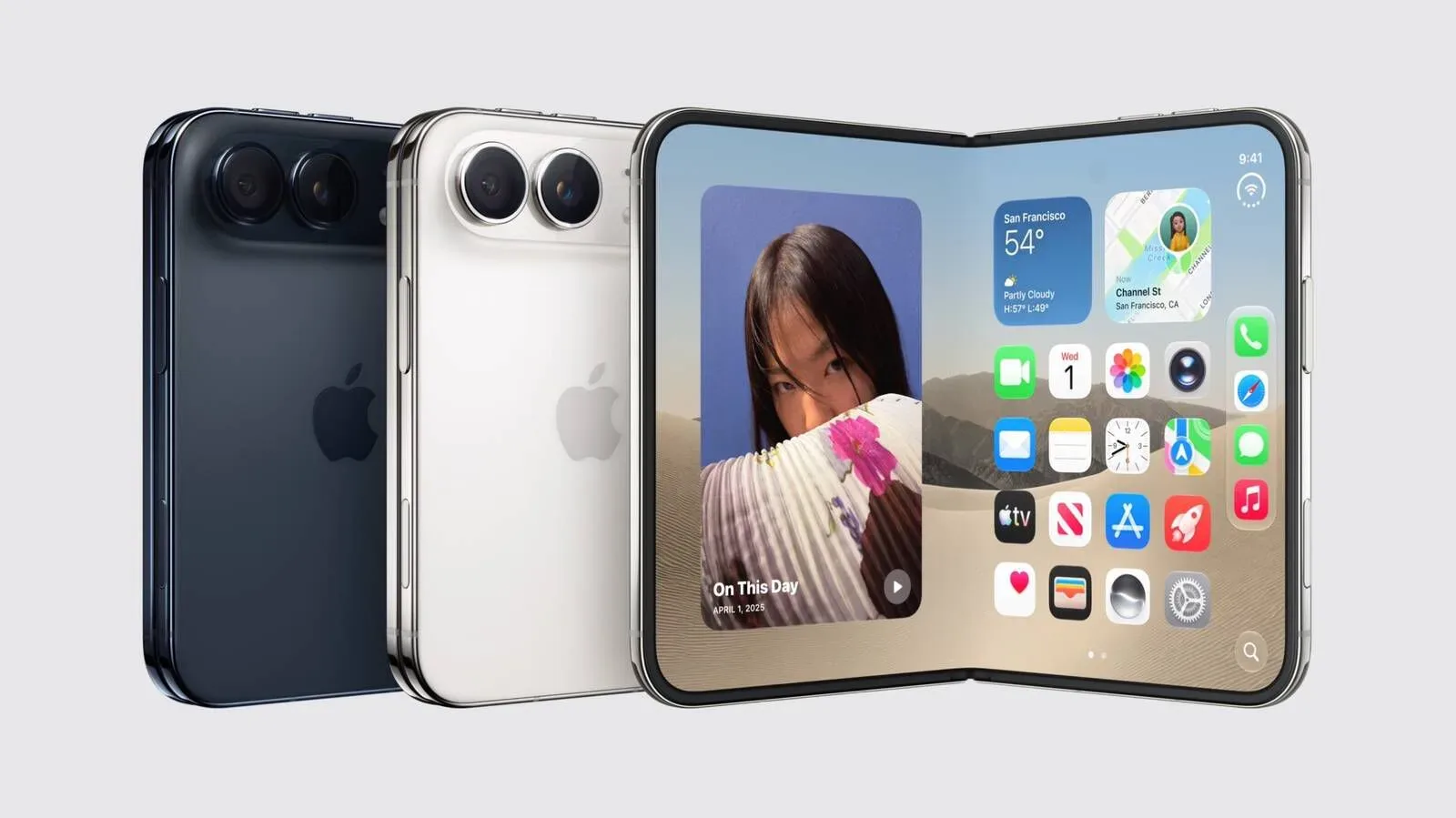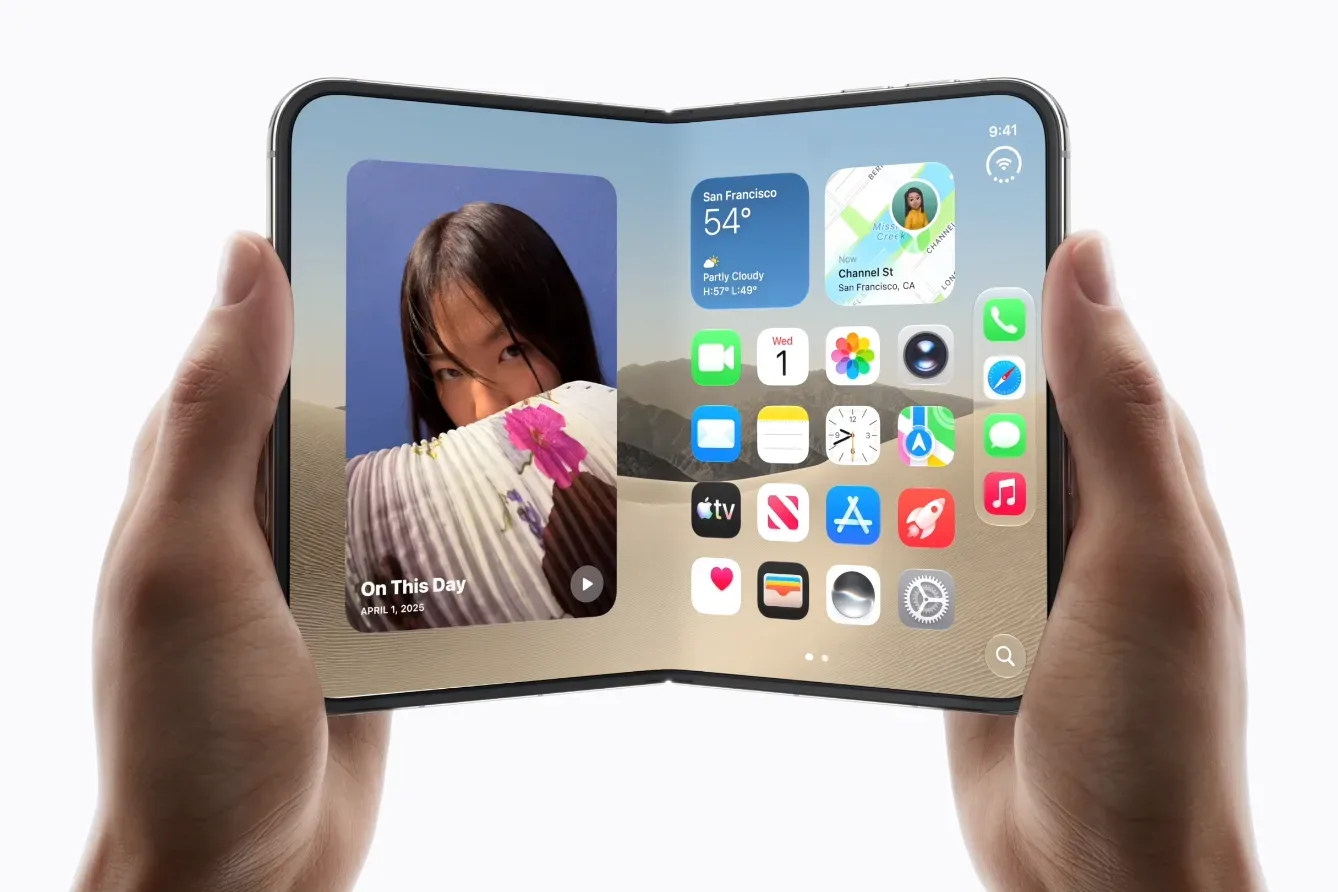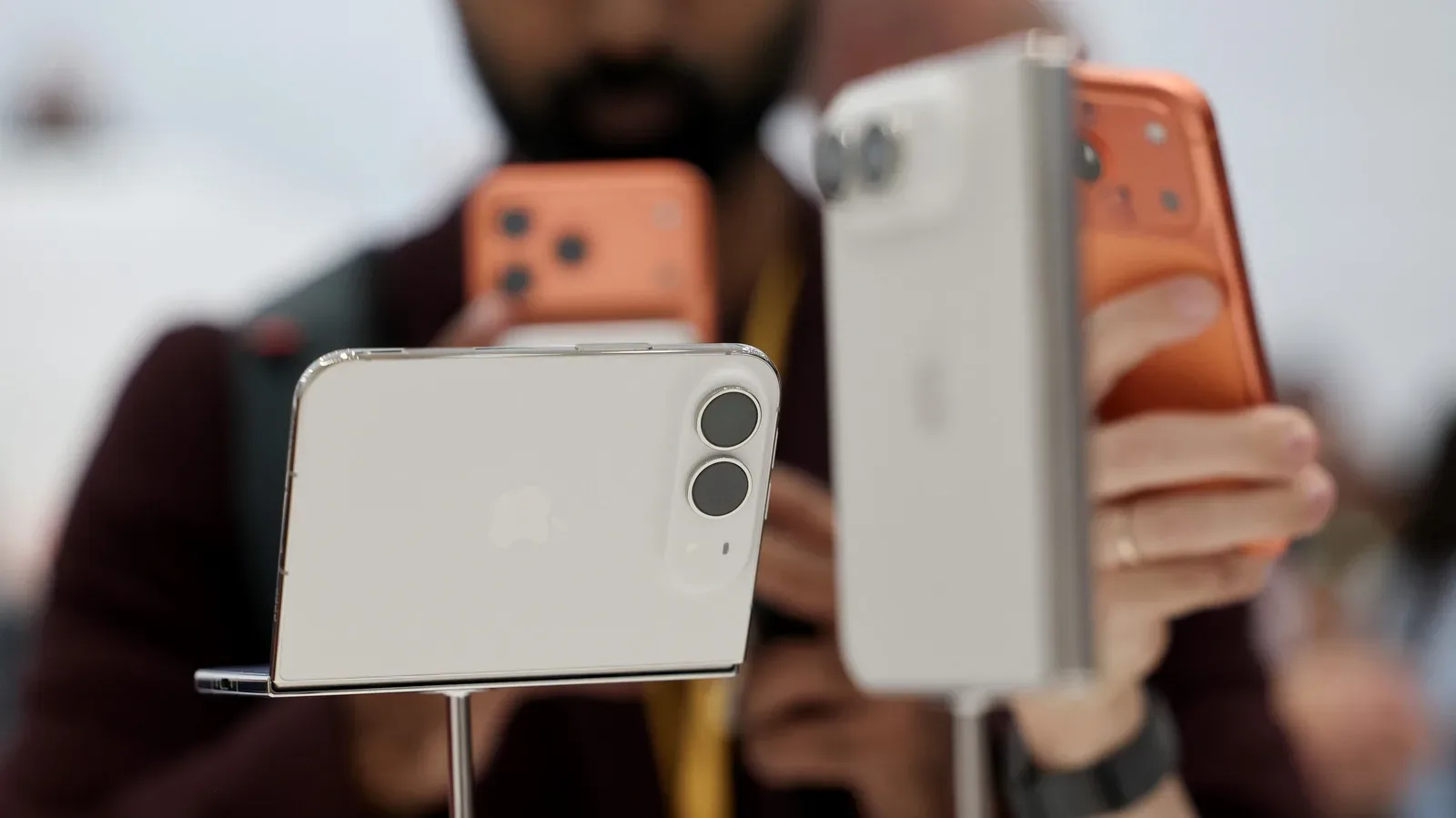
The iPhone Duo and Xiaomi 18 Fold arrive only two days apart, and at first glance they look like they were briefed from the same mood board: premium book-style foldables with a narrower, passport-like shape rather than the squarer proportions long associated with the category. Open either device and there is a 7.6-inch inner display; close it and each offers a 5.4-inch outer display. Both screens run at up to 120Hz.
That shared outline is useful, because it throws the meaningful differences into sharper relief. Apple is positioning the iPhone Duo around build materials, water and dust protection, display finish and an iOS-first take on large-screen multitasking. Xiaomi counters with a much lighter chassis, substantially more ambitious rear-camera hardware, more RAM, a stated 6,000mAh battery and faster charging figures. Price and geography may be the deciding factors before any spec-sheet argument can begin: the Duo starts at $1,999, while the 18 Fold starts at 10,999 yuan, roughly $1,640, but is China-only for now.
Neither device has yet received an in-depth review, so this is a comparison of announced specifications and stated capabilities, not a verdict on real-world battery life, cameras, durability or sustained game performance. That distinction matters especially with foldables, where comfort, heat, software polish and hinge reliability cannot be reduced to one headline number.
The shared display formula, with different display priorities
On paper, the core screen dimensions are a tie. Each handset has a 7.6-inch internal panel for tablet-style use and a 5.4-inch external panel for quick tasks without unfolding. A 120Hz refresh rate means the display can update as many as 120 times per second, which can make scrolling, interface movement and compatible games appear smoother than on a conventional 60Hz screen.
Xiaomi claims the 18 Fold can hit 4,000 nits of peak brightness, versus 3,000 nits for the iPhone Duo. A nit is a unit of screen luminance: higher brightness can help visibility in bright environments. Peak-brightness claims do not, on their own, establish how either screen behaves across a full day or during long play sessions, but the stated maximum gives Xiaomi an advantage in this single specification.
Apple’s counterpoint is its inner-screen treatment. The iPhone Duo uses a nano-textured layer intended to reduce glare and make the fold crease less noticeable. It also places the front-facing camera under the internal display, keeping it hidden until needed. Those choices speak to the uninterrupted-canvas appeal of a foldable: less reflection and less visual interruption could be more valuable to someone reading, watching video, drawing or using two apps side by side than an additional headline brightness figure.
For gaming, the identical size and refresh-rate targets mean neither device automatically wins based on the fundamentals of display real estate. The practical question is which compromises a buyer notices more: potential outdoor brightness advantages, or Apple’s anti-glare treatment and less conspicuous crease. There is not enough evidence yet to declare a display winner beyond those stated differences.
Weight and durability tell opposing stories
The strongest physical distinction is weight. Xiaomi lists the 18 Fold at 219 grams, while the iPhone Duo weighs 254 grams. The 35-gram gap may sound modest when read aloud, but it can be meaningful on a device designed to be held open for extended periods. A lighter foldable may be easier to use for a lengthy video, a commute or a gaming session where both hands are supporting the larger internal display.
Apple, however, presents the more complete durability case in the information available. The iPhone Duo has a titanium frame, Ceramic Shield glass and an IP68 rating for water and dust resistance. An IP rating is a standardized ingress-protection classification; here, the key consumer takeaway is that Apple has supplied a formal resistance rating for both water and dust.
Xiaomi uses an aluminum frame and Shield Glass 3.0. The 18 Fold has no stated IP rating in the available details. That is not proof that the phone lacks protection, but it leaves buyers without a comparable, supplied rating. With any folding phone, a hinge and flexible inner screen add concerns that do not exist in exactly the same way on a conventional slab handset. Buyers who prioritize a clearly stated resistance classification have a concrete reason to prefer the Duo; buyers who primarily prioritize a lighter device have an equally concrete reason to look at Xiaomi.
Custom silicon, RAM and the limits of a spec-sheet gaming verdict
Both companies use their own custom chip designs. Apple’s A20 Pro is described as the company’s most powerful mobile chip and its first chip based on a 2-nanometer architecture, a manufacturing approach presented as improving energy efficiency. Xiaomi’s XRING O3 uses a 3-nanometer architecture.
Architecture labels are important context but should not be treated as a direct frame-rate scoreboard. In simple terms, a smaller process node is commonly associated with the potential for better efficiency, but actual performance and endurance depend on far more than that label. Software optimization, thermal behavior, power management and the demands of a particular app all influence what users experience. There are no supplied benchmark results, temperature figures or game tests for these phones, so declaring one the faster gaming handset would be speculation.
The clearer numerical edge belongs to Xiaomi on memory: the 18 Fold has 16GB of RAM against 12GB in the iPhone Duo. RAM is the working memory used to keep active apps and data readily available. The difference may not matter to ordinary day-to-day use, but it can matter more when demanding games, AI workloads or multiple apps are competing for resources. It is a relevant advantage for heavy multitaskers, though it is still not a substitute for evidence of performance in actual games.
Apple’s advantage is framed less around raw component totals and more around its software. iOS 27 adds Split View multitasking and Siri AI, and Apple Pencil support is due later this year. Split View refers to placing apps side by side, which is especially relevant on the expanded inner display. Apple also emphasizes animations and apps designed for the foldable form factor. That matters because a large folding screen only earns its keep when the interface makes opening the phone feel useful rather than merely bigger.
Android’s situation is not fully defined by the available information: the comparison only establishes that Apple’s form-factor-specific software approach is more clearly presented here. It does not prove that the Xiaomi 18 Fold lacks good multitasking or capable apps. What it does show is where Apple is placing its pitch: a cohesive iOS experience that treats the foldable screen as a distinct workspace.
That broader platform context is worth keeping in mind as AI continues to become a phone-selling feature, from assistants to app tools and developer ecosystems. Recent developments around AI across apps, search and developer tools underline why hardware specifications alone are increasingly an incomplete purchasing guide.
Xiaomi’s camera hardware is far more flexible on paper
The camera divide is stark. Apple equips the iPhone Duo with two 48-megapixel rear cameras: a wide camera and an ultra-wide camera. There is no optical zoom system of the kind found on iPhone Pro models, so distant subjects rely on digital zoom.
Digital zoom enlarges an image electronically rather than changing the lens’s focal length. Optical zoom uses dedicated lens hardware for a closer view. The distinction matters to buyers who routinely photograph distant subjects, because Xiaomi includes a dedicated optical-zoom camera alongside its other cameras.
The Xiaomi 18 Fold has a 200-megapixel main camera, plus 50-megapixel ultra-wide and optical-zoom cameras. Megapixel totals do not by themselves settle image quality; processing and other factors are not detailed here. Still, the presence of that third rear camera gives Xiaomi greater stated hardware flexibility, and the optical zoom is a clear capability Apple’s Duo does not list.
For anyone spending close to or above the price of a flagship phone, the camera choice is not a footnote. The Duo’s $1,999 starting price makes the absence of optical zoom a notable trade-off for users who expect the fullest possible camera system in a premium device. The 18 Fold is the more versatile option on its announced camera hardware, while meaningful image-quality judgments must wait for proper testing.
Battery and charging: stated capacities favor Xiaomi, but Apple’s endurance is unknown
Xiaomi supplies more battery detail: a 6,000mAh silicon-carbon cell, up to 67W wired charging and up to 50W wireless charging. Milliamp-hours, or mAh, describe battery capacity, though they cannot translate directly into a promised number of hours because display settings, software, chip efficiency and usage vary. Silicon-carbon is the battery chemistry identified for the 18 Fold.
Apple has not disclosed a battery capacity for the iPhone Duo, so there is no responsible mAh-to-mAh comparison. Its announced charging limits are up to 60W wired and 35W wireless through MagSafe. Xiaomi therefore leads in the supplied charging figures and provides a capacity number Apple does not, but the available details do not establish which device lasts longer between charges.
This is another case where prospective owners should separate what is known from what is merely plausible. Faster stated charging can be genuinely useful, particularly for a large-screen device likely to handle video, multitasking and games. Yet a final verdict on battery endurance requires use beyond an announcement sheet.
Availability could settle the matchup before features do
The iPhone Duo goes on sale October 23, with pre-orders opening October 16, starting at $1,999. Xiaomi’s 18 Fold starts at 10,999 yuan, about $1,640, and is currently limited to China. Xiaomi does not officially sell the phone in the US, and US carriers do not certify it.
That regional limitation is not a minor shopping inconvenience. It determines whether the lower starting price, lighter design, larger RAM allotment, optical zoom and faster charging are practical options at all. Importing is not presented here as a solution, and buyers should not assume it would supply the local support or carrier compatibility they need.
The short version is refreshingly clear. The iPhone Duo offers a defined US purchase path, an IP68 rating, titanium construction, a nano-textured inner display and a software story built around iOS 27 multitasking. The Xiaomi 18 Fold offers lower stated entry pricing in its home market, dramatically less weight, higher claimed peak brightness, more RAM, a three-camera arrangement including optical zoom, a disclosed 6,000mAh battery and higher charging limits. Until thorough reviews arrive, the best choice depends less on a universal winner and more on where a buyer lives and which compromises they are willing to make.