Google has broadened access to Gemini 4 Argon, its newest AI model, placing it in the Gemini app and AI Mode in Search for Google AI Pro and Google AI Ultra subscribers. Developers can also reach the model through the Gemini API and Antigravity, Google’s agentic software-development platform.
The expanded rollout follows an earlier release to the Fairwind Program, a group consisting of governments and trusted partners that require access to models with the company’s most advanced cybersecurity capabilities. It is an important distinction: Argon is no longer limited to that specialized early audience, but it is not a no-cost, universally available option either.
For ordinary Gemini users, the immediate practical question is eligibility. Argon access in the app and through Search’s AI Mode is currently tied to the paid Pro and Ultra plans. In the US, Google AI Pro is priced at $20 per month, while Google AI Ultra starts at $100 per month. That makes Argon’s consumer rollout a premium feature rather than a model that every person using Gemini can select.
Where Gemini 4 Argon is available
Argon’s availability spans several very different ways of using AI, and each matters to a different audience.
- Gemini app: Google AI Pro and Ultra subscribers can use Argon in Gemini’s consumer-facing chat experience.
- AI Mode in Search: The same paid subscribers can access it in Google Search’s AI Mode.
- Gemini API: Developers can send requests to the model from their own software and services.
- Antigravity: Developers can use it through Google’s agentic development platform, including a coding interface being added to Gemini’s macOS app.
“API” means application programming interface: a route that lets one program communicate with another service. In this case, it lets developers build Argon into tools and workflows rather than only typing into a chatbot window. That access is billed separately from a consumer subscription, using tokens.
A token is a unit of text that an AI system processes. It is not precisely equivalent to a word; a word may be one token or several, while punctuation and formatting can count too. Input tokens are the material a person or program sends to the model, such as a prompt, codebase excerpt or document. Output tokens are the words, code or other text the model returns. The split matters because Argon’s output rate is substantially higher than its input rate.
Pricing: subscriptions for people, token billing for software
Google has set introductory API pricing for Argon at $2 per million input tokens and $10 per million output tokens. Those rates are scheduled to remain in effect through November 30. After that, both will double, bringing the stated prices to $4 per million input tokens and $20 per million output tokens.
For developers, the headline input figure is only part of the calculation. A workflow that sends a concise prompt but requests a large, detailed response will lean harder on output charges. Conversely, a job that repeatedly supplies substantial context—such as long documents or code—can accumulate input tokens even when it asks for brief results. The eventual cost depends on both sides of the conversation and on how often the model is called.
The introductory period also means comparisons based on today’s usage rates need to be read carefully. A task that looks especially cost-efficient before November 30 may have a materially different economic profile after the listed price increase. Teams evaluating an API should therefore separate a model’s capability from the temporary price used to reach it.
What Google says Argon is built to handle
Google positioned Gemini 4 Argon for complex work across finance, software engineering, coding, creative writing and cybersecurity defense. Those labels cover very different tasks. Software engineering and coding can involve understanding, generating or revising program code. Cybersecurity defense generally concerns identifying, investigating or responding to risks in systems and software. Finance can involve information-heavy analysis where errors may carry significant consequences.
That range should not be confused with a guarantee that every result is correct. The announced capabilities describe intended uses and model positioning, not independent proof that a generated answer is accurate, secure or appropriate for a high-stakes decision. The more consequential the task, the more important it is for people using the output to review it against their own requirements and expertise.
Google had previously been expected to release a 3.5 Pro model, but moved ahead with Argon instead. The naming change signals a jump in the company’s release path, though it does not itself provide a simple one-number answer to how every real-world workload will perform. Model evaluation depends on the job: a coding task, a long writing request and a security-oriented workflow can all reward different strengths.
Benchmark result provides one comparison, not the whole answer
Artificial Analysis gave Gemini 4 Argon the same 60-point Intelligence Index result as OpenAI GPT-6 Astra. The Intelligence Index is a composite measurement that combines multiple AI benchmarks. Using Argon’s introductory rates, the analysis said it costs 60 percent as much per task as GPT-6 Astra.
That is a useful snapshot, but it needs appropriate boundaries. A composite benchmark is designed to summarize performance across several tests; it is not a substitute for measuring a particular organization’s prompts, data, reliability needs or spending pattern. Nor does the stated cost comparison automatically extend beyond Argon’s introductory pricing. Since Google has specified a doubling of its token rates after November 30, the date attached to the comparison is essential.
In other words, the 60-point match gives Argon a notable competitive reference point, while the cost figure describes a particular pricing window. Developers deciding between models will still need to consider the amount of input context they send, the size of answers they need, and whether the model fits the workflow they are trying to build.
Faster replies and partial answers during longer work
Within the Gemini app, Google says Argon responds more quickly and reduces hedging, repetition and clichés. The company also says the model can begin returning an answer while it is still working through longer tasks.
This behavior is commonly useful because it reduces the period in which a user sees nothing at all. Rather than waiting for a fully completed result, a person can start reading the response as it appears. That does not necessarily mean the task is complete when the first text arrives, and it does not remove the need to assess the finished answer. But for lengthy requests, the change could make the interaction feel less like submitting a job into a black box.
The claims about less hedging and fewer clichés are also best understood as intended improvements to response style. A more direct answer can be easier to read, yet directness is not synonymous with correctness. Particularly for coding, finance or security work, clear language is valuable only when paired with output that holds up to review.
Antigravity comes into Gemini’s macOS app
Google is also integrating Antigravity’s agentic coding interface into the macOS version of the Gemini app. An agentic interface is one designed around carrying out multi-step work rather than simply producing a single isolated reply. In the coding context, that framing is aimed at software-development tasks that may require several connected steps.
The announcement does not detail the exact set of actions the macOS integration will support, so it would be premature to assume a particular feature list or workflow. What is clear is that Google is bringing its development-oriented environment closer to the consumer Gemini application on macOS. For programmers already using Gemini, it potentially reduces the separation between general AI chat and coding-focused work.
The app is also getting an easier way to switch between chat and tasks. That may sound like a small interface adjustment, but it reflects the broader split in how AI products are being presented: sometimes as a conversational assistant, sometimes as a tool intended to complete a defined piece of work.
Why the rollout structure matters
Argon’s release is notable less for a single access point than for the way Google is distributing it across consumer, search and developer contexts. Pro and Ultra subscribers get app and Search access; developers get programmatic access through the API and Antigravity; and an earlier security-focused cohort received the model through the Fairwind Program.
That structure means “Gemini 4 Argon is available” has different meanings depending on who is asking. A paid Gemini subscriber can use it in the products they already recognize. A developer can account for it as a metered service. And an organization evaluating advanced capabilities, especially around security, may view it through a different set of requirements entirely.
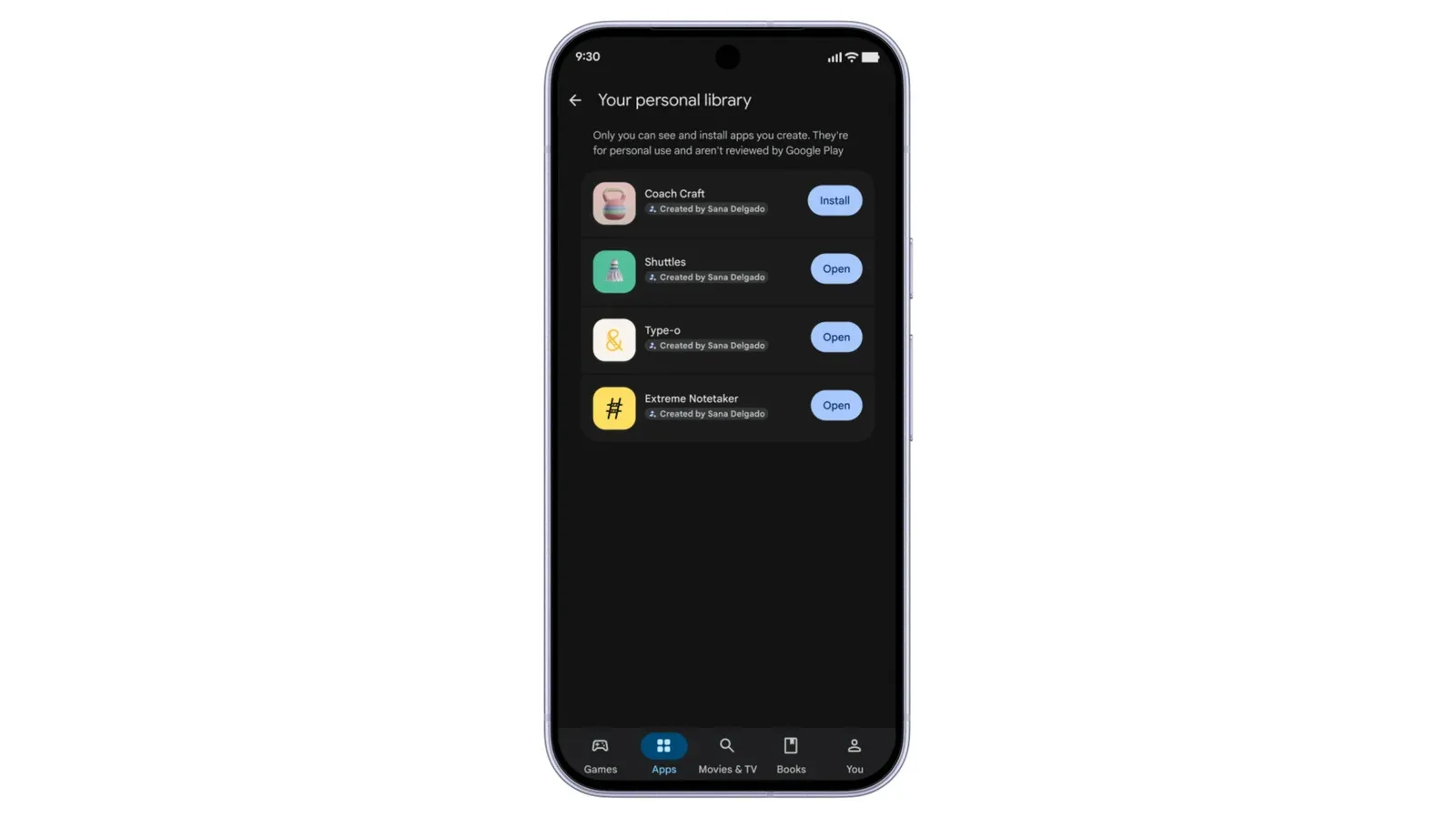
It also places the model in a wider Google product strategy that has been increasingly focused on AI-powered creation and discovery. Google has separately been building a more personal Play Store path for AI-made Android apps while reshaping game discovery, as covered in this look at the company’s Play Store AI plans. Argon’s API and developer-platform availability fits that larger emphasis on putting generative tools in front of both creators and end users.
For now, the key details are straightforward: Gemini 4 Argon is available in the Gemini app and Search AI Mode to Google AI Pro and Ultra members, and it is available to developers via the Gemini API and Antigravity. Its initial API price is $2 per million input tokens and $10 per million output tokens through November 30, after which the stated rates double. The model arrives with ambitious claims for complex technical and creative tasks, but practical value will rest on the specific work users ask it to do, the scrutiny they apply to its output and the cost of using it at scale.