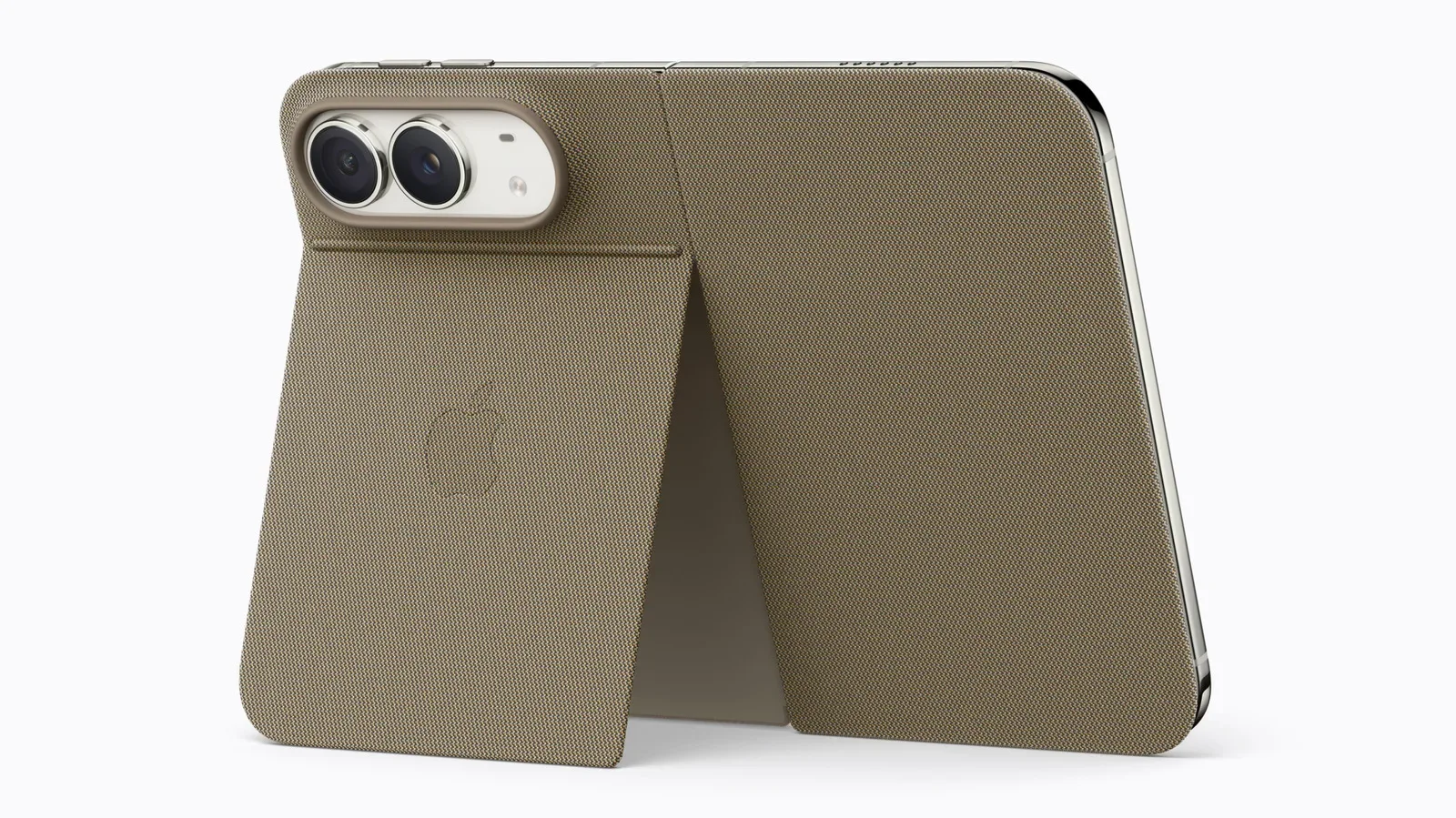
Apple’s iPhone Duo is not simply a familiar iPhone stretched into a new shape. Its foldable design changes the basic question behind every accessory purchase: not just does it attach?, but does it still work safely when the device opens and closes?
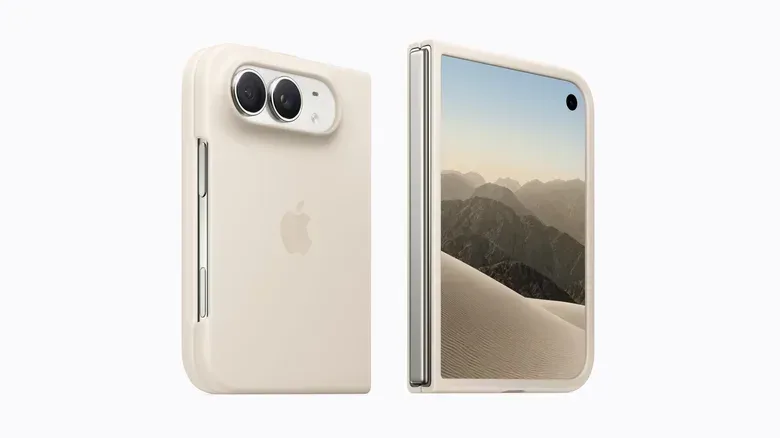
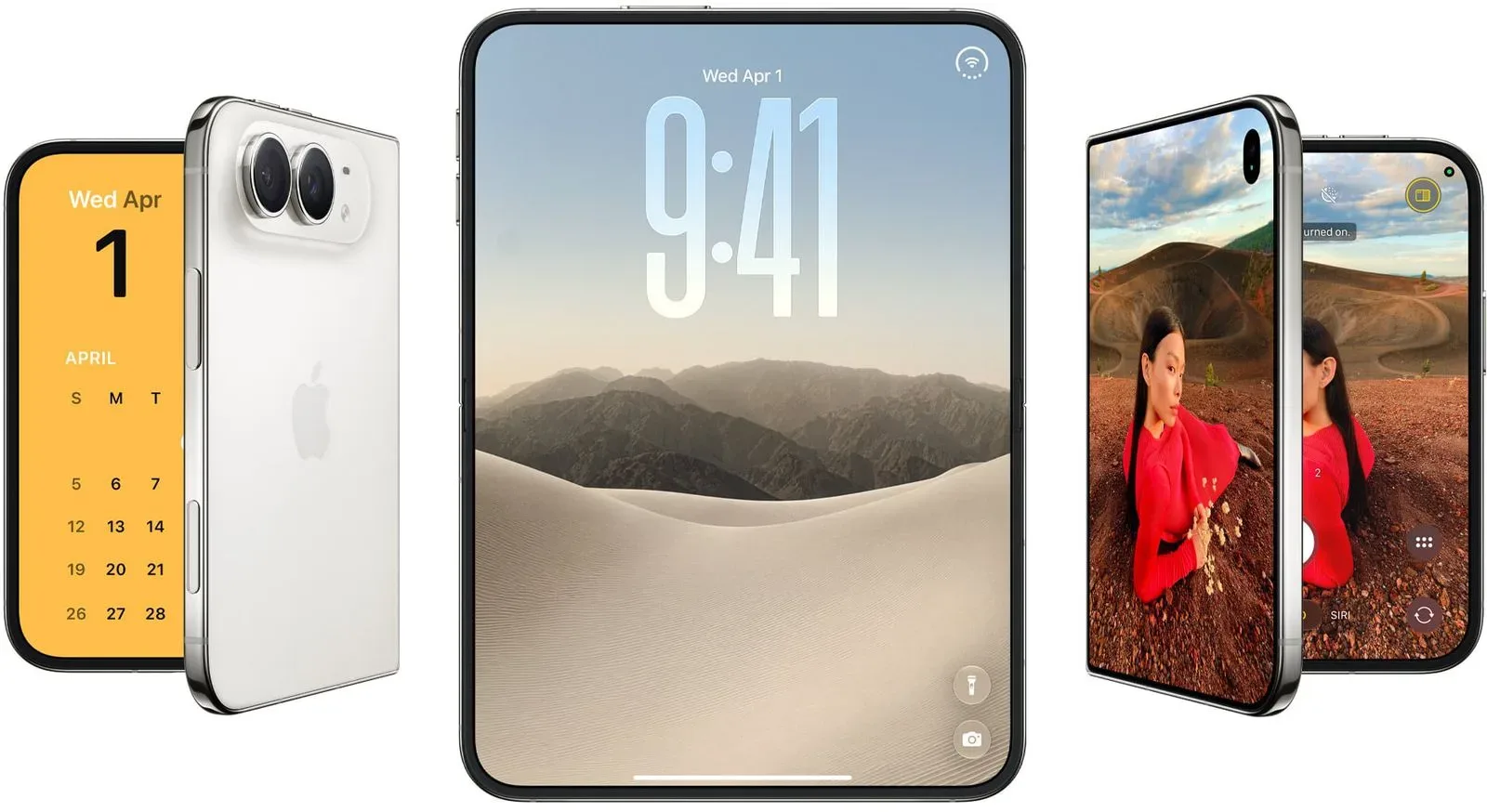
That distinction matters because the Duo measures 164.6 by 117.8 by 5.2 mm when unfolded, then 84.1 by 117.8 by 11.3 mm when folded. Those measurements depart substantially from a conventional slab-style iPhone. Accessories designed around the length, width, thickness, camera position and flat rear surface of older models may connect in some fashion, but that does not make them a good fit.
The useful dividing line is between accessories that depend on a physical shell or exact dimensions, and those that use broadly compatible standards. USB-C peripherals are in the latter group. Most wireless chargers are, too. Conventional cases, screen protectors, clip-style mounts and add-on camera lens systems are much more likely to need a model made expressly for the iPhone Duo.
The short compatibility picture
- Generally compatible: USB-C peripherals, existing MagSafe and Qi2 chargers, and many magnetic MagSafe or Qi2 car mounts.
- Compatible with caveats: MagSafe accessories can attach, but accessories shaped for a longer standard iPhone may overhang the Duo. Existing magnetic battery packs can charge it, but may extend beyond the frame.
- Buy Duo-specific versions: Cases, screen protectors, wallets, battery packs, many mechanical car mounts and many lens accessories.
- Planned rather than current: Apple has said a future software update will enable USB-C Apple Pencil support for the iPhone Duo.
That list is deliberately more cautious than a simple yes-or-no compatibility label. A charger that delivers power and a case that closes around the phone are only the beginning. A foldable also introduces moving parts, a hinge area and a display that bends repeatedly. The fit has to account for all of them.
Why older fitted accessories are a poor bet
Apple supplies accessory manufacturers with detailed dimensional drawings for the Duo, and the need for those drawings is apparent from the device’s form. A fitted accessory is built around exact geometry. If its opening is positioned for a different camera area, if it assumes one uninterrupted back panel, or if it expects a different thickness, it is not a reliable purchase for the new phone.
Cases are the clearest example. Even a case that appears close in size could interfere with folding, leave the hinge exposed, block an intended feature or sit incorrectly around the camera and controls. The same caution applies to lens accessories. These typically rely on precise alignment with the camera arrangement; a product designed for another iPhone shape should not be assumed to line up on the Duo.
Mechanical car mounts need a similarly careful check. Unlike a magnetic mount, a mechanical mount grips the phone with arms, clamps or a cradle. Its compatibility depends on whether the grip can physically accommodate the Duo’s dimensions. That is a practical measurement question, not a brand question: check the mount’s supported width and thickness against the phone in the configuration you intend to mount.
For buyers who want less uncertainty, Apple’s online store has a selected range of approved third-party accessories. That route may cost more, but it provides a clearer compatibility signal than treating an older fitted accessory as a likely match. The broader rule is straightforward: search by the exact iPhone Duo model, then check whether the product description addresses its folded form, unfolded form and hinge.
Cases: protect the hinge, or accept the trade-off
Cases for a folding phone are not all attempting the same job. Some aim to keep thickness low; others focus on more comprehensive protection. Hinge coverage is one of the major differences to identify before buying.
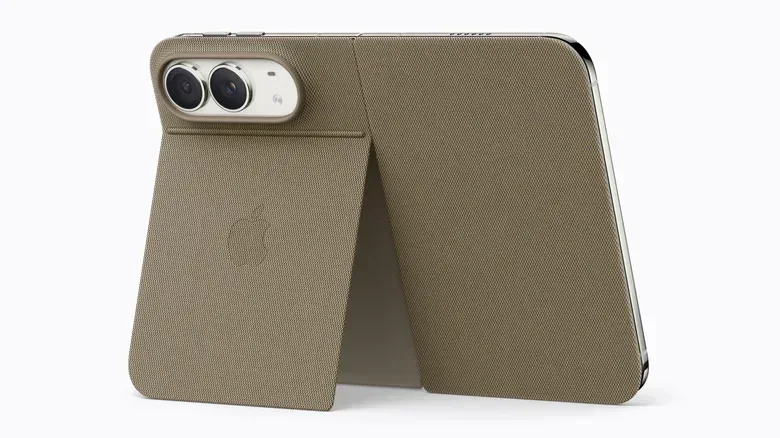
ESR’s vegan-leather magnetic case is described as protecting the entire device, including its hinge mechanism. It also includes a movable kickstand that can double as a lens protector. That is an example of a foldable-specific design using an element for more than one task: support when the phone is propped up and coverage for the camera area when it is not.
Mous offers a thin aramid case. Aramid is a material also used in body armor, and the company’s case adds 1.7 mm to the Duo’s 11.3 mm maximum folded thickness. Its compromise is explicit: it does not protect the hinge. For someone prioritising a slimmer profile, that may be the intended balance. For someone focused on covering the phone’s moving mechanism, it is a reason to look at a different option.
Spigen’s Duo cases take another approach by using the phone’s folding mechanism as a stand, while the Spigen Armor case is positioned as the more robust-protection choice. These examples illustrate why “case compatible” is too broad a filter. A prospective buyer should decide whether their priority is hinge coverage, bulk, stand functionality, camera-area protection or a more protective construction, then confirm the case is engineered around the Duo rather than merely advertised for a generic iPhone.
A practical case checklist
- Confirm that the case explicitly names the iPhone Duo.
- Check whether it covers the hinge, and decide whether that is important to you.
- Look for an explanation of how the case behaves while the phone folds and unfolds.
- Check whether a kickstand, lens cover or magnetic attachment changes the way you plan to use the phone.
- Consider added thickness in the folded state, not only how thin the case appears in product images.
None of those checks guarantees a particular owner’s preference, but they prevent the common mistake of treating a foldable case as interchangeable with a conventional handset case.
Screen protection needs flexibility, not traditional glass
A normal tempered-glass protector is not the right answer for the Duo’s folding display. Even where such a protector seems to fit at first, it can crack when the phone is shut. Glass is valued for scratch resistance, but it is not designed to bend with a display through repeated opening and closing.
The materials to seek here are flexible TPU or PET films designed for the iPhone Duo. TPU means thermoplastic polyurethane, while PET means polyethylene terephthalate. In this context, their important shared trait is flexibility: they can move with the folding screen rather than behaving like a rigid sheet across it.
There is a trade-off. These films are less scratch-resistant than tempered glass. But for a foldable display, surviving the folding motion is not optional. The better fit is a film specifically intended to tolerate repeated flexing and avoid cracking as the handset closes.
That is also a reason to avoid buying screen protection based solely on a claimed diagonal size. A protector for a device with a similarly sized screen may still have the wrong shape, cut-outs, adhesive layout or bend behaviour. “Designed for iPhone Duo” is the essential wording to look for.
MagSafe and Qi2: the charger may fit even when the accessory looks awkward
The iPhone Duo supports MagSafe and 25-watt fast charging through inbound wireless-charging magnetic coils located on the rear panel beneath the camera. Inbound wireless charging means the phone receives power from a charger; it does not mean the phone is configured to provide external wireless power to another device.
That placement means existing MagSafe and Qi2 chargers should generally work. Qi2 is a magnetic wireless-charging standard, while MagSafe refers to Apple’s magnetic accessory and charging system. In both cases, magnetic alignment is the reason the Duo can maintain broad charger compatibility despite its unusual overall proportions.
Yet a working magnetic connection does not ensure a tidy physical match. MagSafe accessories built around the footprint of a conventional longer iPhone can overlap the Duo after attachment. This is most noticeable with products that have a substantial body beyond the magnetic ring, including wallets and battery packs.
Current MagSafe battery accessories should charge the Duo, but they may hang off the edges of its frame because they were made to snap onto a longer handset. New, Duo-specific MagSafe wallets and batteries are needed to match the form properly. Buyers who care about pocketability, balance or a flush appearance should wait for products designed around the Duo rather than regarding overhang as a minor cosmetic detail.
For in-car use, magnetic MagSafe and Qi2 mounts should generally work. They avoid the dimensional uncertainty of spring-loaded arms and cradles, though purchasers should still consider where the mounted phone will sit and whether the accessory body overlaps the device. This distinction between magnetic attachment and mechanical gripping is one of the most useful compatibility shortcuts for the Duo.
USB-C peripherals and Apple Pencil support
USB-C peripherals remain among the more straightforward accessories for the iPhone Duo. Their compatibility is based on the USB-C connection rather than the external dimensions of the handset, so they are not subject to the case-and-cradle problem.
Apple has also promised a future software update that will enable the USB-C Apple Pencil on the Duo. The USB-C Pencil is distinct from Apple Pencil 2 and Apple Pencil Pro because it handles charging and pairing independently over USB-C.
The other Pencil models would have required the Duo to include an additional high-power wireless-charging coil capable of external-facing power exchange. In plain terms, that would mean hardware able to send power outward to the Pencil for charging, rather than simply receiving power through the phone’s existing rear charging system. Apple’s stated constraint is that adding such a coil would have increased the phone’s thickness, cost and weight.
The key purchase implication is timing. USB-C Apple Pencil support is promised through a future update, so it should be treated as pending rather than assumed active immediately. Apple Pencil 2 and Apple Pencil Pro should not be presumed to work simply because they are Apple accessories; their charging and pairing approach is materially different.
Spend on the fit that matters most
The iPhone Duo accessory market is likely to reward restraint early on. Reusing USB-C gear and existing magnetic chargers makes sense where the accessory does not depend on exact phone dimensions. Reusing fitted equipment is far less certain.
The safest buying order is to start with protection that understands the hinge and folding screen, then address the habits that matter most: charging, car mounting, wallet use or stylus use. It is better to establish whether a case supports the way the phone folds than to collect several nominally compatible accessories that each introduce a small annoyance.
That same specificity is becoming important across gaming and consumer hardware coverage, where a device’s physical design can dictate practical ownership just as much as a feature list. For another look at hardware-adjacent game news, see Star Wars: Galactic Racer’s approach to making a fifth-place finish meaningful.
For the Duo, the core advice is simple: standards-based accessories are the likeliest holdovers; fitted accessories need to be designed for this phone. Check for explicit Duo support, understand whether an item has to flex, grip or align with the device, and do not confuse a magnetic connection or rough size match with a genuinely suitable fit.