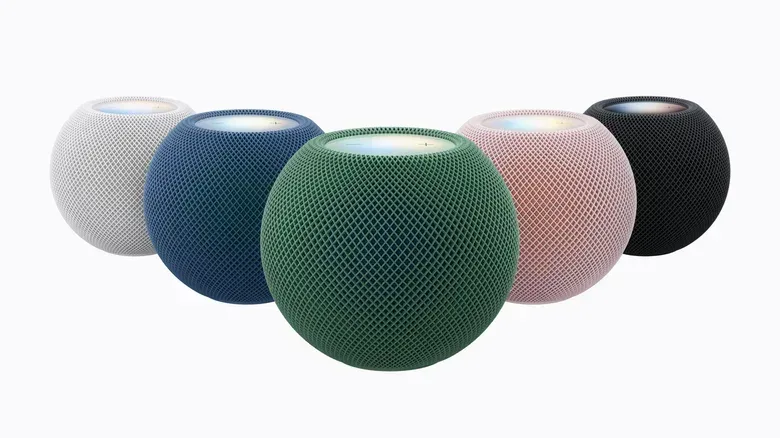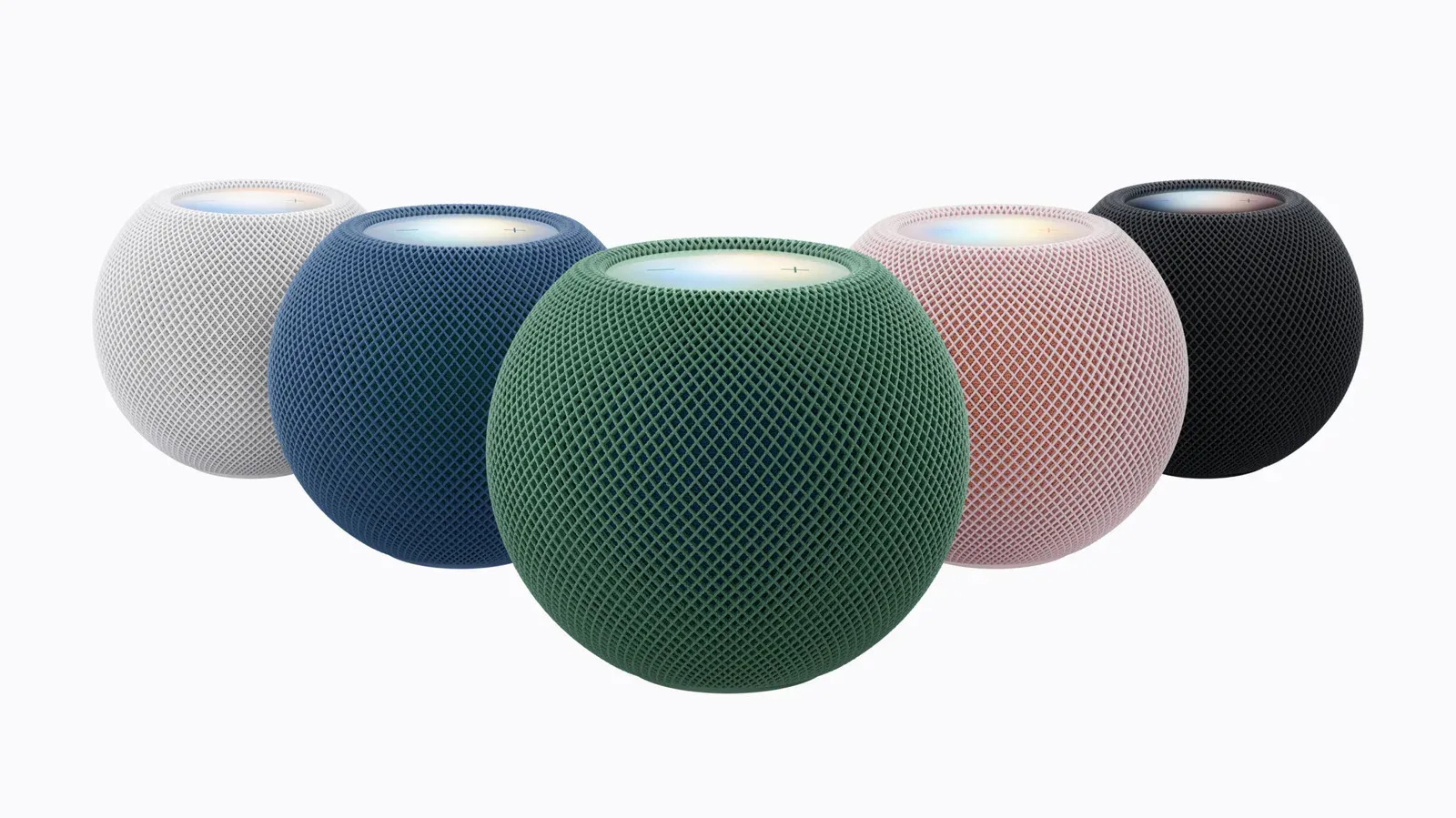
Apple’s compact smart speaker is getting a sequel, but the HomePod mini 2 story is less about a radically different box and more about the ways that box can join a larger audio setup. The new model is scheduled to arrive on October 30 and is available to pre-order for $149. It keeps a look close to the original HomePod mini, while adding blue, green and pink fabric finishes alongside white and Midnight.
The more substantial changes sit in audio behavior and visual feedback. HomePod mini 2 adds Sound Glow, which uses the speaker’s light panel to reflect colors from album artwork. When a soundscape is playing, the panel can instead use animated patterns intended to resemble effects such as raindrops or ocean waves. It is a small interface change, but one that makes the device’s surface more informative without requiring someone to check a phone or television display.
There are also new options for people who use Apple hardware as a connected audio system rather than treating a single speaker as a standalone music player. Two HomePod mini units can now act as speakers for a Mac or MacBook over AirPlay, with that pairing remaining active until it is changed. In a living-room setup, up to four HomePod mini 2 speakers can be used for surround sound with a new Apple TV 4K. The catch: the much-anticipated Siri AI support will not be ready at launch, and there is no stated date for its arrival.
That split between available features and future support is the crucial buying detail. The HomePod mini 2 has clear day-one additions, but prospective buyers should not treat Siri AI as an October 30 capability.
A modest redesign focused on what the speaker does
HomePod mini 2 is visually very close to the earlier HomePod mini. That continuity matters because this is not being positioned around a new industrial design or an entirely new category of speaker. The distinguishing cosmetic change is the expanded palette: blue, green and pink join the existing white and Midnight options.
For a device designed to live in view on a desk, shelf or bedside table, colors are more than a footnote. They allow the speaker to fit more deliberately into a room or alongside other hardware. Still, color should be understood as an aesthetic choice, not evidence of a sound-quality change. The supplied details identify new audio functions, but do not make a claim about changed drivers, output power or acoustic performance.
Sound Glow is the most immediately visible new feature. While music plays, the light panel can take on colors that correspond to the album art. With soundscapes, it can display motion patterns associated with the selected ambient effect. Soundscapes here refers to ambient audio intended to evoke an environment, such as rain or ocean sounds, rather than a conventional song album.
That distinction gives Sound Glow two possible uses. For music, it is a visual extension of the art attached to what is playing. For ambient audio, it can work as a simple at-a-glance indication that a soundscape is active. It is not a substitute for a display with track information, and no such broader display functionality has been described. Its value is atmosphere and lightweight status feedback.
Mac audio pairing is designed to stay put
One of the more practical additions is the ability to use two HomePod mini speakers with a Mac or MacBook through AirPlay. The connection is described as persistent: once configured, it remains in place until the user chooses a different arrangement. It is also said to work with any Mac.
AirPlay is Apple’s wireless media-sharing system. In this case, it lets sound from a Mac be sent to compatible speakers. The headline-worthy part is not merely that audio can be routed wirelessly, but that the chosen two-speaker connection does not need to be rebuilt every time a user returns to the computer.
That could make a pair of minis more viable as regular desktop speakers for people whose audio lives on a MacBook or Mac. A persistent pairing reduces friction in a routine setup: two speakers can remain the chosen output until the person decides otherwise. It is especially relevant for someone using a computer in a fixed spot, where repeatedly selecting audio destinations would be an annoyance rather than a useful choice.
There are limits to what can responsibly be inferred. The announced information establishes persistent AirPlay pairing for two HomePod minis and broad Mac compatibility. It does not detail setup steps, supported listening modes, latency behavior, or performance comparisons with dedicated computer speakers. Those questions remain separate from the feature’s stated purpose.
The bigger change is in the living room
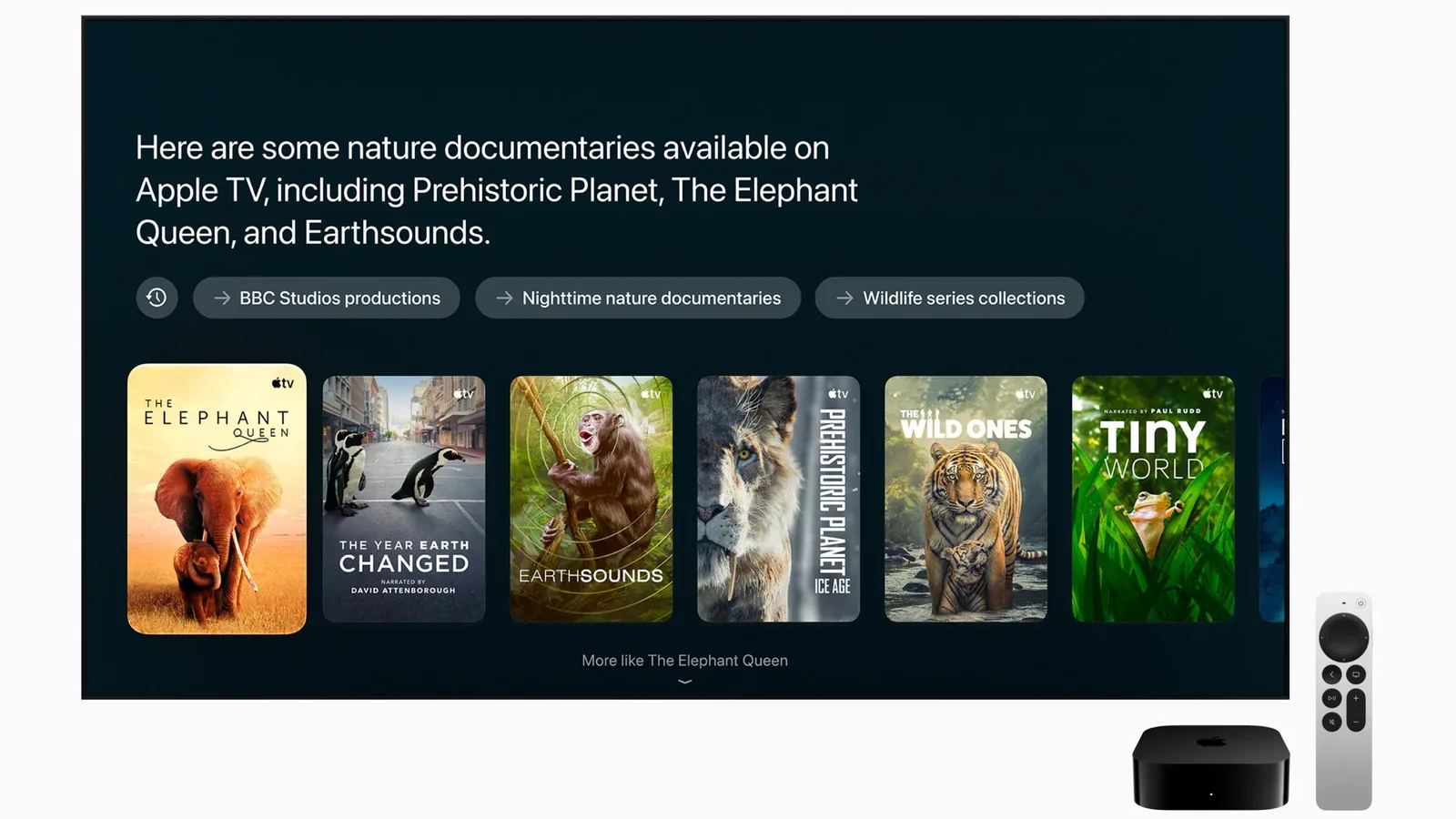
Apple is expanding the maximum number of supported HomePod speakers for a compatible Apple TV arrangement. With a new Apple TV 4K, four HomePod mini 2 units can serve as surround sound speakers. Previously, the described limit for HomePod speakers in the living room was two, so the new ceiling doubles the number of speakers that can be part of the setup.
Surround sound generally means using multiple speakers around a listening position to create a wider, more directional sound field than a single speaker or stereo pair can provide. The announcement identifies four speaker support, but does not spell out individual channel assignments, room-placement guidance or specific surround formats. Buyers should therefore avoid assuming specifications that have not been provided.
The compatibility approach is broader than a mini-only system. The same four-speaker capability works with the second-generation regular HomePod, which means owners can use two speakers from each HomePod line if that suits their arrangement. It also means someone seeking more output than the smaller model provides can use four second-generation standard HomePods instead.
This makes the Apple TV connection the most meaningful practical upgrade in the announcement. A single mini is an uncomplicated smart speaker. A pair can suit a Mac setup. But the move to four speakers changes the scale of what a HomePod-based television system can be, at least for households prepared to place and purchase multiple units.
It is worth separating capability from value. Four-speaker support increases flexibility, but it also asks buyers to assess their room, existing gear and budget. The $149 figure is per HomePod mini 2, and no claim is made here that four units are necessary for every Apple TV owner. The useful question is whether a multi-speaker setup serves a real need, not whether the highest possible speaker count is automatically the best configuration.
Siri AI is confirmed for later, not for launch
The missing launch feature is also the one likely to attract the most scrutiny: Siri AI will eventually be supported on HomePod mini 2, but it will not be available when the speaker goes on sale. No timing beyond “later” has been specified.
That should guide expectations around the purchase. The HomePod mini 2’s immediate feature list is Sound Glow, persistent two-speaker Mac audio over AirPlay, and expanded four-speaker Apple TV 4K support, plus the new finishes. Siri AI belongs in the product’s stated future, not its launch-day toolkit.
The distinction is important because “will support” and “is available now” are not interchangeable promises. A shopper deciding whether to order for October 30 can evaluate the announced hardware and launch software functions. They cannot yet evaluate how Siri AI will work on the speaker or when it will arrive, because those details have not been given.
Apple’s smart-home emphasis had already put the HomePod mini 2 and Apple TV 4K in focus; the wider smart-home lineup had been the subject of attention ahead of this reveal. The new information now makes the speaker’s near-term role clearer: it is an audio-focused update with a future AI component, not an AI-first launch.
Price and upgrade context
HomePod mini 2 is priced at $149. The first HomePod mini launched in 2020 at $99, making the new model $50 more expensive than that original launch price. The gap is plain, while the ultimate assessment of value is less settled.
On the supplied facts, the increase accompanies a refined lighting feature, persistent Mac pairing, a higher ceiling for Apple TV surround setups, new colors and eventual Siri AI compatibility. Whether that collection of changes justifies the price for a particular buyer depends heavily on their use case. Someone who only wants a compact speaker may see the original-style form factor and higher price as the central story. Someone building a Mac audio pair or an Apple TV surround setup may put more weight on the new integration features.
Existing HomePod owners should also note that the four-speaker Apple TV feature is not exclusive to buying four minis: second-generation HomePods are supported too, including a mixed two-mini, two-standard-HomePod configuration. That compatibility provides a path for people who prefer different sizes in the same living room, though no further details about balancing or setup have been specified.
What buyers can count on October 30
- HomePod mini 2 is scheduled to be available on October 30, following pre-orders at $149.
- Its fabric finish comes in white, Midnight, blue, green and pink.
- Sound Glow can mirror album-art colors or show soundscape-style lighting patterns.
- Two HomePod mini speakers can be paired with any Mac over AirPlay, and the chosen connection remains until changed.
- Up to four HomePod mini 2 units can be used as surround sound speakers with a new Apple TV 4K.
- Second-generation standard HomePods also support the four-speaker Apple TV feature, including a two-mini/two-standard mix.
What remains unknown or unavailable
- Siri AI is not available at launch, and no arrival window has been announced.
- No sound-quality comparison, driver change or output specification has been stated.
- Details such as channel layout, placement advice and supported surround formats have not been provided.
The HomePod mini 2 is therefore a restrained hardware refresh with more consequential system-level options. It preserves the familiar compact-speaker design, adds some welcome personalization and turns the speaker into a more stable companion for a Mac. Its biggest immediate appeal is for people interested in scaling an Apple TV setup beyond two HomePod speakers. Siri AI may become a defining part of the pitch later, but the launch product should be judged first by the features that will actually be present on October 30.