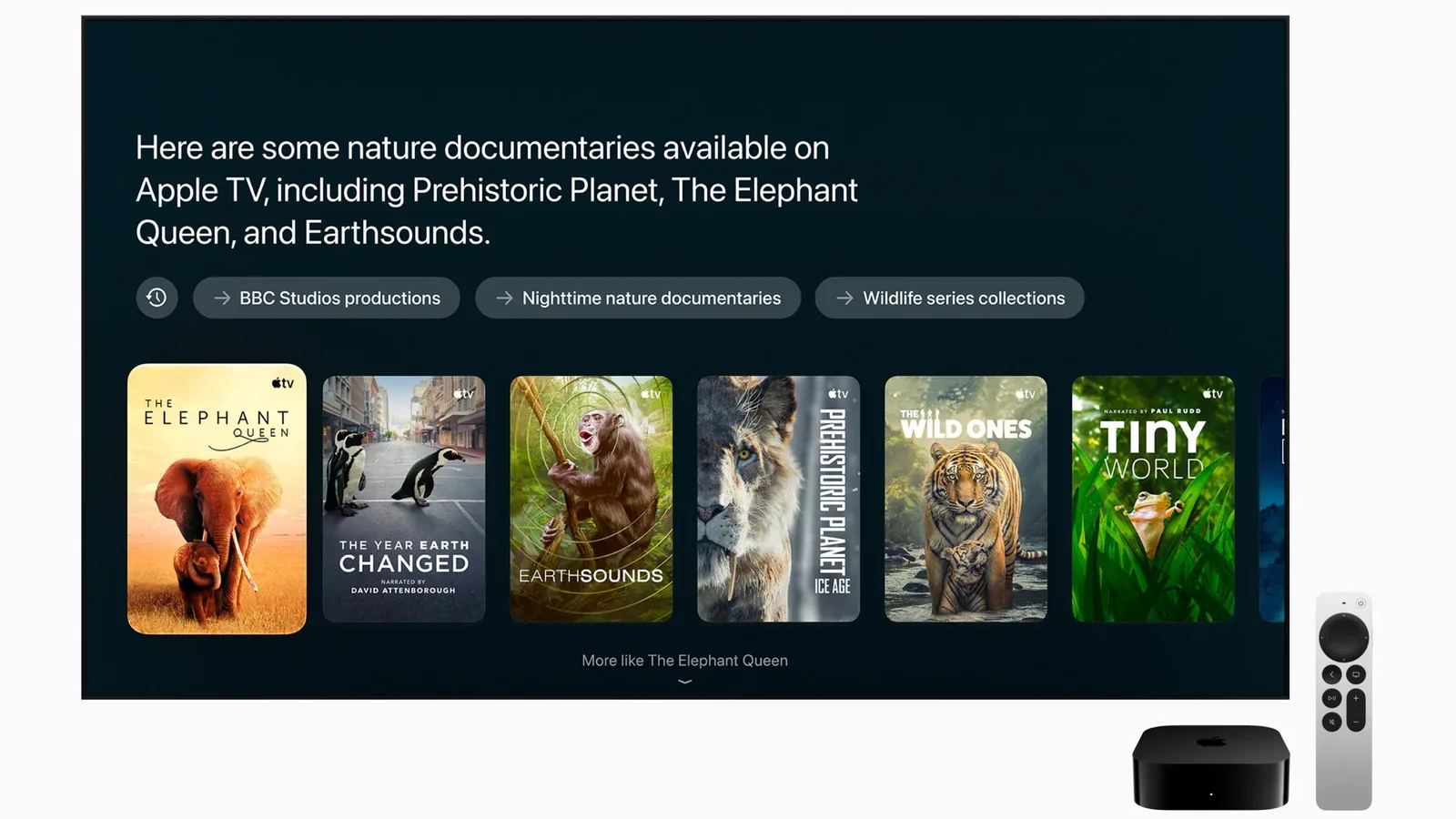
Apple has refreshed its Apple TV 4K with a stronger smart-home pitch: Siri AI is now central to the streaming box, while far-field microphones, a remote that can play a locating sound, and expanded HomePod speaker support aim to make the television setup less dependent on holding a controller.
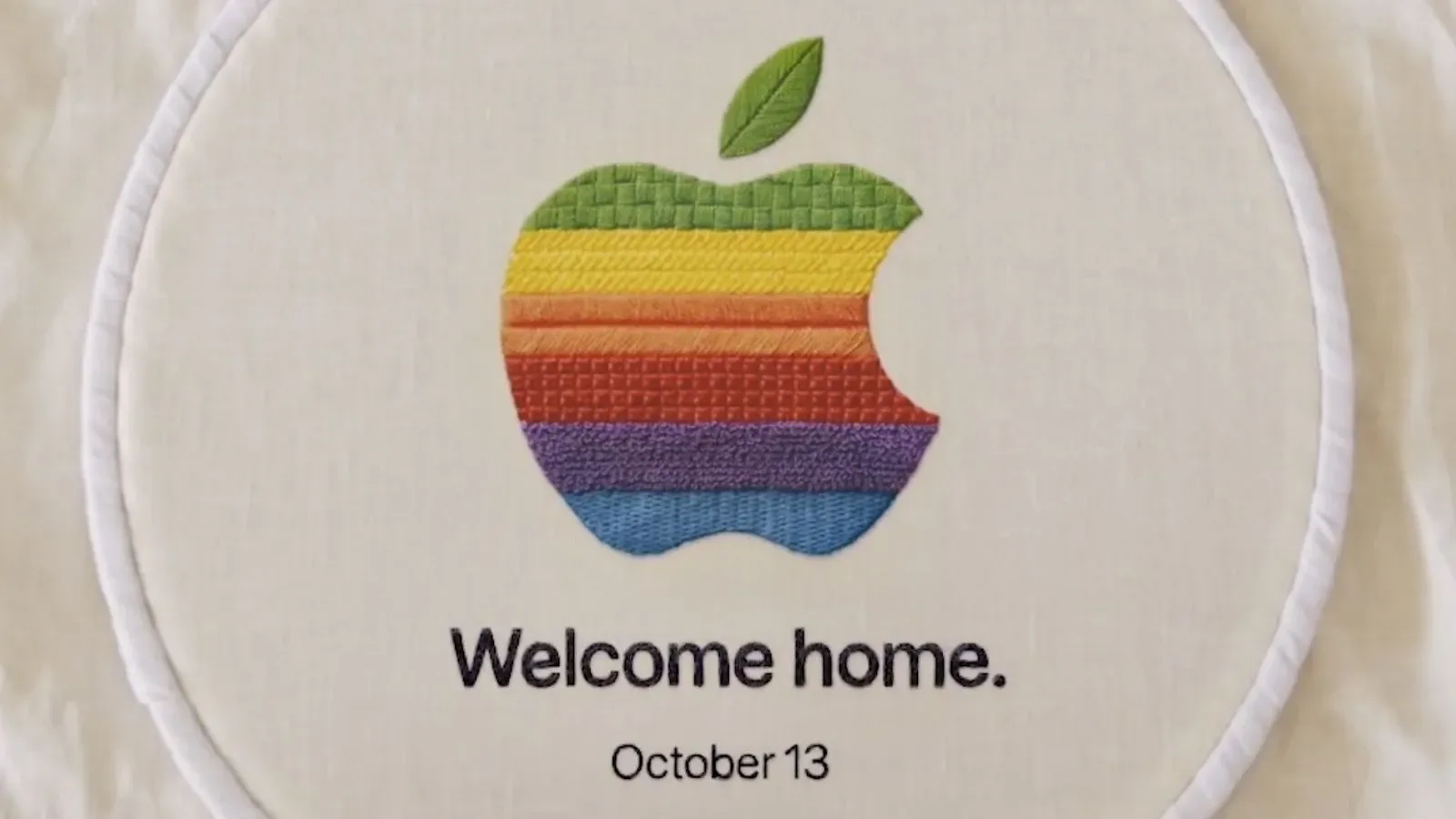
The new model is priced at $299, a $100 increase over the prior model’s starting price, even after that earlier version received a price increase. Pre-orders begin October 13, and the device is scheduled to reach stores on November 13.
That higher price means the refresh will likely be judged less on whether it streams video—an expectation for any modern streaming box—and more on whether its voice, search and room-audio upgrades make the living-room experience meaningfully easier. The most substantial changes are about interaction: asking for a show without reaching for the remote, finding that remote when it slips into the furniture, and building a four-speaker HomePod arrangement around Apple TV.
Siri AI moves from a button press toward room-wide voice control
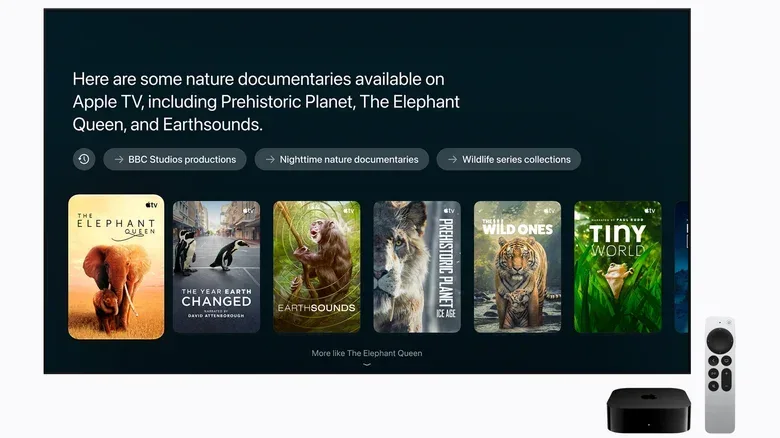
The headline change is support for Siri AI. On Apple TV 4K, the assistant is primarily positioned as a discovery tool, helping a viewer locate something to watch. It can also answer broader questions directly on the television.
Apple’s presentation of those answers matters. Rather than interrupting a program with a spoken response, Siri AI places the response in a corner of the screen. In practical terms, that means the system is designed to preserve the program, film or game already occupying the display while still returning information. It is a notably different use of television screen space than a full-screen results page or a voice reply that competes with the audio of whatever is playing.
The refreshed box also includes far-field microphones. Far-field microphones are intended to pick up a voice from farther away than a microphone held close to the speaker. Here, their purpose is straightforward: Apple TV can accept Siri requests hands-free, without requiring someone to first locate and press the remote.
That change has a practical consequence for ordinary viewing. A viewer can start with a broad request, ask a general question, or make a search-related command while seated across the room. It makes the Apple TV 4K more like a room-level smart-home device as well as a streaming player. Of course, the usefulness of that setup will rest on how well Siri understands requests in real homes, where television audio, conversations and distance can all complicate voice control. No performance claims or additional microphone specifications have been detailed here, so those real-world limits remain unknown.
Personal context is part of the discovery pitch
Apple is also connecting the Apple TV experience to information on an iPhone. The example offered is the ability to ask for a show that a friend texted about and have Apple TV identify the title. This is more than a conventional title search: the request does not need to name the show, because the system is meant to use the context of a message to resolve what “that show” means.
That kind of request is a useful illustration of what “AI” means in this particular product update. The feature is not described as creating video recommendations from scratch or changing how streaming services operate. Instead, it is being used to interpret more conversational, incomplete requests and link them to personal context from an iPhone.
For viewers, the potential benefit is reduced friction. Recommendations often arrive in messages without a clear reminder to search for them later; being able to refer back to the conversation in ordinary language could remove a few steps between hearing about a show and putting it on the TV. The trade-off, naturally, is that the usefulness of this feature depends on the relevant information being available through the connected iPhone context. Apple has not outlined further details on which messages, apps or circumstances are supported.
A small remote change that could solve a familiar problem
Apple has also given the remote a feature with immediate household appeal: users can ask Siri where the Apple TV remote is, prompting the accessory to emit a sound. For a device whose controller can easily disappear between cushions, beneath blankets or in another room, an audible locator may be more valuable day to day than a more elaborate interface change.
The remote can still be located through Find My, too. The distinction is useful. Find My is Apple’s existing location tool, while the new Siri request gives the remote an immediate audible signal. If the remote is nearby but hidden, hearing it may be faster than consulting a location interface. If it is not nearby, Find My remains part of the available toolkit.
It is a modest feature on paper, but it fits the broader revision: fewer moments when using the television begins with hunting for a small piece of hardware. The box’s new built-in microphones mean Siri can be reached without the remote, and the remote itself can now be told to reveal its location. Together, those changes acknowledge a simple living-room reality—remotes spend a surprising amount of time not being where people expect.
Apple TV 4K now supports a four-HomePod surround arrangement
The other major upgrade concerns audio. The new Apple TV 4K can use four HomePod speakers as a surround-sound setup. The previous Apple TV arrangement was limited to two HomePods configured as a stereo pair.
A stereo pair uses two speakers to create left and right channels. A surround configuration uses additional speakers around the listening position to produce a more enveloping presentation. Apple’s update does not provide detailed channel layouts, placement instructions or format support, but the basic change is clear: households that want more robust HomePod-based living-room audio can now use a quartet rather than stopping at two speakers.
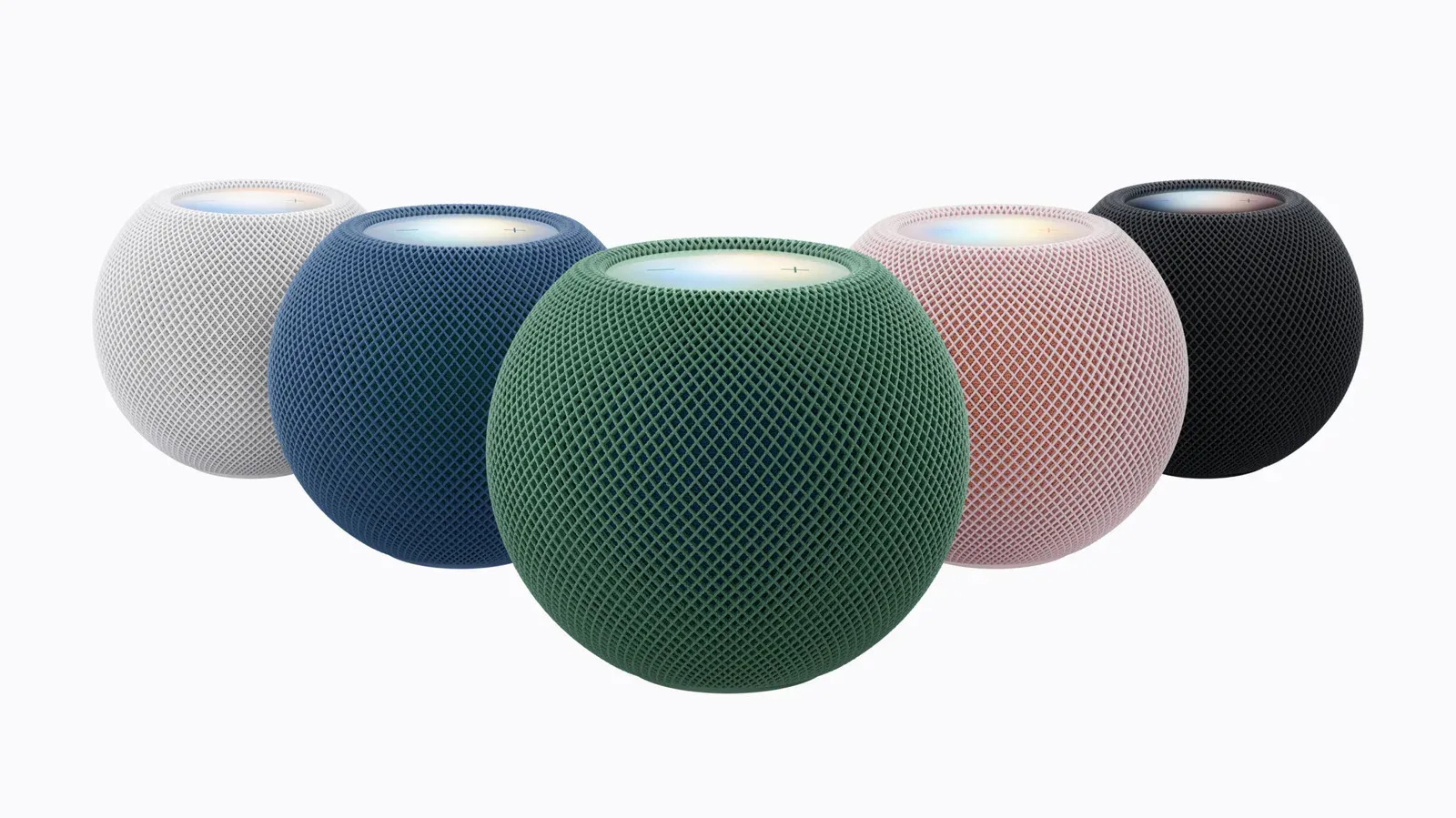
Compatibility is limited to the second-generation HomePod and HomePod mini 2. Apple says users can build the four-speaker setup with four units of either supported model, or with two of each. Owners of different or older HomePod hardware should not assume they are included based on the information available.
This update also places the Apple TV 4K at the center of a larger Apple home setup rather than treating it as an isolated streaming device. The company had already signaled expanded Apple TV audio capabilities around the new HomePod mini 2; the HomePod mini 2’s four-speaker Apple TV audio role now aligns with the updated streaming box’s surround-sound support.
There is an important buying consideration embedded in the feature list. Four-speaker surround support is potentially meaningful for people who already own compatible HomePods or planned to add them. But it does not mean the $299 Apple TV 4K includes that larger audio system. The speakers are separate products, and Apple has provided no pricing details here for assembling a four-speaker configuration. For buyers interested primarily in streaming, the audio expansion may be a future option rather than an immediate benefit.
What the $299 refresh is really selling
At $299, the updated Apple TV 4K is not merely a routine processor or interface refresh in the details provided. Its value proposition rests on a combination of conveniences: hands-free Siri access through microphones in the box, on-screen responses designed not to cover the program, more contextual discovery using iPhone information, a remote-finder sound, and the ability to scale compatible HomePod audio from two speakers to four.
Each improvement addresses a different kind of interruption. Search becomes less formal because viewers can refer to a texted recommendation. Questions do not have to halt the program with spoken replies. A misplaced remote has an audible recovery option. And the living-room audio ceiling rises for users invested in supported HomePods.
Not every household will value all of those pieces equally. Someone with no HomePods will not receive the four-speaker benefit immediately. Someone who prefers a physical remote may not consider built-in microphones a major upgrade. And the Siri AI experience, while promising broader questions and contextual requests, has been described chiefly around discovery rather than as a complete replacement for navigating every part of the TV interface.
Still, the direction is clear. Apple is making the Apple TV 4K more conversational and more embedded in its surrounding device ecosystem. The older model’s basic role—delivering streaming content to a 4K television—remains, but the new hardware is designed to reduce the effort around choosing content, controlling playback and building out audio. Buyers can pre-order from October 13 ahead of the November 13 store launch.