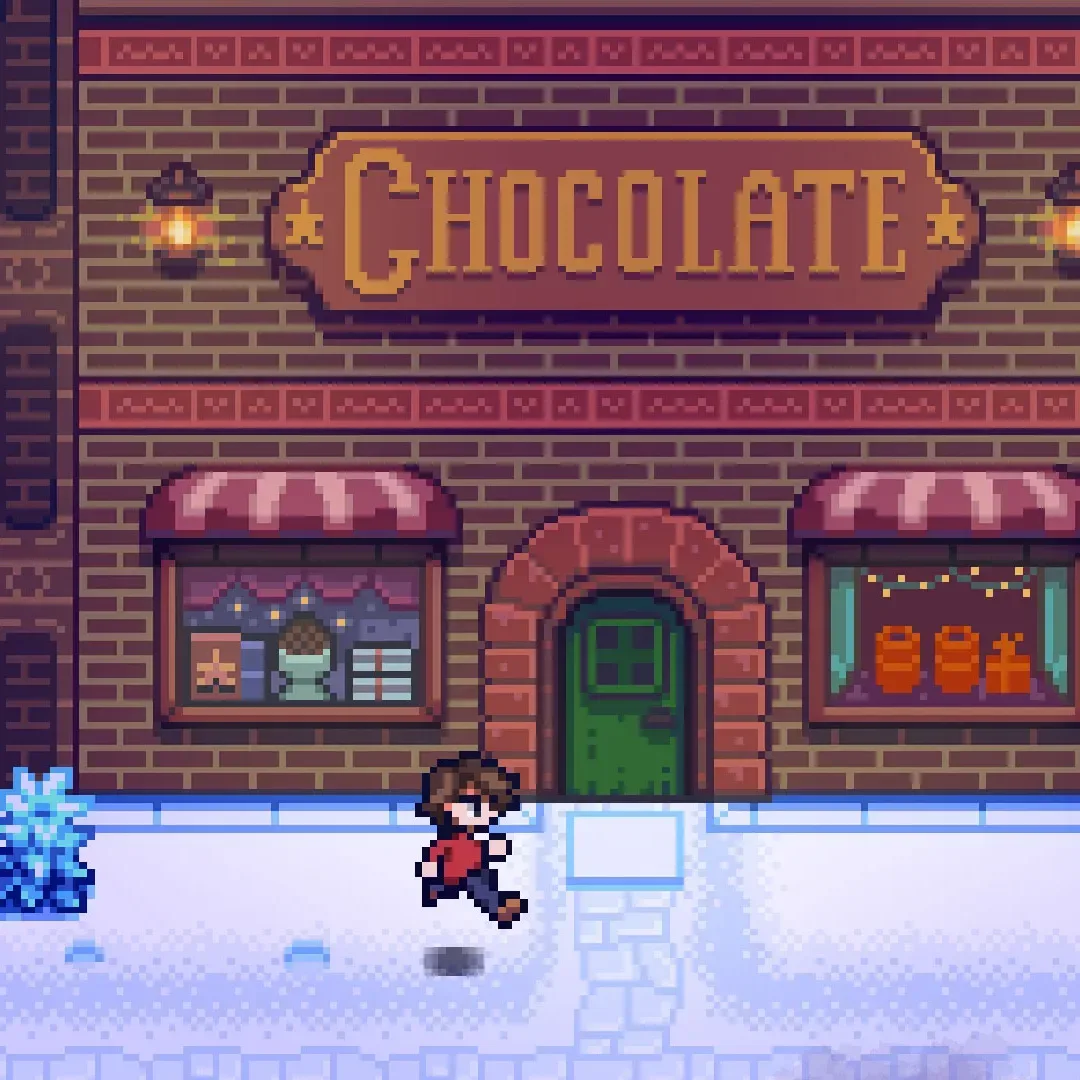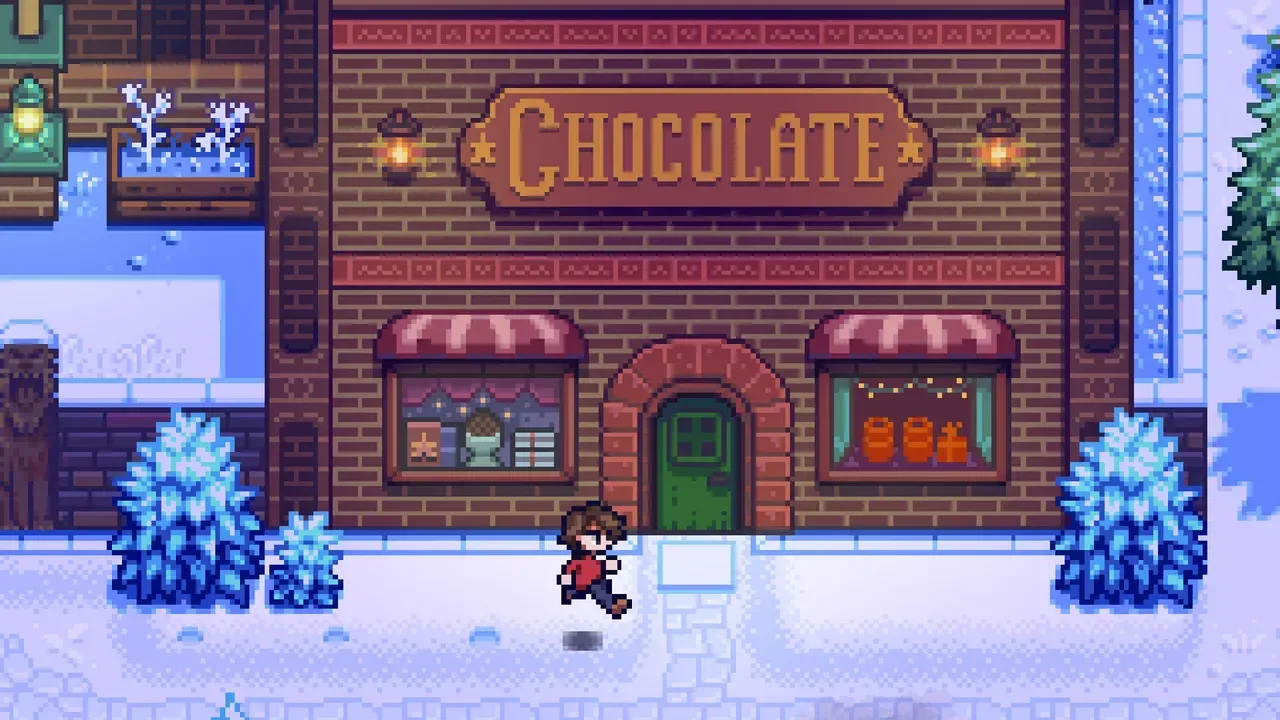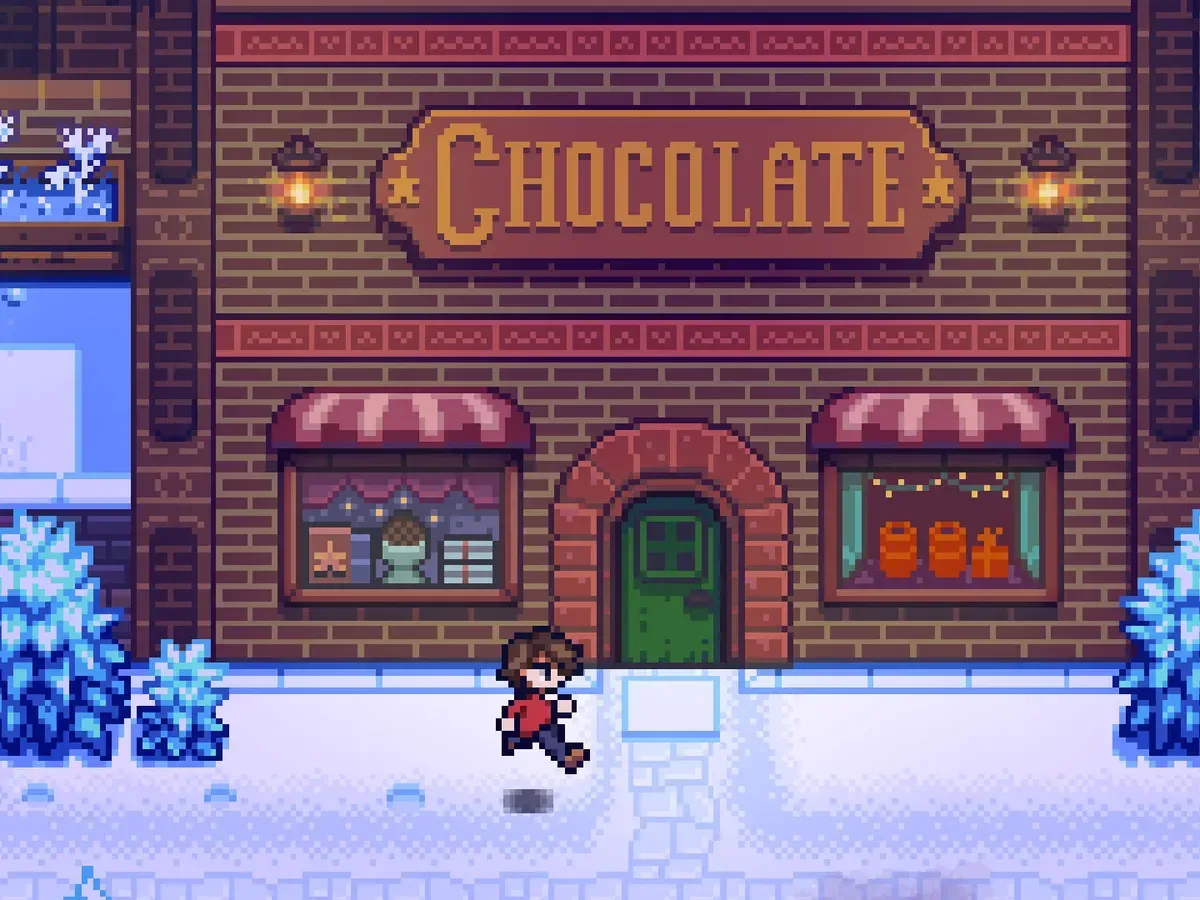
Haunted Chocolatier is not being positioned as Stardew Valley with a new coat of spooky confectionery paint. Eric Barone, known as ConcernedApe, has offered one of the clearest descriptions yet of the long-awaited project: it will retain the social, place-based appeal of what he calls a “town game,” but its central loop is intended to be more action-RPG-driven.
That distinction matters. Barone has described adventuring, finding equipment and becoming more powerful as the game’s main focus, alongside monsters and boss fights. He has specifically framed it around the segment of the Stardew Valley audience drawn to the mines—the players who eagerly turn a peaceful day of farming into a resource run where danger, loot and deeper floors are the point.
It is an unusually direct indication of where Haunted Chocolatier’s priorities sit. A town will still be part of the game, but the available description suggests players should not treat it as a promise of Stardew Valley’s exact balance of farming, relationships, routine and exploration. Haunted Chocolatier’s setting is also described as more metaphysical, a word that implies a locale concerned with realities or concepts beyond the ordinary physical world, without yet defining precisely how that will look in play.
For now, the biggest practical fact remains unchanged: Haunted Chocolatier has no release date. Barone announced it in 2021, and development has moved alongside his continuing work on Stardew Valley. The creator has been candid that progress is gradual and that he is still actively working on it.
For more context, explore Pixel Blade Codes for October 2026: Class Dice, Coins, a Wish and Golden Cod.
A town game where the adventure is the engine
“Town game” is an important piece of Barone’s wording. It suggests that place, residents and a sense of living in or around a community have not been discarded. But the phrase is not a genre label with rigid rules. In this case, it should be read beside the stronger explanation of Haunted Chocolatier’s intended activity: adventuring for gear, fighting monsters, taking on bosses and improving a character’s power.
An action RPG, or action role-playing game, generally combines character progression with combat that depends on direct player input rather than exclusively menu-based choices or turn order. Equipment is meaningful because it can affect what a player is capable of doing. Becoming more powerful usually means gaining stronger tools, statistics, abilities or other advantages that open up harder encounters. Boss fights are typically more substantial enemy challenges, often built to test a player’s command of those systems.
None of those terms, by themselves, confirm specifics such as weapons, skill trees, dungeon structure, difficulty settings or the exact way equipment works. Those details have not been set out. What they do establish is a priority: progression through adventure is meant to carry greater weight than it did in Stardew Valley’s broad mix of activities.
That will likely be welcome news for players who saw the mines as more than an occasional change of pace in Stardew Valley. Barone has said that is the part he personally gravitates toward as well. It is a useful creative clue because it explains why Haunted Chocolatier may be more combat-forward without abandoning the cozy, characterful qualities audiences associate with his earlier game.
The result could be a different kind of rhythm. Rather than organizing nearly every choice around a farm day and its schedule, players may find their attention more often directed toward preparation, expeditions, upgrades and threats. That is analysis, not a confirmed feature list—but it follows directly from a game being described as centered on adventuring and power growth.
Fans looking for a compact version of the current pitch can find related coverage in this discussion of the mine-focused Stardew Valley audience Barone has in mind. The important caution is that “more of an action RPG” is a comparison, not a full mechanical blueprint. Haunted Chocolatier remains in development, and Barone has stressed that elements can change before release.
Chocolate-making still appears to demand serious design work
Combat is not the only area receiving close attention. Barone has previously used the game’s recipe book for making chocolates as an example of the painstaking work happening behind the scenes. It may sound like a small interface problem from the outside. To its designer, it is a frequent interaction that has to be fast, readable, attractive and satisfying while still giving the player useful information.
That recipe book is a UI, short for user interface. A user interface is the part of a game through which players read information and give commands: menus, maps, inventory screens, crafting pages, prompts and similar systems. Good UI is often conspicuous only when it fails. Extra steps, unclear labels, overloaded pages and confusing organization can turn a routine task into friction.
Barone’s stated goals for the chocolate recipe interface point to a few concrete principles:
- Players should be able to complete what they came to do with as few clicks as practical.
- The screen should show enough information to support a decision without dumping so much data on the player that it becomes overwhelming.
- Information needs visual groupings that make sense at a glance.
- The presentation should be appealing, not merely functional.
That emphasis is particularly relevant if chocolate-making is a regular activity rather than a novelty. A menu opened once can tolerate a little complexity. A menu opened repeatedly becomes part of the game’s feel. If it is slow or confusing, it magnifies frustration every time a player makes another item. If it is quick and legible, players may barely notice it—which is often the desired outcome. Barone’s aim goes beyond that baseline, however: he wants the interaction to be delightful.
His comments also illustrate why development updates can appear sparse even while work continues. Iteration means revisiting an element several times, testing possible approaches, revising them and repeating that process until the result meets the creator’s standard. A recipe book can involve decisions about navigation, data hierarchy, visual layout and feedback, not just an ingredient list and a button.
This is not confirmation that every system in Haunted Chocolatier will be unusually complicated. It is evidence that Barone is applying an exacting standard to recurring player-facing details. The implication for players is straightforward: apparent silence should not be equated with a lack of work, especially when the developer is willing to spend substantial time refining something as foundational as a recipe screen.
Why the game is being kept out of the spotlight
Barone has also explained why he is reluctant to show too much of Haunted Chocolatier during this stage. His concern is twofold. First, an unfinished reveal can feel like presenting something incomplete. Second, early material can create expectations that become difficult to meet if design decisions evolve before launch.
That is a sensible distinction between development footage and a promise. Material shown while a game is unfinished may accurately represent work at that moment, yet still not survive in the same form through later iteration. Mechanics can be adjusted, interfaces redesigned, names changed, content restructured or removed, and the balance between systems can shift. Barone’s preference is to avoid creating that gap in the first place by holding back until he feels the game is more fully formed.
It also means prospective players should resist filling in the blanks with assumptions. The confirmed high-level pillars are a town-game element, a metaphysical setting, action-RPG emphasis, adventuring, equipment, increasing power, monsters, boss fights and chocolate-making supported by a recipe-book interface. There is much more that remains unannounced.
That restraint is possible, Barone has noted, because he does not feel he needs to market the project early. It is a notably patient approach in an industry where repeated trailers, developer diaries and roadmaps often accompany long production periods. The trade-off is obvious: fans receive fewer regular specifics. The benefit, from Barone’s perspective, is reduced pressure to preserve early ideas that may no longer serve the finished game.
How Stardew Valley 1.7 fits into the picture
Stardew Valley remains part of the scheduling equation. Version 1.7 also has no release date, although Barone has said he is not working on it directly in the same all-encompassing way as earlier updates. He expanded his team so he could spend more time on Haunted Chocolatier, while taking a creative-director role on 1.7: setting direction and ideas before the team works on them.
That does not mean he is detached from the update. Barone has said he expects to become heavily involved at some point in its cycle, reviewing, adjusting or approving aspects of it because he feels his hand needs to touch each part of the game. The arrangement shifts more day-to-day space toward Haunted Chocolatier, but it does not turn Stardew Valley 1.7 into a completely separate project from him.
He has also acknowledged the difficulty of switching mental gears. Moving from deep focus on a new game to allocating one or two days to an ongoing update is not an easy rhythm for him. That admission helps clarify why the team expansion is meaningful but not magical: delegation can change the balance of work, yet oversight and creative approval still require time and concentration.
For players, the responsible expectation is patience on both fronts. There is no date to circle for Haunted Chocolatier, and no date to circle for Stardew Valley 1.7. What has changed is the public understanding of Haunted Chocolatier itself. It is still built around a town and a chocolate-making identity, but Barone’s latest outline places the thrill of the expedition—the gear, the monsters, the bosses and the steady climb in power—at the center of the experience.