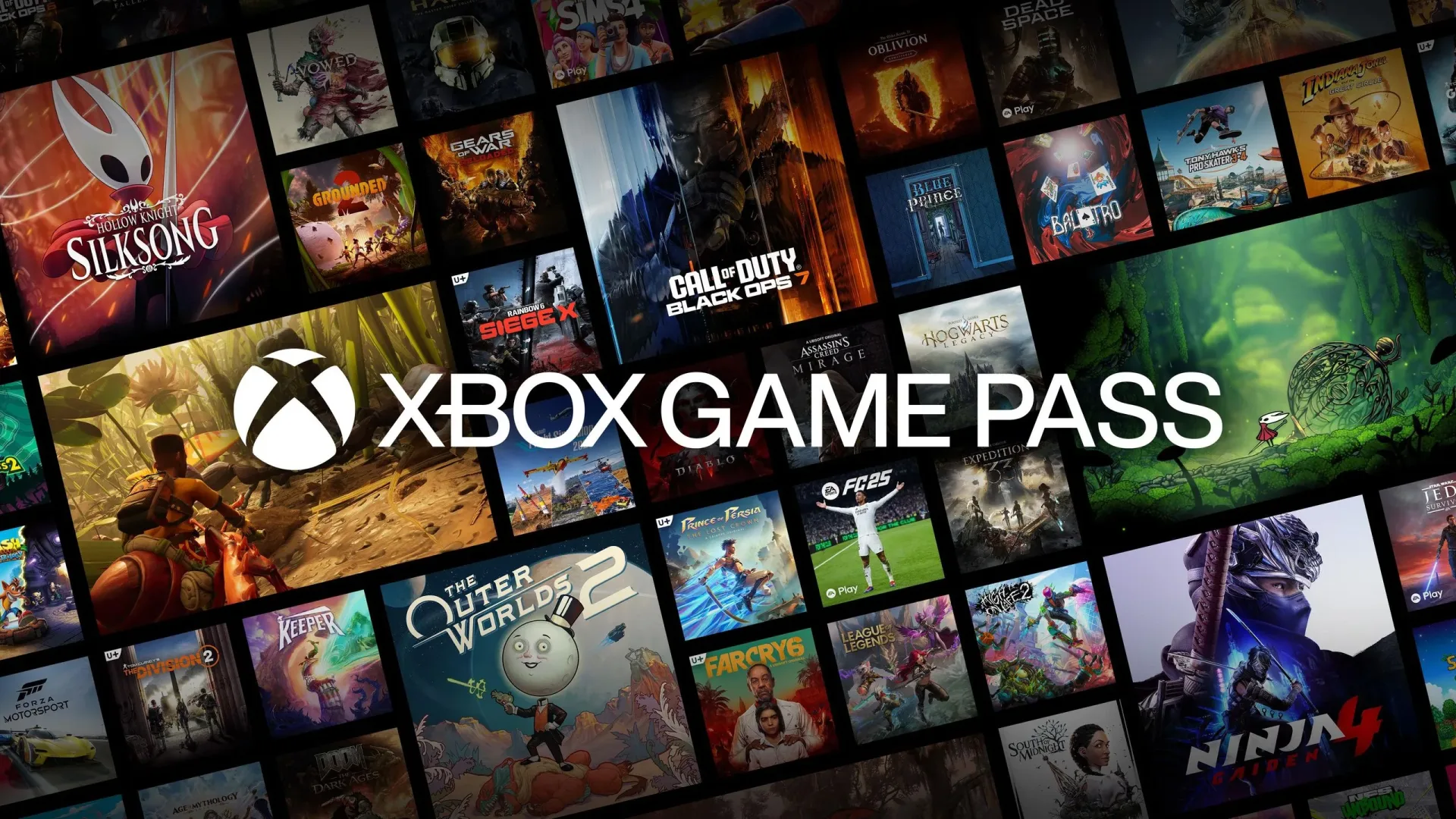
Subscription services have changed the way players discover and sample games, but the business equation behind an all-you-can-play library remains a difficult one to see from the outside. Shawn Layden, a former PlayStation executive, has renewed that debate by arguing that a platform operator can make money from a subscription while the developers supplying its games may face a much tougher route to meaningful profit.
His focus is on launch-day inclusion: the practice of putting a game into a subscription catalogue at the same time it becomes available for individual purchase. Layden’s position is not that a subscription platform cannot make a profitable business of its monthly fee. Rather, he says the incentives and potential upside for a studio can differ sharply from those of the company running the service.
“The house always wins,” Layden said, using a casino comparison to describe the difference between a profitable platform and the creators working within its system.
That framing is deliberately blunt, and it should be treated as an argument about the model rather than a disclosed account of Game Pass finances or of every contract signed by a developer. Still, it gets at a genuine distinction worth understanding: a subscription owner aggregates risk, costs and revenue across a large catalogue, while a game maker is often trying to ensure one specific project clears its costs and earns further returns.
Platform profitability and developer profitability are different questions
Layden previously used a figure of 500 million subscribers when discussing what might be needed for Game Pass profitability, and characterized it as hyperbole. His broader point in the latest discussion is more important than the number itself: profitability is not a single scoreboard. A service can potentially find a sustainable arrangement at the platform level without guaranteeing that every participating studio has the same opportunity to prosper.
A subscription platform collects recurring monthly revenue and offers a library containing hundreds of games. Its calculation is therefore portfolio-based. Some titles may draw attention, encourage sign-ups, keep existing members subscribed, or add perceived value to the catalogue. Those benefits can matter to the platform even if they do not look like the conventional sales performance of a standalone release.
For a developer, the calculation can be narrower. A studio builds a game, manages its production costs and hopes the game’s commercial results exceed the point at which those costs are recovered. Layden specifically highlighted two terms that are central to this conversation: break-even and profit sharing.
- Break-even is the point at which revenue has covered the costs associated with making and bringing a game to market. Revenue beyond that point can become profit, subject to the terms governing the project.
- Profit sharing refers to an arrangement in which parties receive a share of profits once agreed costs or thresholds have been met. Layden also referred to “overages,” meaning additional earnings beyond an initial financial baseline.
- Day-and-date means a game arrives in a subscription service on the same day it is released for individual sale.
Layden argues that the subscription structure makes the latter stages of that progression—surpassing break-even and reaching the additional upside of profit sharing—effectively impossible for developers. That is a strong claim, and the available evidence here does not provide the deal terms needed to test it across the full range of Game Pass agreements. Payment structures can matter enormously, as can a game’s budget, the size of its team and the obligations attached to its publishing arrangement.
Related coverage includes Shawn Layden Questions Whether Game Pass Can Deliver Profits for Developers.
But the practical question for studios remains clear: what replaces the potential upside of direct unit sales when a game is included in a catalogue from day one? The answer may be an upfront agreement, a route to visibility, or an opportunity to finance the next project. It may also involve trade-offs in a game’s ability to become a large standalone seller.
Why the issue looks different for smaller games
The debate cannot be reduced to the idea that subscription inclusion is always bad for creators. Developers of smaller games have publicly described meaningful benefits. Thomas Sala, the solo developer behind The Falconeer series, has said that being signed to the service is generally very positive. Gareth Damian Martin, lead developer of Citizen Sleeper, said Game Pass was necessary for making a sequel to the acclaimed science-fiction game.
Those accounts supply an essential counterweight to Layden’s criticism. For an independent developer, the crucial outcome may not be maximizing every possible sale of a single release. Predictable funding, a larger audience, visibility in a crowded release calendar, and the ability to keep a studio operating long enough to make another game can all be highly valuable outcomes.
In that sense, “profitable” should not be used casually as if it always means exactly the same thing. A project can be strategically valuable to its maker if it secures funding, sustains a team, or enables a follow-up game, even if its revenue path differs from a hit sold primarily through individual purchases. Conversely, a deal that looks attractive in the short term might limit the long-tail sales or breakout potential a developer hoped to capture. Both possibilities can exist.
Players can also benefit from the discovery side of the model. A subscription catalogue lowers the immediate cost of trying an unfamiliar game, which can be especially helpful for smaller projects without the marketing reach of a major blockbuster. Recent coverage of a packed independent release slate, including Toem 2, Tiny Flock and Star Wars: Galactic Racer, illustrates the basic attention problem: there are many games competing for limited player time. Library placement may help a title get noticed where a conventional paid launch could struggle to cut through.
AAA releases create a bigger tension
Layden’s sharpest criticism is aimed at big-budget, AAA releases. He noted that a $69.99 game has a single chance to break through commercially. The logic is straightforward. In the traditional model, a highly anticipated new game can generate substantial revenue from individual purchases at launch. If it reaches a wide audience, that initial momentum can be a major part of its financial case.
Putting the same game into a subscription catalogue at launch changes the consumer choice. A subscriber can play it without paying the separate $69.99 purchase price. This does not automatically mean the game cannot be valuable to the platform owner; a major release may persuade people to subscribe or remain subscribed. The tension lies in deciding how that platform-wide value is recognized for the studio that made the game.
Layden says PlayStation did not pursue a day-and-date subscription strategy for AAA games, while Microsoft did. He presents that difference as a strategic divide rather than a minor distribution detail. For major productions, the question is not simply whether a game reaches players. It is whether the release model preserves enough revenue potential to justify the scale, cost and risk of producing it.
It is also important not to confuse a subscription catalogue with a simple replacement for a digital store. In a purchase model, each customer transaction is tied directly to a particular game. In a subscription model, one monthly payment supports access to a changing group of games. The operator then has to determine how the economic value created by any title is measured and shared. Without detailed contracts and accounting, outsiders cannot reliably calculate which arrangement is best for a particular game.
What players and studios should take from the argument
Layden’s comments are best understood as a warning about alignment. A platform may prioritize recurring subscriptions, catalogue depth and retention. A developer may prioritize recoupment, royalties, ownership, audience growth or enough cash certainty to continue working. These goals can overlap, but they are not inherently identical.
For players, that means the health of a subscription library is not measured only by the number of games it contains or the presence of a marquee launch. A durable ecosystem also depends on whether creators believe the available terms make sense for their projects. The positive experiences cited by Sala and Martin suggest that the model can be enabling for some independent teams. Layden’s concern is that it may become much harder to justify when the budget, sales expectations and commercial risk become much larger.
For developers weighing such an arrangement, the key considerations are likely to be concrete rather than ideological: whether the deal covers production needs; what happens after a project reaches recoupment; whether there is additional compensation tied to performance; and how launch-day inclusion affects the game’s other sales opportunities. None of those questions has one universal answer.
That nuance is the real value in the current dispute. Game subscriptions are neither automatically a lifeline nor automatically a dead end. They are a business structure with different effects depending on the game and the agreement. Layden’s casino metaphor is memorable because it emphasizes the imbalance he sees between the operator and its suppliers. The developers who have praised Game Pass demonstrate that a place in the catalogue can also provide a path forward. The unresolved challenge is creating terms that can support both realities—discovery and sustainability for smaller games, while leaving credible upside for the expensive releases that can otherwise rely on a major paid launch.