Indie games are having one of those particularly unruly weeks where a quiet photography trip, a sheep-herding VR sandbox, a tactical robot-dog escape and a high-speed journey across familiar sci-fi worlds can all sit beside each other without seeming especially strange. The common thread is not genre. It is the willingness to build a strong, specific play loop around an unusual idea.
That range is apparent in the latest releases, led by Toem 2, Tiny Flock, Keep Driving, Endless Rails and Dog in the Machine. The months ahead also hold co-op road trips, digging expeditions, a murder-mystery farming sim and a haunted library organization game. Meanwhile, Star Wars: Galactic Racer arrives October 6 with an ambitious roguelite structure attached to its racing.
For players, the practical takeaway is simple: this is not a week to treat “indie” as a genre label. It is a useful but blurry description of a development and publishing space that currently includes both intimate experiments and a $60 licensed racer. The better question is what kind of session, challenge and tone each game offers.
Star Wars: Galactic Racer turns crashes and upgrades into a run-based racer
Star Wars: Galactic Racer is due on Steam for Windows, PlayStation 5 and Xbox Series X/S on October 6 for $60. It comes from Fuse Games, a newer studio with developers who previously worked on Burnout and Need for Speed, while Secret Mode became independent from Sumo Group last year. Those details help explain why the project occupies an unusual position: it uses an enormous entertainment license but is also being framed within an indie-focused release slate.
Its key mechanical idea is the roguelite campaign. In this context, a run is a self-contained attempt at progressing through a sequence of races and events. Failure can end that attempt, but permanent improvements unlocked between runs carry forward. That model is intended to give repeat races shifting stakes: a player is not merely trying to post another lap time, but is adapting a machine, accumulating risks and deciding how to use a growing set of upgrades.
Galactic Racer reportedly includes hundreds of possible upgrades, permanent stat enhancements between runs and random campaign encounters involving enemies or possible allies. Ship components can be damaged and impose a negative condition until a mechanic is reached. That makes maintenance part of the campaign’s decision-making rather than a cosmetic garage detour.
Races can also end a run through repeated crashes or an inability to remain ahead in an eliminator event. An eliminator race is a format where falling behind the pack carries a direct survival penalty, putting pressure on consistency as well as outright speed. The game further asks players to manage a dual-boost system, environmental hazards and build choices. Burning interferes with boost use, while acid can temporarily corrupt abilities.
Track-specific interaction appears central to the appeal. Crait’s red minerals can be kicked up to obscure racers behind, while Jakku sends vehicles through the remains of much larger ships. The vehicle roster includes a speeder bike with sharp cornering, while podracers enter later in progression. This combination of handling distinctions, hazards and upgrades is exactly where a run-based structure can make a limited number of circuits feel less static—although the currently available selection of tracks and planets has been described as limited.
Related coverage includes Star Wars: Galactic Racer Leads a Packed Week of Indie Game Releases and Reveals.
The game also has multiplayer races still to be explored. That is worth separating from the campaign assessment: the supplied information supports a detailed picture of the single-player roguelite structure, but does not establish how multiplayer performs or which modes it includes.
Toem 2 aims for a gentler kind of puzzle hunt
Toem 2 is available for $20 on Steam for Windows, Mac and SteamOS/Linux, PlayStation 5, Switch and Switch 2. It is Steam Deck Verified, and it has a 15 percent discount through October 13; the PS5 discount requires PlayStation Plus. Something We Made developed the game and publishes it alongside Popagenda.
The sequel follows 2021’s Toem: A Photography Adventure, putting an upgraded camera and new attachments at the center of its puzzles. The camera is not just a sightseeing prop. It is the means by which the player notices, frames and solves environmental problems. Quests fill a journal with stamps, which both document progress and open access to the next region.
That stamp structure gives the game a readable sense of momentum for players who prefer low-pressure exploration but still want direction. Platforming, hidden paths and elevated viewpoints encourage looking at spaces from different angles. Rather than treating photography as a detached collection activity, the design ties taking pictures to moving through and understanding the world.
For a relaxed weekend game, that distinction matters. A player can expect character interactions and puzzle-solving with a light exploration layer, not a pure photo-mode showcase or a demanding precision platformer. The sequel’s new cast and camera attachments suggest a broader set of interactions without abandoning the first game’s core premise.
Tiny Flock makes VR physics the point
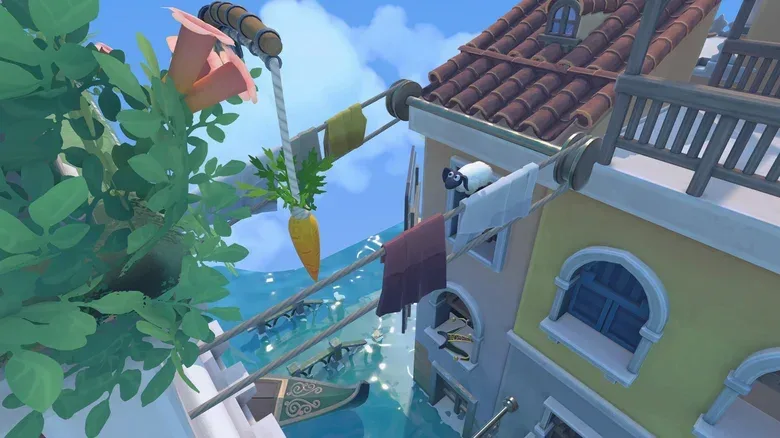
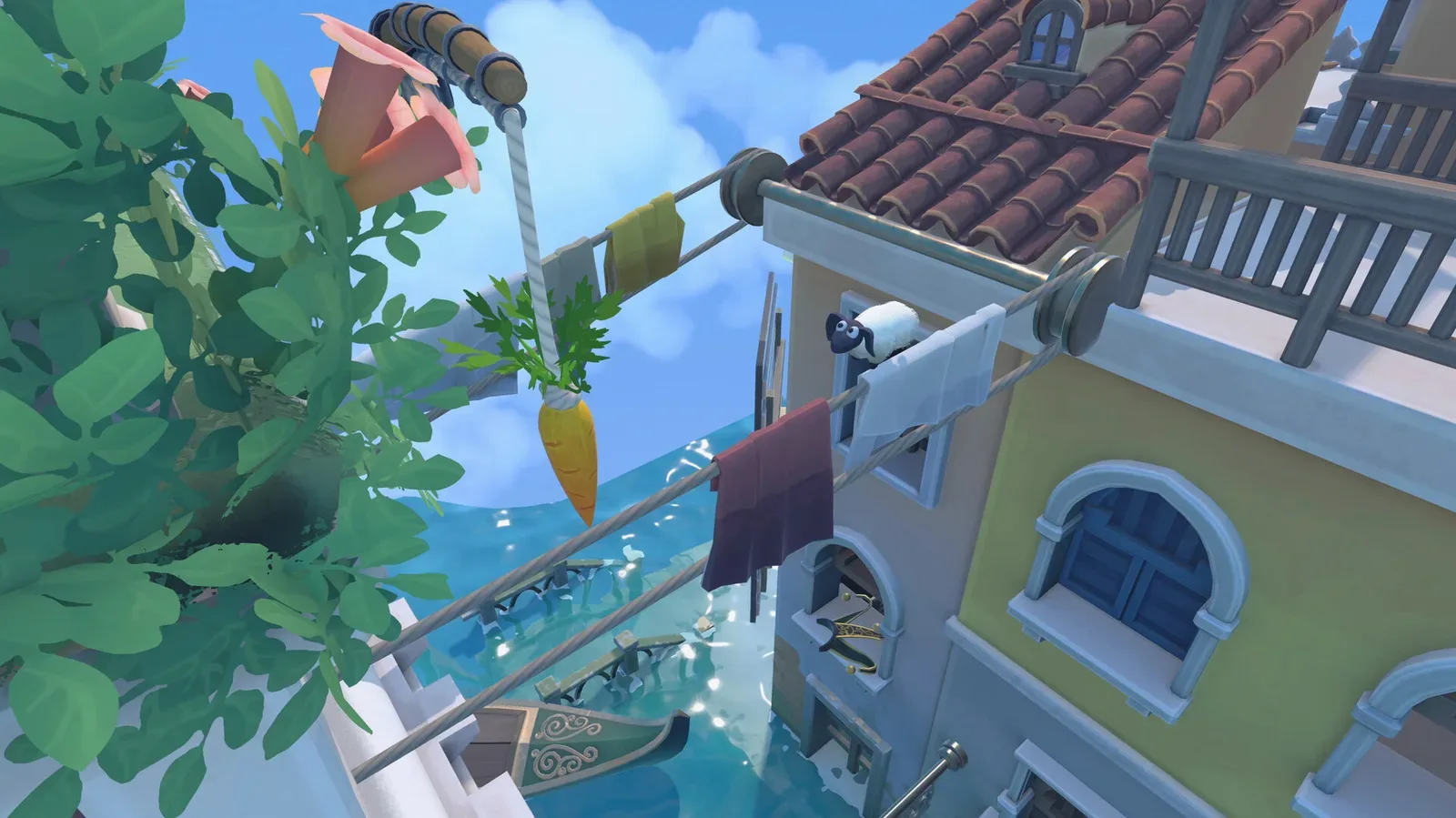
Tiny Flock arrives from No Brakes Games, the studio behind Human Fall Flat. It is available on Steam as a VR-only title and on Meta Quest for $19, with a 21 percent Steam discount through October 13. The objective is to shepherd a small flock of sheep across diorama-like levels, but the route is deliberately flexible: objects can become bridges, breakable scenery can become a new route and the environment is broadly interactive.
The phrase physics-based can cover many styles of game, but here it points to tactile problem-solving. Players manipulate objects and improvise around the physical behavior of a space instead of simply selecting a preordained solution from a menu. In VR, that can make seemingly simple tasks far more playful—and potentially much messier.
The Quest edition supports hand tracking and passthrough. Hand tracking allows a headset to follow a player’s hands without standard controllers, while passthrough uses the headset’s cameras to show the physical surroundings. The latter can make a virtual flock-sharing exercise feel as though it has spilled into the room. No Brakes has described the project as a family-friendly challenge built around two-handed interactivity and tactile physics; a child of the studio’s cofounder also contributed puzzle ideas and voice lines during prototyping.
Three more new releases, three very different rhythms
Keep Driving brings the road-trip RPG to consoles
Keep Driving is now on Xbox Series X/S, PS5 and Switch after launching previously on Steam. It costs $18 and is made by YCJY Games, with Kepler Ghost also publishing. The Steam version has also received mod support.
Set in the early 2000s, it casts the player as someone driving across the country to reach a festival. Obstacles, including sheep blocking the road, are resolved through a variation on turn-based combat. The unusual phrasing is important: this is not necessarily conventional fighting. Rather, the game applies the decision-by-turn structure to road-trip problems and resource management.
Players may pick up hitchhikers, take odd jobs and customize, repair and upgrade the car. Multiple endings are present, with each ending said to take roughly one to four hours to reach. That relatively brief duration suggests the game is designed to reward replaying routes and choices rather than demanding one huge expedition.
Endless Rails keeps each leg brief
Endless Rails is on Steam for Windows, is playable on Steam Deck and costs $7. It has a 30 percent discount through October 13. Studio Monoblok developed it and publishes with Maple Whispering Limited.
The game combines survivors-style action with tower defense. Auto-firing drones defend a moving train, and each stop offers upgrades for both the drones and the train. Train cars can be merged, combining their attributes. A run ends when the train stops permanently, after which permanent upgrades may be unlocked before beginning again.
“Survivors-style” generally refers to games built around sustained enemy pressure, automatic attacks and rapid upgrade selections. Adding tower-defense thinking means the player’s attention shifts toward building an effective defensive setup rather than aiming every shot. Journeys between stations last only about 20 to 30 seconds, making the game’s pacing especially suited to short sessions.
Dog in the Machine favors visible consequences
Dog in the Machine is a $18 turn-based tactical roguelite for Steam on Windows and Mac, developed by Studio Chahut and published by Goblinz Publishing. It is discounted by 20 percent through October 13.
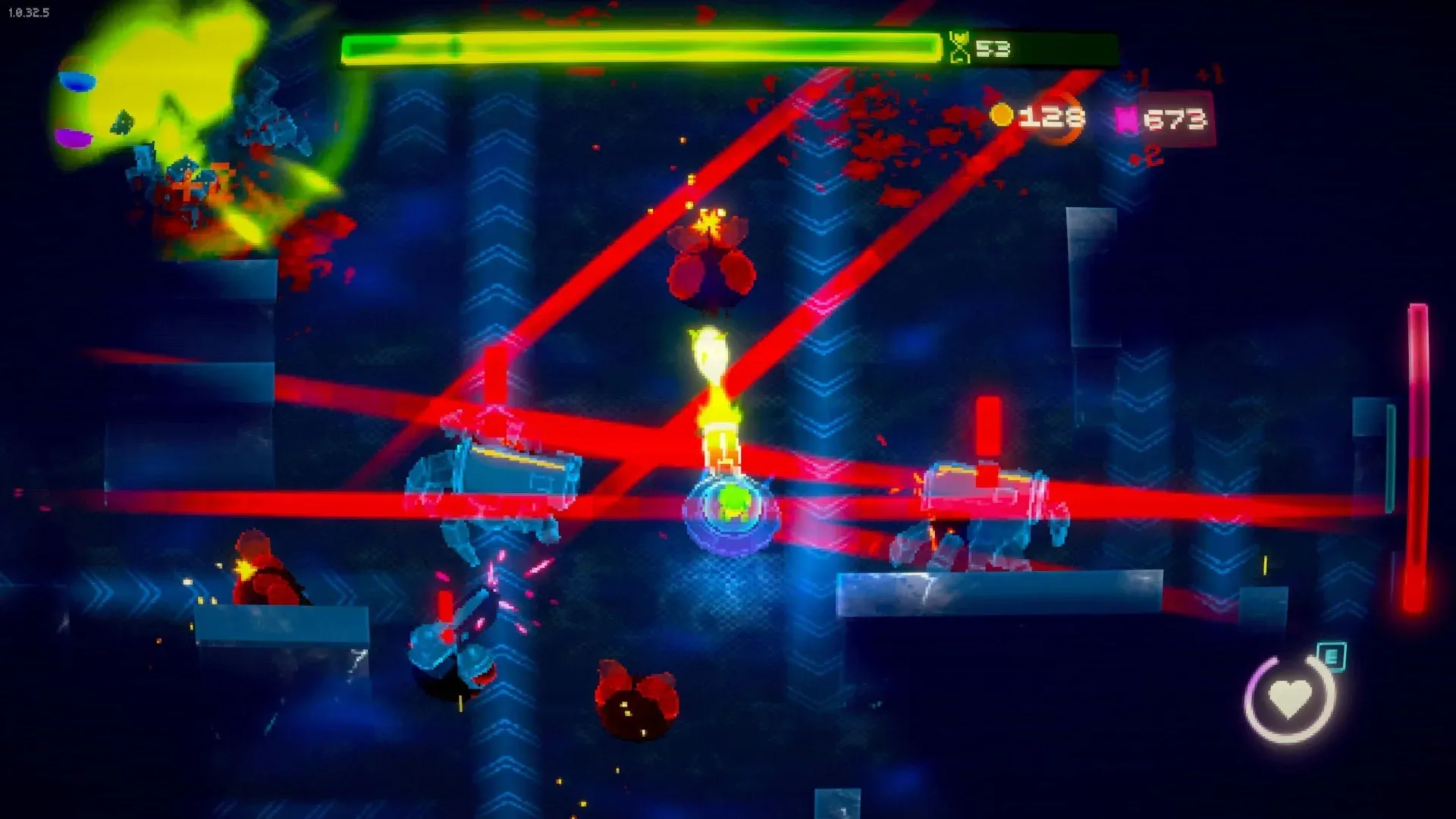
The player directs an AutoDog attempting to escape a dystopian mecha-city and return to humans living in exile. Battles are built around arranging chain reactions against enemy guardians, and the game displays a preview of the result before a move is committed. That preview system can lower the friction of tactical experimentation: players still need to recognize an effective sequence, but do not have to guess at every interaction.
The robot dog acquires tricks during a run and can combine them into more powerful moves. As with Galactic Racer and Endless Rails, the roguelite label means build decisions happen during individual attempts, while repetition is expected to reveal new strategies.
What is still coming
Seikyu Let’s Go is planned for Steam in Q4 2026. Developed by Ace Entertainment and published with Logoi Games, it is a co-op offshoot of the farming life sim Tales of Seikyu. Up to four players can ride in a camper van through a world of quests, minigames, puzzles, go-karting, pickup basketball and character encounters. Difficult terrain may require everyone to get out and push the motorhome, while proximity chat is part of the social setup. Japanese folktales are among its inspirations.
A Game About Digging A Hole Together will bring the digging premise into four-player co-op. Mi’pu’mi Games is developing the sequel, with Rokaplay Select and Shochiku publishing. It is planned for Steam, Epic Games Store, PS5, Xbox Series X/S, Xbox for PC and Switch 2, with Game Pass availability. Players dig into a beach, find secrets and sell items to finance better tools. The original sold more than one million copies and was made quickly as a solo side project using a voxel system initially created for Solarpunk. A voxel system represents terrain as small volumetric units, which makes deformable digging environments possible. The sequel has been rebuilt to incorporate features including crossplay.
There is also Grave Seasons, now scheduled for March 9, 2027 on Steam, Xbox Series X/S, PS5 and Switch. Perfect Garbage is developing it, with Blumhouse Games and Solo Game publishing. It merges farming-sim routine with a murder mystery: a malevolent force is killing residents, and different campaigns assign the killer role to different characters. That setup could give repeat playthroughs materially different mysteries rather than merely altered dialogue.
Finally, Strange Scaffold’s Something is Wrong With the Library is targeting Steam in fall 2026. It is an organization game in which players shelve thousands of real book titles using the Dewey Decimal System, but its library has become haunted after a billionaire’s crimes in a nearby tech-focused mountain town. Each session will use a different selection of books, and the project has teased an area called the Drowning Room. It is a striking example of an increasingly common arranging-game format being pushed toward horror and narrative unease instead of calm domestic order.
Players wanting to keep an eye on unusual PC projects can also follow experimental software news such as this Vita3K experimental snapshot. It is a different corner of the PC gaming world, but it reflects the same appetite for platforms and tools that expand how games can be experienced.