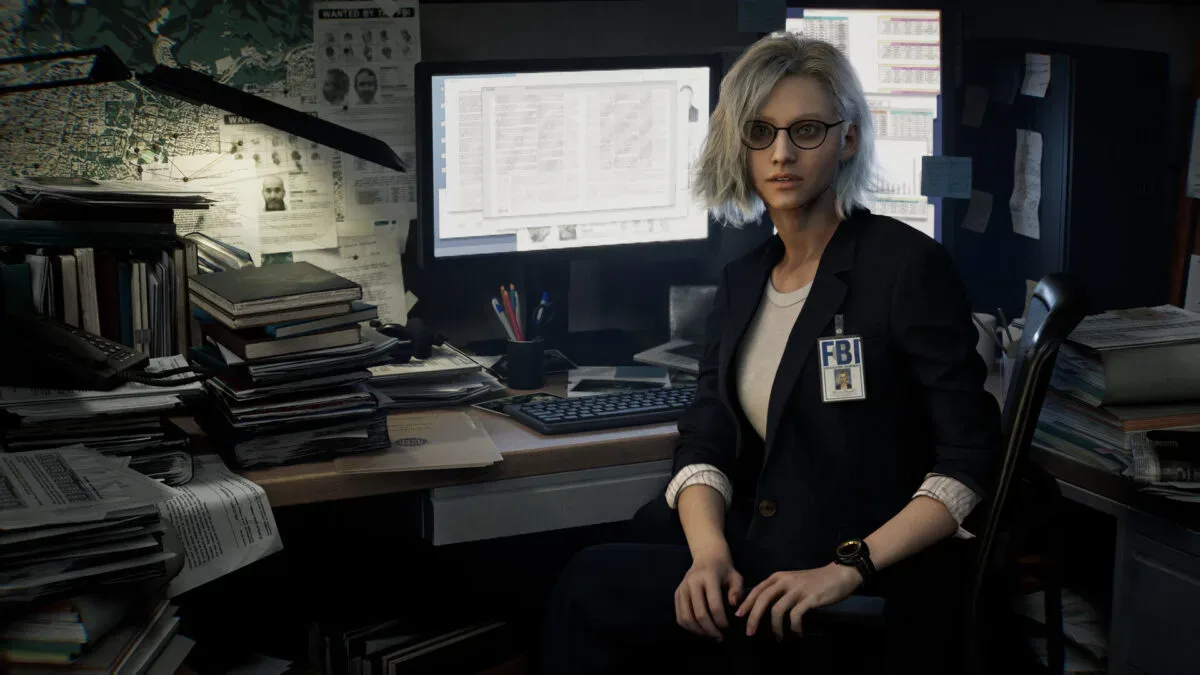
Sega is drawing a clearer—if still carefully worded—line around generative AI and the games it makes. Senior executive officer Tsuyoshi Saito said the company is approaching AI use in development cautiously and is not giving the creative side of game production over to the technology.
“We are being very cautious about [AI’s] use in the game development process, and we are not entrusting the creative aspects of games to AI.”
That distinction matters. It does not amount to a company-wide ban on generative AI, and it does not establish a detailed, public production policy covering every team or project. But it does signal that Sega sees a boundary between internal business applications and the creative material that players ultimately encounter in a game.
For an industry where statements about AI can be broad enough to create more questions than answers, the emphasis on creative aspects is the important part. It suggests that Sega is not presenting generative systems as the author of its art, animation, writing, or other game-facing work. Still, the exact scope of that boundary will depend on how the company defines and enforces it across projects.
What “generative AI” means in this context
Generative AI refers to systems that produce new output from prompts or other input: text, images, video, code, audio, and potentially motion data are all examples mentioned in broader discussions of the technology. That is different from conventional automation, analytics, or tools that simply speed up an established task without creating new content.
The difference is not merely semantic. In game development, a tool that organizes documents or helps a publishing team summarize routine material sits in a different category from one used to generate concept art, character dialogue, environmental imagery, animations, or code that materially shapes the finished game. The latter can directly affect the authorship, consistency, and provenance of the work players see.
Saito’s remarks are most meaningful because they focus on that player-facing creative territory. The stated approach is not that AI has no role anywhere at Sega. Rather, it is that creative responsibility in games is not being entrusted to it.
Why Crazy Taxi: World Tour made the issue harder to parse
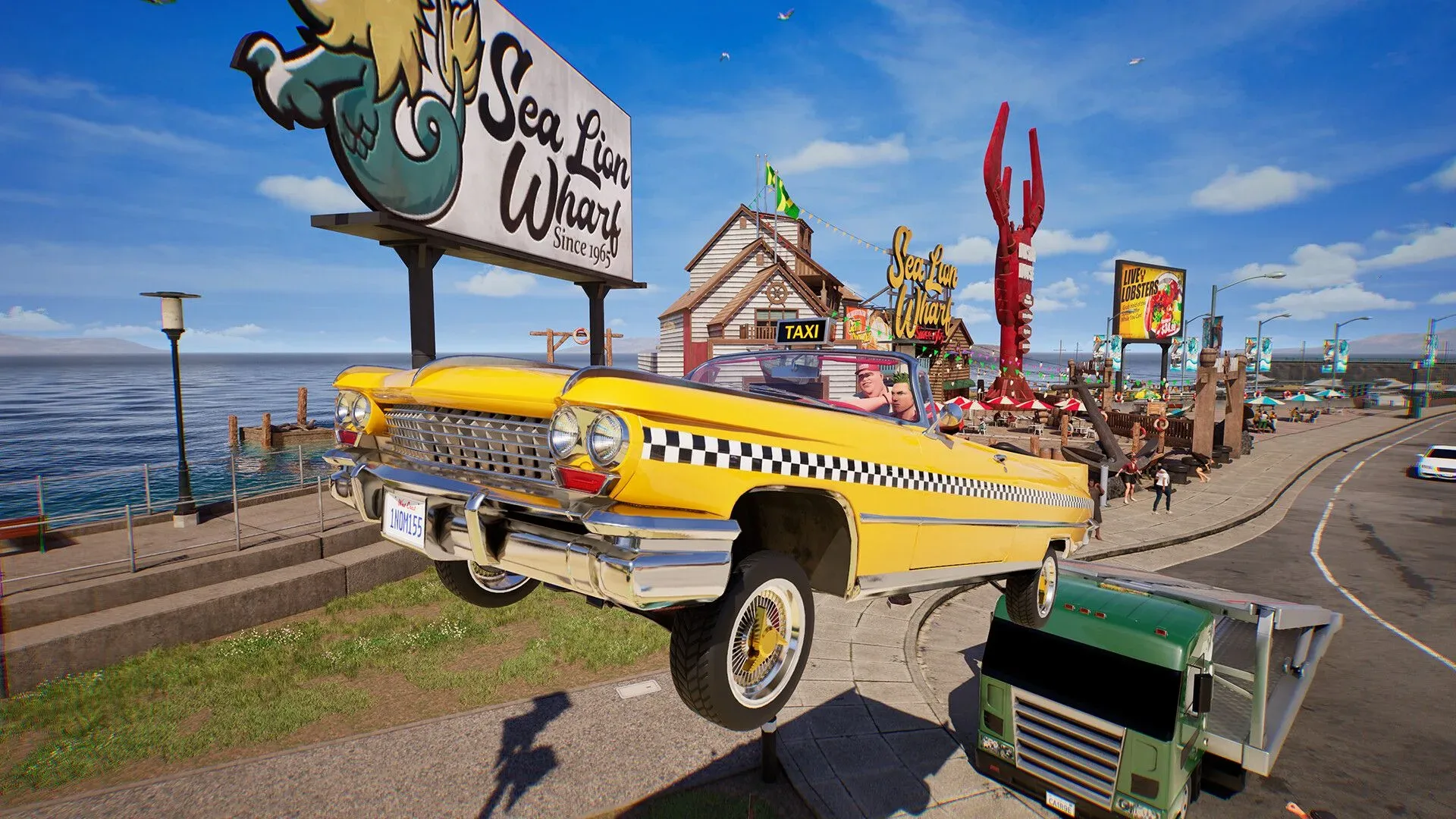
The scrutiny arrives after a muddled sequence of messaging around Crazy Taxi: World Tour. An AI disclosure on Steam said developers had used AI tools to support their work, but did not make clear whether generative AI had made anything that would appear in the game itself.
Related coverage includes Sega Signals Caution on Generative AI in Game Creativity.
Subsequent reporting characterized generative AI as having been used for background assets, before a later clarification said that no in-game assets were created by AI and that the tools were used only for reference. Those are materially different descriptions. “Used for reference” can mean a team consulted generated material during research or ideation; “used for background assets” implies generated work could be part of what players encounter.
That confusion is precisely why a concise statement of principle is useful—but only up to a point. A broad commitment not to entrust creativity to AI is easier to understand than a disclosure that simply says AI tools were used to “support” developers. Yet it still leaves practical questions: What does Sega classify as a creative aspect? Does the line apply to all generative output, including internal drafts and prototyping? How will projects communicate their practices when AI is involved somewhere in the process but not in final assets?
None of those questions are answered by the available comments, so it would be premature to treat them as a fully specified ban on every conceivable development use. The safest reading is narrower: Sega is expressing caution and saying that human creators, rather than generative AI, should retain control over game creativity.
AI remains part of Sega’s business operations
Saito also described AI being used to improve efficiency in publishing and corporate departments, as well as to generate business ideas. In other words, the company’s separation is not between “AI” and “no AI.” It is between uses considered operational and uses that would be entrusted with the creative content of games.
Sega previously formed a Generative AI Committee in 2025 to oversee the company’s use of the technology. It has also said generative AI had become embedded in day-to-day operations, with applications including chatbots, image generation, and video generation. Earlier internal testing referenced code generation, image generation, and motion generation, while Sega also acknowledged concerns about the energy consumption associated with the technology.
Those details make the newest comments more consequential, rather than less. Sega is not speaking from a position of ignoring generative tools altogether. It has investigated and used them in organizational settings. The reported stance instead indicates an attempt to limit how far such systems travel into the work of actually making games.
That does not remove the broader labor questions that accompany “efficiency” language. When a company says AI can make a department more efficient, it can refer to reducing repetitive work, speeding up communications, or assisting planning. It can also raise concerns for workers about duties being narrowed, measured differently, or replaced. The available remarks do not spell out Sega’s staffing approach, so claims about the effect on particular jobs would go beyond the evidence. What is clear is that the company expects AI to have an operational role outside the creative core it says it will protect.
Why the boundary matters to players and developers
For players, the immediate practical benefit is clarity of expectation. Sega’s franchises depend on recognizable visual identities, characters, worlds, and design sensibilities. A commitment to keep creative responsibility with people speaks directly to how those identities are maintained. It is also relevant to audiences who want to know whether the images, motion, text, or other material in a released game were made through generative systems.
For developers, the issue is about authorship and accountability as much as output. A human-led creative process does not guarantee that every game will be good, but it establishes who is making decisions, revising work, and standing behind the result. In a production environment, a generated image or block of text can be fast to create; integrating it thoughtfully, verifying it, and ensuring it fits a project can still require substantial human work.
The underlying concern is especially visible in cases involving visual work and permission. A recent dispute in another game prompted an apology after an artist said a ship design had been used without clearance, illustrating why provenance and approval processes matter even apart from generative AI. That case highlights the practical importance of knowing where creative material comes from and who authorized its use.
Sega’s wording also avoids a more sweeping promise that it may not be prepared to keep. Modern game development includes many disciplines and many kinds of software. A blanket claim that no AI-assisted tool can ever touch a production would be difficult to interpret without exact definitions. By saying creative aspects are not being entrusted to AI, Sega is articulating a principle of human responsibility rather than claiming every adjacent tool has vanished from every workflow.
An opening toward independent developers, with few details so far
The same interview also pointed to Sega’s interest in potential relationships with independent developers. Saito said the company has been considering how to engage with indie creators and sees potential in arrangements where independent games could benefit from Sega’s distribution network and marketing expertise.
There are no stated plans for Sega to sell indie games under its own brand. That limitation is important: this is not an announced label, publishing program, funding initiative, or acquisition strategy. It is an expression of interest in finding a mutually beneficial model.
Even so, the framing is notable. Sega’s view appears to be that independent games and the company bring different strengths to the table. Indie developers may have their own creative identities and approaches, while Sega can point to established distribution and marketing capabilities. Whether that develops into concrete partnerships will depend on details that have not been announced, including how developers would retain independence, what support Sega would provide, and how any commercial arrangement would work.
What Sega has actually committed to—and what it has not
The responsible takeaway is encouraging but measured. Sega has publicly signaled caution around generative AI in development and says it is not handing game creativity over to AI. At the same time, the company continues to use AI in publishing and corporate functions, has a committee overseeing generative AI, and has previously tested applications involving code, images, and motion.
- Stated direction: Sega says game creativity will not be entrusted to generative AI.
- Continued use: AI remains in play for publishing, corporate work, and business ideation.
- Unresolved detail: The comments do not define every permitted or prohibited tool use during game production.
- Indie angle: Sega is exploring ways to work with independent developers, but no specific program has been announced.
That is a more useful position than a vague claim of “responsible AI” with no distinction between a chatbot in a business department and generated material in a finished game. The next meaningful test is not another broad promise; it is whether future Sega projects describe their practices clearly enough that players and developers can tell where the boundary was drawn.