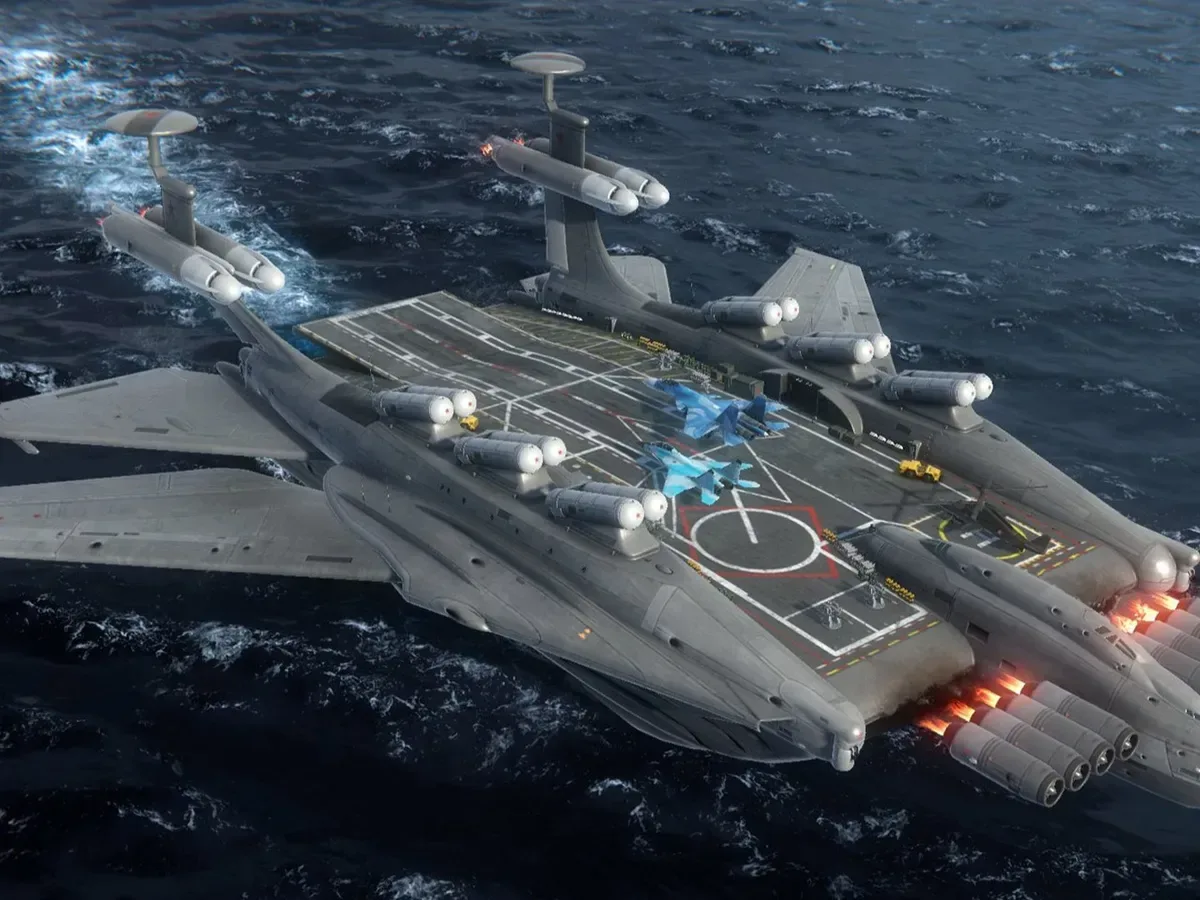
Modern Warships developer Artstorm has apologized after independent concept artist Alex Jay Brady highlighted striking similarities between a personal vessel design and an in-game ship, the RF Bartini A-2000-7. The developer said Brady’s work had been used “as a reference without proper clearance” and said it would make contact directly to resolve the matter.
The dispute matters beyond one unusually large ship model. The RF Bartini A-2000-7 is not merely background decoration in a naval combat game: it is an item players can pursue through paid gacha spins or obtain through the game’s ArtCoins currency. That makes the origin of its design a question of both creative attribution and value. When a game sells access to content that appears closely based on an artist’s work, a public acknowledgement and a promise to talk are only the beginning; the practical outcome depends on what the parties agree to next.
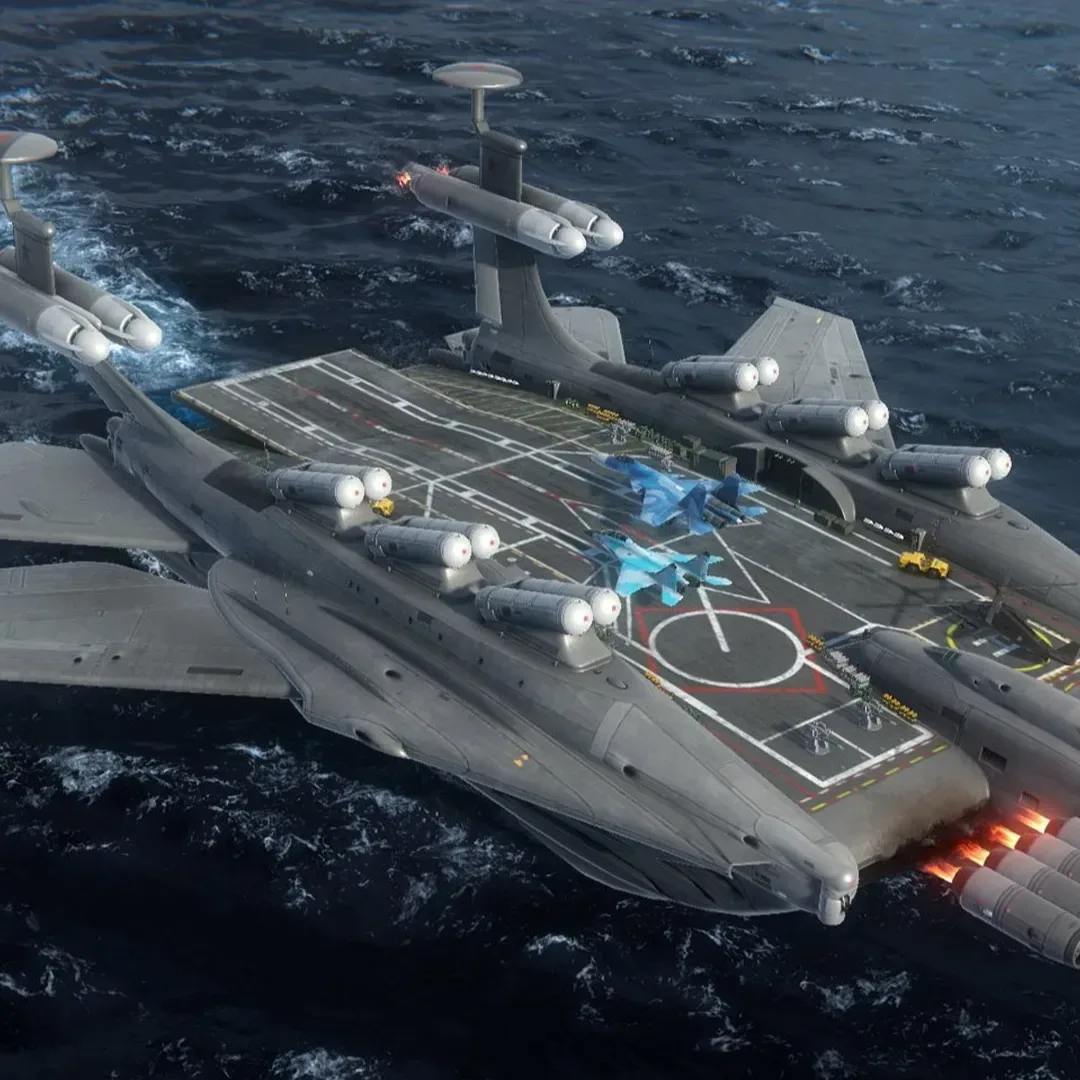
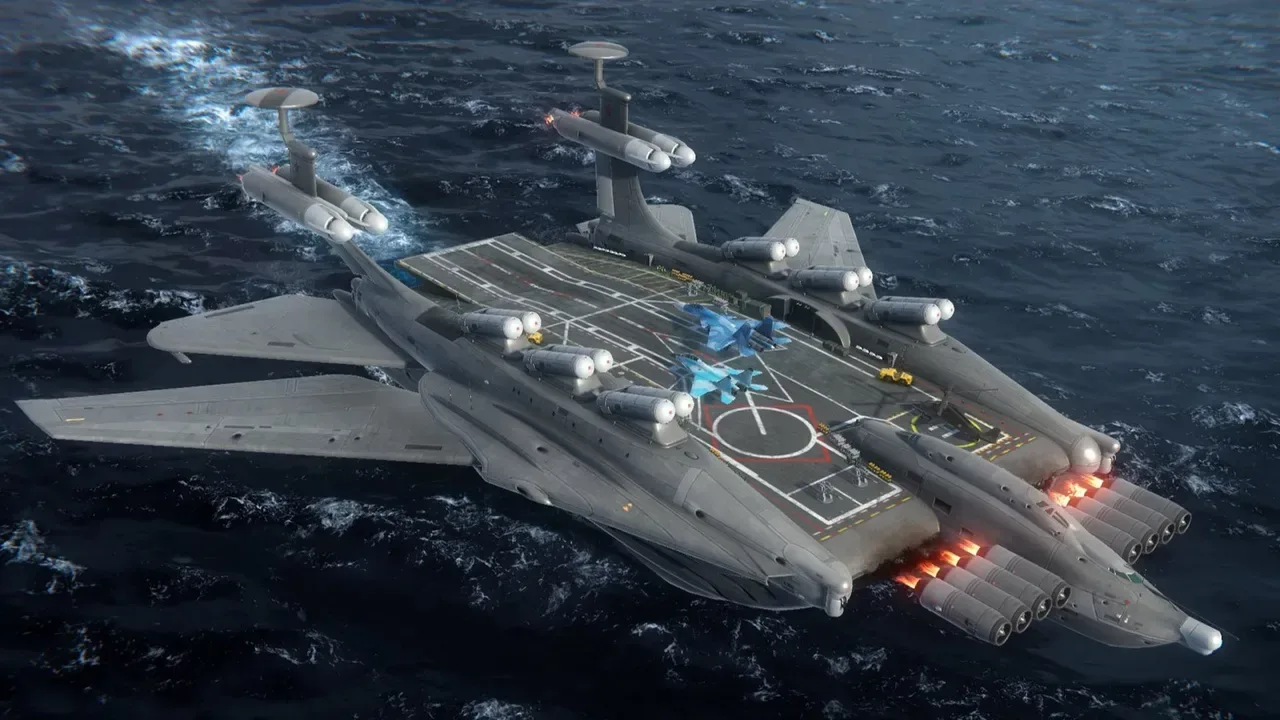
A side-by-side comparison put the design in focus
Brady’s original work depicts an atomic ekranoplan carrier vessel. An ekranoplan is a ground-effect vehicle: broadly, a craft designed to travel extremely low over a surface, taking advantage of aerodynamic ground effect. The concept is visually distinctive even before the carrier elements are considered, which is part of why the comparison drew attention.
Brady placed the original concept beside Modern Warships’ RF Bartini A-2000-7 and argued that the game model retained essentially the same overall design, with only limited changes. The artist pointed to differences including the placement and duplication of an AWACS dish and the engine count, but said the rest of the design was carried over.
AWACS is shorthand for airborne warning and control system, generally referring to radar-and-command capability carried by an aircraft. In the disputed design, the prominent dish is one of the visible changes Brady identified. But small component substitutions do not necessarily answer the larger creative question when the combined shape, arrangement, flight deck treatment, and other defining visual choices remain closely aligned.
“Fair call, and apologies from us. Your design was used as a reference without proper clearance. We’ll contact you directly to make this right.”
That statement is notable for what it concedes: Artstorm did not frame the resemblance as coincidence or simply as two creators reaching similar conclusions from common naval references. It acknowledged use of the work as reference and said clearance had not been obtained. The developer has not publicly laid out further details about how the asset entered production, who approved it, whether the in-game model will change, or what form a settlement could take.
The artist says even the flaws appear to have survived
Brady’s account adds an unusual layer to the issue. The artist said the speculative craft was not designed from deep technical knowledge of the subject, and that its realism problems appear to have been carried into the game model along with the visual structure.
Related coverage includes Modern Warships Developer Apologizes After Ship Design Is Linked to Independent Artist's Work.
Among the issues Brady identified were engines whose wash crosses the deck and aircraft that would take off backward rather than into the wind. The artist also said there had never been a swing-wing ekranoplan carrier, “for good reason.” These are not presented as a claim that the game must be a simulation. Modern Warships is a PvP naval warfare game, and games often alter real-world logic for readability, spectacle, balance, or technical constraints.
Instead, Brady’s point is evidentiary and creative: unusual mistakes can be more revealing than broad genre conventions. A conventional hull, a radar dish, or a cluster of engines can arise from widely shared visual language. A very specific collection of unconventional design decisions, including decisions the original artist now regards as technically unsound, may be much harder to explain as independent inspiration.
Brady says they retain project files for the design, including the deck lines. Original working files can be important in a dispute because they may document the development of a concept rather than merely prove that a finished image existed. Nothing public here establishes the complete legal or contractual result, and Artstorm’s apology is not the same thing as a publicly disclosed settlement. Still, the acknowledgement has moved the conversation from whether the comparison deserves attention to how the developer intends to remedy the clearance failure.
What resolution could mean in practical terms
Brady has said the matter would be considered closed if an offer is accepted, and that the resulting portfolio images could then be treated as a roundabout form of contract work. That phrasing leaves considerable room for negotiation. A solution could involve compensation, a retrospective license, credit, a change to the model, or some combination of those steps, but no terms have been disclosed and none should be presumed.
The distinction between those options is meaningful. Credit recognizes an artist’s contribution, while a license is permission to use work under agreed terms. Compensation addresses payment for that use. In a situation where the asset has already been implemented in a commercial free-to-play game, those concepts can overlap, but they do not automatically substitute for one another.
For artists, the episode is also a reminder that keeping layered files, sketches, exports, and dated project material can help establish a clear creation trail if questions emerge later. For studios, it illustrates why a reference process needs more than a folder of striking images. Teams need to know where reference material came from, whether it is purely inspirational or intended as direct production input, and whether it requires permission before being translated into a game asset.
That sort of review is not paperwork for paperwork’s sake. Concept art can influence a 3D model’s silhouette, proportions, surface details, functional layout, and visual identity. Once an asset has been made, integrated, marketed, and monetized, resolving a clearance problem becomes more complicated than catching it while the concept board is still internal.
The monetization context raises the stakes
The RF Bartini A-2000-7 can reportedly be unlocked via gacha spins costing roughly $50 to $100, or bought using ArtCoins. Gacha refers to a randomized-reward system: players spend for a chance at a desired item rather than necessarily purchasing that specific item outright.
The ship’s reported ArtCoins price averages from about 7,000 AC to more than 15,000 AC. ArtCoins themselves are described as averaging roughly $100 for 1,300 to 2,000 AC. Using those figures, a 10,000-AC ship could translate to roughly $500 to $700 or more in equivalent currency purchases, though the actual outcome can shift with market price fluctuations and the precise path a player uses to obtain the ship.
Those calculations should not be read as a fixed cash price or proof that every owner spent that amount. Players may acquire currency in different ways, prices fluctuate, and a randomized route has its own uncertainty. The figures do, however, explain why the dispute has attracted pointed scrutiny. A design that appears in a paid chase item occupies a different commercial position from a one-off piece of scenery that players never interact with.
Some user reviews on Steam have separately criticized the pricing of stronger ships in the free-to-play title. User reviews are individual opinions, not a measure of the game’s overall quality or a finding about this specific design dispute. Yet they provide relevant context for why the carrier’s acquisition route has become part of the conversation: players are discussing an asset attached to an expensive and contested progression economy.
Why an apology is only the first checkpoint
Artstorm’s response is more direct than silence or a vague statement that it is looking into the matter. It accepts that proper clearance was missing and says the team will contact Brady. That is an important first step, particularly because it gives the artist a clear opening to seek an agreement rather than requiring a public argument over whether the resemblance exists.
But the key unanswered questions remain straightforward: What does Artstorm offer? Does Brady accept it? Is the game asset altered, credited, licensed, or left as-is under new terms? And does the studio describe any process changes intended to avoid a repeat? Until those points are answered, the public record supports an apology and an ongoing discussion—not a completed resolution.
For players, the immediate takeaway is not to assume the RF Bartini A-2000-7 will be removed or changed. No such plan has been announced. For artists, it is a high-visibility example of why documentation and clear permissions matter. For developers, it is a case where the most memorable detail may be that the allegedly inherited design also carried inherited mistakes.
Public-facing trust can depend on how studios handle such moments, whether the issue involves asset clearance or community operations. A separate recent example of the pressures around visible game-community management can be seen in Sonic’s official Discord launch and its immediate moderation questions. Here, Artstorm has set an expectation by acknowledging the problem. The next measure is whether its private offer produces a resolution Brady is willing to accept.