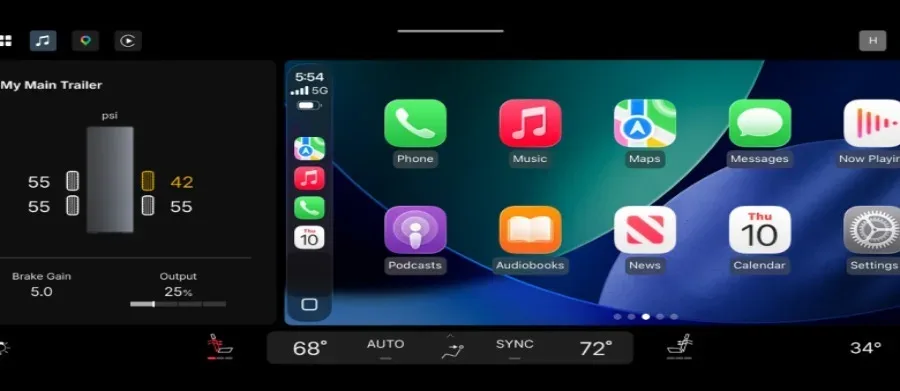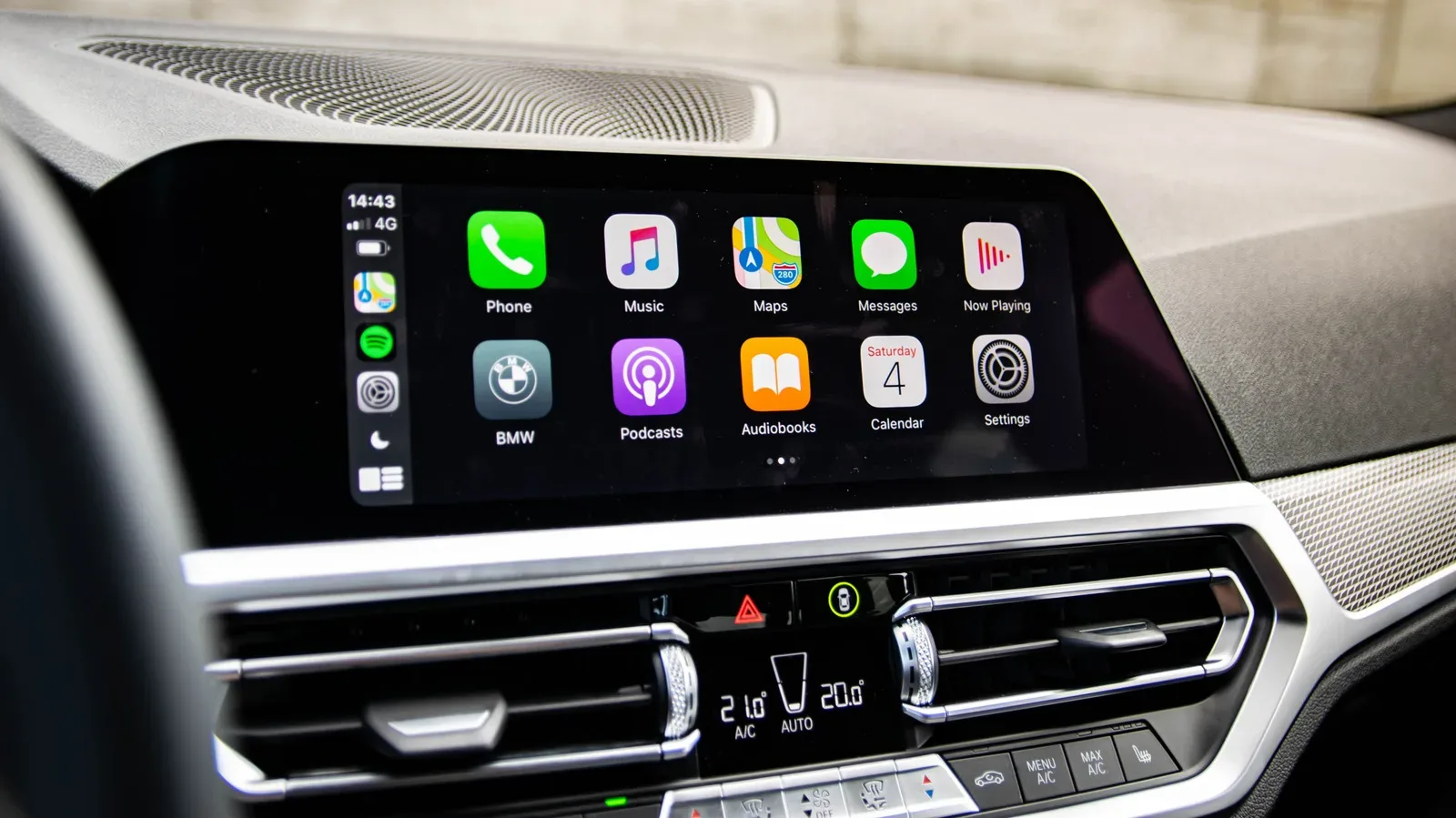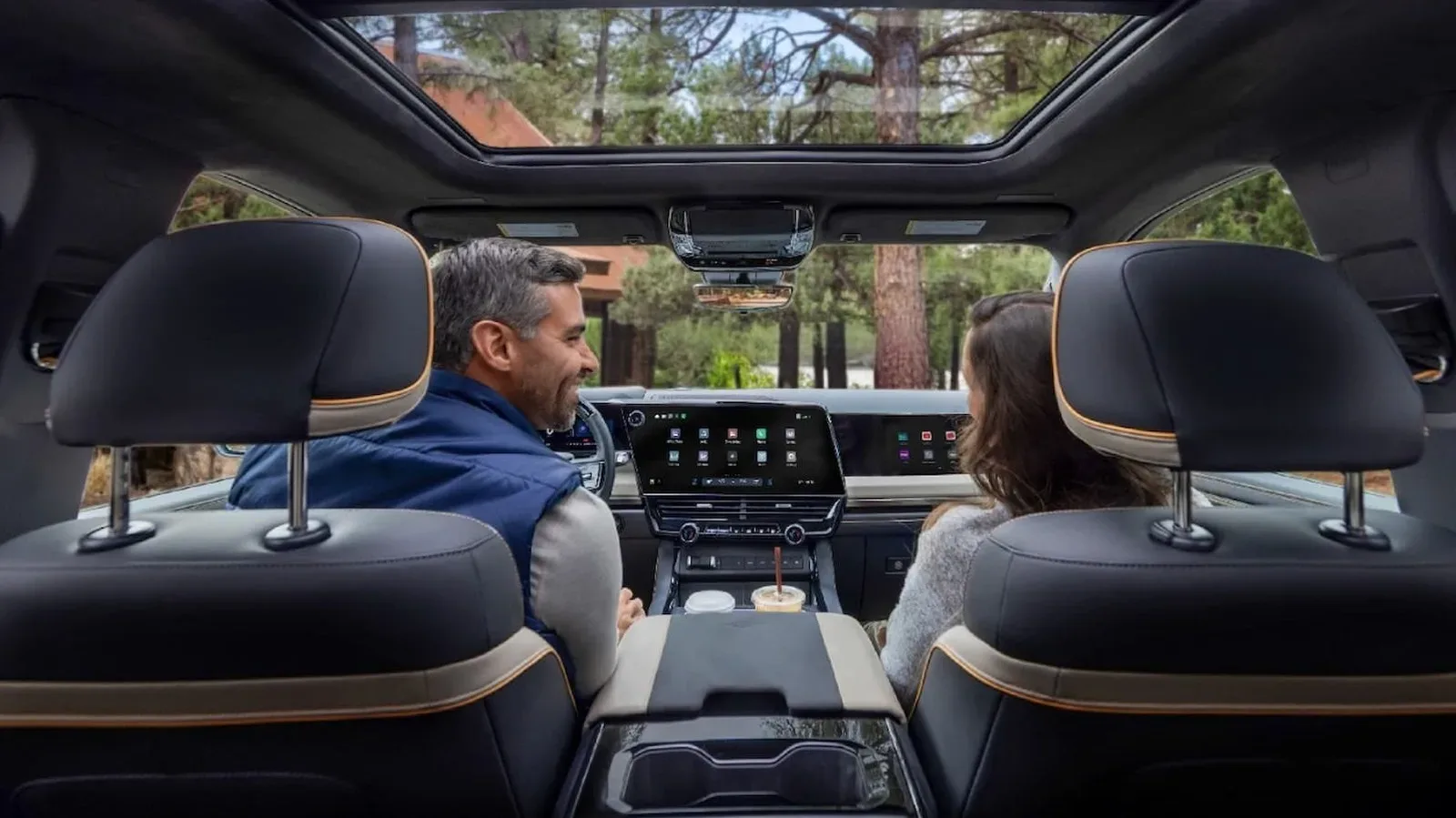
General Motors is bringing Apple CarPlay and Android Auto into a newly designed infotainment interface, starting with the 2027 Chevrolet Silverado and 2027 GMC Sierra pickups. The significant part is not merely that the two phone-projection systems are returning: GM says its new layout will present them in a split-screen view alongside vehicle gauges, rather than forcing the driver to keep switching between a phone-focused screen and the truck’s own information.
It is a notable adjustment after GM said three years ago that it intended to move away from CarPlay and Android Auto in electric vehicles, favoring its own infotainment approach using Gemini, and planned eventually to take the same direction with gas-powered vehicles. The new pickups are the first named vehicles for the revised user interface, with GM saying it will reach other models later. No timetable or specific additional models were given.
For anyone whose dashboard routine is essentially navigation in one app, music in another and a nervous glance at range, speed or charging-related information in between, the change is best understood as a layout solution. GM is attempting to let the smartphone ecosystem and the vehicle ecosystem share the same stage instead of making either one leave it.
What GM is changing in the 2027 pickups
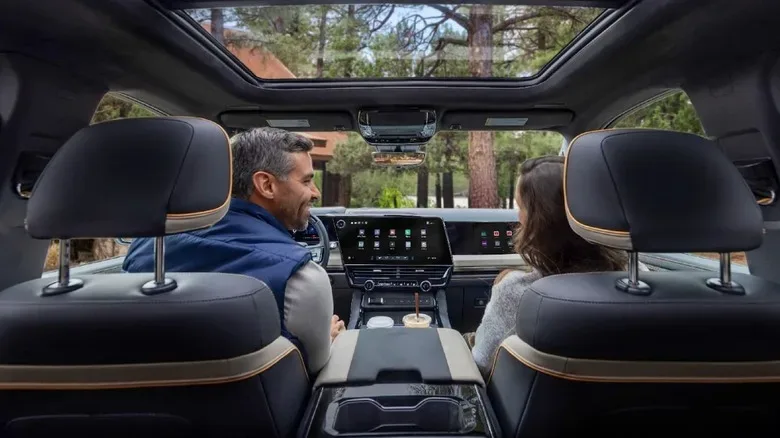
The 2027 Silverado and Sierra will have 60 inches of total screen real estate, including a front-passenger display capable of streaming video. GM plans to use that broad display setup for a split-screen implementation of CarPlay and Android Auto. The driver can access compatible phone functions while vehicle gauges remain in view.
CarPlay is Apple’s interface for presenting selected iPhone apps and functions through a vehicle display. Android Auto serves a comparable role for compatible Android phones. In both cases, the attraction is familiarity: drivers can use a phone-centered interface for items such as supported navigation, media and communications instead of learning a wholly separate interface for every vehicle brand.
That familiarity has a practical limit in a modern vehicle. Dashboard displays increasingly do much more than host audio controls and maps. They can be the place drivers check vehicle status and gauges. When a projection system occupies the main display, the driver may need to change views to see information the vehicle itself considers important. GM’s split-screen approach is intended to reduce that screen swapping.
GM software product-management executive director Mike Wahlstrom said customers value the simplicity of CarPlay and Android Auto but also want quick access to what the vehicle can do. He described the next-generation interface as an effort to combine those needs in one cohesive experience.
GM said it worked with Apple and Google on the arrangement. That matters because this is not being framed as a basic reversal in which the old, full-display phone projection simply returns unchanged. The stated goal is a more deeply integrated presentation for the company’s light-duty pickups.
Why split-screen matters more than it sounds
“Split-screen” can sound like a cosmetic dashboard preference, but it addresses an awkward design conflict. Phone-projection systems are built to make a phone’s useful, compatible apps legible and accessible in the car. Vehicle software, meanwhile, needs to communicate information specific to that vehicle. Those are separate jobs competing for the same screen space.
In a traditional full-screen arrangement, a driver might choose between a map or media controls on one side and vehicle data on the other. GM’s proposed format seeks to avoid treating that choice as a menu-navigation problem. Keeping both visible can mean fewer transitions through screens while driving, which GM suggests may help reduce distraction.
That is an important distinction: a split layout can reduce the need to swap displays, but GM has not made a broader safety claim here, and the information provided does not establish how the system will behave in every situation. Screen size, text legibility, control placement and what is shown at a given time all shape the actual experience. The concrete promise is simultaneous access to phone-projection functions and vehicle gauges.
The approach also recognizes that vehicle interfaces now have a job closer to a device operating system than to an old-school radio panel. A truck’s display can mediate navigation, entertainment, communications and vehicle-specific information. That makes interface ownership consequential. Drivers often prefer the continuity of their own phone platform; manufacturers need direct access to the vehicle’s settings and data. GM’s new layout is an attempt to give each a defined portion of the display.
A real course correction, with boundaries still in place
GM previously outlined several reasons for moving away from CarPlay and Android Auto. One was the possibility of monetizing its own infotainment software through subscriptions. Another, more immediate interface concern was that CarPlay and Android Auto normally take over a display. That is especially difficult when the same screen is used for gauges, a situation that can be particularly relevant in EVs.
The new UI appears to tackle the second issue directly. Rather than requiring the phone interface to own the display, GM is dividing the view. The outcome preserves a dedicated area for vehicle information while restoring access to the two smartphone interfaces in the newly announced pickups.
It does not yet establish that GM has changed course for its EV lineup. The company’s Q&A on the revamped UI does not mention EVs, and GM has not said that CarPlay will return to those vehicles. That absence is crucial. The 2027 Silverado and Sierra announcement concerns light-duty pickups; it should not be read as confirmation of a company-wide CarPlay and Android Auto return.
GM EVs without CarPlay are not entirely cut off from phone-associated services. The supplied information says those vehicles can access some phone apps, including Apple Music. But Apple Music availability is not equivalent to support for the full CarPlay interface, just as access to selected apps is not the same thing as Android Auto support.
What owners and shoppers can reasonably take from this
For prospective 2027 Silverado and Sierra buyers who rely heavily on either mobile platform, the clear benefit is that they will not have to choose as sharply between a preferred phone interface and visible truck gauges. Navigation and media habits can remain closer to the phone experience drivers already know, while the truck retains a visible presence on the dashboard.
For current GM owners, there is no reason in this information to assume an update is coming. GM has identified the two 2027 pickup models as the debut vehicles and said other models will follow later, but it has not specified whether existing vehicles are included, which vehicles are next, or when expansion will happen.
For EV shoppers, the answer remains even narrower: there is no announced return of CarPlay or Android Auto to GM EVs. Anyone weighing phone integration heavily should distinguish between what is confirmed for the upcoming pickups and what remains unaddressed for the electric range.
- Confirmed: CarPlay and Android Auto are planned for GM’s redesigned infotainment system in the 2027 Chevrolet Silverado and 2027 GMC Sierra.
- Confirmed: The implementation will use a split-screen view that keeps vehicle gauges visible alongside those interfaces.
- Confirmed: GM says the revamped system will come to other models later.
- Not confirmed: Which additional models will receive it, when they will receive it, or whether existing vehicles can gain it.
- Not confirmed: A return of CarPlay or Android Auto to GM EVs.
The wider software question
The story is also a reminder that a dashboard is increasingly part of the device ecosystem people bring with them. A phone is where many drivers already keep their preferred maps, music services and communication habits. A vehicle, however, is not merely a larger phone dock: it has its own operational information and responsibilities. The tougher design challenge is making those worlds coexist without hiding key vehicle data behind a tap.
GM’s answer, at least for these trucks, is coexistence rather than replacement. It preserves the manufacturer’s own interface and its access to the vehicle side of the screen while acknowledging demand for Apple and Google’s more familiar front ends. That is a more pragmatic position than an all-or-nothing fight over whose software gets the dashboard.
Apple’s broader software ecosystem will continue to be a moving target for carmakers and drivers alike; for related context on the company’s upcoming AI access plans, see our overview of iOS 27 Siri AI beta access. In the pickup announcement, though, the immediate focus is far less abstract: keep the route and playlist handy, keep the gauges visible, and ideally spend less time playing dashboard tab-switcher.
The 2027 Silverado and Sierra will show whether that division of screen space feels as natural as it sounds. The key idea is straightforward, even if the software arrangement behind it is not: the truck’s information should not vanish just because the driver wants their phone’s navigation, and the phone’s useful car interface should not have to vanish just because the truck has something to say.