General Motors has spent the past several years steering its dashboard strategy away from the familiar comfort blanket of Apple CarPlay and Android Auto. The company removed the phone-mirroring systems from its EVs in 2023, and GM chief executive Mary Barra later confirmed that the phaseout would extend to gas-powered vehicles as well. The pitch is straightforward: a vehicle’s own software should be more tightly integrated, more capable, and less awkward than hopping between a manufacturer interface and a phone interface.
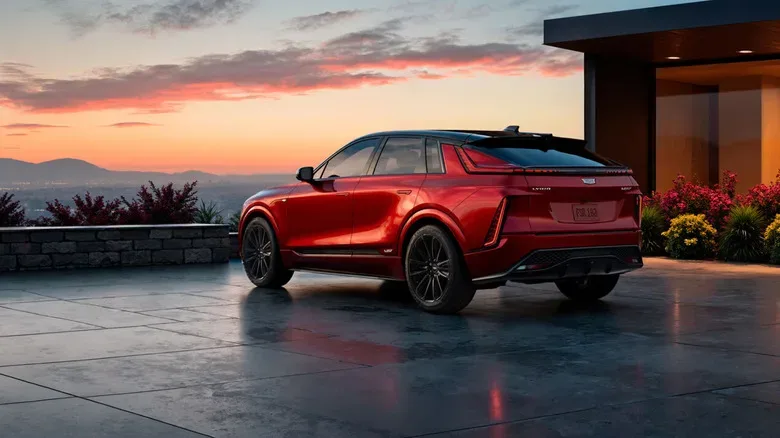
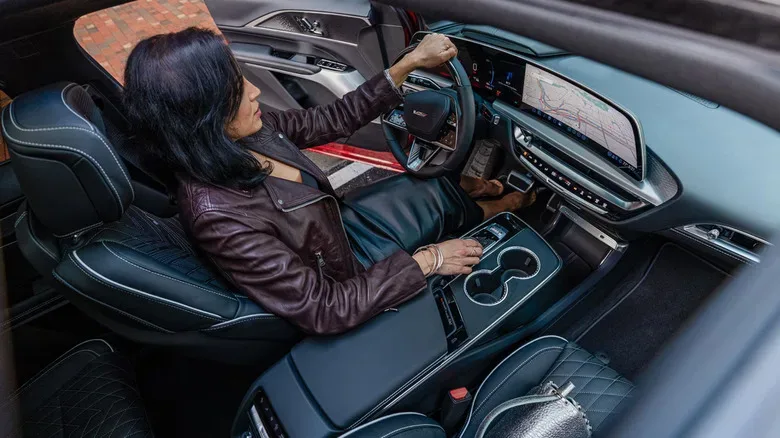
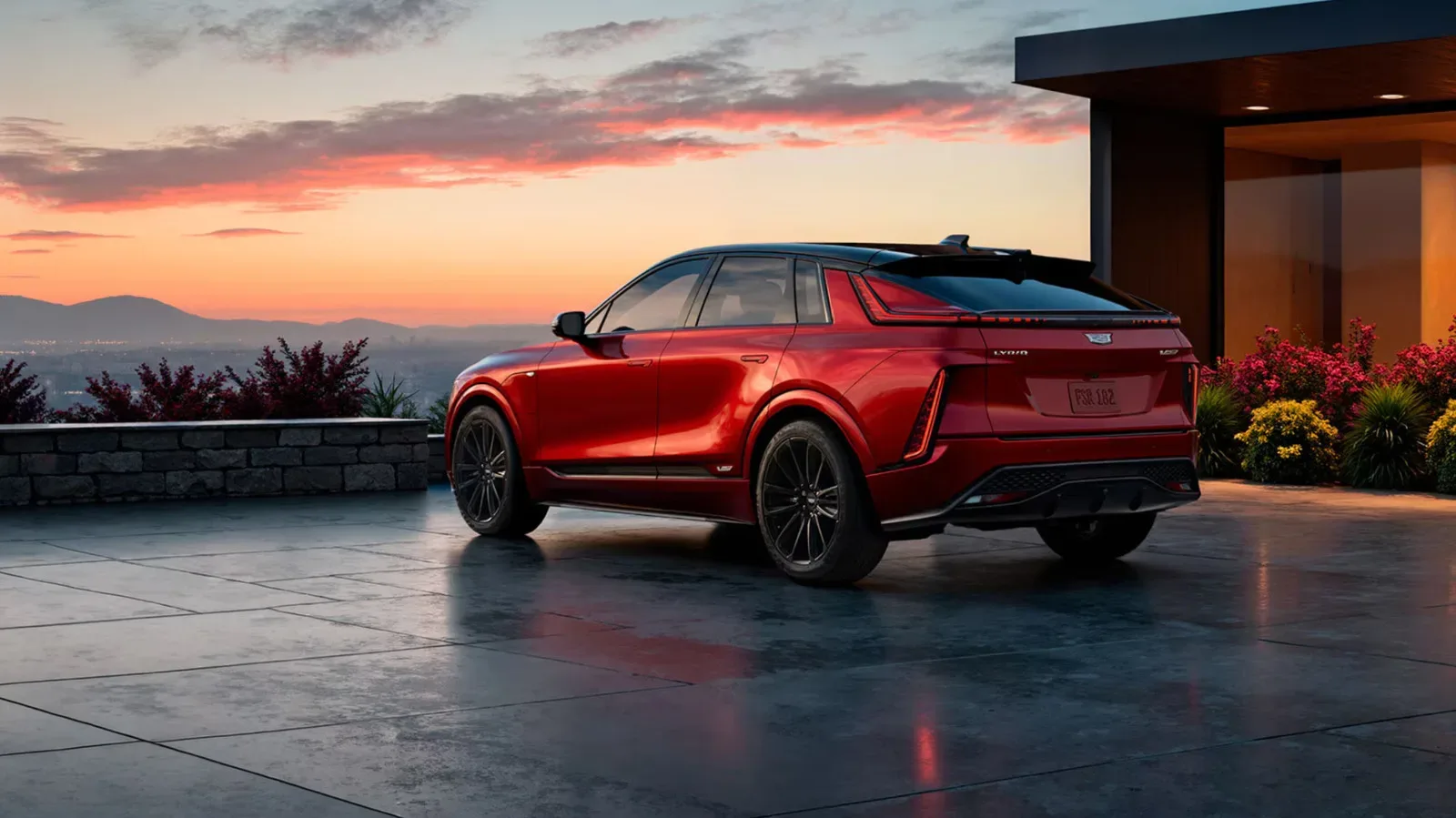
But one luxury EV may be keeping a foot in both camps. The 2027 Cadillac Lyriq is reportedly expected to continue supporting both Apple CarPlay and Android Auto. If that holds true, it would make the Lyriq the only GM EV sold in North America with compatibility for both systems at a moment when newer Chevrolet, GMC, and Cadillac electric models are being pushed toward GM’s native software experience.
That makes the Lyriq an intriguing outlier—not merely because it is a Cadillac, but because the exception arrives while GM is building an increasingly ambitious argument for keeping the digital cockpit under its own roof.
GM’s infotainment plan is bigger than removing a pair of icons
It is easy to reduce the issue to whether a driver can tap the CarPlay or Android Auto logo, but GM’s strategy is broader. Apple CarPlay and Android Auto let a connected smartphone supply many of the most-used dashboard functions: maps, music, messages, podcasts, calls, and voice commands. For many drivers, that consistency is the entire attraction. Their preferred apps, saved destinations, contacts, and subscriptions travel with them rather than being tied to one carmaker’s operating system.
GM, meanwhile, wants its own in-car interface to handle more of that work natively. The company’s stated direction includes a shift from its built-in Google operating system toward an experience incorporating Google’s Gemini AI assistant. GM said in April that it was aiming to deliver a custom AI assistant, tuned using proprietary vehicle data, by the end of 2026.
The appeal of an integrated system is understandable in principle. A vehicle-aware assistant could potentially deal with trip planning, charging considerations, navigation, cabin functions, entertainment, and communications without acting as though the car and the phone are separate machines arguing over custody of the touchscreen. GM has described the desired result as a more cohesive experience, with voice-driven assistance for tasks including route planning, entertainment, messaging, and streaming.
Barra has also said that customer feedback pointed to friction when drivers moved between GM’s built-in system and third-party phone software. That complaint is not hard to picture. A car may offer navigation tied to battery status and vehicle systems, while a phone might hold the driver’s preferred mapping app, recent searches, or music queue. The modern dashboard can become a tiny diplomatic summit where each platform insists it should be in charge.
GM’s wager is that deeper integration will eventually be more valuable than broad phone mirroring. The Lyriq’s reported exception suggests, however, that the company may recognize the value of giving at least some buyers a choice.
Why the Lyriq stands apart
The Cadillac Lyriq is a premium electric SUV, and buyers in that part of the market often arrive with especially firm expectations about convenience and personalization. A luxury vehicle can be judged as much by the small repeated interactions as by its acceleration or upholstery. If the owner expects their iPhone or Android handset to become the familiar control center of the dashboard, withholding that option can feel less like a clean software philosophy and more like an unnecessary limitation.
A Cadillac representative reportedly attributed the decision to retain phone mirroring in the Lyriq to customer feedback. That explanation is logical, but it also highlights the central tension in GM’s wider plan. Feedback has clearly helped establish that CarPlay and Android Auto matter to some Lyriq customers. It remains uncertain why the same principle has not led to equivalent compatibility across other GM EVs, or whether the Lyriq is an early clue that the policy could evolve.
For now, the reported Lyriq position contrasts with recent GM EV changes. The Chevrolet Silverado EV Work Truck and the GMC Hummer EV had their CarPlay and Android Auto functionality removed earlier in 2026. Those decisions reinforce that GM is not treating phone mirroring as a temporary absence while it prepares a replacement. The manufacturer is committing to a platform it believes can stand on its own.
There is also no confirmation that the Lyriq’s reported 2027 compatibility represents a company-wide reversal. The safer reading is that it is a model-specific decision until GM says otherwise. Cadillac’s choice may reflect its audience, its product cycle, existing hardware or software arrangements, or a practical response to demand. Without additional details, it should not be treated as proof that every future GM EV will regain the two systems.
Native apps are GM’s answer to the missing-phone question
The hardest part of asking buyers to leave CarPlay and Android Auto behind is not the logo itself. It is the fear that the replacement will lack the apps and habits drivers use every day. GM has been trying to close that gap by adding major services directly to its in-car platform.
Apple Music became available through GM’s vehicle software platform for 2025 and 2026 models after an announcement in December. That matters because music is one of the first places drivers notice a difference between a phone-mirroring setup and a manufacturer-controlled system. Providing Apple Music inside the dashboard does not recreate CarPlay, but it does give owners a prominent Apple service without requiring Apple’s full vehicle interface.
GM’s Google compatibility also means access to Google Maps and applications available through the Google Play Store. Mapping is especially important in an EV, where navigation may be expected to account for charging stops, range, and route conditions. A native system can theoretically make vehicle-aware decisions that a conventional phone projection layer may not handle in precisely the same way.
Still, software breadth and software preference are different things. A driver may value a particular podcast client, messaging workflow, navigation history, accessibility configuration, or voice assistant behavior that is already established on their phone. Built-in apps can satisfy many needs without removing the desire for a platform that looks and behaves the same in every compatible vehicle.
That dynamic resembles a recurring debate in gaming hardware. A closed ecosystem can deliver tailored features and tightly managed performance, while an open or familiar platform gives people freedom to carry their preferences forward. In both cases, the argument is not simply technical. It is about who controls the interface where the user spends their time. The same sort of realism-versus-player-preference balancing act is visible in Rockstar’s ongoing questions around realism and player experience in GTA 6, even if a dashboard and an open-world game have very different stakes.
The third-party route for drivers who do not want to wait
Owners of compatible non-Lyriq Chevrolet, GMC, and Cadillac EVs who want phone mirroring do have a third-party option: the EV Play LT. The device is designed to bring wired and wireless Apple CarPlay and Android Auto functionality to infotainment systems that do not include the two platforms.
The EV Play LT is listed at $199.99 and does not carry subscription fees. That is a notably direct answer for drivers who see phone mirroring as essential rather than optional. It does not change GM’s underlying software policy, and it should not be confused with manufacturer-provided support, but it illustrates how quickly an aftermarket solution can emerge when a mainstream convenience feature disappears.
Its existence may also sharpen the market test facing GM. If buyers strongly prefer a device that restores the familiar phone-driven experience, that signals an unmet demand. Conversely, if GM’s native apps, Google services, Apple Music integration, and Gemini-powered assistant become compelling enough, more drivers may decide they do not need phone mirroring in the first place.
A luxury exception with larger implications
The reported 2027 Lyriq decision does not settle the CarPlay and Android Auto debate at GM. Instead, it makes the company’s approach more interesting. The automaker is publicly investing in a vehicle-centric, AI-assisted interface while apparently preserving the two dominant phone-mirroring choices in one of its most visible luxury EVs.
For prospective Lyriq buyers, that could be a meaningful advantage: native Cadillac and Google-based functions remain available, but Apple and Android users may retain the dashboard environment they already know. For GM, it creates a more complicated message. A seamless homegrown system may be the long-term destination, but customer preference is still powerful enough to shape at least one route there.
Whether the Lyriq remains a singular exception or becomes a template for a more flexible GM policy is unclear. What is clear is that infotainment is no longer a background feature. It has become part of the ownership decision, right alongside charging, range, cabin technology, and the increasingly personal question of which digital ecosystem gets the keys.