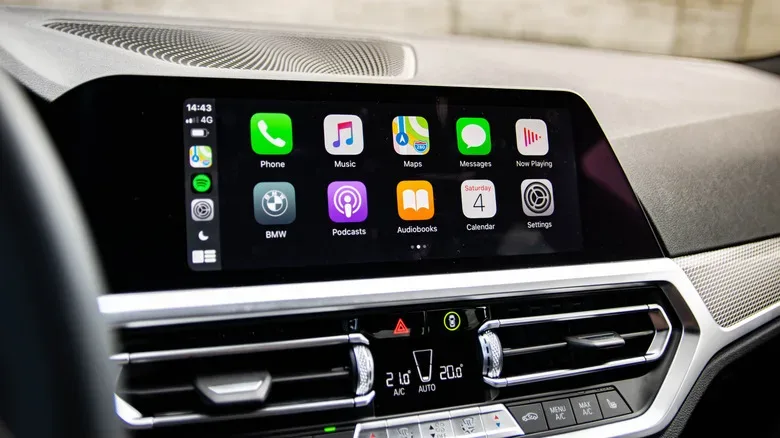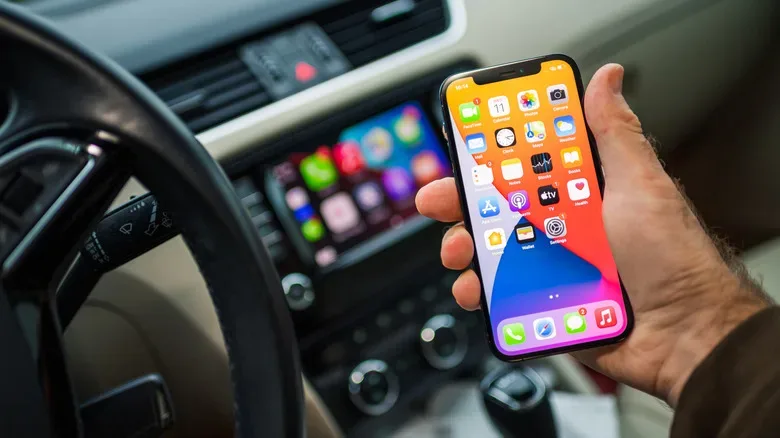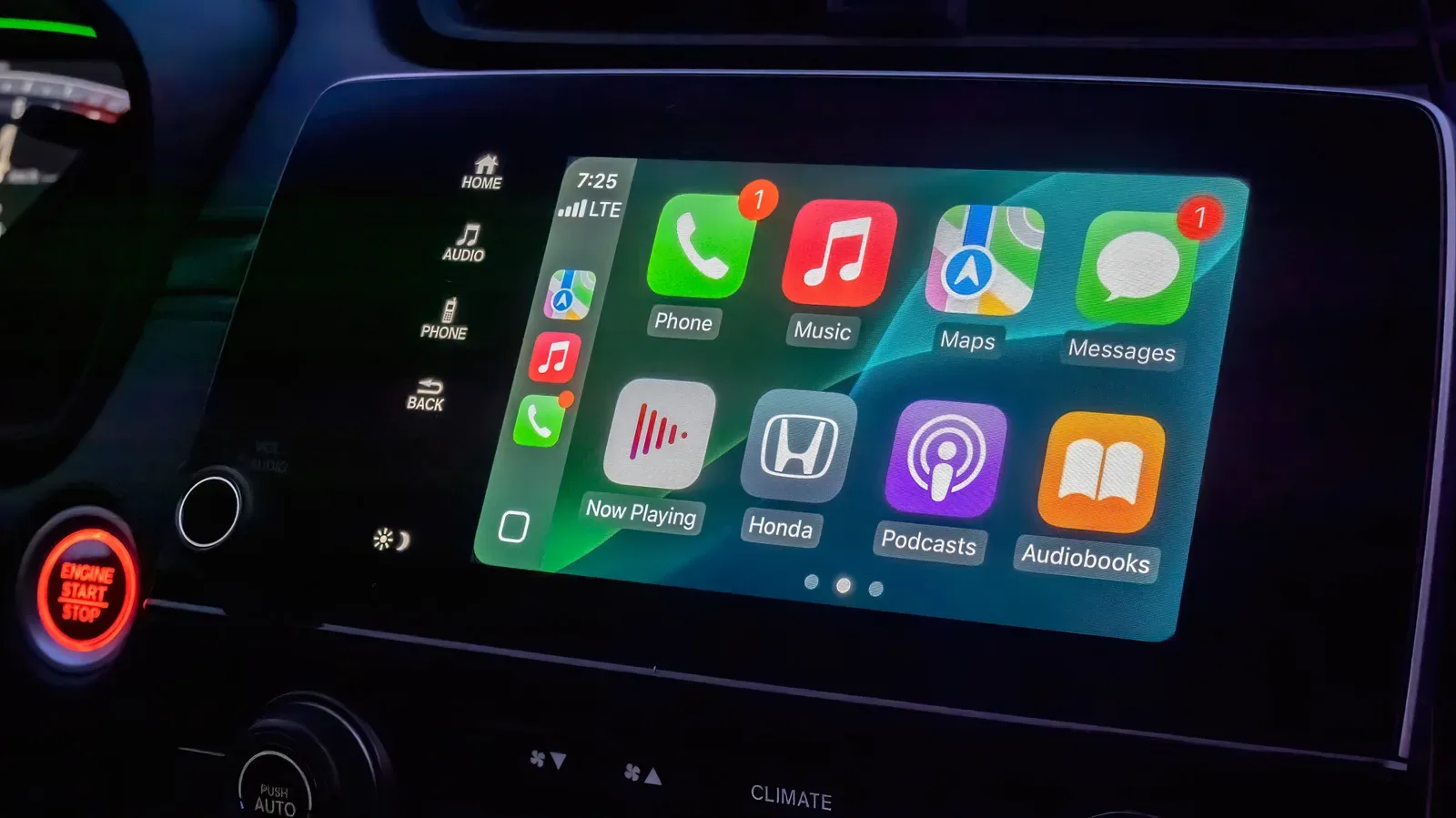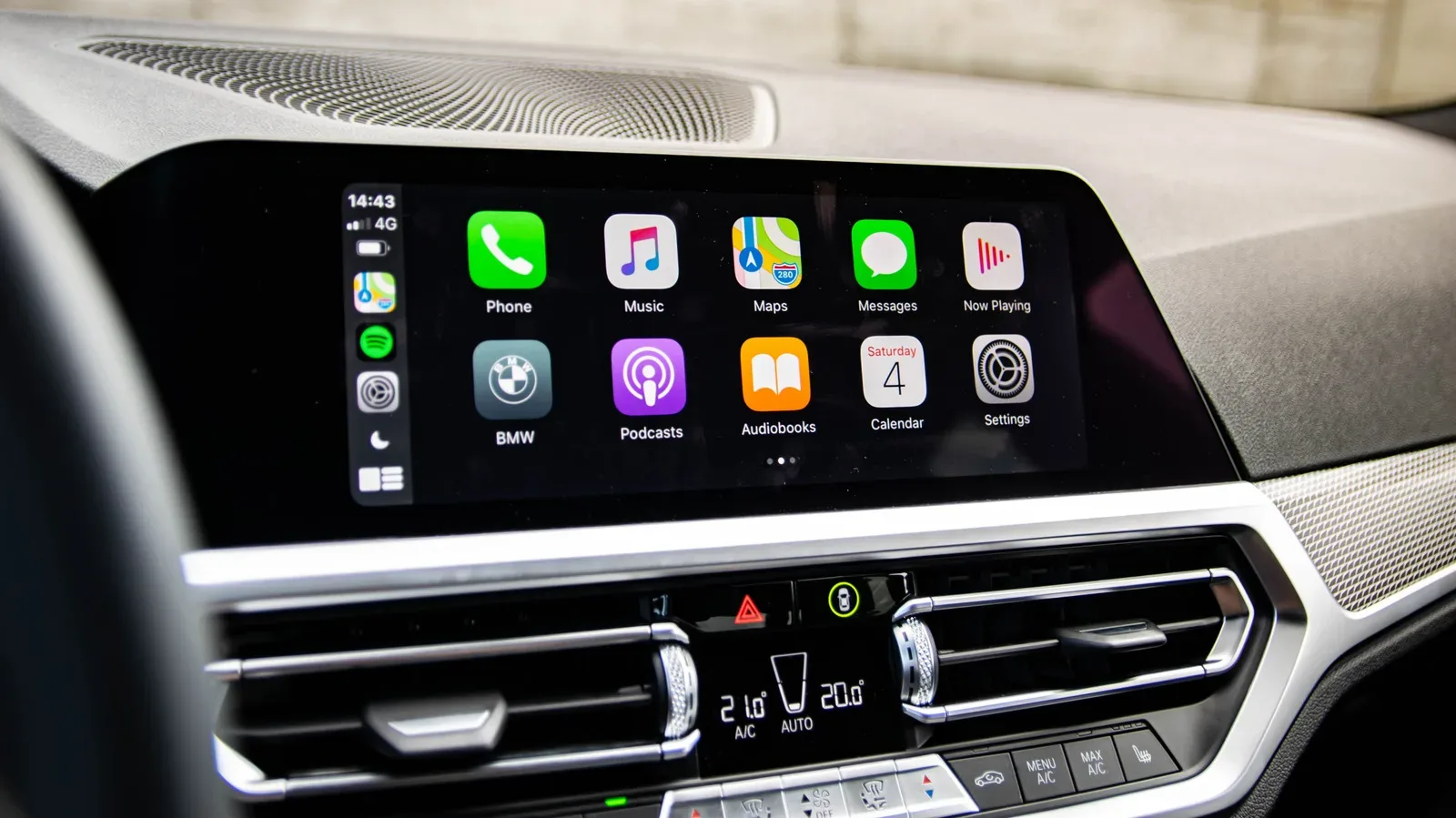
For more than a decade, Apple CarPlay has supplied the shortcut drivers wanted: plug in an iPhone, put familiar maps, messages, music, and contacts on the dashboard, and largely stop worrying about how good the automaker’s own infotainment software might be. It is a remarkably consumer-friendly arrangement. The digital environment can travel with the driver rather than being permanently defined by the badge on the steering wheel.
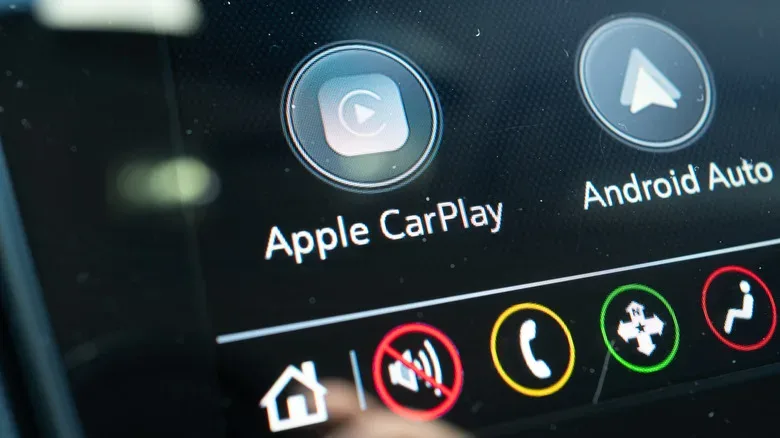
That arrangement is becoming less comfortable for some car companies. General Motors has already removed both Apple CarPlay and Android Auto from newer electric vehicles, including the Chevrolet Blazer EV, and intends eventually to move away from phone-projection support more broadly. Tesla and Rivian, meanwhile, have never offered CarPlay, though Tesla has reportedly explored it in testing.
This is not simply a fight over whether one touchscreen layout looks nicer than another. The increasingly software-defined car—particularly the EV—creates a contest over who manages the most valuable screen in the cabin, who receives operational data, and who gets to build the services drivers may use every day. CarPlay makes life easier for iPhone owners. A native automaker platform can make it easier for a company to tie navigation, charging, climate, vehicle settings, subscriptions, and data together.
For players who care about platforms, it is a familiar argument. The dashboard is starting to look less like a humble radio console and more like a walled garden competing for the user’s attention. The difference is that this particular screen is attached to a moving, multi-ton vehicle.
CarPlay won by making the car feel less like a car computer
CarPlay’s core benefit is consistency. A driver can enter a compatible model from a different manufacturer and still encounter the same broad visual language, the same phone contacts, and many of the same supported apps. There is little incentive to learn a separate proprietary system, migrate personal information, or make a new account just to play music and find a destination.
That reliability mattered because in-car software had a mixed reputation long before phone projection became common. Some older systems could be slow, awkward, and costly to keep current. Navigation databases could age poorly, while updates were sometimes inconvenient or expensive. Ford and Lincoln’s MyFord Touch lasted only five years, illustrating how quickly an in-car interface can become yesterday’s project. BMW also drew attention when it attempted to charge $80 per year for CarPlay access.
Against that history, CarPlay and Android Auto were an easy win. Manufacturers could let Apple or Google handle much of the app-facing experience while concentrating on their vehicles. Apple says CarPlay is supported by more than 800 models, a scale that makes it hard to portray the feature as a niche luxury.
Driver expectations reinforce that position. Apple said at WWDC 2022 that 79% of prospective car buyers would not consider a vehicle lacking CarPlay. A later survey found that 55% of CarPlay users regarded its removal as a deal breaker. Those figures are not a universal verdict for every buyer, but they show why cutting support can be risky. For a shopper invested in an iPhone, CarPlay is not merely another line on a features list; it is an assurance that the cabin will behave in a recognizable way.
It also turns the car into a more portable technology purchase. A dated factory interface can be sidestepped so long as the phone is current and the vehicle continues supporting the connection. In an era when people may keep a car longer than a handset, that flexibility has obvious appeal.
EVs expose the limits of a phone-projection layer
The automaker case is not entirely invented. Conventional CarPlay generally sits atop the vehicle’s underlying system as a phone-projection experience. It is excellent for the familiar mobile tasks it supports, but EV ownership introduces vehicle-specific jobs that require deeper knowledge of the hardware.
Battery preconditioning, charge-state-aware route planning, charging settings, and manufacturer-specific energy controls are all examples. A driver may use CarPlay for directions, then have to leave its interface to reach a setting the phone layer does not control. That split is precisely what a fully integrated native system aims to avoid.
General Motors’ planned alternative is built around Android Automotive, which should not be confused with Android Auto. Android Auto is the phone-projection counterpart to CarPlay. Android Automotive is an operating system that lives in the car and can run applications without a smartphone being connected. In GM’s model, Google Maps can use information such as EV battery level and projected range to plan a route with suitable charging stops.
That is a meaningful distinction: the vehicle becomes the computing platform rather than treating the phone as the essential middleman. GM executive Mike Hichme described that thinking in 2023, arguing against an infotainment experience dependent on a driver having a cellphone.
There are practical advantages to that philosophy. A car-native map can potentially understand energy use and charging availability in a way a generic mirrored interface cannot. A vehicle system can also keep basic functions present for a driver who does not own a compatible phone, whose battery is dead, or who simply does not want to connect it.
But integration is not the same thing as consumer preference. The strongest version of the automaker argument requires factory software to be as quick, legible, dependable, and familiar as the smartphone tools it replaces. Removing a popular option does not automatically make the replacement feel better. It raises the standard that the replacement has to meet.
Control of data and services is part of the real stakes
Native software gives a manufacturer more than a tidier technical architecture. It can give the company a clearer view of how drivers use navigation, charging, and connected functions. It can also create more chances to offer paid services. If in-car apps depend on the vehicle’s own data connection rather than the driver’s phone plan, an included connectivity period could eventually turn into an additional subscription cost.
That commercial incentive makes the “better integration” explanation more complicated, even if the integration benefits are genuine. Companies want a direct relationship with customers after the vehicle is sold, and the dashboard is a powerful place to establish one. Handing the most frequently used screen to Apple or Google means giving up some visibility, branding, and potential recurring revenue.
There is a trust issue alongside that opportunity. In January, the Federal Trade Commission banned General Motors from selling driver data for five years after allegations that it collected and sold driving-behavior data without informed consent. That action makes any discussion of a more data-aware native dashboard especially sensitive. Drivers weighing the convenience of a connected vehicle will reasonably ask what information is collected, where it goes, how long it remains available, and whether the choice is genuinely clear.
The same platform-versus-owner tension appears elsewhere in consumer technology. Readers following the possibility of Beats becoming an entry point for iPhone gaming controllers can see a related dynamic: hardware makers increasingly want a stronger role in the software and service ecosystems around their devices. Cars are simply a much more consequential version of that contest.
CarPlay Ultra aims to become the whole dashboard
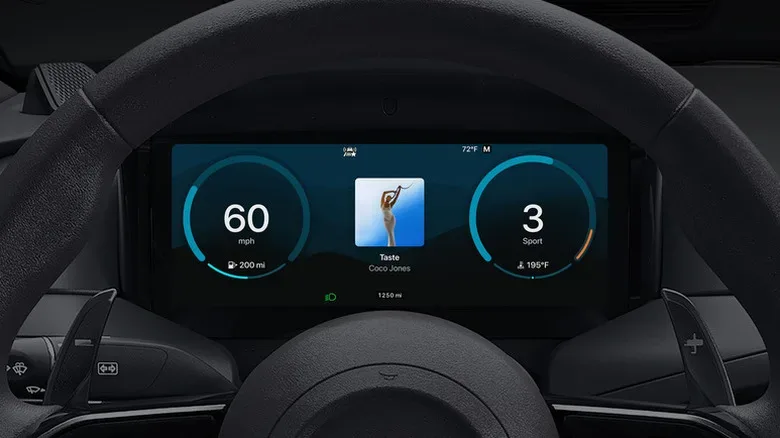
Apple’s response to the integration critique is CarPlay Ultra. Rather than limiting itself to an app area on a central display, Ultra is designed to reach across the in-car experience, including the instrument cluster. It can place details such as speed and tire pressure alongside Apple Maps guidance, while also incorporating functions including radio and climate controls.
The ambition is clear. Instead of making drivers bounce between Apple’s interface and the vehicle maker’s menus, CarPlay Ultra attempts to present one coherent control surface. Automakers can create visual themes that suit their own design identities, but Apple’s software becomes much more deeply embedded in the experience.
For drivers, that could preserve the appeal of a known iPhone-centered interface while addressing some of the fragmentation found in standard CarPlay. For automakers that want to own every aspect of their digital cockpit, however, it may be an even tougher proposition than ordinary CarPlay. Supporting Ultra requires close work with Apple and sharing vehicle information needed for the expanded controls and displays.
It also does not solve the phone-dependency objection. CarPlay Ultra still relies, at least for now, on an iPhone’s processing power. A driver without that iPhone loses access to the Apple-led layer, whereas Android Automotive can function as software resident in the vehicle.
Adoption has been limited so far. Aston Martin is currently the only manufacturer offering CarPlay Ultra. Hyundai and Kia have indicated they may support it later, but no confirmed timeline is established. That slow rollout underscores how difficult it is to merge a phone ecosystem with a vehicle maker’s safety, design, data, and product-roadmap priorities.
What shoppers should watch as the split grows
CarPlay is far from disappearing overnight. It remains available across hundreds of models, and GM is not pulling support from cars already on the road. Its broader phaseout is expected to extend to gas-powered models after a centralized computing platform arrives around 2028. The immediate consequence is therefore a more complicated new-car market, not an instant shutdown of a familiar feature.
Anyone choosing a car should treat phone integration as a long-term ownership question, not a minor showroom checkbox. Confirm whether the exact trim supports wired or wireless CarPlay, whether Android Auto is included if that matters in the household, which navigation and charging tools function without a phone, whether connected services need a subscription, and how the manufacturer describes its data practices.
The future dashboard may be better integrated, more capable at EV-specific planning, and less dependent on a handset. It may also be more closed, more subscription-oriented, and more demanding of personal data. CarPlay’s popularity ensures that automakers cannot ignore what drivers value. But the push toward proprietary vehicle software shows that the battle for the dashboard has moved well beyond picking a map app.