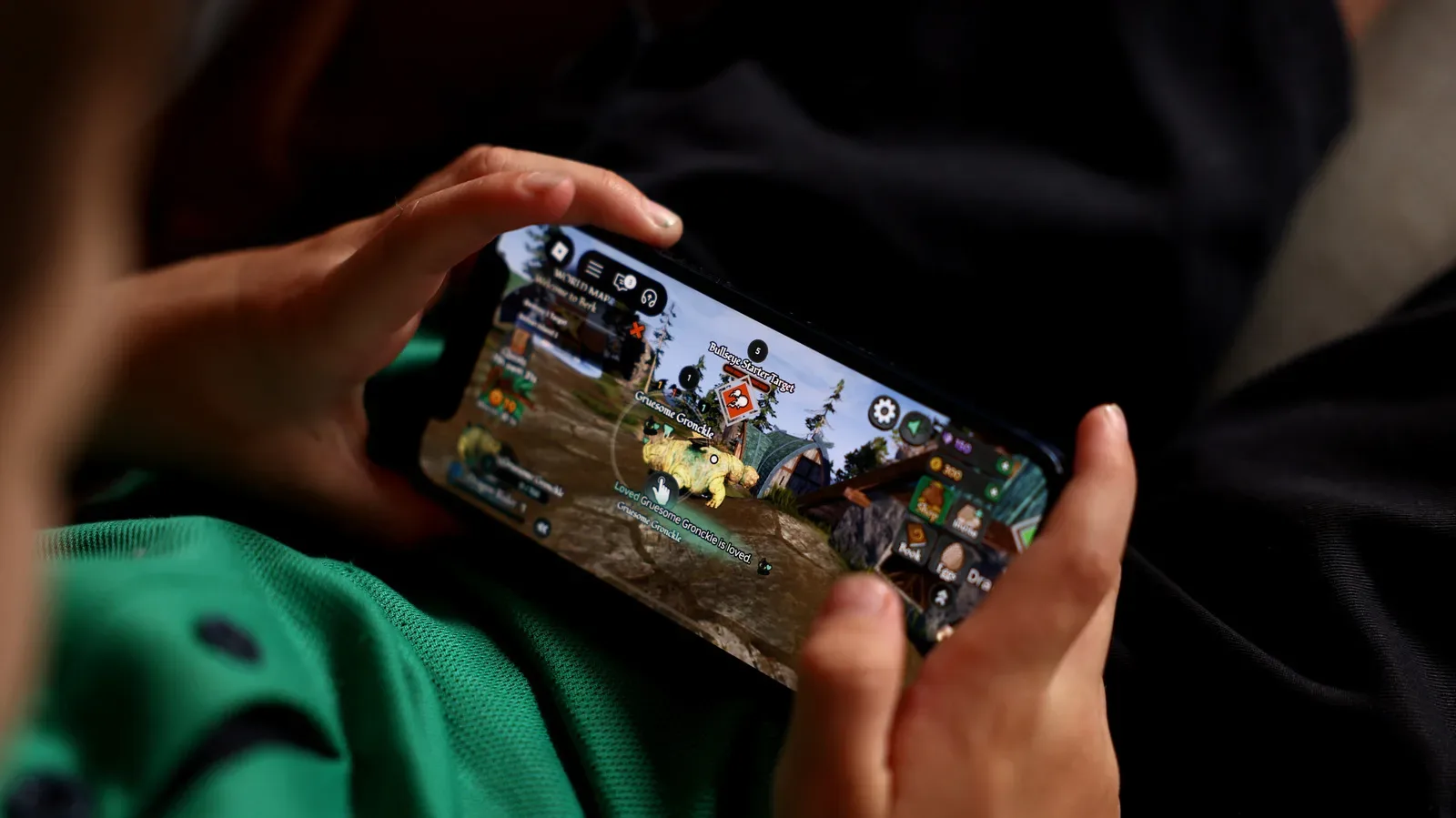
Apple may be preparing to put a more literal joystick in Joking Joystick territory. A new report says the company has spent more than a year developing iPhone gaming controllers and may bring them to market through Beats rather than under the Apple name. The claim is not an announcement, and there is no confirmed product, launch date, price, compatibility list, or design to inspect. Still, the details attached to the rumor make it more substantial than the usual “somebody drew a controller-shaped rectangle” chatter.
Two devices are said to be in development, reportedly carrying the codenames T6502 and T1057. References discovered in a macOS release candidate earlier this month reportedly described hardware with recognizable controller elements: dual thumbsticks, shoulder buttons, and D-pads. That does not tell us whether either device is a telescoping iPhone cradle, a wireless pad, a compact portable controller, or something more unusual. It does suggest that the supposed projects are being considered as proper game-input hardware rather than a novelty button attachment.
The biggest twist is the badge. Beats, Apple’s audio-focused brand, is reportedly handling product conception and engineering through Beats executives. On paper, the pairing makes a surprising amount of sense. In practice, it is also the kind of idea that inspires an immediate, involuntary mental image of a controller arriving with bass-heavy startup sounds and a charging case that looks suspiciously ready to headline a gym playlist.
Why Beats could be the useful testing ground
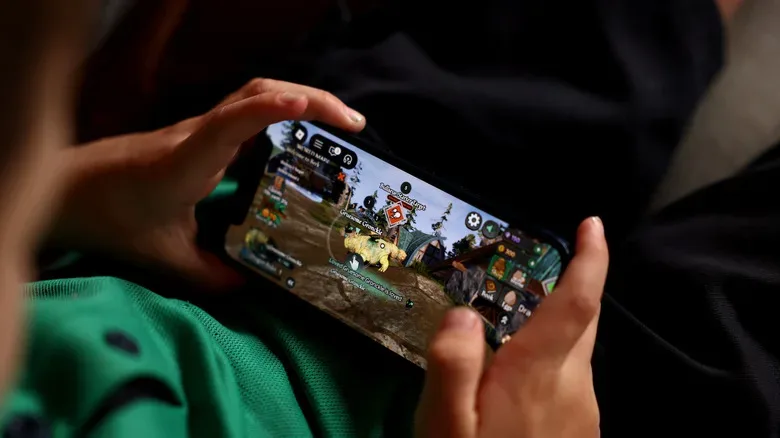
Apple already has a place in gaming, even if it does not always act like the company wants to sit at the cool kids’ console table. The iPhone and iPad support controllers, major games have arrived on Apple hardware, and the company’s storefront already carries third-party options including products from Backbone and SteelSeries. An in-house controller would not create controller support from scratch. It would give Apple a chance to shape the physical experience around iPhone gaming rather than leaving that layer entirely to accessory makers.
Using Beats could offer some strategic distance while doing that. Apple’s core hardware is usually associated with a tightly managed premium identity, which can create towering expectations before anyone has even pressed a face button. Beats has room for a different approach: youth-oriented styling, louder colors, an entertainment-adjacent image, and perhaps a product positioned below Apple’s usual hardware pricing tier. The report specifically raises the possibility that a Beats controller could be more affordable because it would not need the same materials or styling typically expected of an Apple-branded device.
That possibility matters, but it remains only that: a possibility. No price has been reported, and “more affordable than Apple” is not the same thing as inexpensive. A controller can be comparatively accessible while still demanding enough money to make a player stare longingly at the touchscreen controls they had been trying to escape.
Brand fit is another reason Beats is plausible. Gaming accessories thrive on personality. Controllers are used in public, photographed in setups, coordinated with handheld cases and headphones, and sometimes collected in colors that players swear are objectively faster. Beats has experience selling a lifestyle-facing device category in which design and cultural positioning are part of the purchase. An iPhone controller built with that mindset could look distinctly different from the utilitarian black plastic that has traditionally dominated the accessory aisle.
The code references are interesting, not a retail promise
The macOS release-candidate references are the most concrete thread in the rumor, but they should be interpreted carefully. Internal code can indicate active development, testing, support work, or preparation for hardware that later changes dramatically. It does not guarantee that a project ships. Companies routinely explore products, move them between teams, revise their purpose, or decide the timing is wrong. Codenames T6502 and T1057 offer clues that there may be two distinct hardware entries, but they reveal almost nothing about how customers would actually use them.
The listed inputs do establish a baseline worth watching. Dual sticks, shoulder buttons, and a D-pad cover the core vocabulary of modern controller play. They would suit racing, action, platforming, fighting games, shooters, streaming services, and the many genres that become considerably less polite when asked to work through a flat glass screen. Dedicated controls can also help make an iPhone feel less like a phone awkwardly balancing a game and more like a portable system with a clear job.
Yet the unanswered questions are substantial:
- Will the controllers connect directly to an iPhone, wrap around it, or work wirelessly?
- Which iPhone models, iPads, Macs, or Apple TV devices—if any—would be supported?
- Would both rumored devices target different use cases, such as portable and living-room play?
- Will there be a headphone jack, passthrough charging, remappable buttons, haptics, a companion app, or a carrying solution?
- How will cases, USB-C layouts, larger iPhone sizes, and future handset revisions affect fit?
- Would the controllers work broadly with games that already support standard pads, or need special integrations?
Until Apple or Beats provides answers, declaring a winner in the imaginary Controller Wars would be premature. The first great achievement of any phone controller is simple: it must not become a very expensive object that lives in a drawer next to three mystery cables and a SIM-eject tool.
What an Apple-made option would need to prove
Third-party iPhone controllers already set a meaningful bar. Backbone and SteelSeries products demonstrate that there is an audience for physical controls on mobile devices, and that an Apple-backed entrant would need more than a famous logo to stand out. Comfort, reliable connectivity, software support, portability, and a sensible fit across devices are the real bosses at the end of this level.
Apple and Beats could potentially distinguish themselves through close integration, but no such features have been reported. It would be unwise to assume automatic pairing, custom system menus, exclusive software, or special subscription benefits. Those are the sorts of logical guesses that rapidly turn into fictional spec sheets when repeated often enough. For now, the supported facts are narrower: the controller effort has reportedly been underway for over a year, two projects have been referenced, and Beats is said to be involved in their engineering and concept work.
There is also a practical reason Apple may be interested in a controller category beyond any one game. Its devices span phone, tablet, computer, television, and headset ecosystems. A good controller is a bridge between screens and services. It can make game streaming more appealing, help an Apple TV feel more game-ready, and offer a familiar control scheme to players who do not consider touch input their preferred language. Whether the rumored hardware would extend beyond iPhone remains unknown, but broader utility would be a natural question once official information appears.
Anyone considering an accessory purchase now should treat this as rumor-season information rather than a reason to freeze every buying decision. A currently available controller is a known quantity; these two alleged Beats devices are not. Buyers should prioritize the games they play, the phone they own, the form factor they can tolerate, and whether they need a controller immediately. They should also consider device coverage and accessory risk, especially for gear that may spend its life attached to a costly handset; our guide to AppleCare+ versus AppleCare One explains the wider protection-plan question for Apple device households.
No timetable, and no reason to pre-order with your imagination
The report does not provide a release timeline. That is an important absence. Hardware can remain in development for a long time, and the path from a code reference to a store shelf is full of chances for redesign, delay, rebranding, or cancellation. Even the Beats name is reported rather than confirmed, meaning the final branding could change if either product emerges.
For now, the story is compelling because it combines a recognizable accessory need with an unexpected brand route. A Beats controller could let Apple try a more playful, price-flexible, culturally aligned gaming product without asking its flagship hardware brand to carry every expectation on day one. Two alleged devices, complete with conventional gamepad controls, make the idea feel more tangible than a vague ambition. But tangible is not the same as official.
Until there is a formal reveal, the sensible reading is straightforward: Apple may be exploring a notable expansion of its gaming hardware ambitions, potentially through Beats, and the evidence points to more than one controller concept. The rest—the shape, the price, the platforms, the features, and the launch date—is still waiting at the spawn point.