Big games can be thrilling precisely because they seem endless: a giant map, dozens of systems, a campaign that can absorb months of spare evenings. But Matt Radford, a former visual effects artist who worked on The Last of Us and Uncharted 4, has made the case for an equally valuable alternative: shorter games that know exactly what they want to do, do it well, and let players finish them without turning the calendar into collateral damage.
Radford, who has since opened the studio 5th Corner, described blockbuster-sized projects such as Grand Theft Auto 6 and the next Elder Scrolls as personally intimidating. The issue was not hostility toward either series, nor a prediction that their games will disappoint. It was a practical preference shaped by time: he is more excited by focused experiences that can deliver a great time without demanding a massive commitment.
“I’m 38 years old,” Radford said. “And I think that there’s also something intimidating to me about a GTA 6 or, you know, another Elder Scrolls. I, personally, am really looking for shorter experiences that are focused [and] that I have a great time with. That excites me probably more.”
The time commitment is part of the design conversation
Game length is often discussed like a simple measure of value: more hours for a player’s money sounds automatically better. Yet that framing misses a basic fact of how people play. An experience running beyond 50 hours is not merely a longer version of an eight-hour game. It asks for a different kind of relationship with the player.
It can require a sustained memory of plot details, character motivations, mechanics, map geography and unfinished objectives. It can become difficult to return to after a busy week. And for players balancing work, family, studies, health, other hobbies, or simply a crowded release schedule, it may become an unfinished promise rather than a cherished adventure.
That does not make long games a mistake. A sprawling role-playing game or open-world crime game can use its scale to produce discovery, freedom and a sense of inhabiting a place. Those benefits are real, and they are not interchangeable with a linear campaign. But Radford’s point speaks to a separate player need: a substantial game that fits into real life without needing to become real life for a while.
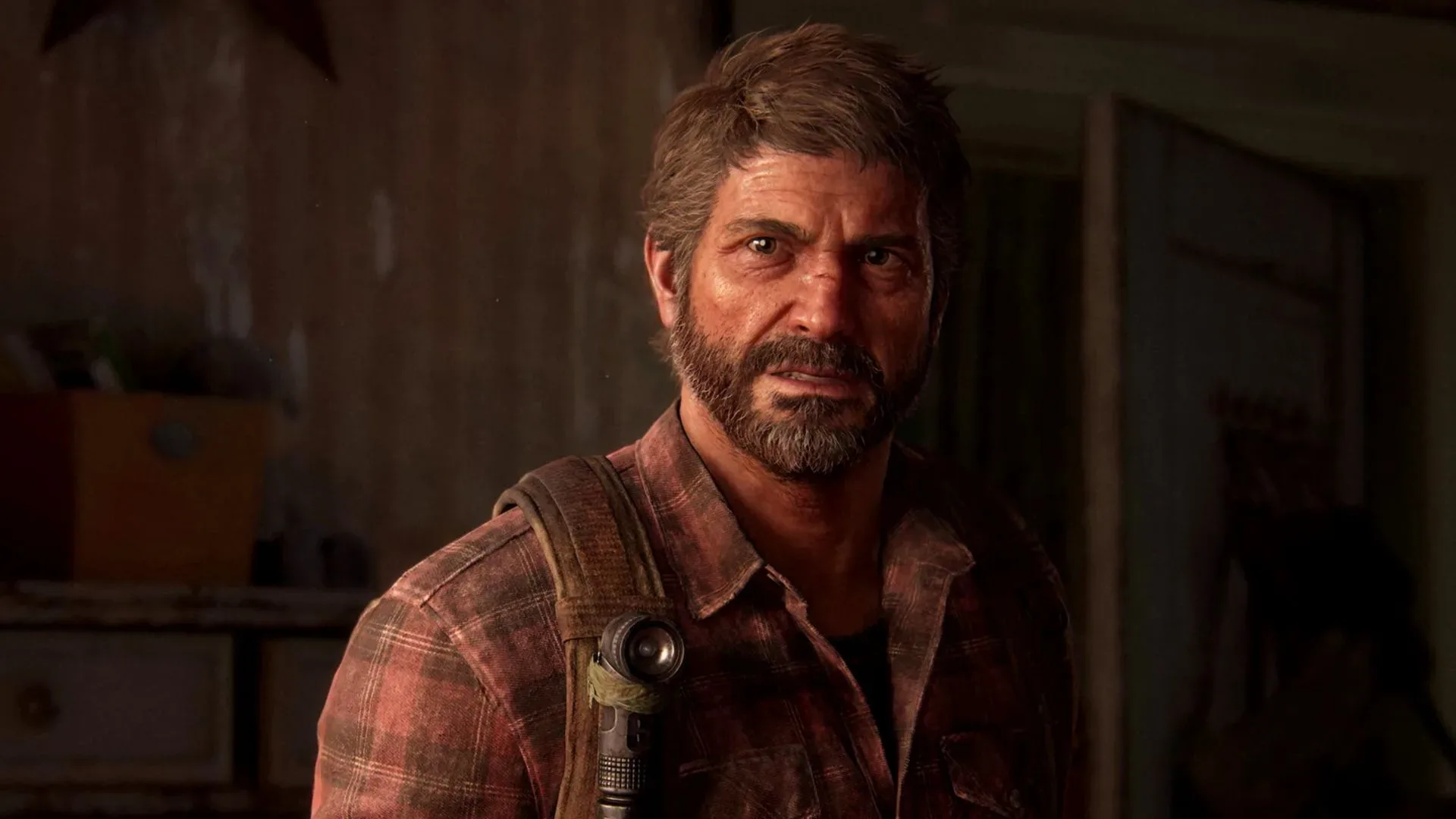
He specifically contrasted the length of The Last of Us Part II, which he felt ran long, with the earlier Uncharted games he enjoyed at roughly six to eight hours. That comparison matters because both examples are associated with polished, cinematic, high-production storytelling. The distinction is not between an ambitious game and a small one. It is between projects whose ambition is expressed through breadth and duration, and projects whose ambition is expressed through concentration.
What “focused” can mean in a game
A focused game is not necessarily a tiny game, and it does not mean a game must have little replay value. In this context, focus means designing around a clear core rather than treating every possible activity or system as mandatory proof of scale.
Related coverage includes Former Naughty Dog Artist Says Shorter Games Feel More Appealing Than Massive Open-World Epics.
- A defined dramatic arc: The narrative can move forward with fewer detours and less pressure to continually expand the cast, world or conflict.
- Mechanics with a purpose: A smaller set of tools can be introduced, developed and used in meaningful situations instead of becoming a long checklist.
- Less friction in returning: Players are more likely to remember where they were and what they were doing after a short break.
- A finish line within reach: Completing the story may feel realistic over a weekend or two rather than an uncertain long-term undertaking.
None of that argues that every game should be six hours long. A length only works when it suits the game’s structure. The more useful takeaway is that duration should be a creative choice, not a default badge of importance. A game can be memorable because it leaves the player wanting more, rather than because it outlasts every other entertainment option competing for their attention.
There is also a difference between a player choosing to spend 50 hours because the game continues to reward their curiosity and a player feeling they must spend 50 hours to reach the good parts, understand the story or see a satisfying ending. The former can be a strength of the medium. The latter is the kind of obligation Radford’s comments push back against.
Scale also has a production cost
Radford’s preference is not only about a player’s schedule. He also pointed to the financial reality behind huge modern productions. AAA games can cost more than $200 million or $300 million to make. “AAA” is an industry shorthand for projects with major budgets, large teams and high technical and production expectations; it is not a guarantee of quality, but it generally signals the scale of investment and risk involved.
When a project needs that much money, the stakes around its commercial performance rise sharply. A company is not merely deciding whether an idea is creatively interesting. It is committing to an enormous undertaking that has to justify its cost. Radford suggested that tighter experiences could potentially lower those costs.
That is a possibility, not a magic formula. A shorter game can still be expensive if it pursues exceptionally detailed visuals, elaborate effects work, extensive performance capture or other demanding production goals. Likewise, a huge game may have a business rationale that a shorter release does not. Still, reducing length and scope can give developers room to make different trade-offs: fewer environments, fewer missions, fewer interlocking systems, or a more contained narrative may reduce the amount of material that must be created and integrated.
In practical terms, every added area, feature and hour can entail additional art, animation, visual effects, audio, writing, design, testing and technical support. Scope is not just map size. It is the cumulative production burden of making all of those pieces work together at a standard audiences expect.
That is why a conversation about shorter games is also a conversation about creative planning. A project that cuts ideas early can devote more attention to the ideas that remain. The result is not inherently better, but it can be more deliberate. Developers may gain the freedom to make a distinctive game that does not need to compete on the sheer number of hours it occupies.
Wanting smaller commitments is not wishing for blockbuster failure
Radford was explicit that his view is not rooted in wanting massive projects to stumble. He expects GTA 6 to be “awesome” and said the wider industry wants it to succeed. In his view, a failure for a game of that stature would be a bad sign for the business rather than a victory for fans of shorter experiences.
That distinction is crucial. The case for focused games does not require declaring open worlds obsolete or treating big-budget releases as artistically invalid. Players can want an enormous, all-consuming world sometimes and a compact, carefully paced campaign at other times. The real question is whether the market and the industry preserve enough room for both.
There is no single ideal game length, because there is no single player routine. Some people enjoy methodically inhabiting one game for months. Others prefer a game that offers a complete arc between other responsibilities. Some will play an expansive release mainly for its main story and ignore optional activities; others will happily make those activities the point. These approaches are not in conflict until game design and marketing imply that only maximum scale represents value.
Even game technology does not point in only one direction. Efforts to make worlds feel more seamless can add to the appeal of large experiences, as seen with projects such as a mod attempting a no-loading-screen route from orbit to the ground in Starfield. But technical spectacle and a manageable campaign are separate design goals. A game can chase one, the other, or try to balance both.
A healthier measure of value
Radford’s comments ultimately challenge the assumption that a game earns its price or prestige primarily through size. Completion, pacing, replayability, mechanical depth, storytelling, social play and personal enjoyment all matter. Hours matter too, but they are not the only unit of value, and they can become a barrier when they grow beyond what a player can comfortably give.
The appeal of the six-to-eight-hour adventure is easy to understand: it can have a beginning, middle and end without asking someone to postpone the rest of their library—or the rest of their life. The appeal of a 50-hour epic is easy to understand as well: it can offer the rare pleasure of settling into a world that feels broad enough to keep unfolding.
There is room for both. But as budgets rise and players’ available time remains finite, the shorter option is more than a nostalgic preference for older game structures. It is a meaningful creative and practical lane—one where a game’s confidence may come from choosing what to leave out.