The U.S. retro handheld market may be facing a more serious policy question than whether a compact emulator can run a favourite old game smoothly. The Entertainment Software Association (ESA) has urged the Office of the United States Trade Representative (USTR) to examine ANBERNIC and other sellers of retro handheld hardware as part of the USTR’s Notorious Markets review, raising concerns about devices that are sold with unlicensed games or otherwise facilitate commercial-scale piracy.
That request matters, but it is important to describe it accurately. The ESA’s submission is not an announced ban on ANBERNIC hardware, a seizure order, or a finding that a particular product is unlawful. It is a request for the USTR to consider named companies and sellers in a process intended to identify markets associated with substantial copyright piracy and trademark counterfeiting. No U.S. action against the products described has been established here.
Still, the development puts renewed attention on a part of the retro-device business that has long been difficult to separate neatly: the distinction between selling general-purpose emulation hardware and selling hardware bundled, advertised, or distributed with game libraries the seller does not have permission to provide.
What the ESA is asking the USTR to consider
The ESA is a U.S. trade association representing video-game industry interests. Its work includes advocacy around intellectual-property protection, technology and digital policy. In this case, it has made a recommendation connected to the USTR’s Notorious Markets list.
The list is designed to draw attention to physical and online markets that engage in or enable serious copyright piracy or trademark counterfeiting. In practical terms, it is a visibility and policy mechanism: it can identify businesses, sales channels and practices that rights holders believe help sustain infringement. Being raised in this process is consequential, but it does not itself establish legal liability or automatically stop a product from entering the United States.
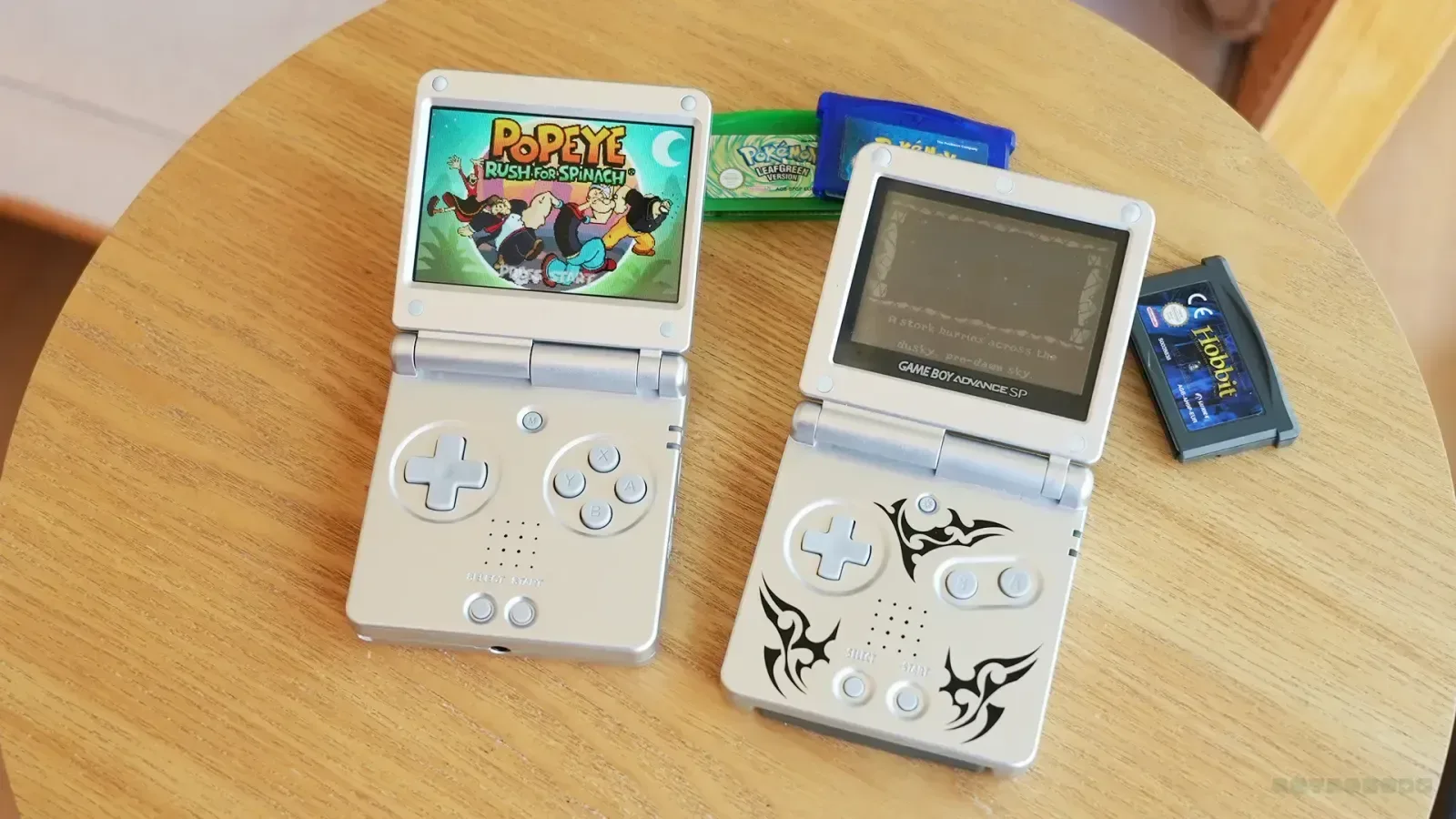
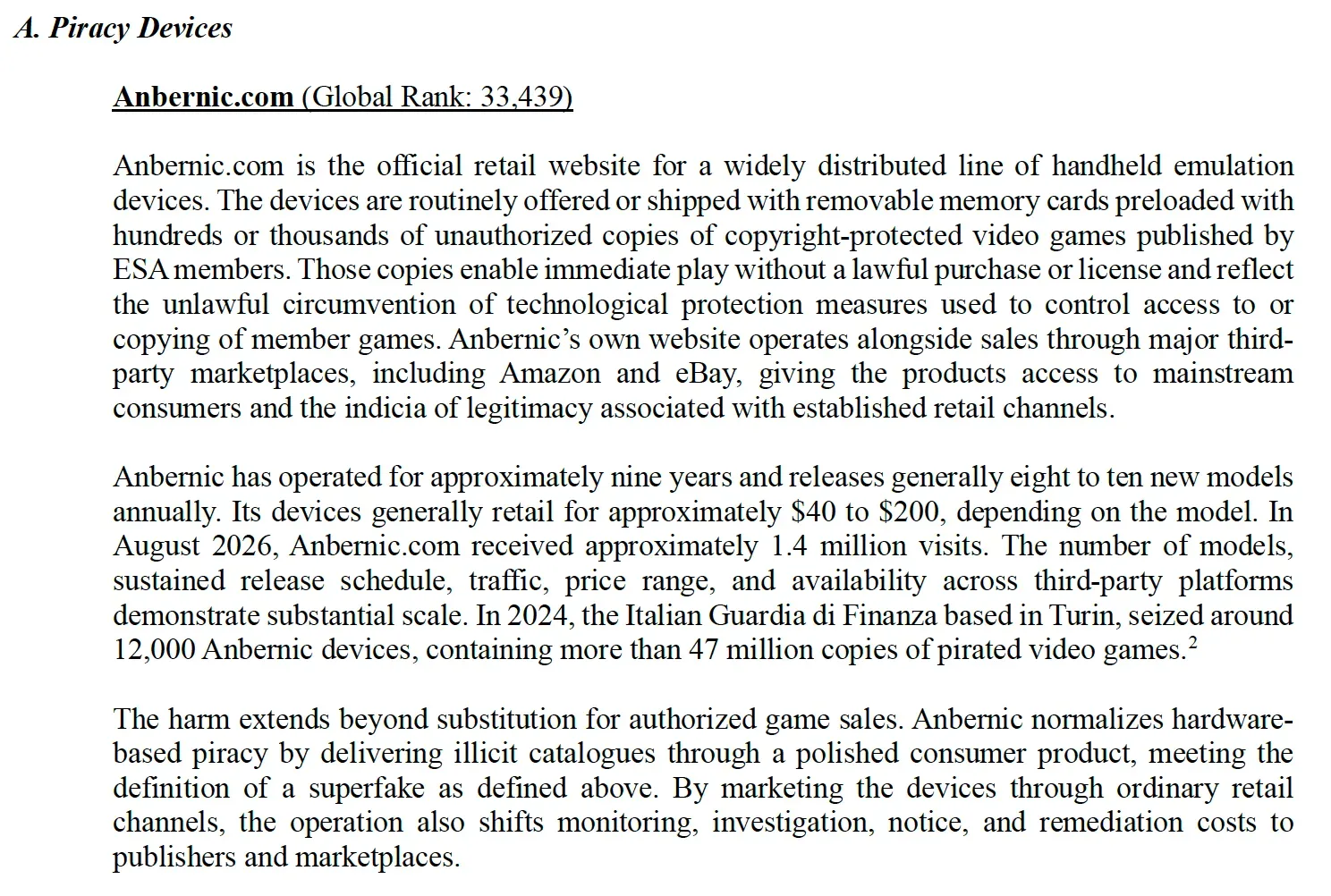
ANBERNIC appears among companies the ESA wants examined under a piracy-devices framing. The central concern described is not simply that a handheld can emulate older systems. It is the commercial distribution of devices with protected game software included, particularly where an SD card is preloaded with a large catalogue of titles.
A device capable of running emulators and a device marketed with a library of unauthorized games are not necessarily the same legal or commercial proposition.
That distinction is likely to be the key one for buyers and sellers alike. Hardware can be used for many purposes, while preloaded game files can raise a separate copyright issue. The evidence supplied does not establish that every ANBERNIC device is shipped with unlicensed content, nor does it establish that every seller using the company’s hardware follows the same packaging or software practices. Those details matter when broad labels are applied to a brand or a product category.
Related coverage includes ESA Asks USTR to Examine ANBERNIC and Other Retro Handheld Sellers.
Why preloaded SD cards are at the center of the discussion
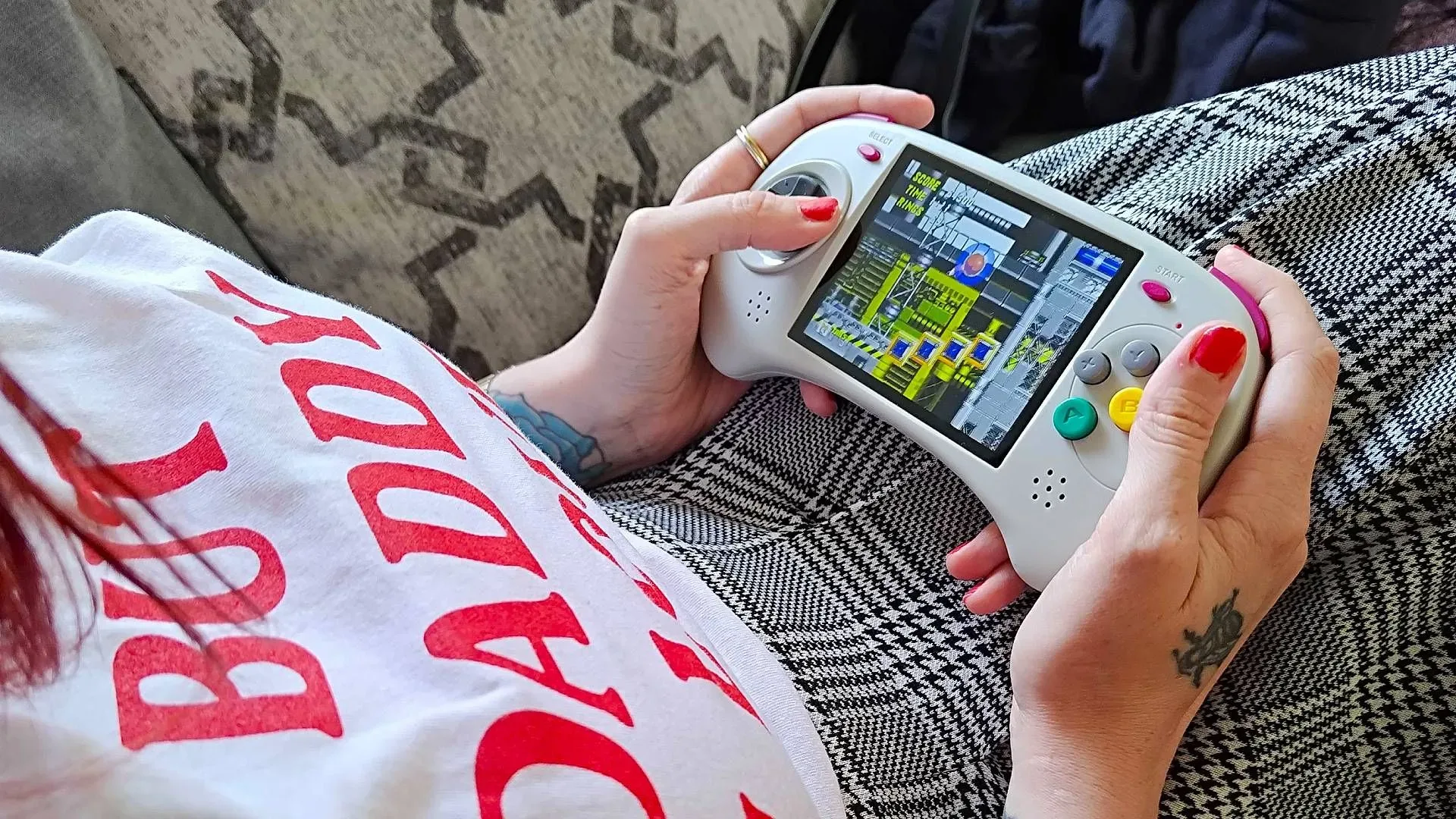
A retro handheld is generally a small portable computer built to run software that imitates older gaming hardware. That software is commonly called an emulator. A game file used with an emulator is often called a ROM, though the word is used loosely in everyday retro-gaming conversation.
Neither term answers the licensing question on its own. The issue is whether a game publisher or rights holder authorized the copy and distribution of the game software. A handheld sold without games is therefore materially different from one advertised with thousands of titles already on a storage card. The latter turns the purchaser’s experience from setting up their own software into receiving a ready-made game catalogue as part of a commercial sale.
This is why the ESA’s interest is directed at piracy devices rather than retro hardware in the abstract. A product listing that foregrounds a giant number of included games can look less like an ordinary hardware sale and more like a commercial offer built around unlicensed software. That marketing also makes the risk easier to understand for consumers: an enormous game count may be convenient, but it should prompt questions about who supplied those files and whether they were authorized.
Preloaded cards remain a visible practice in parts of the market, especially through some marketplace listings. The material provided also indicates that not every major handheld brand or product listing follows that model and that bundled game cards have become less common on some devices over the last couple of years. The variability is significant. Shoppers should avoid assuming that every unit from a particular manufacturer includes games, or that an identical-looking product listing from a different seller has the same contents.
What consumers can check before purchasing
- Read the listing closely: Look for whether it promises a numbered game library, mentions an included SD card, or identifies software by name.
- Separate the hardware from the bundle: A seller may offer the same handheld in different configurations, with or without a storage card.
- Be wary of vague claims: “Thousands of games” without a transparent description of licensing or contents is a meaningful warning sign.
- Keep the product page and order details: If a listing changes or the item received differs from the offer, those records help document what was sold.
- Do not treat inclusion as permission: A game arriving on a card does not by itself show that its distribution was authorized.
What this does not decide about emulation
There is a temptation to turn every dispute involving retro handhelds into a verdict on emulation as a whole. The available information does not support that leap. The ESA’s request concerns alleged commercial-scale piracy and the distribution practices surrounding particular devices and sellers. It does not amount to a blanket rule announced here against emulators, retro hardware, or users who play older games.
That nuance is especially important because retro gaming includes several different activities: collecting original cartridges and discs, using licensed re-releases, preserving personal libraries, developing emulator software, and purchasing plug-and-play hardware. These activities may overlap technically, but they are not automatically identical from a rights or marketplace perspective.
Questions about preservation have also appeared elsewhere in gaming, including debate around fan-led attempts to keep older games accessible. The legal picture around unauthorized game ports remains unsettled, and the same general caution applies here: technical capability, consumer demand and legal authorization are separate questions.
Separate issue: handheld designs that resemble established consoles
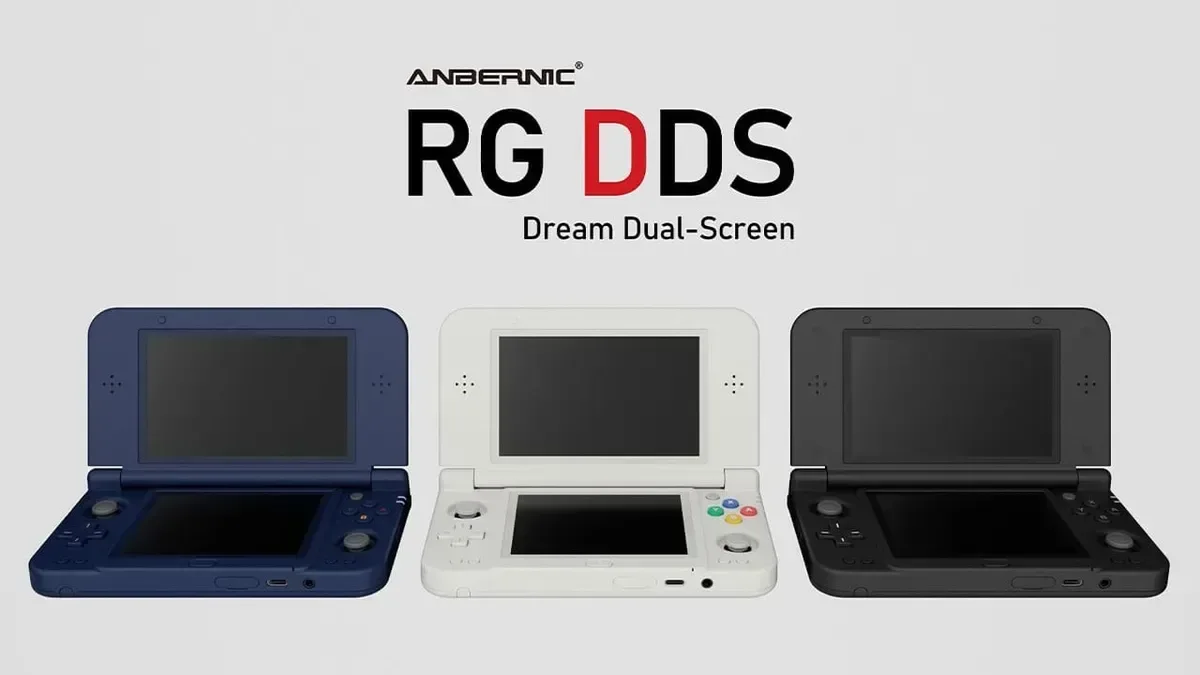
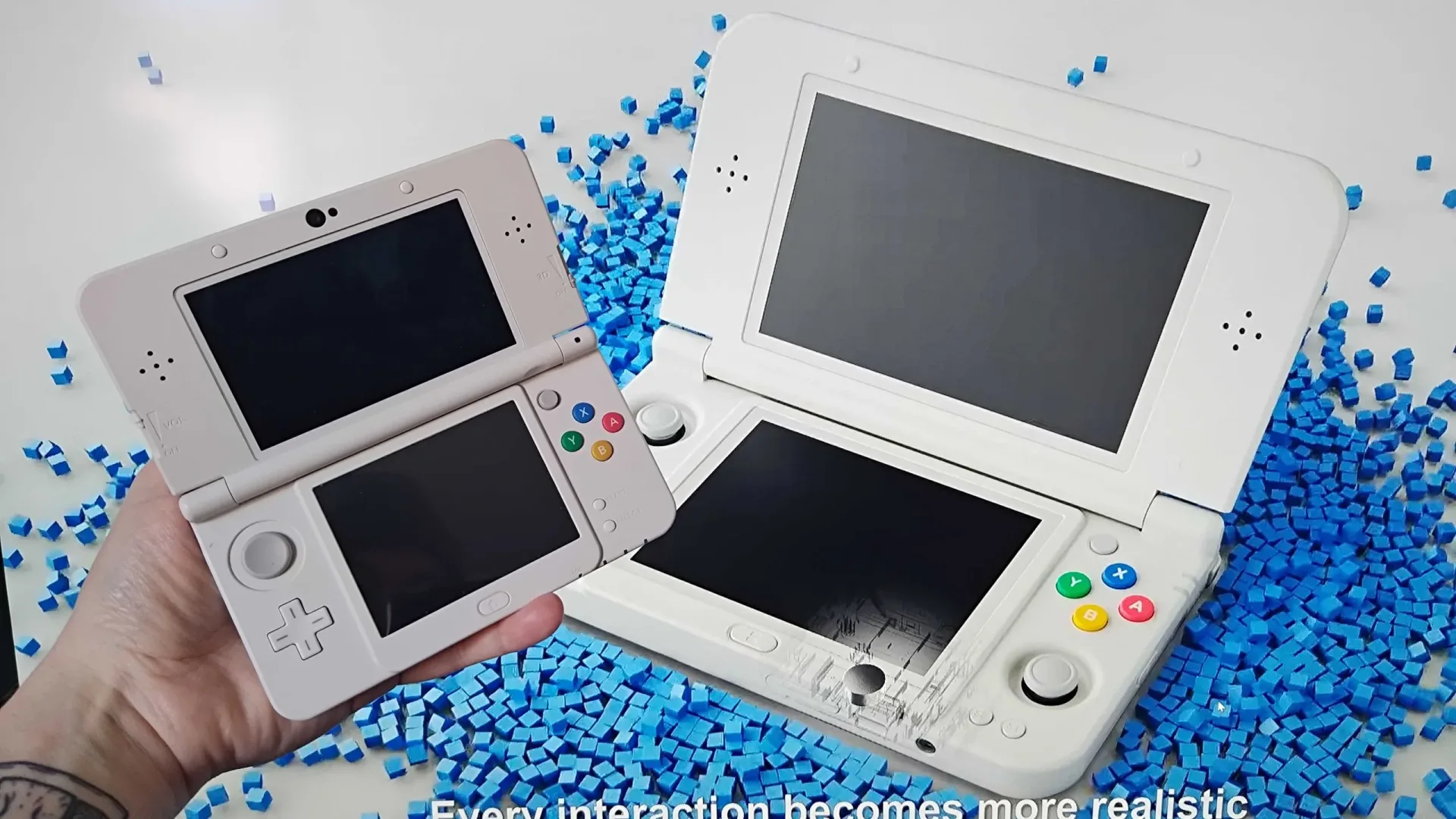
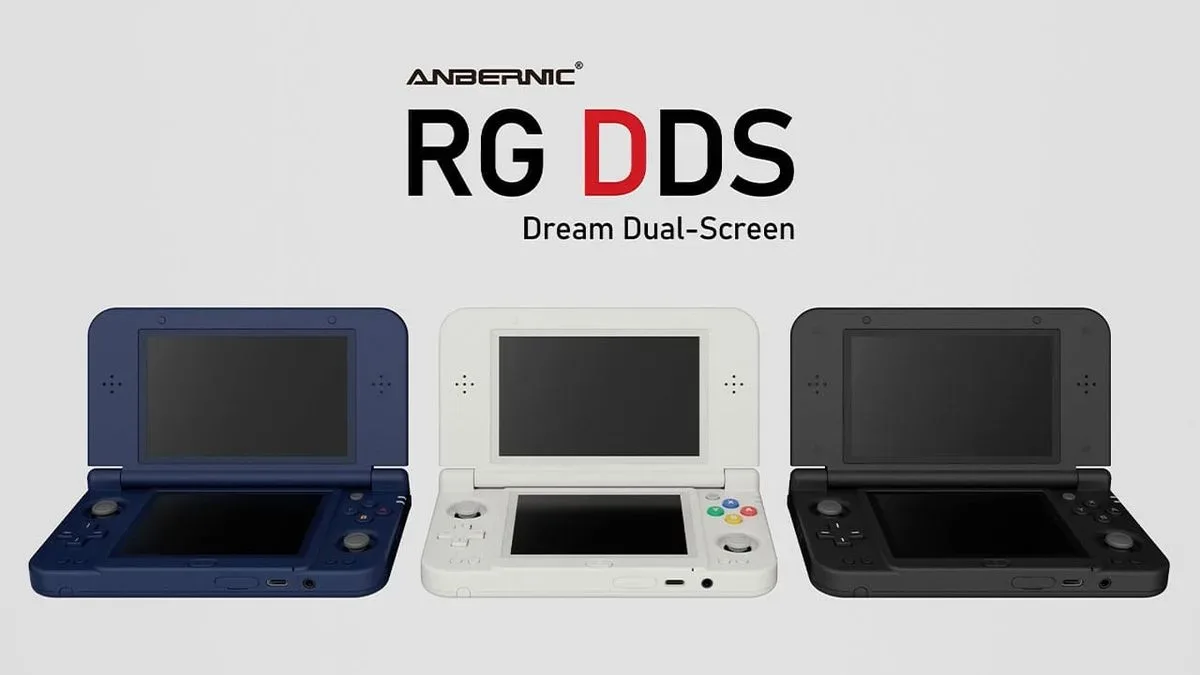
The reporting also points to ANBERNIC’s newly announced RG DDS, which is described as looking very similar to Nintendo’s 3DS. That is a different potential issue from copyrighted game files on an SD card.
Copyright generally concerns protected creative works, including game software. Trademark concerns branding and identifiers that tell consumers who made or stands behind a product. Patent questions can concern protected inventions or specific design-related rights, depending on the claim at issue. A close-looking handheld design may invite discussion about one or more of these areas, but it does not establish an infringement claim by itself.
Nothing supplied here indicates that Nintendo has filed a claim regarding the RG DDS. It would be premature to represent visual similarity as a legal determination. The ESA’s USTR recommendation and any hypothetical dispute over a product’s physical design should therefore be kept distinct.
Possible consequences, and why patience is warranted
The immediate consequence is scrutiny, not a confirmed market change. A Notorious Markets recommendation can influence attention from policymakers, platforms, intermediaries and companies that handle international commerce. It may also encourage sellers to reconsider preloaded software bundles, product-copy language and supplier practices.
But a request is only one stage. Any U.S. response would depend on the USTR’s review and whatever further actions, if any, relevant authorities or rights holders choose to pursue. The material does not provide a timetable, a proposed import rule, or evidence that an import restriction has been approved.
There is at least an international enforcement backdrop. Italy previously seized 12,000 ANBERNIC products, showing that retro handhelds can draw regulatory attention in specific jurisdictions. Yet that episode does not predict what U.S. authorities will do, nor does it automatically determine the treatment of every product sold under the ANBERNIC name.
What the story means for the retro handheld market
The ESA’s request places pressure on the industry’s most legally exposed convenience feature: the promise that a device will arrive with a vast game library ready to use. If sellers respond by moving away from preloaded cards and explicit game-count marketing, consumers may encounter more devices sold as bare hardware or with storage intended for user setup.
That would not erase demand for compact retro machines. It would, however, shift more responsibility toward purchasers to understand what they are buying and how software gets onto it. It could also make the market less uniform: a branded handheld, a third-party marketplace bundle and a similarly styled clone may look alike in a search result while presenting very different software and compliance risks.
For now, the narrowest and most useful reading is straightforward. The ESA has asked the USTR to look at ANBERNIC and other sellers in connection with piracy concerns. The request is meaningful, particularly for products packaged with unlicensed game libraries, but it is not a final ruling and not an announced U.S. ban. The next meaningful development will be an official response or concrete enforcement step—not speculation based solely on the referral.