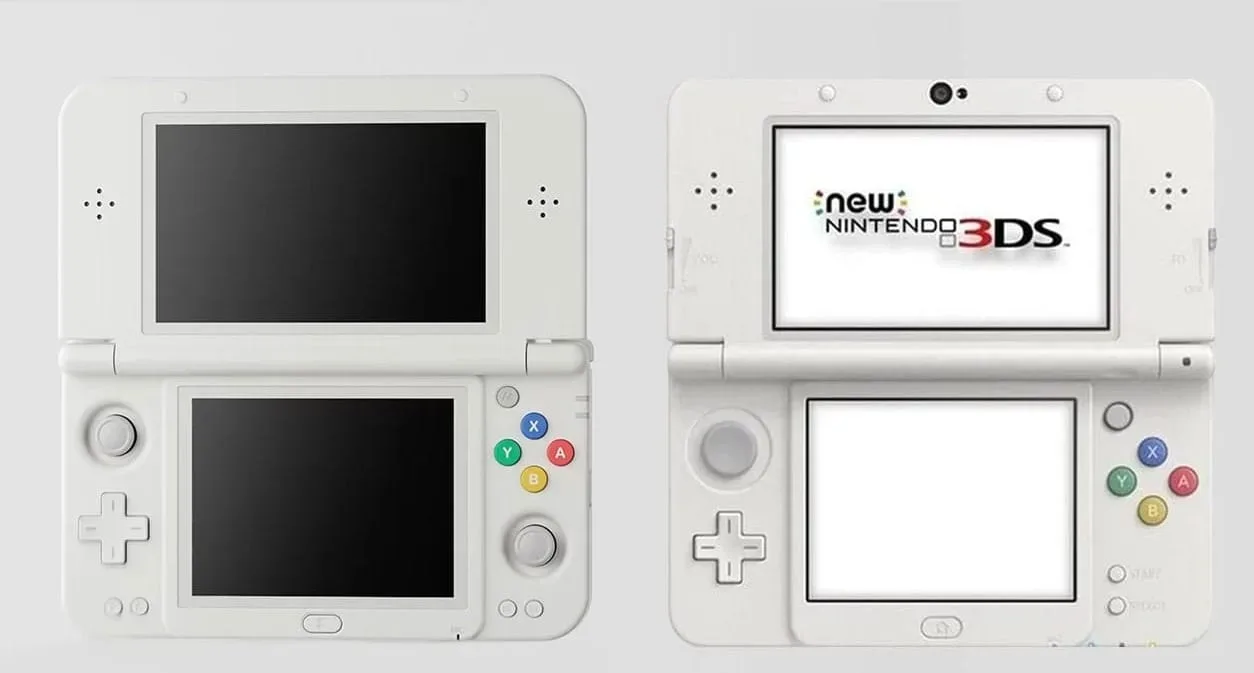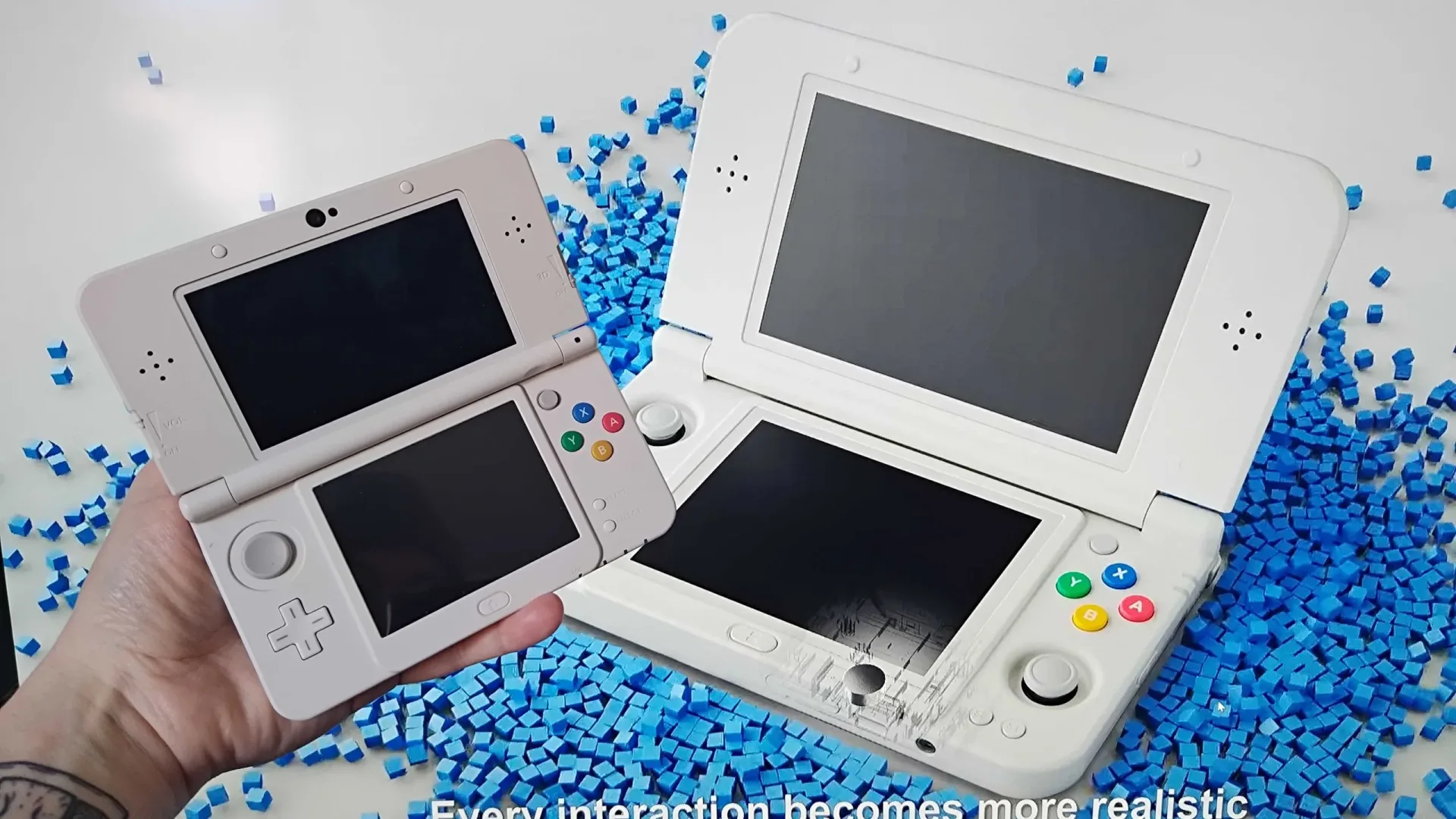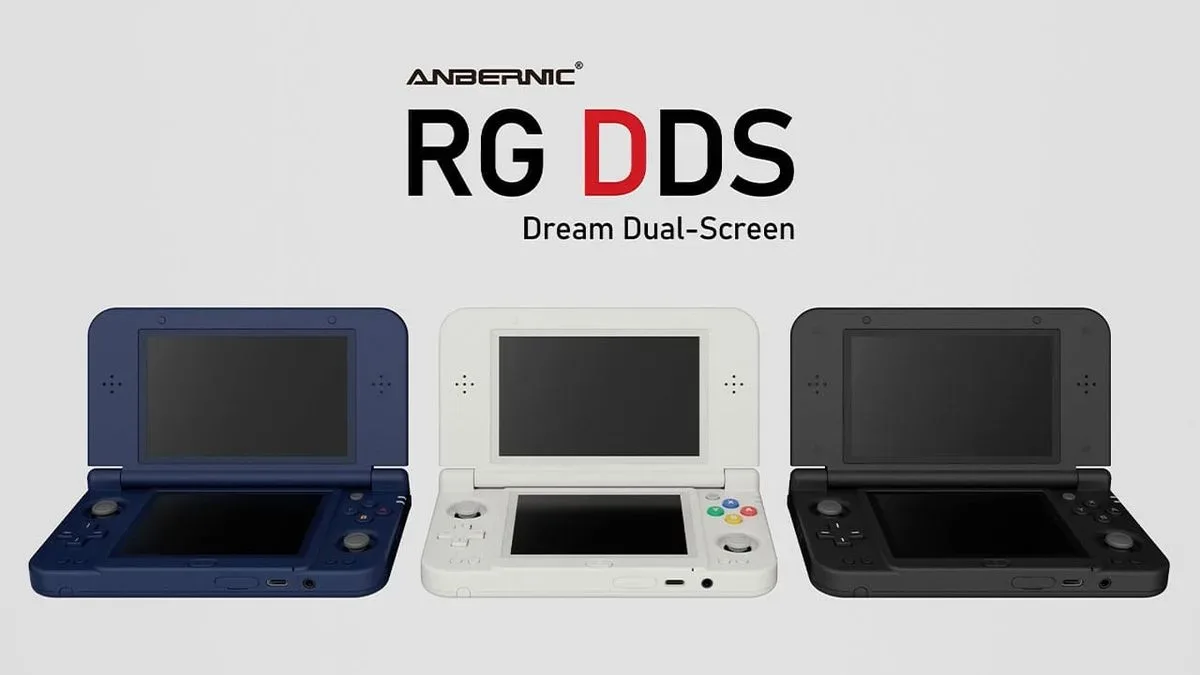
Anbernic has revealed the RG DDS, short for “Dream Dual Screen,” a clamshell handheld whose visual language will be immediately recognisable to anybody who spent years opening a Nintendo 3DS. It has two vertically stacked displays, a familiar compact shape, a bottom-screen stylus slot and controls arranged in a way that strongly recalls the New Nintendo 3DS line.
The resemblance is not a vague nod to a classic form factor. Based on the material shown so far, the outer shape, speaker-grille placement, button presentation and colour choices all deliberately evoke that era of Nintendo hardware. Anbernic has also added one major control difference: a second analogue stick sits on the right side beneath the face buttons.
That combination makes the RG DDS one of the more direct attempts yet to build a contemporary dual-screen handheld around the physical habits people formed on DS-family systems. The important caveat is equally direct: it is not presenting itself as a machine with the 3DS’s namesake stereoscopic 3D display feature. “Dual screen” is the central idea here, not glasses-free 3D.
What has been shown about the RG DDS
The confirmed hardware detail at the centre of the reveal is a Qualcomm Snapdragon G2 Gen 2 chipset. A chipset is the package containing key processing components that determine a portable device’s general computing and graphics capability. In practical terms, it is a meaningful specification because software support and performance targets will matter just as much as the familiar shell.
However, a processor name alone does not settle how a handheld will perform with every game, emulator or operating system. Results can depend on software optimisation, display configuration, memory, cooling, controller support and the maturity of the platform. It is therefore sensible to treat the RG DDS’s real-world compatibility range as unproven until Anbernic gives fuller technical details and the device is available for independent evaluation.
Anbernic’s presentation places obvious emphasis on DS- and 3DS-style play. The RG DDS uses the same display aspect ratio as the New Nintendo 3DS, which should help its screens feel proportionally familiar for software designed around that layout. Its displays are said to be smaller than those on the Retroid Pocket Lite, but the smaller dimensions may be a feature rather than a drawback for players seeking something close to the original 3DS’s overall scale.
Aspect ratio simply describes the relationship between a screen’s width and height. Matching the New Nintendo 3DS ratio does not by itself guarantee perfect image presentation for every title, but it suggests that the device is pursuing a particular visual and ergonomic reference point instead of merely placing two generic screens in a clamshell.
A second stick changes the pitch
The right-side analogue stick is the clearest functional departure from the classic 3DS-inspired silhouette. On the original hardware, control options and the precise location of inputs were shaped by Nintendo’s own design choices. The RG DDS instead makes room for a more contemporary twin-stick layout, positioning the added stick below the face buttons.
Related coverage includes Anbernic Reveals RG DDS Dual-Screen Handheld With 3DS-Like Design.
That may make the handheld more flexible for software that benefits from independent movement and camera control, while retaining a layout that remains easy to understand for players accustomed to Nintendo’s dual-screen portables. It also highlights the balancing act at the heart of the device: the RG DDS is chasing nostalgia in its physical design while trying to incorporate controls associated with newer portable hardware.
For prospective buyers, the details that remain unseen will be especially important. Stick feel, button travel, hinge durability, screen brightness, touchscreen responsiveness and how easily the device can be held over long sessions all matter to a clamshell handheld. None should be assumed from renders or design comparisons alone.
The lower display appears to be more than a second picture
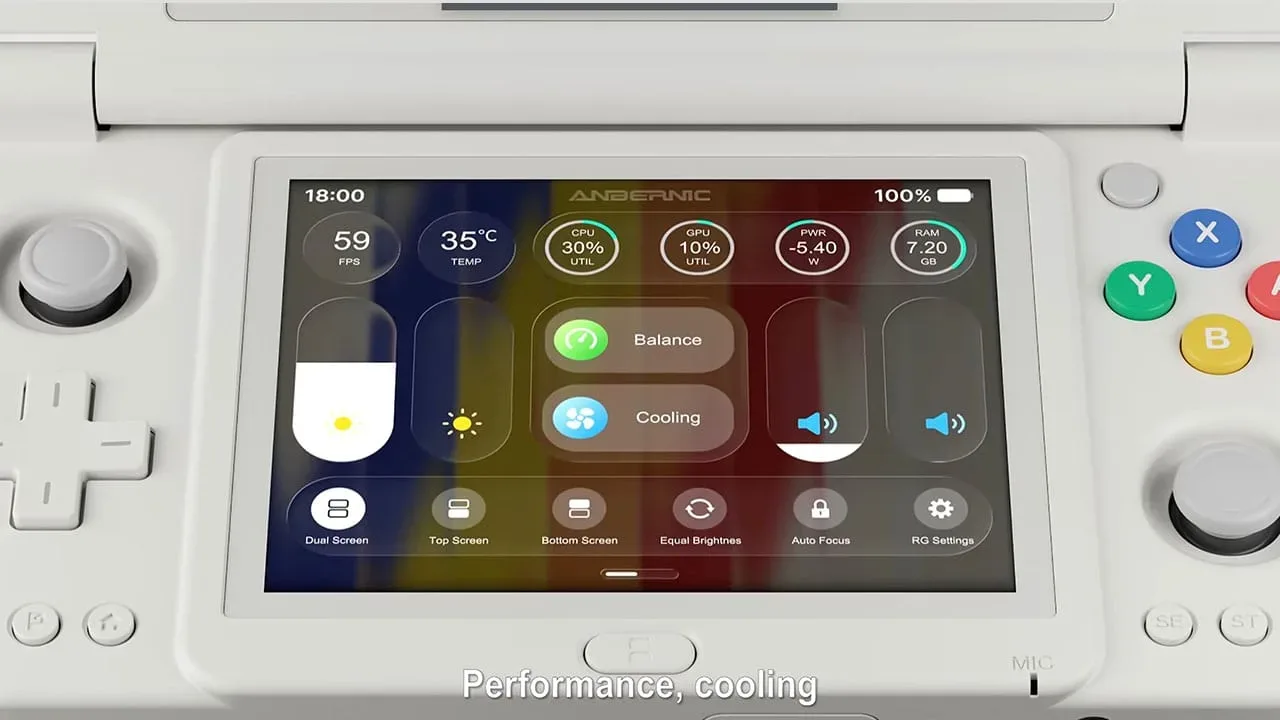
The bottom screen is shown hosting a substantial set of parameters and controls. This suggests that Anbernic sees the lower panel as an interface space as well as a display for games. A dual-screen setup can keep system settings, navigation tools and device information separate from the primary screen, avoiding some of the menu switching that is common on single-display handhelds.
The interface itself appears to combine DS-like presentation with a more modern mobile-style design. An extendable stylus, stored in the lower edge of the handheld, can be used to operate it. That is a practical inclusion for any interface built around compact controls, and it potentially gives the lower touchscreen a more purpose-built role than it would have if the system depended entirely on buttons and sticks.
Still, the usefulness of that interface will come down to execution. A dense panel of settings can be powerful for experienced users, but it can also become intimidating if common functions are difficult to find. The design shown so far indicates plenty of available options; it does not yet establish how coherent or customisable the software experience will be.
The unexplained AI button is the big question mark
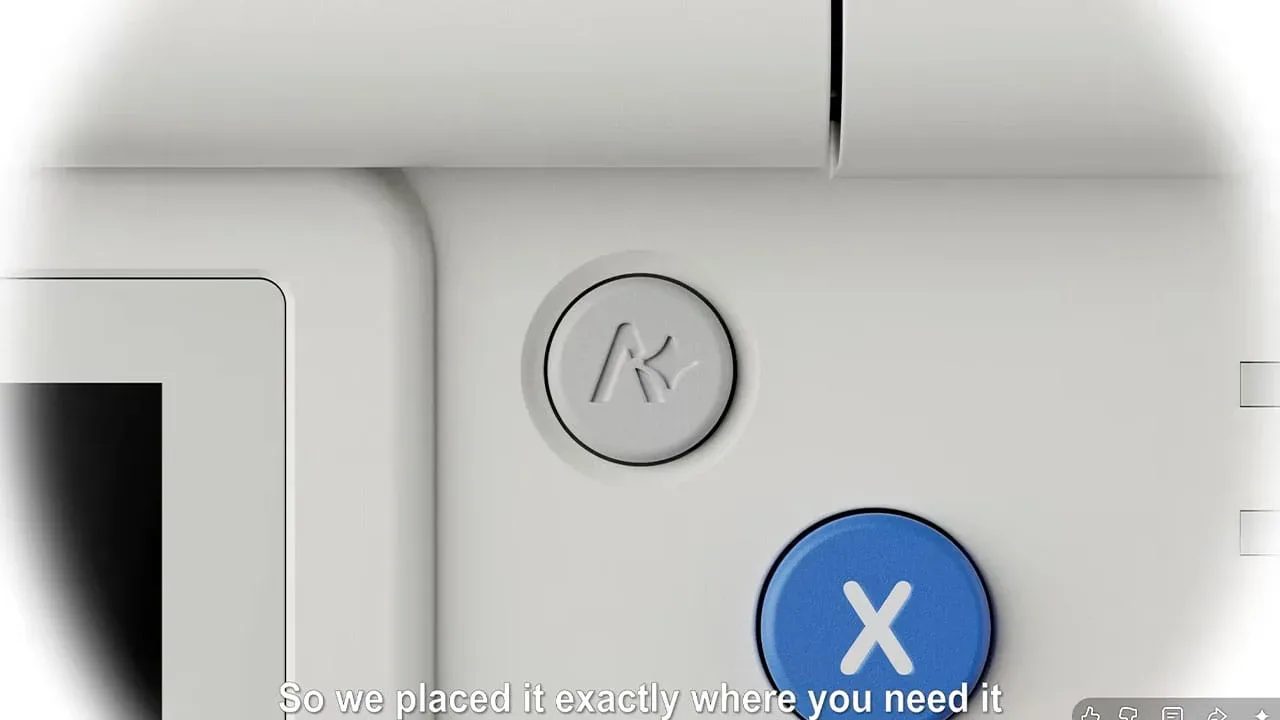
One small button has attracted outsized attention: an AI-labelled control positioned above X. Anbernic has shown the button, but its purpose has not been explained in the available information. That makes it impossible to say whether it will trigger an assistant, open a system utility, provide a shortcut to a particular service or serve another role entirely.
For now, it is best understood as an unknown rather than a selling point. A dedicated button can be convenient when it opens a frequently used feature, but it can be an awkward use of front-panel space when the function is optional, unclear or difficult to remap. Buyers interested in the DDS should watch for a proper explanation of what the button does, whether it needs an internet connection, and whether its behaviour can be changed.
The AI label also raises useful practical questions without answering them. Will the feature work locally on the handheld or rely on an online service? Does it collect or transmit user data? Is it available in every region? Will it remain useful if an associated service changes? Those are the kind of implementation details that can make a major difference to a device feature, particularly when it receives dedicated physical hardware.
What this means for the dual-screen handheld crowd
The broader appeal of the RG DDS is easy to see. The DS and 3DS families made two-screen interaction feel natural for a vast range of games, menus and touch-based systems. Modern handhelds frequently offer considerably stronger hardware than older dedicated portables, but most use one display and a landscape control layout. A purpose-built clamshell with two stacked screens addresses a different use case.
It may appeal to players who value a compact, familiar form factor and want modern controls in that shape. It may also appeal to enthusiasts who prefer a device designed around simultaneous top-and-bottom-screen viewing rather than an improvised layout. The physical design itself is the headline: this is not simply another rectangular handheld with a software overlay.
That does not mean it should be treated as a substitute for original Nintendo hardware. The absence of stereoscopic 3D is a material distinction, and the ultimate experience will depend on Anbernic’s software, build quality and long-term support. The legal and technical status of particular game files, platforms and software configurations is also separate from the existence of a dual-screen device; consumers should ensure they follow applicable laws and the terms that govern the software they use.
There is also no confirmed basis yet for claims about support for demanding systems beyond the device’s apparent dual-screen focus. Rumours and speculation about performance with other platforms should remain exactly that until Anbernic publishes detailed specifications and demonstrated software support. For a sense of the current console-release landscape beyond handheld hardware, see our coverage of HORSE CLUB Ride West arriving across Switch, PlayStation, Xbox and PC.
Price and release date are still missing
Anbernic has not provided a release date or price for the RG DDS in the material currently available. That leaves two of the most important purchase questions open. It also means comparisons with competing handhelds are preliminary: specifications and product positioning can indicate intention, but price determines whether that intention lands as a premium niche device, a mainstream alternative or something in between.
Further information worth watching includes display resolution and panel type, battery capacity, charging specifications, storage and expansion options, wireless connectivity, operating system details, available colours, the exact function of the AI button and the software experience for the second screen. Until then, the RG DDS is notable chiefly because it has made the dual-screen clamshell layout its unmistakable priority.
The “Dream Dual Screen” name may be new, but its design is built to activate extremely specific muscle memory. Anbernic is asking whether a 3DS-shaped handheld, updated with a newer chip, a second stick and a dense touch-driven system interface, is what today’s portable players have been waiting for. The answer will depend less on the instantly familiar silhouette than on the unanswered details inside it.