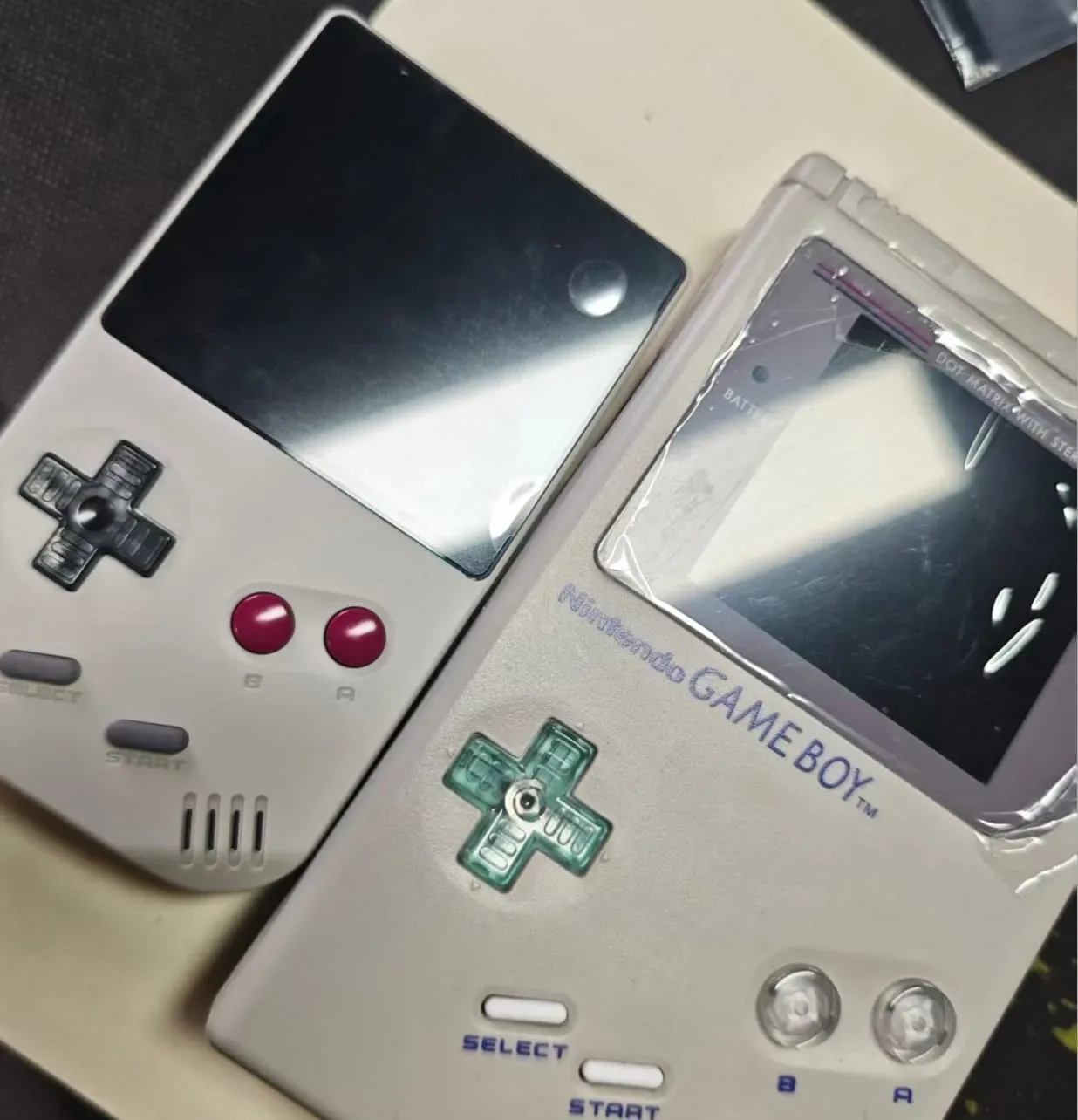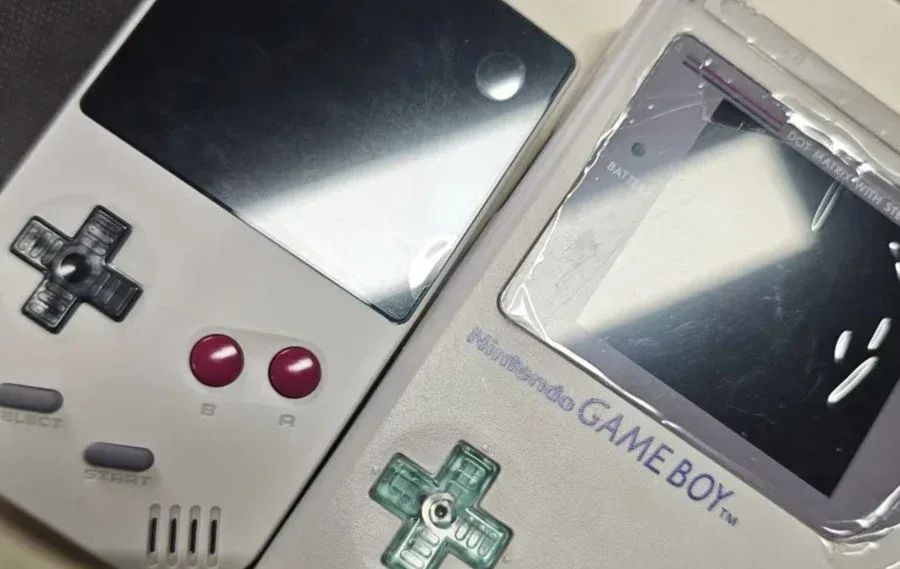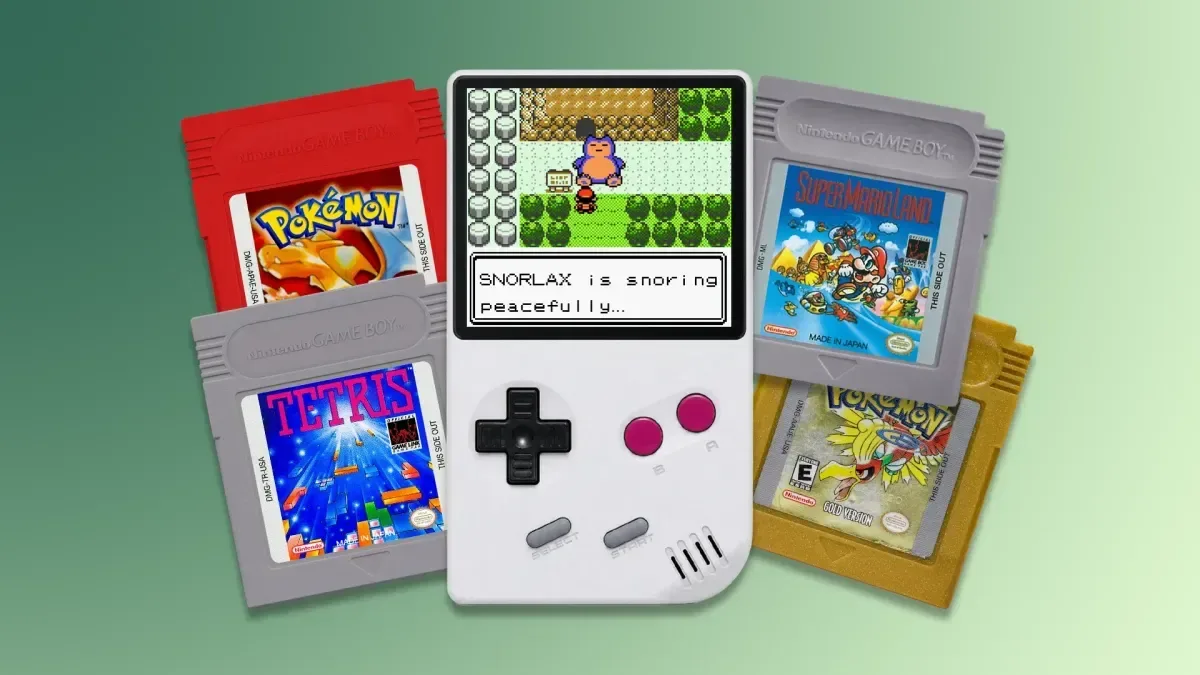
FunnyPlaying has detailed the hardware specifications for the FPGB Mini, a compact handheld designed around original Game Boy and Game Boy Color cartridges. The device uses a miniature vertical form factor reminiscent of the original Game Boy DMG, but its feature set combines a real 32-pin cartridge slot with MicroSD storage for ROM files.
The specification sheet answers several of the basic hardware questions surrounding the FPGB Mini, including its display resolution, battery capacity, dimensions, charging behaviour and storage limit. It also establishes a few important boundaries for prospective buyers: link play requires a separately purchased proprietary USB-C cable, while FlashCart and clone-cartridge compatibility is not guaranteed. Price and release timing have not been provided.
The FPGB Mini’s confirmed specifications
- Display: 2.98-inch IPS TFT, 800 × 720 resolution, RGB565 colour format, 16.7 million colours
- Battery: Removable 1,800mAh lithium-polymer battery
- Charging: USB-C with PD and other protocol support; stated actual charging rate of 5V/1A
- Charge time: Approximately two to three hours
- Stated battery life: Approximately four to six hours
- Dimensions: 113 × 64 × 22 mm
- Weight: 135g with the battery installed
- Storage: MicroSD card, up to 32GB, formatted as FAT32
- Cartridge slot: Original 32-pin Game Boy/Game Boy Color slot
- Speaker: 0.5W
A cartridge-first device with a second route for ROMs
The defining detail is the FPGB Mini’s original 32-pin GB/GBC cartridge slot. That is the physical connector used by Game Boy and Game Boy Color cartridges, allowing the handheld to work with the original game media rather than treating cartridges merely as decorative accessories.
FunnyPlaying also says the handheld can play ROM files from a MicroSD card. A ROM is a digital copy of game data, and on this device that library is kept on removable storage rather than inside a built-in fixed-capacity drive. The FPGB Mini supports cards of up to 32GB using the FAT32 file system. FAT32 is an older, widely compatible storage format; the relevant practical point here is that a larger card may not be supported simply because it fits physically.
The two play methods use different save locations. Games run from authentic cartridges save in the normal way to the cartridge itself. ROM-based games save to the SD card. That distinction matters for anyone moving between original hardware and a modern handheld: a cartridge’s existing save data should remain associated with that cartridge, while SD-based saves are part of the device’s storage setup.
Prospective owners should not read the physical slot as a blanket promise that every cartridge-shaped product will work. FunnyPlaying has specifically cautioned that some FlashCarts and clone carts may run, but compatibility is not assured across all of them. A FlashCart is a rewritable cartridge that loads game files from its own storage; clone carts are unofficial reproductions or copies. Both can vary substantially in their hardware behaviour, so this is a meaningful limitation rather than a minor footnote.
An unusually dense screen for Game Boy and Game Boy Color software
The FPGB Mini has a 2.98-inch IPS TFT panel with an 800 × 720 resolution. IPS, short for in-plane switching, is a type of LCD panel technology generally associated with broad viewing angles. TFT, or thin-film transistor, describes the active-matrix display technology used to control the pixels. Neither label alone guarantees a particular image quality, but together they identify the type of screen FunnyPlaying is using.
Resolution is the more immediately notable number. An 800 × 720 panel contains far more pixels than the images produced by Game Boy and Game Boy Color software. That surplus can allow the system to scale a game image upward, rather than forcing it to run at its original pixel dimensions in the centre of the screen. FunnyPlaying’s information indicates that the display could enable 4× upscaling for Game Boy Color games.
“Upscaling” does not mean the underlying game suddenly gains new visual detail. It means the original picture is enlarged to occupy more of a higher-resolution screen. The quality of that presentation depends on how the device handles scaling, colour treatment and screen filters, areas that are not described in the specifications. The announced resolution therefore makes a sharp enlarged image plausible, but it does not by itself establish how individual games will look in use.
The panel is listed as RGB565 with 16.7 million colours. RGB565 is a common 16-bit colour arrangement in which red receives five bits of data, green receives six and blue receives five. The listed 16.7-million-colour figure describes the panel’s stated colour capability, not the native colour output of every Game Boy or Game Boy Color title. It should be understood as a display specification, rather than a claim that older software itself contains that many available colours.
Compact dimensions, removable power and USB-C charging
At 113 × 64 × 22 mm and 135g with its battery, the FPGB Mini is positioned as a particularly small portable. The supplied measurements are useful because “mini” can mean anything from slightly reduced to genuinely pocketable; this one is notably compact on paper while retaining a standard GB/GBC cartridge slot.
The included battery is a removable 1,800mAh lithium-polymer pack. Removability is a practical feature for a long-lived handheld because the battery is a separate part rather than permanently enclosed as an inseparable component. It does not answer questions about replacement pricing or availability, which have not been detailed, but it identifies a potentially useful maintenance path.
Charging is handled through USB-C. The FPGB Mini supports USB Power Delivery and other charging protocols, though FunnyPlaying lists the device’s actual charge rate as 5V/1A. That works out to 5 watts at the stated rate. The company estimates a complete charge in roughly two to three hours, followed by around four to six hours of battery life.
Those endurance figures are estimates, not an independently verified test result. Battery life can vary with display brightness, sound volume, the game being played and other operating conditions. Until broader real-world testing is available, the quoted four-to-six-hour range is best treated as the manufacturer’s target rather than a guaranteed session length.
Link cable support comes with an accessory requirement
The FPGB Mini supports link-cable functionality, but not through a conventional legacy Game Boy connector. FunnyPlaying says it requires the company’s own proprietary USB-C link cable, which will be sold separately when it becomes available.
Link-cable support is relevant to games and features built around direct handheld-to-handheld communication. However, the proprietary-cable requirement means buyers should account for an additional accessory if that functionality is important to them. Details including the cable’s price, availability date and broader device compatibility have not been provided.
That approach makes the USB-C port serve a wider modern-hardware role while placing the actual multiplayer connection inside a specific accessory ecosystem. It is a trade-off: USB-C is physically common, but the cable itself is not presented as a standard USB-C cable that can be replaced with any equivalent lead.
What remains unknown
The FPGB Mini specification list is substantial, but it is not a complete picture of the finished product. There is still no announced price or release date. The information also does not settle how ROM loading is organised, which FlashCarts are supported, how scaling options work, or what the device’s controls and operating interface will feel like in practice.
Those unanswered questions are significant because the FPGB Mini is attempting to serve two audiences at once: players who want to use original Game Boy and Game Boy Color cartridges, and players who want a compact system for an SD-card library. Its physical cartridge slot, cartridge-based saving and removable battery speak directly to the former. Its 800 × 720 display and MicroSD support broaden the proposition for the latter.
FunnyPlaying has previously worked on retro-console modifications and has made other retro handhelds, including the Retro Pixel, which places an RK3326 CPU in a Game Boy Pocket-style shell. The FPGB Mini is a different kind of proposition because its stated design centres on native GB/GBC cartridge use alongside ROM-file support rather than simply putting a general-purpose processor into a familiar shell.
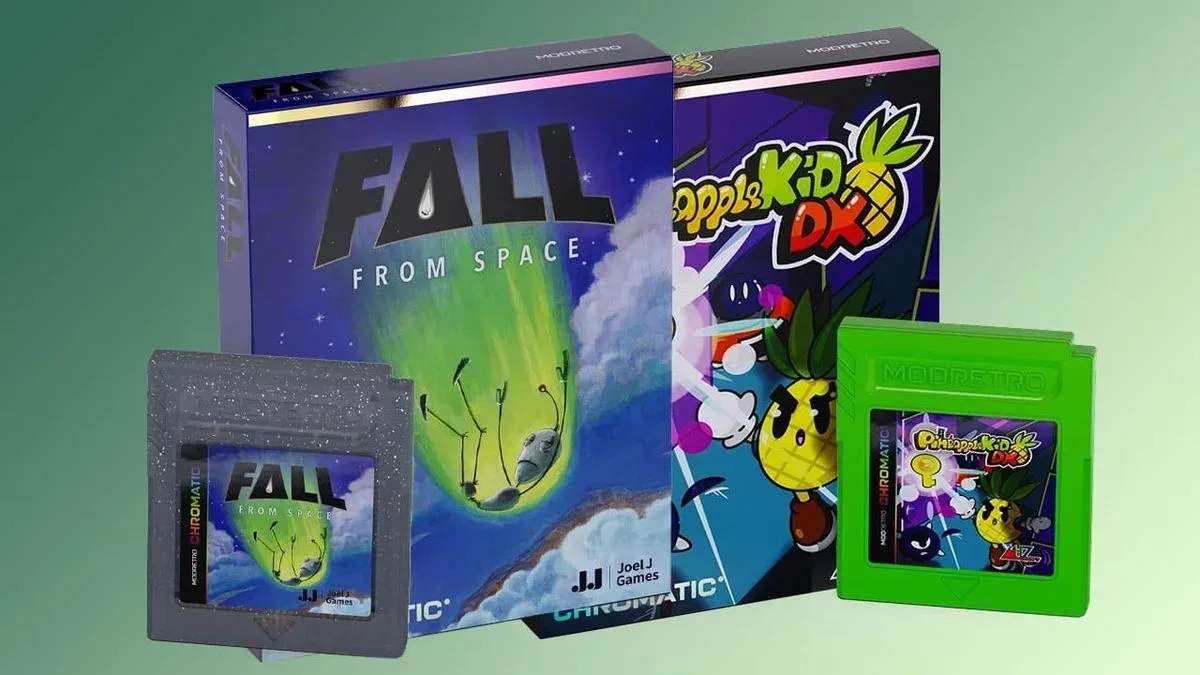
The current handheld market has also continued to make room for cartridge-oriented Game Boy-compatible hardware. For another recent example of physical releases in that space, see Fall From Space and Pineapple Kid DX for ModRetro Chromatic.
For now, the most concrete takeaway is straightforward: the FPGB Mini is a small, 135g GB/GBC handheld with a 2.98-inch 800 × 720 IPS display, removable 1,800mAh battery, USB-C charging, MicroSD support up to 32GB and an original 32-pin cartridge slot. Its caveats are equally clear: link play needs a separate proprietary cable, FlashCart and clone-cart results may vary, and neither pricing nor a release window has been confirmed.