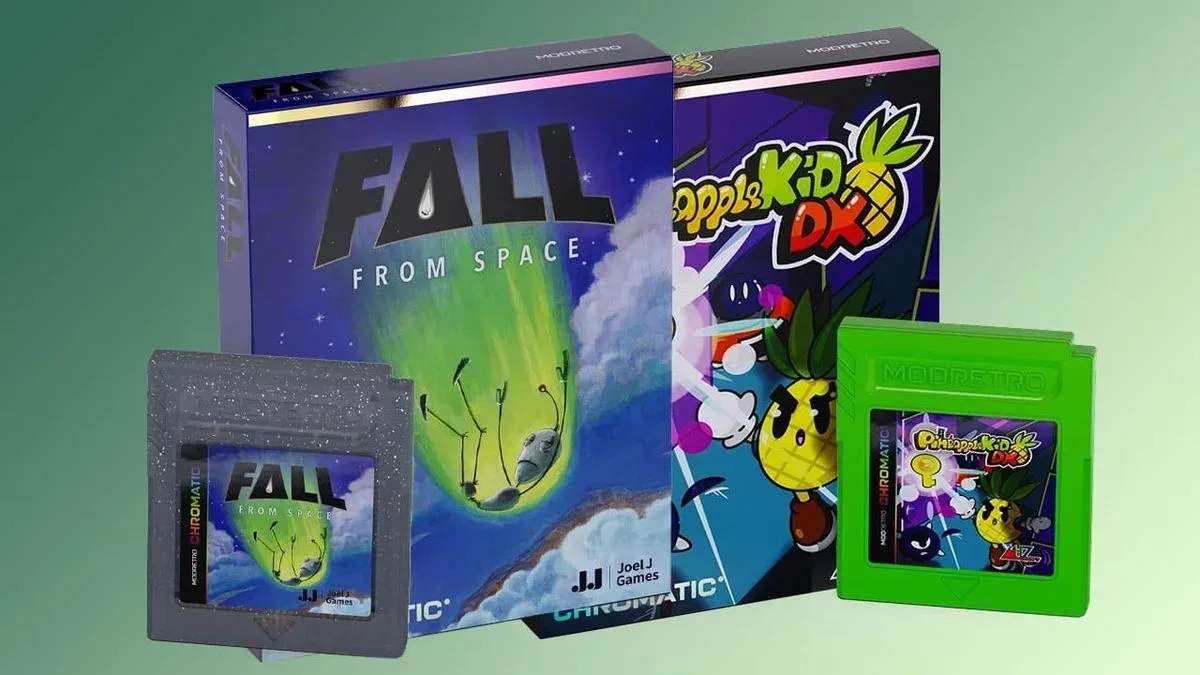
New cartridge games are now available for the ModRetro Chromatic, and they take two sharply different routes through handheld retro design. Fall From Space and Pineapple Kid DX can both be played on the Chromatic as well as Game Boy and Game Boy Color hardware, giving players a choice between a longer, branching adventure and a compact puzzle climb through a very strange tower.
It is an encouragingly literal kind of retro gaming news: these are not merely old games being rediscovered, digitally reissued, or discussed in preservation circles. They are new games arriving in cartridge form for hardware designed around the Game Boy and Game Boy Color ecosystem. That physical format matters here, because each release is built around the constraints, appeal and immediate pick-up-and-play character associated with handheld cartridges.
The pair also illustrate how broad a modern Game Boy-compatible library can be. Fall From Space is described as a blend of Metroidvania and open-world role-playing game, with roughly 10 hours of play and multiple endings. Pineapple Kid DX, meanwhile, is a deliberately shorter puzzle game, estimated at more than two hours, whose core challenge is methodically traversing every white tile in each room.
Fall From Space is the bigger, more changeable adventure
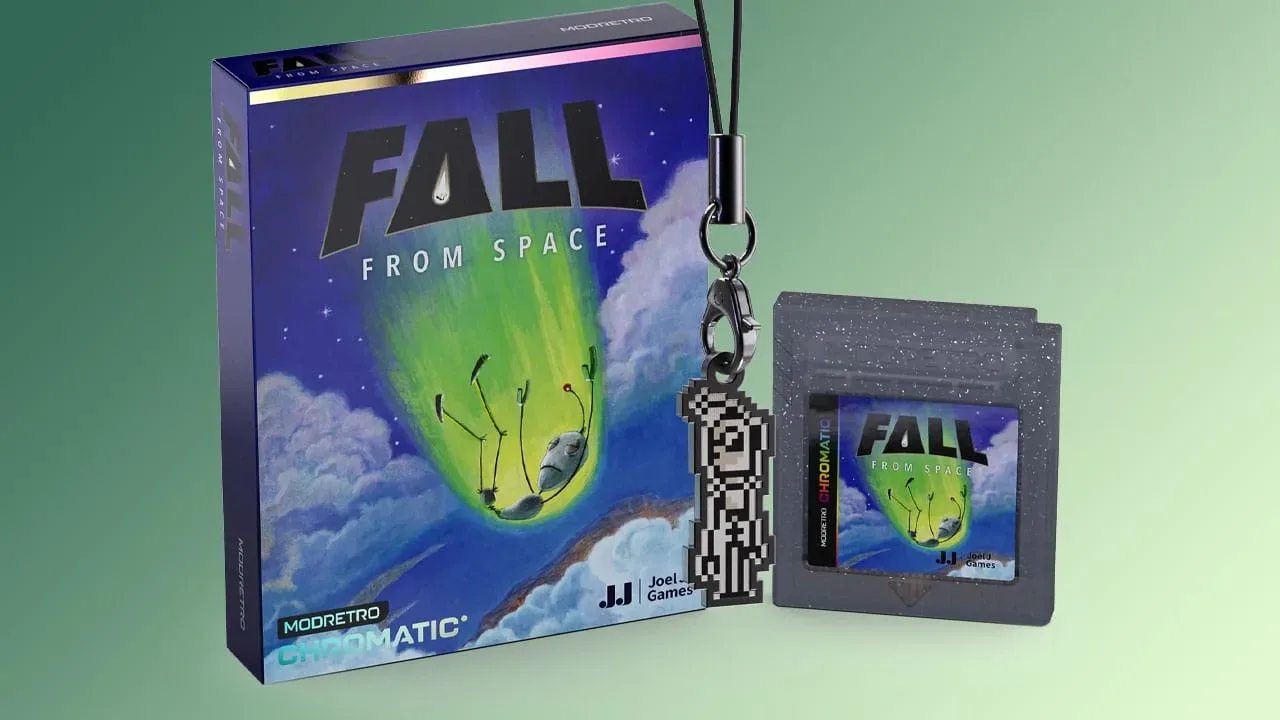
Fall From Space is priced at $44.99 and comes with more than just the cartridge. The package includes a full-colour manual, a glitter-finish cartridge and a Chromatic charm intended to hang from the console. For players who value the tangible side of a cartridge release, those details are part of the proposition rather than an afterthought.
Its game design is the more expansive of the two. A Metroidvania generally describes an exploration-driven action adventure in which progress depends on navigating an interconnected world, reaching new areas and overcoming barriers. An open-world RPG, in this context, points to a broader role-playing structure and player-led movement through its setting. Combining those ideas suggests a game interested in discovery and decision-making rather than a simple sequence of isolated stages.
The stated length of around 10 hours gives it a very different profile from a short arcade-style score chase or a single-sitting puzzle game. More importantly, it has multiple endings. That means a first completion is not necessarily the only outcome the game can offer.
A karma system is central to that replay value. In games, a karma system tracks player conduct or choices and alters how the game responds. The important detail is not simply that a number exists behind the scenes; it is that the system changes the experience around the player as the adventure unfolds. In Fall From Space, that can make successive runs meaningfully different if players take different approaches.
That structure puts the focus on consequences. A player considering the cartridge as a one-and-done adventure should keep the multiple endings and reactive karma mechanic in mind: its reported 10-hour length is a useful measure of one path through the game, not necessarily a hard ceiling on the time someone may spend exploring its alternatives.
Related coverage includes ModRetro Adds Fall From Space and Pineapple Kid DX to Its Chromatic Library.
The game comes from developer Joel Jarman and features work with artist Mitsuhiro Arita. It is also now part of a growing conversation around contemporary releases for Game Boy-compatible machines: developers are making games with modern ambitions while working within an established handheld format. The result does not have to mimic one narrow genre or one particular era to belong on the hardware.
Pineapple Kid DX turns movement into the puzzle
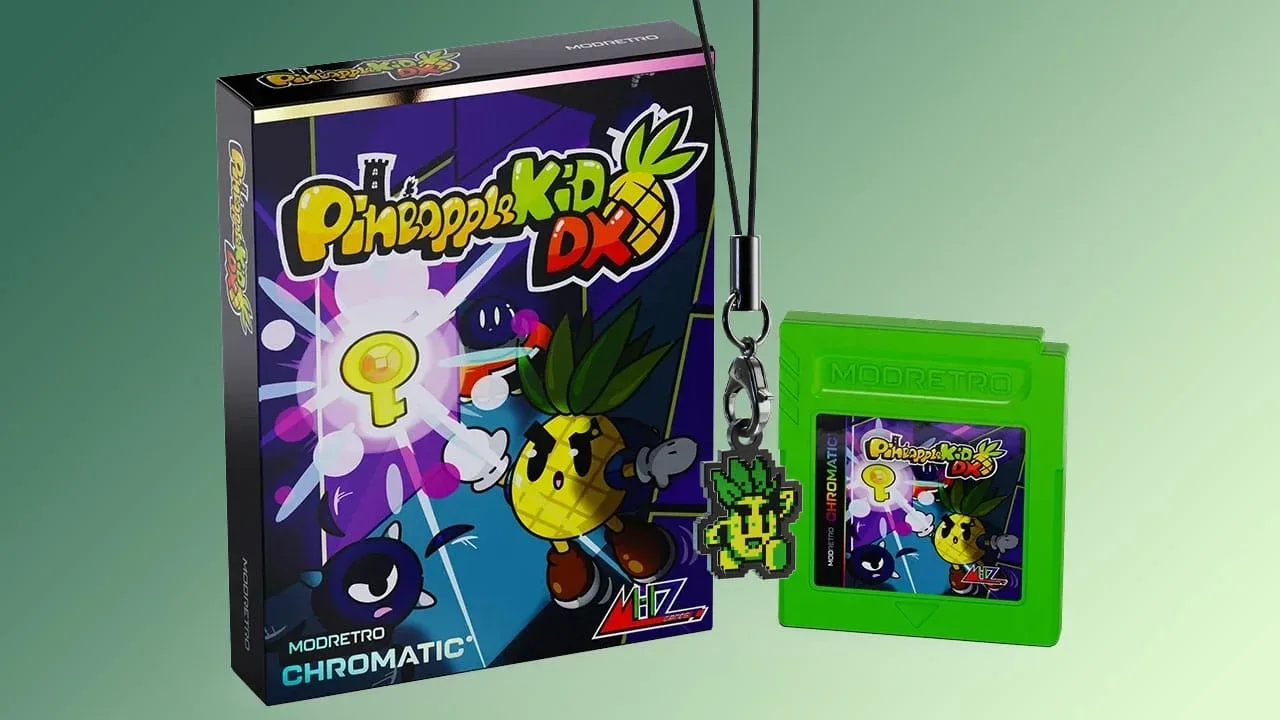
Pineapple Kid DX takes a more focused approach. Priced at $39.99, it is a colour remake of the 2021 game made by MHZ Games and previously distributed by Bitmap Soft. Its setting is the mysterious 100-Year Tower, where the pineapple protagonist runs through rooms, avoids hazards and searches for keys.
The essential mechanic is easy to explain but potentially demanding to execute. Each level begins with white, unlined floor space. As Pineapple Kid moves over squares, the floor changes into a lined surface. The goal is to cover every available white square. Once the entire room has been traversed, keys appear; collecting them enables progress to the next stage.
In practical terms, that makes route planning the heart of the game. Every movement can matter because a path that seems efficient at first may leave an awkward tile behind, while hazards can make a clean plan harder to carry out. The challenge is not only reaching an exit. It is deciding how to draw a complete route through a space while staying clear of danger.
This is the kind of puzzle concept where the rules can be understood quickly, then gain complexity from level layout. Players do not need an elaborate inventory system or a long list of actions to engage with the challenge. Instead, the tension comes from spatial awareness: where Pineapple Kid has already been, where the remaining untouched squares are, and whether the current route can still cleanly cover the rest of the board.
The reported play time of more than two hours makes it a notably smaller commitment than Fall From Space. That is reflected in its lower price, but short does not necessarily mean disposable. A compact puzzle structure can suit repeat attempts, especially when the appeal lies in solving rooms cleanly and working through successively tougher arrangements. It also makes the game a natural candidate for shorter sessions rather than a campaign that demands a long uninterrupted evening.
Two useful choices for different kinds of handheld sessions
The new releases are best understood as complementary rather than competing. Anyone looking for a larger world, role-playing elements, multiple conclusions and a system that reacts to player behaviour will likely be drawn to Fall From Space. Its $44.99 package is also the one for buyers who particularly want the full-colour manual, glittery cartridge and console charm.
Players after an immediately readable, level-based challenge may find Pineapple Kid DX the clearer fit. Its central rule—cover the room, reveal the keys, move onward—is direct, while the hazards and increasingly difficult tower puzzles provide the pressure. At $39.99, it offers a more concise puzzle-focused alternative without requiring the same time commitment as the longer adventure.
- Choose Fall From Space for a Metroidvania/open-world RPG blend, roughly 10 hours of play, multiple endings and a karma system that changes the game’s response.
- Choose Pineapple Kid DX for a colour puzzle remake with tile-covering objectives, keys, hazards and an estimated play time of more than two hours.
- Choose either on cartridge if you play on ModRetro Chromatic, Game Boy or Game Boy Color hardware.
Neither game requires buyers to treat the Chromatic as a closed platform. Their stated compatibility with Game Boy and Game Boy Color hardware is significant for players who already own original systems, as well as those using ModRetro’s handheld. The cartridge is the common denominator.
Why the physical format is part of the appeal
For retro handheld players, a cartridge release is not interchangeable with a download. The format brings practical and tactile considerations together: inserting the game into compatible hardware, using a printed manual, and having packaging designed to sit alongside other physical releases. In the case of Fall From Space, the glittery cartridge and included charm lean into that presentation directly.
There is also room for wildly different kinds of new work on the same family of hardware. Fall From Space pursues exploration, role-playing and branching outcomes. Pineapple Kid DX builds around one clear spatial puzzle rule and layers difficulty over it. That range is a healthier sign for a cartridge ecosystem than two games chasing identical ideas.
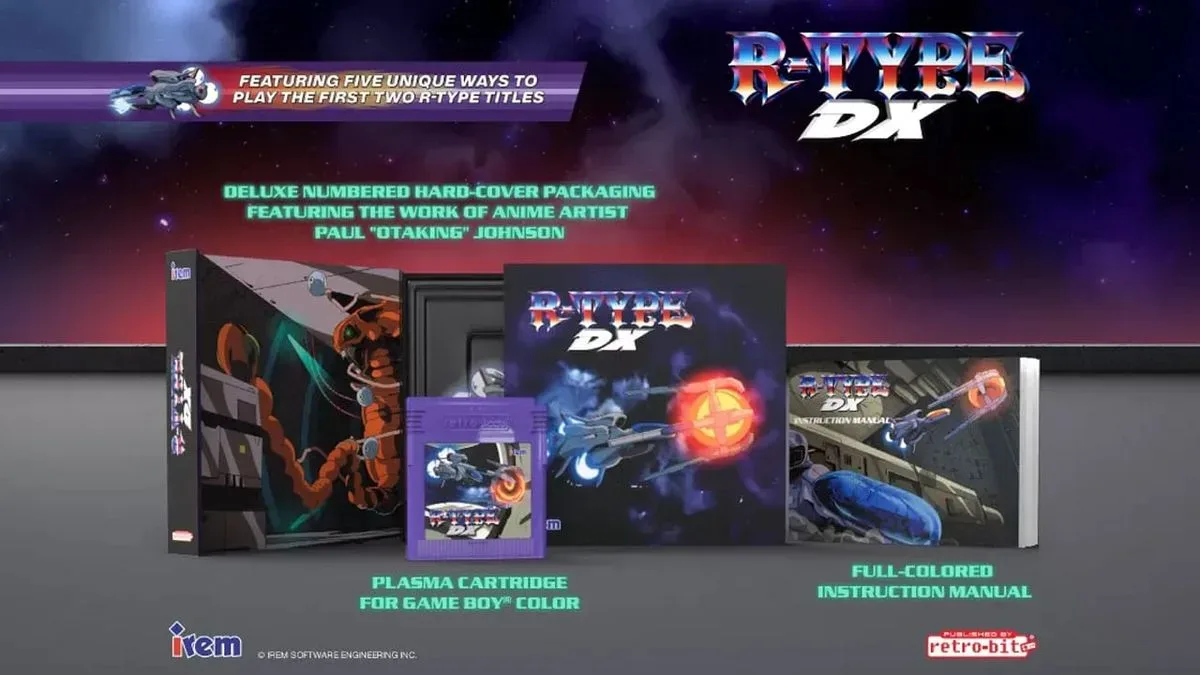
Recent Game Boy cartridge releases have similarly shown that the format can host more than nostalgia alone; R-Type DX’s Game Boy cartridge return is another example of physical releases continuing to find an audience. The important distinction with these two Chromatic additions is that they offer separate play styles even before collectors consider their boxes, manuals or cartridge designs.
What to know before choosing
The clearest dividing line is time and structure. Fall From Space is the game for someone who wants to settle into an adventure and revisit it to see how different decisions and endings play out. Its karma system means player behaviour has an active role in shaping the experience, a feature that can make the game feel less fixed than its approximate running time suggests.
Pineapple Kid DX is for someone who would rather tackle self-contained challenges, learn through movement and refine a route across each room. Its simple-looking objective should not be mistaken for a lack of depth: games based on complete tile coverage make every neglected corner a problem, and hazards add an extra layer to planning.
Both titles are available to purchase now. Whether the better pick is the spacefaring, branching RPG-adventure or the tower-bound pineapple puzzler comes down to what a player wants from the next cartridge they slide into a Game Boy-compatible handheld.