Retro Remake has teased the SuperStation Pocket, an FPGA-based handheld intended to play original Game Boy, Game Boy Color and Game Boy Advance cartridges while also supporting downloadable console cores. The early outline is ambitious: support is claimed for cores reaching PlayStation and Nintendo 64, plus 4K output when the handheld is connected through a dock.
It is an intriguing proposition because it combines two interests that are often served by separate devices. There is direct cartridge support for three Nintendo handheld families on one side, and a configurable FPGA platform for broader retro systems on the other. The SuperStation Pocket is also said to be open source from launch, though the teaser does not yet define exactly which parts of the device’s software, hardware designs or core ecosystem will be made available.
Crucially, this is still a tease rather than a full product briefing. There is no confirmed release date, full specification list, screen information, battery estimate, complete compatibility chart or final price. Those omissions matter for a machine whose appeal will rest as much on implementation as on its long feature list.
What has been claimed for the SuperStation Pocket
The announced fundamentals are clear enough to establish the product’s intended lane. The SuperStation Pocket will accept GB, GBC and GBA cartridges. That means it is being positioned as a physical-media handheld for the original monochrome Game Boy library, the Game Boy Color catalogue and Game Boy Advance releases.
Beyond those slots, Retro Remake says its FPGA can use additional cores, with PlayStation and Nintendo 64 listed as the upper end of the stated target range. A dock is expected to provide 4K output, and that dock has been described as affordable, although neither a price nor the output details have been confirmed.
- Cartridge formats named: Game Boy, Game Boy Color and Game Boy Advance.
- Additional platform goal: downloadable FPGA cores up to PlayStation and Nintendo 64.
- TV play: 4K output through a dock is planned.
- Platform approach: open source from launch is the stated plan.
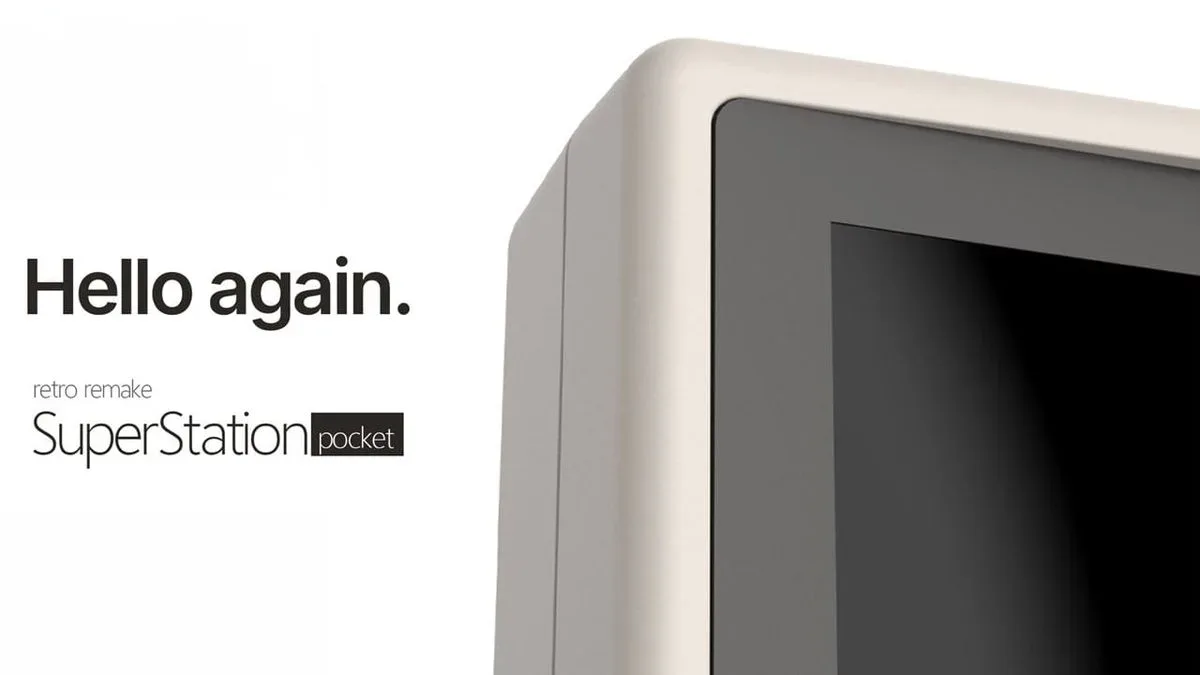
- Design direction: the revealed look closely recalls the Game Boy Pocket.
The handheld follows Retro Remake’s existing SuperStation, a PlayStation-inspired FPGA console initially designed around PS1 games but capable of using other cores. It also arrives after the recently announced SuperFPGA console, which is based on the SNES. Taken together, the products suggest a wider FPGA hardware push rather than a one-off console experiment.
FPGA, explained: why the term matters here
FPGA stands for field-programmable gate array. In simple terms, it is a type of chip that can be configured to behave like different pieces of hardware. In the retro-gaming space, a “core” is the configuration used to recreate the logic of a particular console or computer system.
That distinction is important because the SuperStation Pocket is not simply being described as a handheld that runs software emulators. Its pitch is that the FPGA can be loaded with cores for different systems. In principle, that gives the device a more flexible foundation than a dedicated cartridge player: the same physical hardware can be configured for multiple retro platforms as core support develops.
However, FPGA is not a universal guarantee of perfect results. The experience ultimately depends on the individual core, the hardware resources available, the maturity of its development and the way peripherals, storage, controls and video output are handled. “Up to PS1 and N64” is therefore a statement of intended capability, not enough on its own to establish how every game or accessory will perform.
The practical takeaway is straightforward. Prospective buyers interested chiefly in Game Boy cartridges will want to know how reliably the slots read original games and how the screen treats each handheld format. Those who are most excited by PlayStation or Nintendo 64 cores will need more information on which cores are supported, what their compatibility looks like and how the docked experience works.
A direct challenger in the Game Boy FPGA space
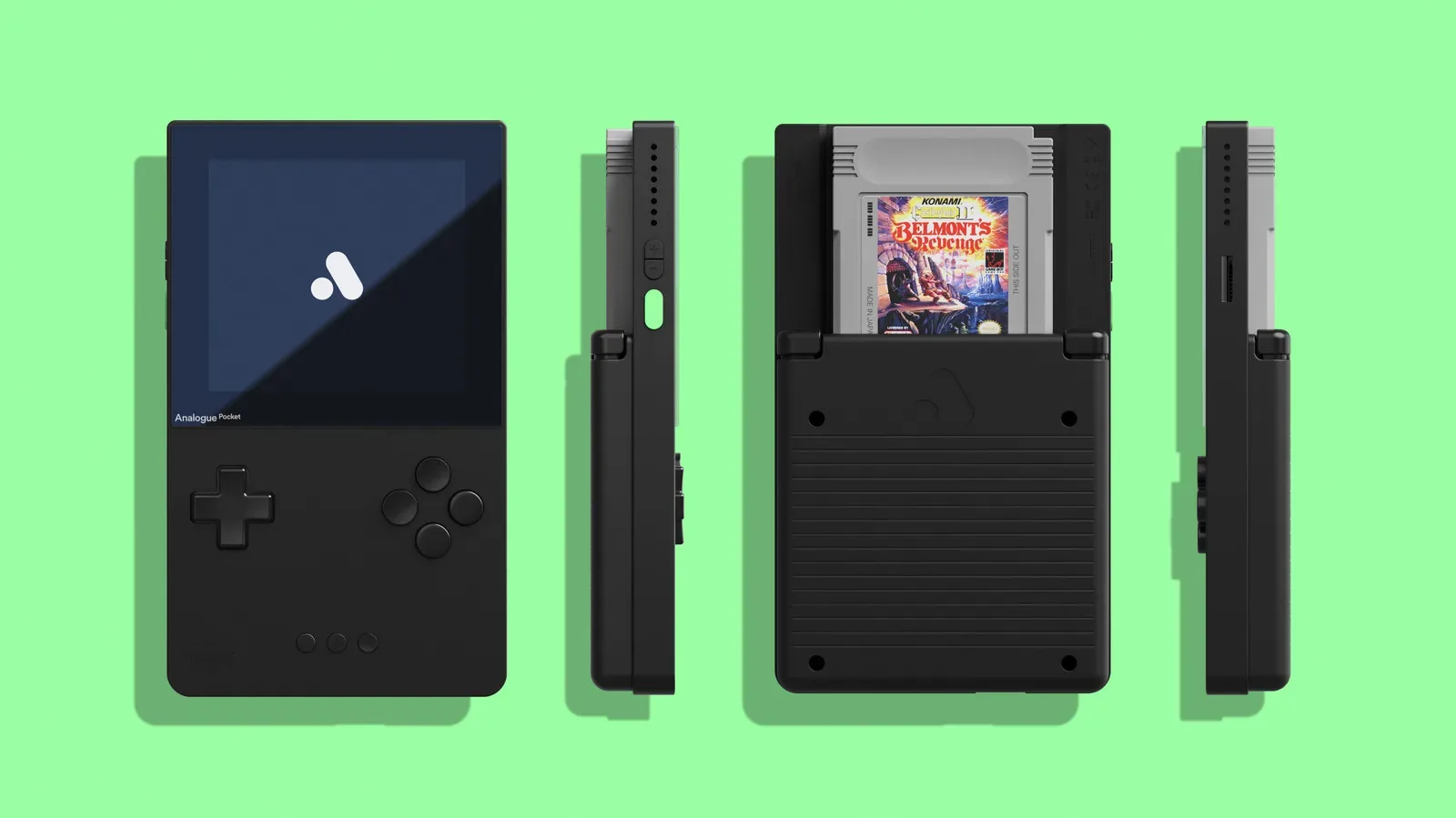
The closest obvious comparison is Analogue Pocket, another FPGA handheld that plays GB, GBC and GBA cartridges. The Analogue Pocket’s base colours cost $239. The SuperStation Pocket is being framed as a less expensive alternative: its price is said to begin with a “1,” but no precise number has been announced.
That clue establishes only one firm conclusion: Retro Remake intends the entry price to sit below the $239 benchmark. It does not confirm whether the dock is included, whether different shells or bundles will exist, or how much a complete handheld-and-TV setup will cost. As with any accessory-led hardware, the headline figure will tell only part of the value story.
Still, a lower starting price could be a meaningful differentiator. FPGA hardware has often appealed to enthusiasts willing to pay for cartridge support and hardware-oriented preservation, but price remains a major barrier for players who simply want to use the games they already own. A handheld that lowers that entry point while retaining original Game Boy-family cartridge slots could broaden the audience considerably.
There is another potential distinction in the planned scope. The SuperStation Pocket is not only proposed as a Game Boy line device; it is also being sold as a portable gateway to a larger core library. That could make it attractive to players who do not want separate handheld and living-room FPGA devices. Whether it actually occupies that role will depend on details still to come, particularly controls, display behaviour, storage workflow and core support.
What 4K docked output does—and does not—tell us
The mention of 4K output is notable, but it needs some context. Classic Game Boy games were not created in 4K, so the feature does not mean the original software somehow gains newly authored ultra-high-resolution artwork. Instead, a dock can send the game image to a 4K display at that output resolution, using scaling and presentation options to fit modern televisions.
For pixel-art games, the quality of that presentation depends on choices such as aspect ratio, scaling method, colour treatment and whether the image is kept crisp or softened. For systems using analogue-era output conventions, video handling can be especially important. No information has been given about the SuperStation Pocket’s filtering options, display modes or latency characteristics, so those are all questions rather than promises.
The dock could nevertheless make the device more versatile. A Game Boy cartridge player that transitions to a television changes from a personal portable into a potential shared-screen machine. The feature becomes more compelling if the controls and core interface make that switch simple, but the present teaser does not specify controller support or the dock’s connections.
Open source could be important, but the scope needs clarification
“Open source from launch” is one of the most significant phrases attached to the SuperStation Pocket, and also one that needs a fuller explanation before buyers can assess its impact. Open source generally means that code or design materials are made available for people to inspect, modify and build upon under the relevant licence. In an FPGA context, that may be especially relevant to system cores and the community work around them.
For users, an open approach can potentially mean a broader path for community development and maintenance. It can also make a platform less dependent on one company’s update priorities. But the teaser does not specify what will be released, under what licence, or how developers will install, distribute and update supported cores.
Those are not minor technicalities. They shape whether “open source” becomes a practical advantage for ordinary players or remains mainly a benefit for technically experienced contributors. A later detailed announcement would ideally clarify the project’s documentation, core-loading process, update mechanism and policy for community contributions.
The Game Boy Pocket-inspired design is a deliberate choice
Visually, the SuperStation Pocket appears to draw from the Game Boy Pocket rather than the more rounded Game Boy Color or horizontal Game Boy Advance. That is more than a nostalgia cue. The Game Boy Pocket silhouette is compact, recognisable and closely associated with the middle period of Nintendo’s cartridge handheld line.
The design does not confirm the handheld’s dimensions, materials, screen size or button feel, so it would be premature to judge comfort or portability. But it does signal that Retro Remake is leaning into a restrained, vertical handheld identity instead of trying to mimic every era it supports. The available imagery has prompted hopes for a classic grey treatment and possibly translucent shells, but neither finish has been confirmed.
That visual restraint may help the device stand apart from modern Android handhelds, which often borrow their shape from later widescreen portable systems. Here, the pitch is closer to a cartridge-first Game Boy successor with a much broader technical ceiling behind it.
The unanswered questions that will define the hardware
At this stage, the SuperStation Pocket’s strongest points are its proposed cartridge support, FPGA flexibility, planned dock and intended lower price bracket. The biggest unknowns are the ones that will determine whether those ideas cohere into a compelling everyday device.
- Price and bundle contents: The starting price has not been revealed, nor has the dock’s cost or inclusion status.
- Release timing: The project has been described as having been worked on throughout the year, but no launch date has been provided.
- Screen details: There is no confirmed information on size, resolution, brightness or display modes.
- Core support: PlayStation and Nintendo 64 are named targets, but a complete supported-system list has not been announced.
- Dock specifications: 4K output is planned, while ports, controller support and video options remain unconfirmed.
- Open-source implementation: The exact materials that will be open source have yet to be detailed.
The SuperStation Pocket therefore has a promising premise rather than a finished spec sheet. Its tease places it squarely in the growing interest around premium ways to play original retro cartridges, while its price hint suggests Retro Remake wants to make that space more accessible. For now, the most sensible reading is measured optimism: the combination of GB, GBC and GBA cartridge support, an FPGA core ecosystem and docked 4K output is appealing, but the value of that combination will only become clear once the remaining technical and pricing details are on the table.
Players following forthcoming games across the wider industry can also keep an eye on Witchbrook’s newly dated PC and console release.