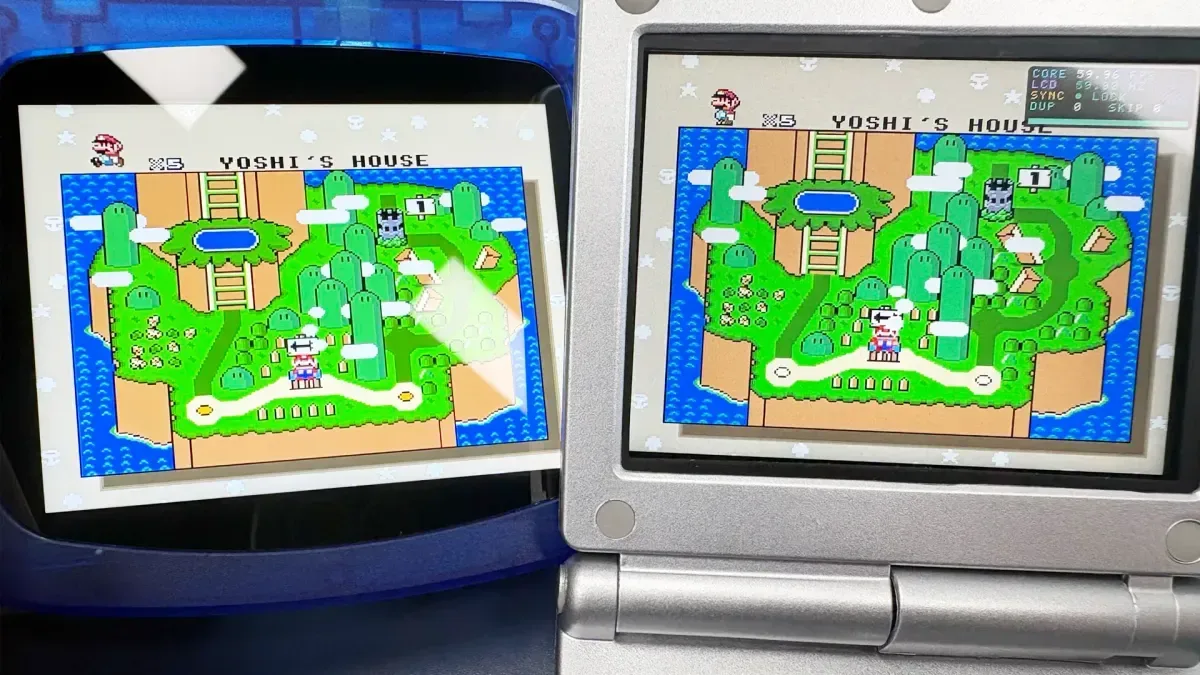
A pair of FPGA handheld projects inspired by Nintendo’s Game Boy Advance family are moving through another round of prototypes. Taki Udon has indicated that work is under way on both a landscape Game Boy Advance-style unit and a clamshell Game Boy Advance SP-style unit, with the latest hardware revision focused heavily on the display.
The most concrete update is not a launch window, retail price, or final specification sheet. It is an in-development screen change. Taki Udon says the team has begun testing larger display options on a hardware revision that has been worked on for months, and describes improvements to brightness, colour and scaling. One of those new panels has also been fitted into the Game Boy Advance-style form factor.
That makes this a prototype-progress story rather than a product announcement. The handhelds have been shown working in transparent shells, but important buying details remain unconfirmed, including final screen size and resolution, battery life, cartridge support, controls, operating-system features, accessories, regional availability and price.
Two designs, one particularly active development push
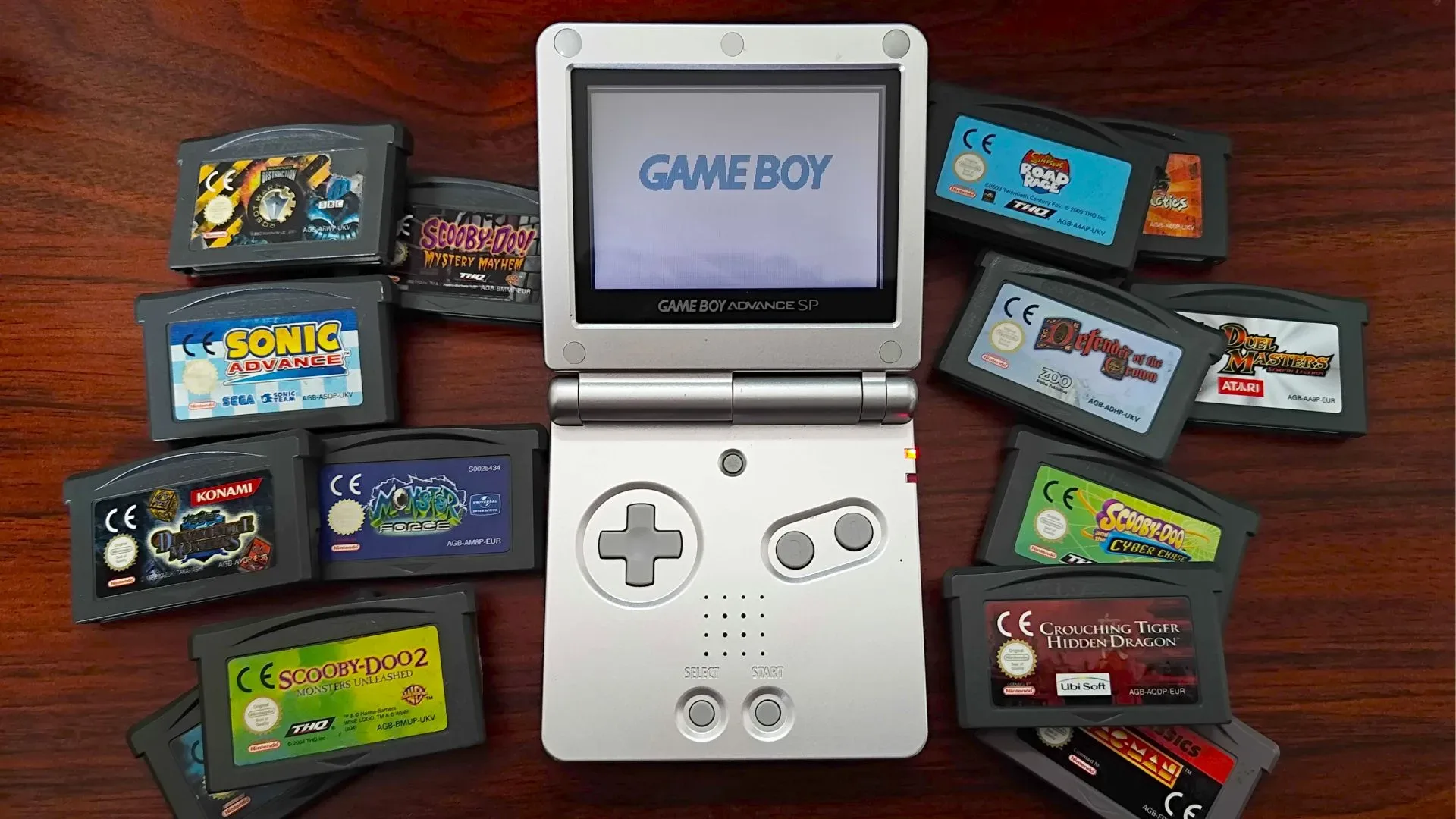
The projects are commonly framed as an FPGA Game Boy Advance and an FPGA Game Boy Advance SP. The distinction matters beyond appearance. The original GBA’s wide, horizontal layout and the GBA SP’s folding design create very different practical challenges around screen placement, controls, thickness and hinges. At this stage, however, the available information only establishes that prototypes for both shapes exist and that the GBA-style device is now being tested with one of the newer displays.
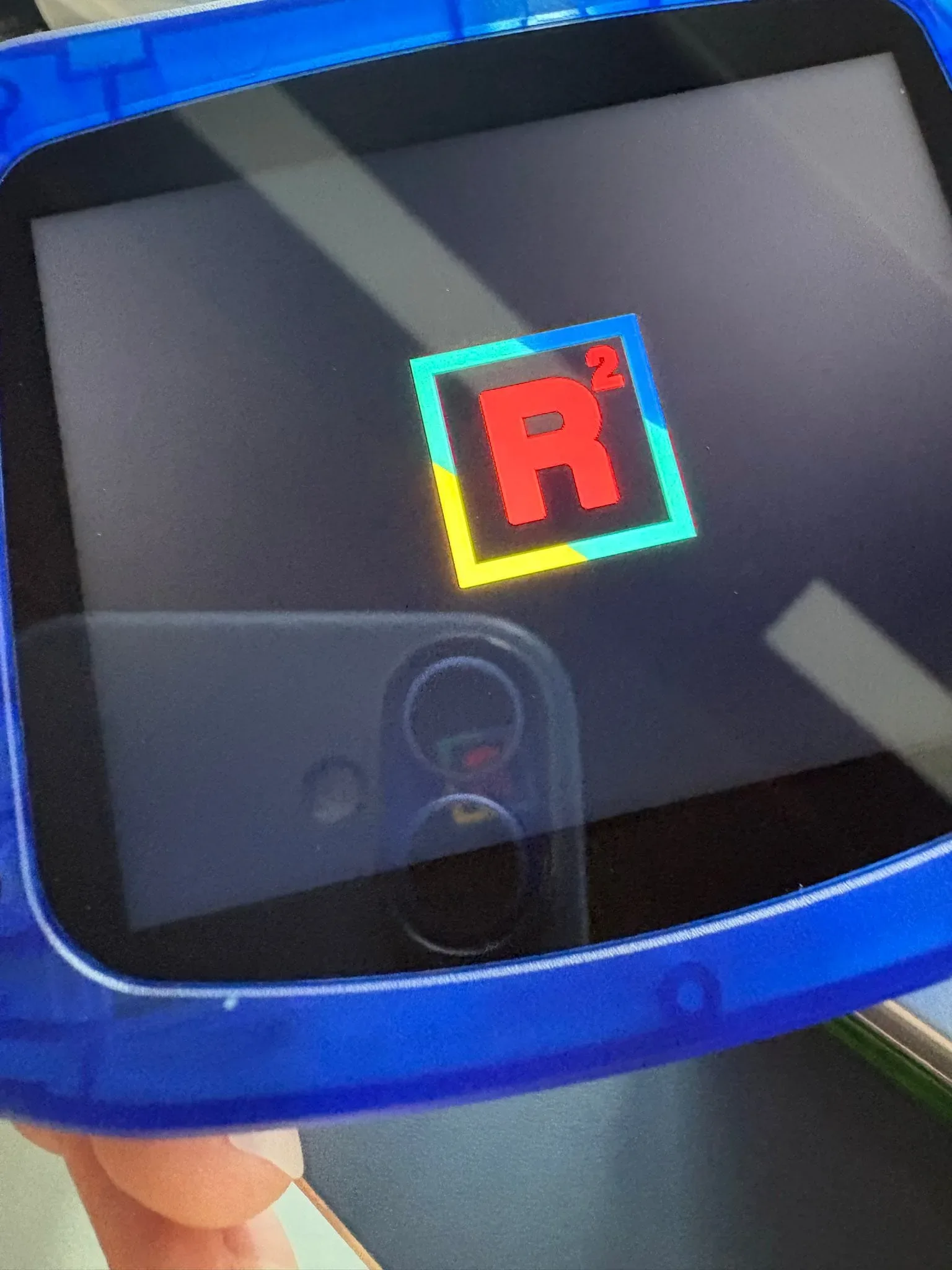
For the SP-inspired handheld, Taki Udon says a cold boot now takes two seconds and is accompanied by a boot logo. A cold boot means starting a device from a fully powered-off state, rather than waking it from sleep or restarting it while power remains active. A two-second claim is encouraging for a portable intended to be picked up for short sessions, though it should not be treated as a full measure of a finished user experience. Startup time tells us nothing yet about menus, sleep behaviour, save handling, display controls, battery endurance or final software reliability.
Still, boot behaviour is the sort of small detail that signals a project moving beyond a purely static mock-up. It suggests the team is refining the experience surrounding the core hardware, not simply demonstrating that games can appear on a screen.
What FPGA means in this context
FPGA stands for field-programmable gate array. In plain language, it is a type of programmable chip that can be configured to reproduce the logic of older hardware. In retro-gaming discussions, FPGA devices are often valued because they aim to recreate a system’s behaviour in hardware logic rather than relying solely on conventional software emulation.
That description should not be mistaken for an automatic guarantee of accuracy or quality. The eventual experience depends on the implementation, the maturity of the underlying hardware core, display treatment, controls, audio, firmware and manufacturing. But FPGA is an important label here because the projects are positioned as dedicated Game Boy Advance-family devices rather than generic Android handhelds with a broad app-based emulator library.
Related coverage includes Taki Udon Teases FPGA GBA and GBA SP Handhelds With Upgraded Screens.
The phrase scaling is equally relevant to the screen update. Scaling is how a device maps a game’s original image to its panel. A larger display can make a handheld more comfortable to view, but a poor scaling approach can make pixel art look uneven or soft. The stated improvement in scaling therefore matters as much as the claim of more brightness or richer colour—particularly for a system whose games were designed around a much smaller native screen.
The screen is likely to be a key decision point
Display quality has become one of the clearest points of differentiation in the retro-handheld market. The latest prototypes are being positioned around a panel upgrade in three areas: brightness, colour and scaling. All three address real concerns for Game Boy Advance players, whose original hardware is associated with an era of reflective, front-lit and backlit portable screens rather than today’s high-brightness panels.
A bigger screen can also be a double-edged design decision. It may improve readability and make the device more inviting for longer play sessions, but it can alter the proportions of a GBA-inspired case, affect perceived authenticity and introduce questions about black borders or integer scaling. “Integer scaling” is a method of enlarging pixels by whole-number multiples to keep their grid uniform. It is frequently desirable for 2D pixel art, although it can leave unused space around the game image if a screen’s dimensions do not align neatly with the original output.
None of those implementation choices have been detailed for these units. That is why the current teaser should be read as a promising direction, not a final declaration that the display issue has been solved. The promised showcase of larger screens, if it produces positive results, should be more informative than the initial claim alone: it could reveal how the panel fits the shell, how the image is framed and whether the apparent upgrade translates cleanly to the intended form factors.
A crowded idea, but no settled affordable standard
The appeal of these prototypes comes partly from a gap in the current specialist market. Analogue Pocket can play Game Boy Advance cartridges, but its vertical handheld shape differs from the original GBA’s landscape layout. The Pocket is listed at $239 in the available comparison, while GAMEBUB is cited at $269 and is presented as falling short of the build-quality expectations attached to that price level.
Those comparisons explain why a purpose-built GBA or SP-shaped FPGA handheld could attract attention: players may want cartridge-focused hardware in a silhouette closer to the system they remember, without accepting a premium price simply for that form factor. Yet affordability is an ambition, not a confirmed feature of Taki Udon’s hardware. No price has been provided. Until one is announced, it is not possible to say where either device will sit against existing alternatives.
It is also worth separating the demands of an enthusiast audience. Some buyers will prioritise a bright, well-scaled screen. Others will care more about a familiar layout, sturdy buttons, cartridge compatibility, a compact clamshell design, or dependable firmware. An FPGA label may draw the initial interest, but the finished handheld will be judged on the complete package.
Retro Remake’s broader FPGA work provides context, not guarantees
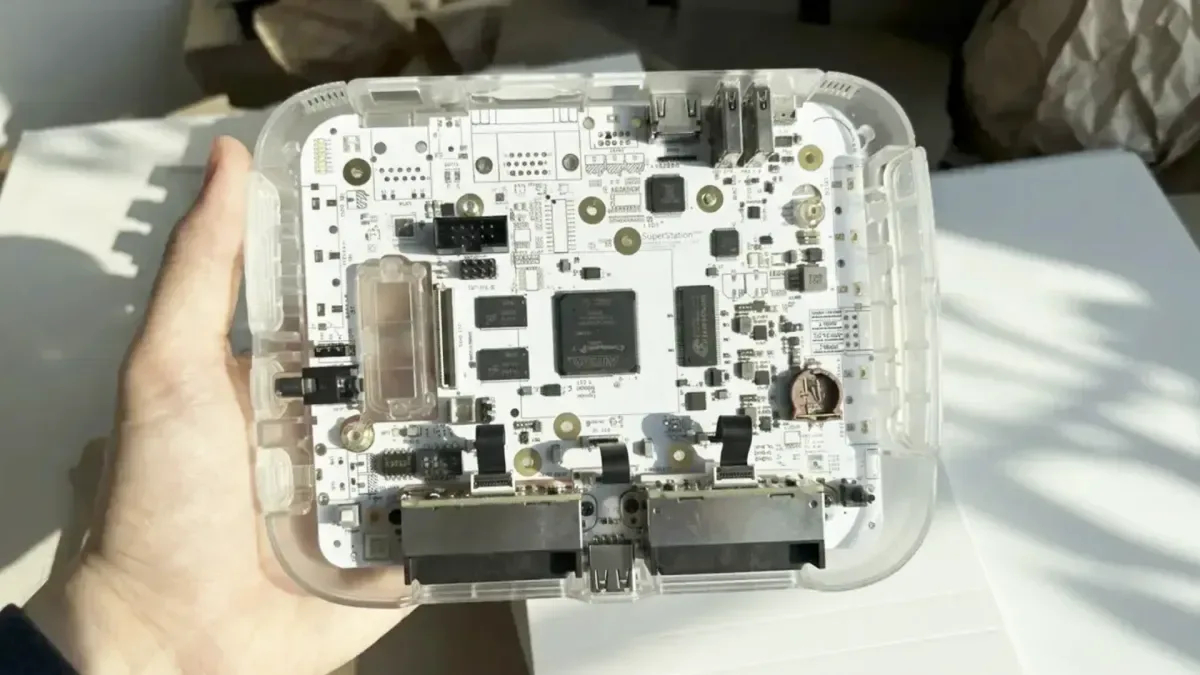
The Game Boy Advance projects sit alongside wider hardware work from Retro Remake. The team has already launched and shipped the SuperStation, a PlayStation-focused FPGA console, and has also said it is working on an SNES version. That background indicates an ongoing interest in dedicated FPGA hardware across multiple classic platforms.
It does not, however, confirm that the GBA and GBA SP-style devices are close to retail release. Development status can vary sharply between products, and transparent prototype shells are not the same thing as finished manufacturing units. The visible emphasis on the GBA designs does suggest they are receiving substantial attention, but the safest reading is simply that the work is active.
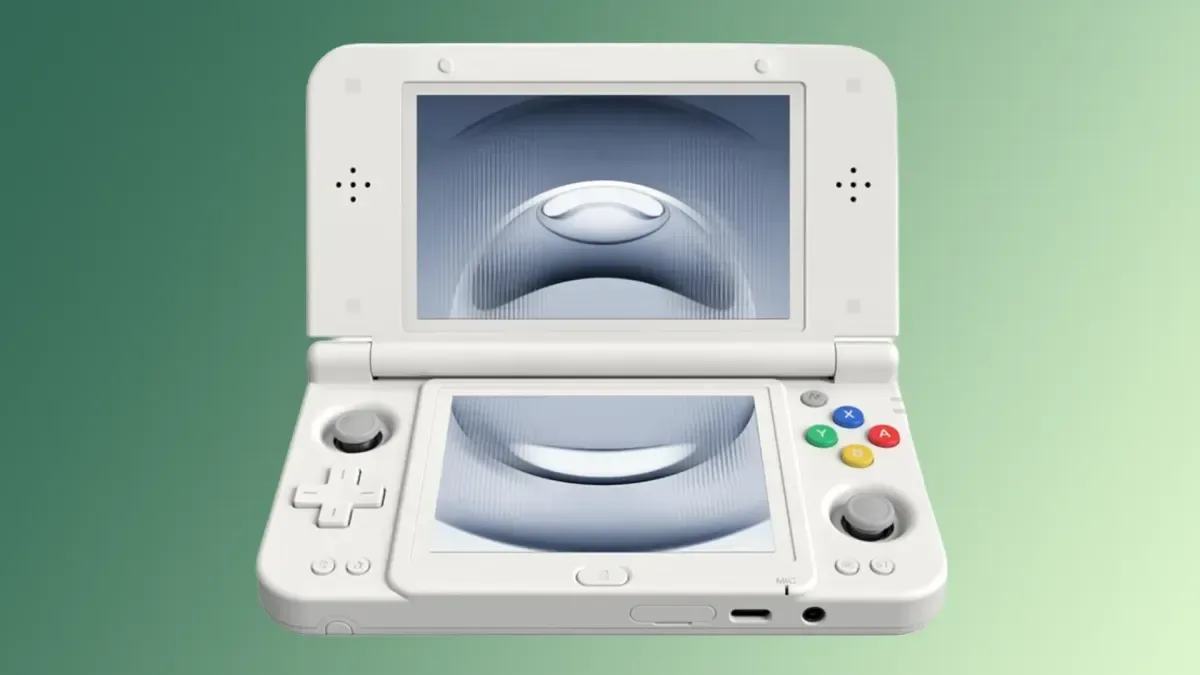
The broader handheld space is moving quickly, too. For a look at another approach to portable retro hardware, ANBERNIC’s $299 dual-screen Android handheld illustrates how differently manufacturers can approach screens, operating systems and form factors. Taki Udon’s prototypes, by contrast, are being framed around FPGA hardware and familiar Game Boy Advance-derived shapes.
What remains unanswered
The next meaningful update needs to answer questions that prototype footage cannot settle. The most important are straightforward:
- What are the final display size, resolution and scaling options?
- Will the GBA and SP-style devices accept original cartridges, and if so, which formats?
- What will each handheld cost?
- How durable will the shells, controls and—especially for the SP design—hinge be?
- What battery life, charging arrangement and software features can buyers expect?
- When will final specifications and release timing be announced?
There is also a claim that the products could potentially handle cartridges while emulating other consoles. That possibility remains speculative in the present information and should not be considered a confirmed capability. Likewise, no final accessories or release dates have been detailed.
For now, the strongest takeaway is narrow but notable: both GBA-inspired FPGA handheld concepts appear to be progressing, the SP prototype reportedly has a fast fully-off startup, and new screen experiments are central to the latest revision. If the promised larger-screen demonstration materialises, it should offer the first useful chance to judge whether those brightness, colour and scaling improvements are shaping up as more than a prototype checklist.