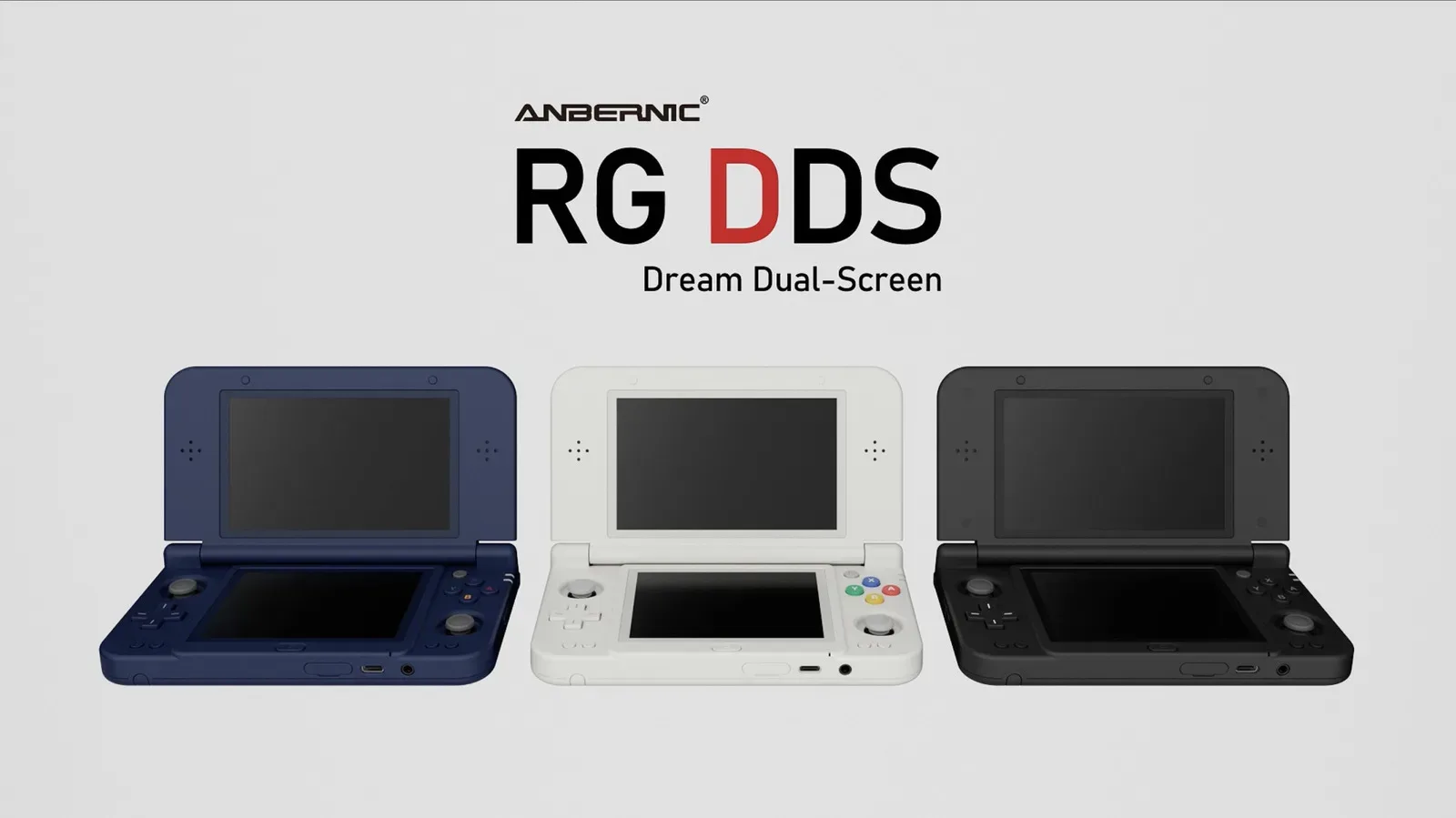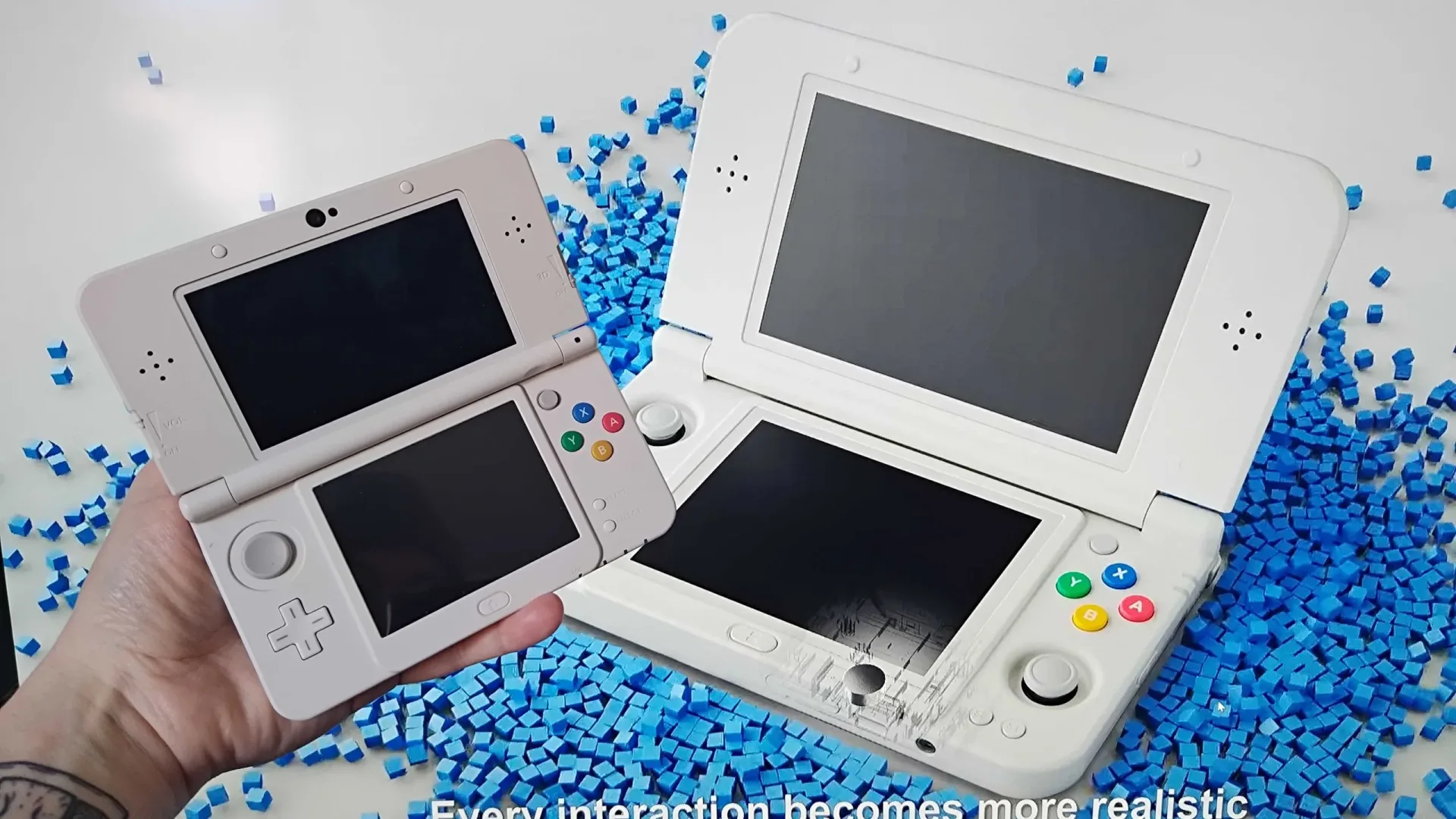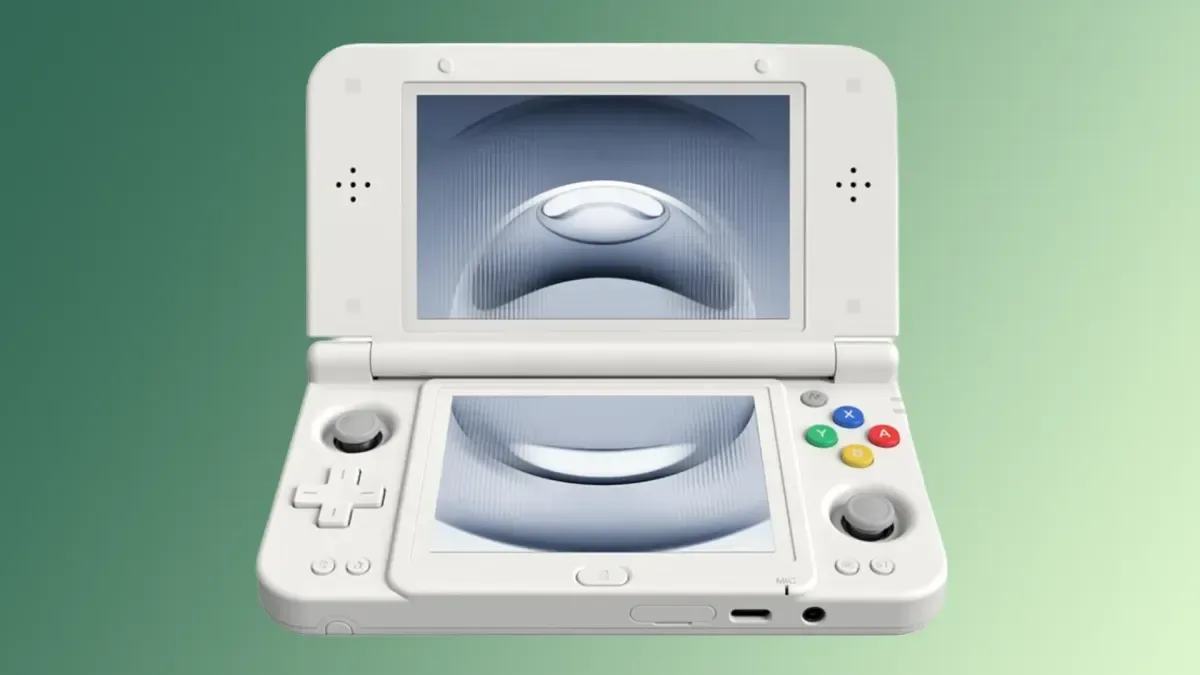
ANBERNIC has opened pre-orders for the RG DDS, a dual-screen Android handheld starting at $299. Positioned by the company as a flagship-level device, it takes an overtly familiar clamshell approach: two stacked displays, physical controls and a stowed stylus give it a design language close to Nintendo’s 3DS family, while the underlying platform is a much newer Android-based handheld.
The proposition is unusually broad. ANBERNIC says the RG DDS is built with enough power for emulation spanning PlayStation 2, Xbox, Nintendo 3DS and even PlayStation 3 games. That is an ambitious set of targets, and it is important to separate the device’s hardware specification from a blanket expectation that every game on every named system will behave identically. Emulation results can vary substantially by game, emulator, configuration and software maturity. Until independent testing establishes how the RG DDS handles individual titles, those platform references are best read as the intended performance range rather than a promise of uniform results.
What is clear is that the RG DDS is designed around a use case many conventional single-screen handhelds cannot reproduce especially comfortably: software that was made with two displays in mind. That makes the form factor itself at least as meaningful as the chipset. Menus, maps, touch inputs and second-screen information can remain visible instead of being squeezed into a hotkey, stacked temporarily onto one panel, or constantly swapped.
A dual-screen layout with unequal, purpose-built displays
The upper screen is a 4.7-inch IPS panel at 1200 × 720, using a 5:3 aspect ratio. The lower panel is a 4-inch IPS display at 960 × 720 in a 4:3 ratio. Both are listed at 300 PPI and 500 nits.
IPS, short for in-plane switching, is a display technology generally associated with stable viewing angles. In a clamshell device, where the two screens are seen together and may sit at slightly different angles to the player, that is a sensible fit. The shared 500-nit brightness rating suggests the screens are intended to present at a comparable apparent brightness, while their different shapes acknowledge that the panels are not simply duplicate rectangles.
The upper 5:3 screen has more width, while the lower 4:3 screen is comparatively squarer. Those choices should matter more in practice than the raw resolution figures alone. A second display does not automatically make software more convenient; the benefit depends on how an emulator or app assigns its image and touch controls across the panels. Still, dedicated physical screen space is a more direct solution than treating a second screen as an occasional overlay.
The RG DDS also includes a stylus that stores inside the shell. That is a small but important detail for a device whose lower display is likely to be used for touch interaction. A stylus is only useful if it is close at hand; an integrated storage slot reduces the chance that it becomes a separate accessory left in a bag or drawer.
Android 16 makes software setup part of the purchase
The handheld runs Android 16. Rather than locking the owner into one fixed software front end, Android makes room to install compatible emulators, apps and other tools. That flexibility is a strength, but it also means the experience may be shaped by setup decisions: which emulator is used, how controls are mapped, how the two screens are arranged and which options a particular game requires.
Related coverage includes ANBERNIC RG DDS Pre-Orders Open for New Dual-Screen Android Handheld.
For prospective buyers, that distinction is practical. The hardware may supply the screens, controls and processing headroom, but the software layer determines how gracefully those elements work together. Someone looking for a device that offers a simple, immediate console-style library should keep that configuration element in mind. Someone who values choice across apps and emulators may see Android as the central attraction.
The company lists Wi-Fi 6 and Bluetooth 5.4 for connectivity, along with dual speakers and a 3.5mm headphone jack. The headphone connection remains useful for players who prefer wired audio or do not want to depend on Bluetooth pairing and battery management. The unit also has a 6-axis gyro, meaning motion data can be measured across three rotational and three directional axes. Whether that feature becomes valuable will depend on the software and control profiles being used, but it is another input option beyond buttons and touch.
Chip, memory and storage options
Inside, the RG DDS uses Qualcomm’s Snapdragon G2 Gen 2 (SG6275P), manufactured on a 4 nm process, with an Adreno A22 GPU. Two memory and storage configurations are listed: 8GB RAM with 128GB storage, or 12GB RAM with 256GB storage.
RAM, or random-access memory, is short-term working space used while software is running. Internal storage holds installed applications and files. The higher-tier configuration therefore raises both available working memory and built-in capacity, but the available specifications alone do not establish exactly how much any individual emulator or game will gain from the extra RAM. It is a specification difference, not a performance result.
The 4 nm designation refers to the chip manufacturing process named in the specifications. It should not be interpreted as a direct measurement of a finished handheld’s speed, heat or battery life. Those outcomes depend on the entire device: its cooling, software behavior, display power use and the workload being run. The RG DDS’s advertised ambitions make real-world thermals, sustained performance and battery behavior key unanswered questions rather than details that can be inferred from a component list.
That makes the $299 entry price particularly notable. It puts the RG DDS in a more consequential buying bracket than a low-cost retro handheld, while its dual-screen construction adds hardware complexity that a typical single-panel Android device does not need. Buyers are being asked to weigh that specialized shape against not only the specification sheet, but also the possibility that ANBERNIC may iterate quickly.
Battery, charging and the questions that remain
ANBERNIC lists a 6,000mAh battery and charging at up to 27W. Battery capacity is useful context, but it is not a runtime estimate. Two active displays, screen brightness, wireless use, selected emulator, processor demand and audio output can all affect how long a charge lasts. Likewise, a 27W maximum tells buyers the listed top charging capability, not how quickly every charging setup will replenish the battery.
The device will be offered in Basalt Black, Glacier White and Phantom Blue. Each color will be available in both listed memory and storage configurations. AI Translation is also included in the stated feature set, though the available information does not define its languages, supported apps, operating conditions or whether it relies on a network connection. It is therefore a feature worth treating cautiously until its implementation is clearer.
There is a broader reason the RG DDS will draw attention beyond ordinary spec-sheet interest. The Nintendo 3DS-style silhouette is not merely decorative when a system is meant to handle dual-screen software. A clamshell naturally keeps two screens in a vertical relationship, and the lower touch panel plus stowed stylus reinforce that focus. For players interested in the wider history of Nintendo’s two-screen ideas, the original format remains a useful point of reference, including in stories such as the renewed attention around Nintendo’s legacy hardware presentation.
At the same time, the RG DDS should not be judged only by resemblance. Its Android 16 operating system, current Qualcomm hardware, wireless specification and stated support goals place it in a different category from a legacy console. Its appeal will rise or fall on execution: hinge and shell quality, screen behavior, controls, software compatibility, sustained performance and how straightforward it is to configure the two displays for the applications people actually want to use.
ANBERNIC has already made two other dual-screen handhelds, but the RG DDS is described as one of its most powerful and costly devices to date. That history makes the new model less of an isolated experiment, while also raising the stakes. The company’s rapid device cadence has prompted understandable concern among potential customers about a revised model arriving soon after launch. No successor has been announced in the supplied details, so that remains a purchasing-risk consideration rather than a confirmed plan.
For now, the firm facts are a $299 starting price, Android 16, two IPS panels, a Snapdragon G2 Gen 2 processor, two RAM-and-storage tiers, and a design built specifically to make dual-screen interaction feel native rather than improvised. The unknowns are just as decisive: how reliably demanding emulation works, how polished the software experience is, and whether the device’s premium hardware translates into a consistently convincing handheld. Those are the areas pre-order customers will be watching most closely.