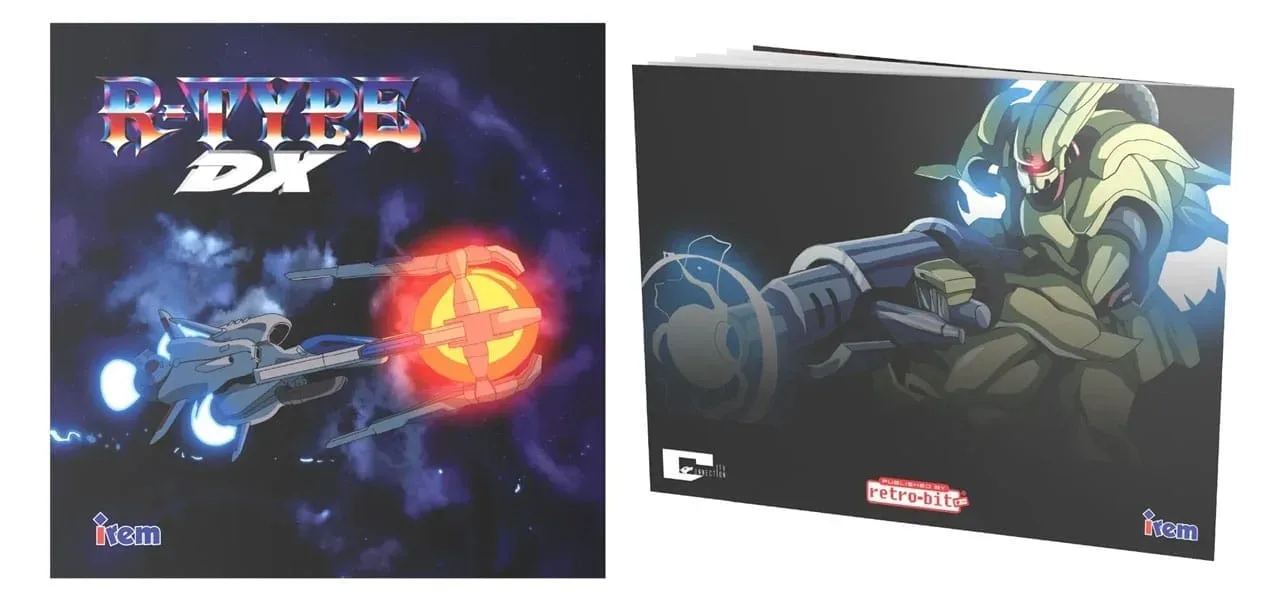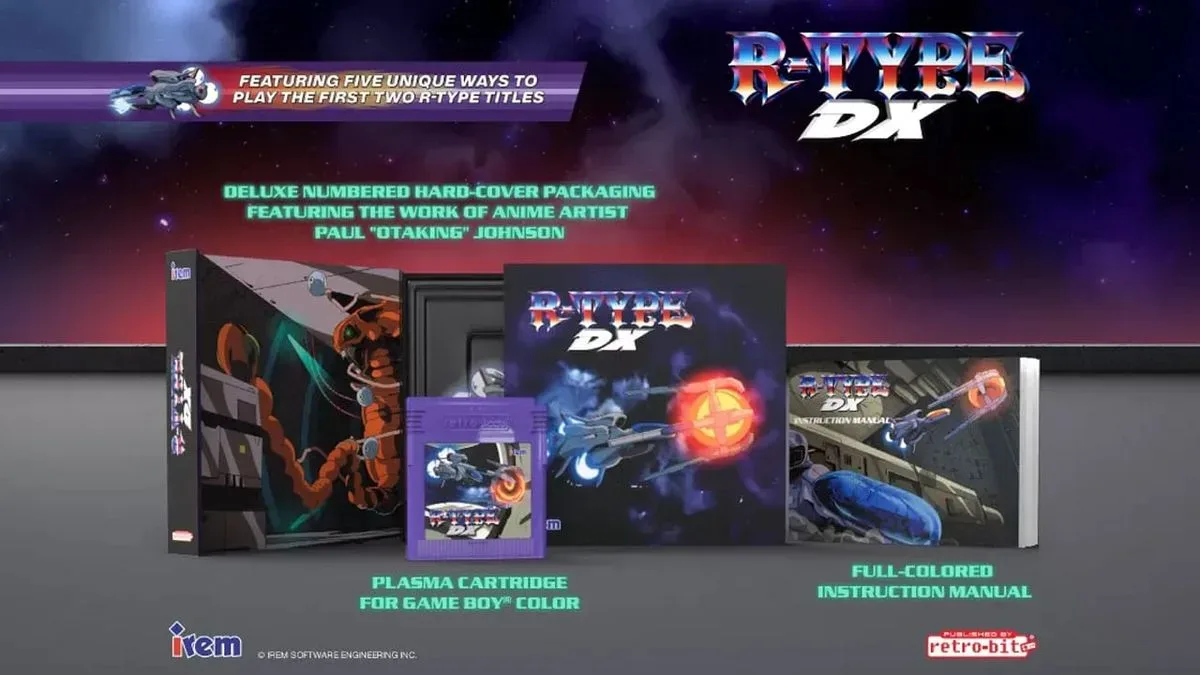
R-Type DX is returning to the Game Boy family in a new physical edition built around five playable versions of the celebrated scrolling shooter. The release is planned on a plasma purple cartridge and will package the original R-Type, R-Type II, color-enhanced versions of both games, and an R-Type DX Mode that joins the two adventures for continuous play.
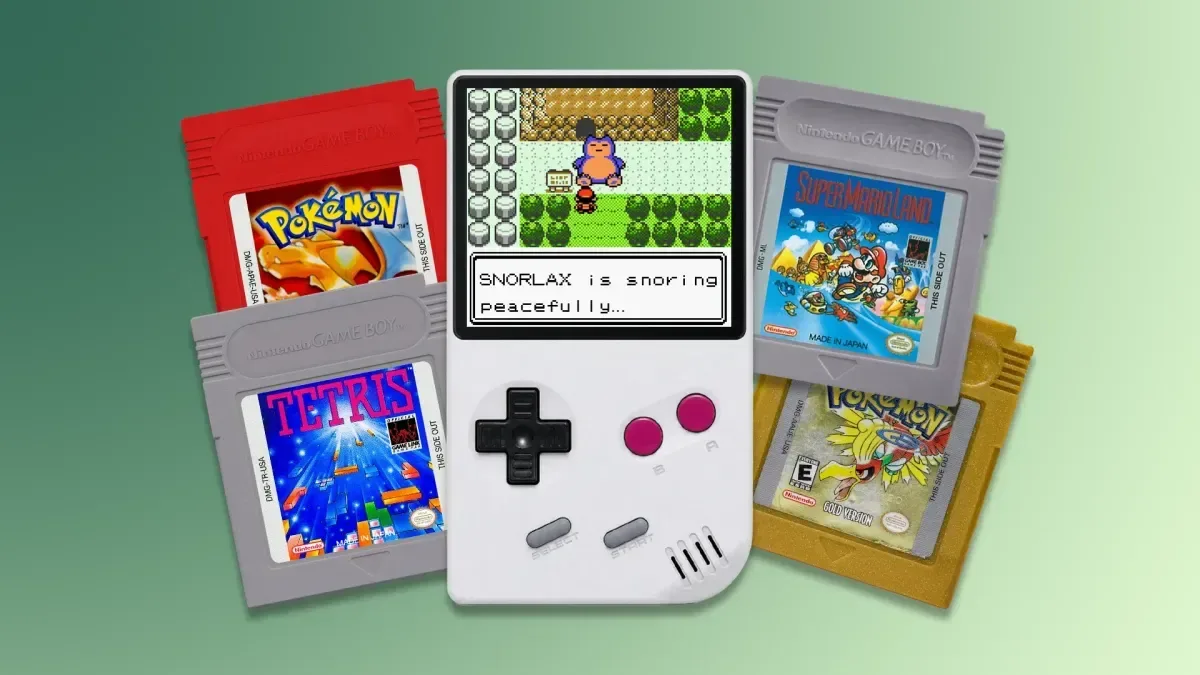
The cartridge is intended for Game Boy and Game Boy Color play, while the supplied details also identify ModRetro’s Chromatic as a compatible modern handheld option. It is being presented as more than a loose cartridge: the package is set to include a hardcover box and a color manual. Shipping is expected in 2027, so this is a pre-order-era announcement rather than a release that players can put into a handheld today.
What the five versions actually mean
“Five games on one cartridge” is useful shorthand, but the breakdown matters for anyone trying to understand what is included. This is not five unrelated entries from across the wider series. It is a collection centered on the first two games and their different visual presentations, capped by a combined mode.
- R-Type: the classic version of the first game.
- R-Type II: the classic version of the sequel.
- R-Type color-enhanced: a version of the original game with enhanced color presentation.
- R-Type II color-enhanced: a color-enhanced version of the sequel.
- R-Type DX Mode: a mode bringing both games together for a continuous run.
That distinction should help set expectations. The value proposition is choice: players can approach the two games in their classic form, select the color-focused editions, or treat the pair as one longer play session through DX Mode. The announcement does not detail how the mode handles progression, options or transitions between the two titles, so those specifics should not be assumed ahead of release.
A shooter designed around pressure and giant threats
For newcomers, R-Type is framed here as an intergalactic arcade shooter in which a lone pilot faces formations of enemy craft and enormous bosses while battling the Bydo Empire. The series’ basic structure is immediately recognizable to fans of the genre: fly across hostile stages, survive incoming attacks and clear increasingly imposing opposition.
A scrolling shooter, often shortened to “shmup,” is an action game where the playfield moves while the player controls a craft navigating dangers and firing on enemies. The term describes the format, rather than a promise that every shooter will play the same way. In this case, the supplied description emphasizes arcade-scale bosses and waves of attackers, which is why the format suits both quick attempts and longer sessions spent trying to push further through the game.
The appeal of a handheld version is easy to see. Arcade-origin action can fit naturally into short bursts, but a difficult stage or a near-successful run can also turn “just a few minutes” into a far longer commitment. Putting both R-Type and R-Type II on one cartridge gives players a compact way to revisit that challenge away from an arcade cabinet.
Classic and color-enhanced options are not the same thing
The collection’s dual-presentation approach is one of its clearest selling points. A classic version means the edition described as the traditional presentation of the game. A color-enhanced version is the separately identified color-focused alternative. Based on the available details, it is safest to understand these as distinct ways to play the same two core games rather than five wholly different campaigns.
Related coverage includes R-Type DX Returns on Plasma Purple Game Boy Cartridge With Five Versions.
That gives the cartridge a potentially welcome degree of flexibility across the supported handheld ecosystem. Someone looking for the older-style experience has the classic selections, while someone playing on Game Boy Color hardware or a Chromatic can choose the color-enhanced alternatives. What has not been specified is whether there are changes beyond color, so buyers should avoid reading unannounced gameplay differences into the “enhanced” label.
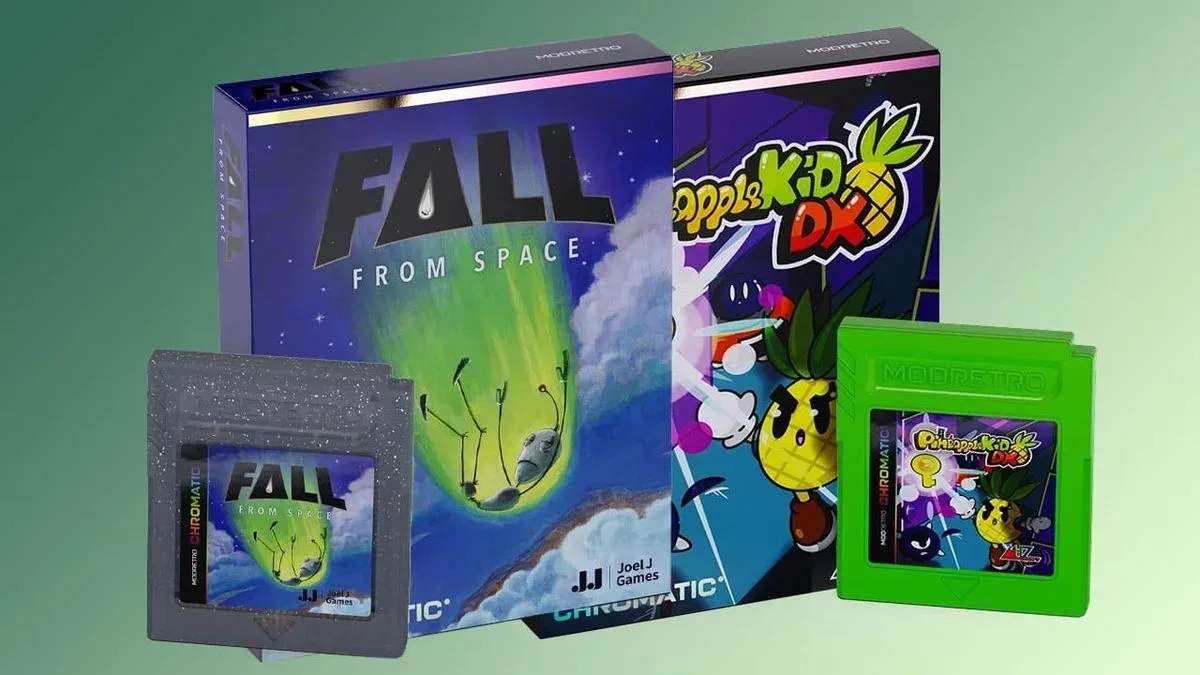
The Game Boy angle also arrives during a visibly active period for that corner of retro hardware. ModRetro has recently identified two additional games for Chromatic, adding to the library available to people using that system or original Game Boy hardware. For a broader look at how new projects continue to find practical uses for Nintendo’s handheld formats, see Nano-daw’s six-track MIDI-style music sequencer for Game Boy Advance.
Why the physical presentation is part of the story
Modern reissues often live or die by whether the physical edition feels intentional rather than merely functional. Here, the plasma purple cartridge is a visible differentiator, and the hardcover box and color manual make the planned release closer to a complete shelf package than a cartridge-only reprint.
The manual matters on its own terms. In an era when game information is often handled through digital menus, patches or online guides, a printed color manual changes the relationship with the object. It can give owners basic reference material without asking them to leave the game environment, and it makes the package feel designed for people who value the format as well as the software.
There is a practical caveat for collectors and players alike: package details establish what is expected to be included, not how every shipped copy will arrive years before the stated release window. Anyone pre-ordering should check the selected seller’s terms, regional availability, cancellation policy and current estimated shipping information. Those checks are especially important for a physical product that is not expected to ship until 2027.
A second cartridge color is also planned
Alongside the plasma purple edition, a limited run through Limited Run Games is expected to use a cosmic black cartridge. The game content described for the wider release remains centered on the same five-version arrangement; the stated difference is the cartridge color. No extra modes, exclusive game variant or technical distinction has been detailed for the cosmic black version.
That makes the choice comparatively straightforward for anyone deciding between the editions: pick based on the retailer, cartridge aesthetic and the conditions that matter most to you, rather than presuming one contains a different set of games. “Limited edition” can describe scarcity or presentation, but it does not automatically mean the software differs. The available information supports a color distinction, and nothing further should be inferred.
What to keep in mind before ordering
Retro-Bit has indicated that pre-orders can be placed through chosen stockists in the United States and Europe. Because the release remains planned for 2027, the useful approach is to treat product-page information as something to verify close to the time of ordering rather than a permanent guarantee.
- Confirm your preferred cartridge color. The regular edition is plasma purple, while the limited-run alternative is cosmic black.
- Check hardware plans. The release is described for Game Boy and Game Boy Color, with Chromatic included among the intended modern handheld options.
- Read the listing’s package description. The announced package includes a hardcover box and color manual; ensure the listing identifies the edition you want.
- Look at the estimated dispatch date and seller policies. With shipping expected in 2027, those terms are more consequential than they would be for an in-stock game.
- Do not expect five separate series entries. The five selections are two core games, their color-enhanced counterparts, and one combined DX Mode.
Analysis: a focused reissue rather than a broad anthology
The most persuasive thing about this package is its focus. Rather than attempting to market a vague nostalgia bundle, it lays out a specific format: two related games, multiple display-oriented options, and a mode intended to connect them. That approach has a practical benefit. Players who already know what they want can choose a classic or color-enhanced version, while people new to the pair have a single cartridge that explains the relationship between the two games.
Its limitations are equally clear. The supplied information does not establish price, precise retailer-by-retailer allocation, detailed technical specifications, or the exact behavior of DX Mode. Nor does it substantiate any claim about exclusivity beyond the cosmic black cartridge’s limited-run positioning. Those unanswered points do not undermine the announced package, but they are the areas to watch as the long path to 2027 shipment continues.
For now, R-Type DX stands as a handsome-looking physical route back to two Bydo-battling shooters, with enough format choice to make the cartridge more substantial than a simple one-game rerelease. The purple shell may draw attention first, but the real pitch is the ability to carry both games, their color-enhanced versions and a continuous DX option in one Game Boy-compatible package.